
Are you providing value to your social media followers? Or are you just pushing your services and talking about yourself?
Narcissism is a turn off for most people in life and social media users are no different. So, if you’re just talking about yourself you’ll probably find people ignore your messages or even worse they could unfollow you.
Kelly Vo has put together this 10 step checklist to help you avoid social media narcissism.
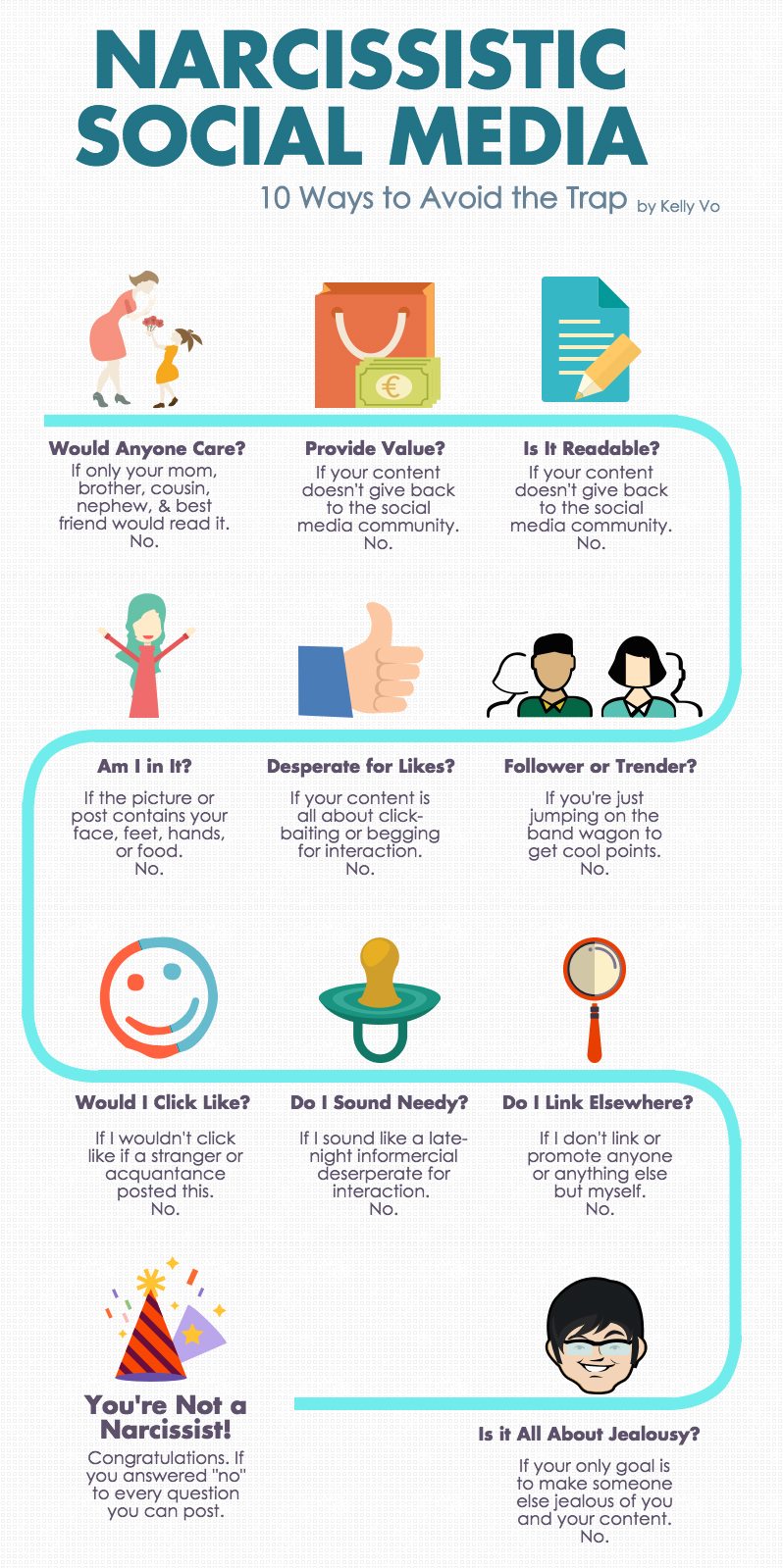
In the age of social media, sharing your life with the world has become easier than ever before. Platforms like Facebook, Instagram, Twitter, and TikTok have made it effortless to broadcast your thoughts, experiences, and daily activities to a global audience. While this connectivity has its advantages, it has also given rise to a phenomenon known as social media narcissism, where individuals excessively focus on themselves, their achievements, and their desires, often at the expense of meaningful interactions and genuine connections with others.
Social media narcissism can be detrimental not only to your online persona but also to your real-life relationships. It can create a shallow online presence that revolves around self-promotion and instant gratification, leaving little room for authentic engagement with your friends, family, and followers.
In this blog post, we will explore the concept of social media narcissism and provide you with ten practical ways to avoid falling into this self-centered trap. By implementing these strategies, you can maintain a healthy balance between sharing your life and fostering meaningful connections on social media.
Understanding Social Media Narcissism
Before delving into the solutions, it’s essential to understand what social media narcissism entails. It’s not merely about posting pictures of yourself or your achievements. It’s a mindset and behavior pattern characterized by excessive self-promotion, a constant need for validation, and a lack of empathy or interest in others’ experiences. Here are some common signs of social media narcissism:
- Self-Centered Content: You primarily share posts, photos, and updates that revolve around yourself, often neglecting the interests or needs of your audience.
- Validation-Seeking Behavior: You measure your self-worth based on the number of likes, comments, and shares your posts receive, leading to an obsession with accumulating social media approval.
- Exaggerated Self-Presentation: You present an idealized version of your life, showcasing only the most positive aspects while concealing any struggles or vulnerabilities.
- Lack of Engagement: You rarely respond to comments, interact with others’ content, or show genuine interest in their lives.
- Frequent Selfies: Your profile is inundated with selfies and photos that primarily feature you, often in glamorous or attention-grabbing poses.
- Insensitive Posting: You share content without considering its potential impact on your followers, such as oversharing personal information or disregarding sensitive topics.
Now that we’ve identified the signs of social media narcissism let’s explore ten practical ways to avoid this self-centered behavior and foster more meaningful connections online.
1. Practice Empathy and Active Listening
One of the most effective ways to combat social media narcissism is to actively engage with your followers and friends. Instead of constantly talking about yourself, take the time to listen to others. Show empathy and interest in their posts by commenting thoughtfully and asking questions. By demonstrating that you genuinely care about their lives and experiences, you can build deeper connections and encourage reciprocal engagement.
2. Diversify Your Content
If your social media feed is saturated with selfies and self-promotional posts, it’s time to diversify your content. Share a variety of topics that interest you, including hobbies, travel experiences, book recommendations, or even thought-provoking articles. This not only makes your profile more engaging but also showcases your multifaceted personality, making you more relatable to a wider audience.
3. Be Mindful of Frequency
Posting too frequently can give the impression of self-obsession. Consider scaling back on the number of posts and focus on quality over quantity. Instead of sharing every moment of your day, select the most meaningful and interesting experiences to share with your audience. This approach will make your content more valuable and less self-centered.
4. Share Vulnerabilities
Nobody’s life is perfect, but social media often portrays a curated version of reality. Break the mold by sharing your vulnerabilities and struggles from time to time. This authenticity can help you connect with your audience on a deeper level as they see you as a relatable human being rather than an idealized persona.
5. Celebrate Others’ Achievements
Avoid making your social media presence all about your accomplishments. Take the time to celebrate the successes and milestones of your friends and followers. Sharing their achievements not only shows your support but also encourages a sense of community and reciprocity.
6. Set Time Limits
To prevent yourself from becoming overly consumed with social media, establish time limits for your daily usage. Allocate specific periods for browsing and posting, and stick to them. This will help you avoid mindless scrolling and constant updates, allowing you to strike a healthier balance between your online and offline life.
7. Focus on Meaningful Connections
Instead of chasing a high number of followers or likes, prioritize building meaningful connections with a smaller, more engaged audience. Quality interactions are more fulfilling than quantity. Engage in conversations, collaborate with like-minded individuals, and nurture relationships that go beyond the superficiality of social media metrics.
8. Practice Gratitude
Social media narcissism often stems from a constant desire for more attention and validation. Counter this by practicing gratitude for the connections you already have. Regularly express appreciation for your followers and friends, and recognize the value they bring to your online experience.
9. Take Breaks
Occasionally disconnect from social media to recharge and gain perspective. Taking breaks allows you to reflect on your online behavior and the impact it may have on your mental well-being. Use this time to engage in offline activities, connect with loved ones, and regain a sense of balance.
10. Seek Feedback
If you’re unsure whether your social media presence leans towards narcissism, don’t hesitate to seek feedback from trusted friends or family members. They can provide valuable insights and help you identify areas where you might need to adjust your behavior.
In conclusion, social media narcissism can hinder your ability to form meaningful connections and create a genuine online presence. By practicing empathy, diversifying your content, and being mindful of your posting habits, you can avoid falling into this self-centered trap. Remember that social media is a tool for connection and communication, so use it wisely to foster authentic relationships and enrich your online experience. Balancing self-expression with genuine interest in others can transform your social media presence from narcissistic to genuinely engaging and fulfilling.

Author:
Mark Ford