Are you looking for ways to improve your content marketing strategy? Want to know the types of content you should create and KPIs you should measure?
Econsultancy share their periodic table of content marketing in this infographic.
Here’s a quick summary of what they cover:
- Strategy
- Format
- Content Type
- Platform
- Metrics
- Goals
- Sharing Triggers
- Checklist
Check out the infographic for more detail.
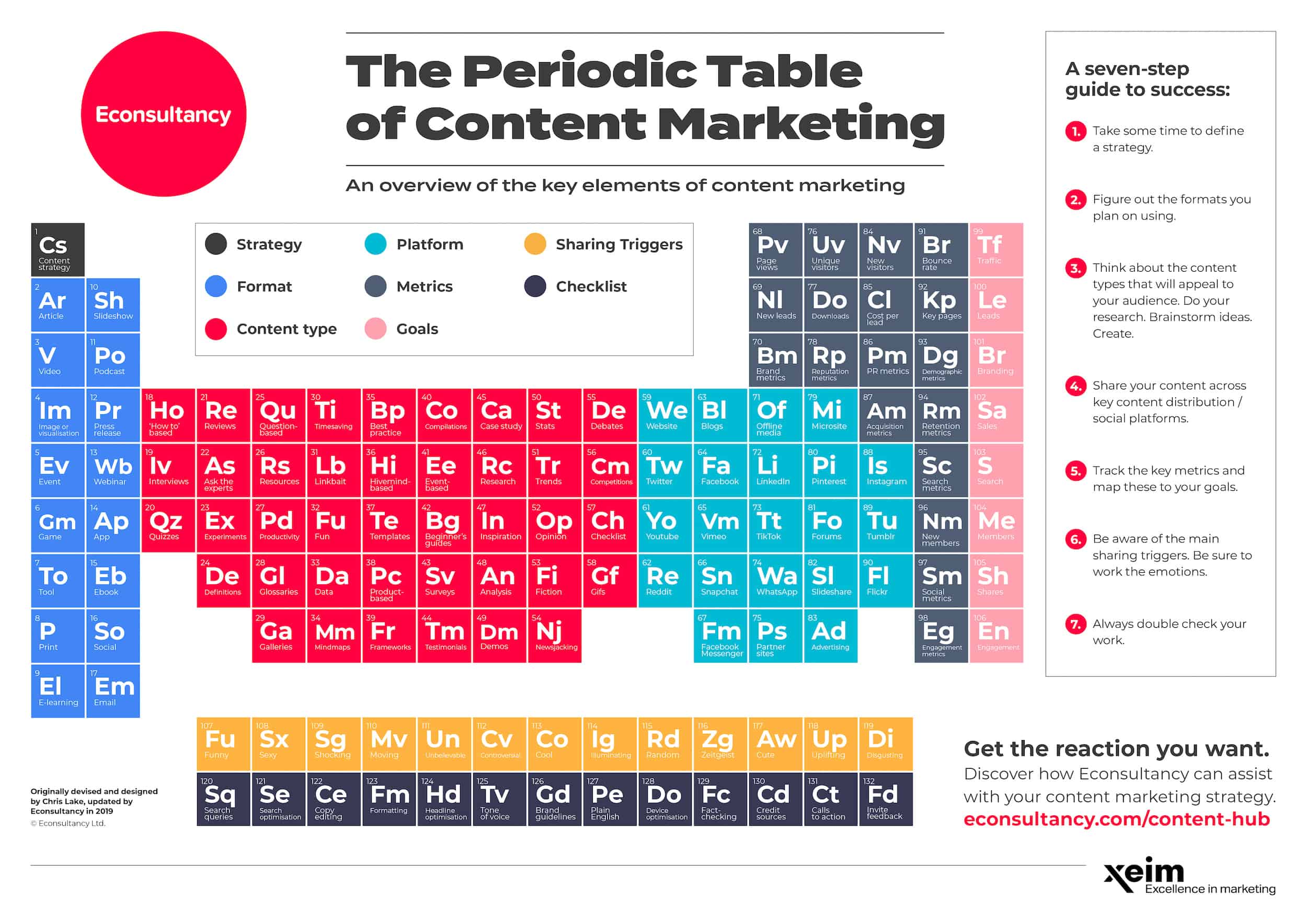
Content marketing is a crucial component of a successful digital marketing strategy, providing a way to engage, inform, and build relationships with your audience. Just as the periodic table organizes elements based on their properties, the Periodic Table of Content Marketing categorizes essential elements that can help marketers create effective content strategies. This comprehensive guide will explore key elements, including strategy, format, content type, platform, metrics, goals, sharing triggers, and a checklist for success.
Strategy
The Foundation of Content Marketing
In the realm of content marketing, strategy is everything. A well-defined strategy not only provides direction but also ensures that your content aligns with your business goals and resonates with your target audience. Here’s an in-depth look at how small businesses can effectively craft a robust content marketing strategy.
- Conduct Thorough Audience Research
Understand Your Target Market
- Create Buyer Personas: Develop detailed profiles of your ideal customers. This should include demographics (age, gender, income), psychographics (interests, values, lifestyle), and behavior patterns (buying habits, content consumption). Tools like surveys, interviews, and analytics can help gather this information.
- Identify Pain Points: Understand the challenges and pain points your audience faces. Use forums, social media, and customer feedback to gather insights. This allows you to create content that addresses their needs directly.
- Segment Your Audience: Consider segmenting your audience based on different criteria (demographics, behavior, or interests) to tailor your content more effectively. This approach ensures that each segment receives relevant messaging.
- Define Clear Content Goals
Align with Business Objectives
- Set SMART Goals: Ensure your content marketing goals are Specific, Measurable, Achievable, Relevant, and Time-bound. For example, instead of saying, “I want more traffic,” specify, “I want to increase organic traffic by 20% over the next six months.”
- Map Goals to the Buyer Journey: Align your goals with different stages of the buyer’s journey—awareness, consideration, and decision. This ensures that your content meets the needs of potential customers at each stage.
- Prioritize Goals: Decide which goals are most critical to your business at this time. Focus your efforts on achieving these first, then expand to other goals as your resources allow.
- Develop Your Unique Value Proposition (UVP)
Stand Out from the Competition
- Identify What Makes You Unique: Determine what sets your business apart. This could be your products, services, customer service, or industry expertise. Your UVP should clearly communicate this uniqueness.
- Articulate Your Value: Create messaging that highlights the benefits your audience will gain from your content. This could include educational insights, entertainment, or practical solutions.
- Integrate Your UVP into All Content: Ensure your UVP is consistently represented in all content pieces. This helps to reinforce your brand identity and creates a cohesive narrative across all platforms.
- Establish Content Pillars and Topics
Create a Structured Framework
- Define Core Themes: Identify 3-5 key topics that align with your business goals and resonate with your audience. These will serve as the foundation for your content strategy.
- Create Subtopics: For each core theme, brainstorm related subtopics. This not only helps diversify your content but also enables you to cover the topic comprehensively over time.
- Stay Relevant: Regularly revisit and update your content pillars and topics based on audience feedback, industry trends, and performance metrics. This ensures your content remains timely and valuable.
- Design a Content Distribution Plan
Maximize Your Reach
- Choose the Right Platforms: Identify where your audience spends their time online. This could be social media platforms, forums, or industry blogs. Focus on distributing content where it will have the most impact.
- Create a Content Calendar: Develop a content calendar that outlines what content will be published, when, and where. This helps keep your team organized and ensures a consistent flow of content.
- Plan for Promotion: Don’t just publish and forget. Develop a promotion strategy for each piece of content. This can include sharing on social media, sending out email newsletters, or utilizing paid advertising.
- Set Up a Feedback Loop
Continuous Improvement
- Monitor Performance Metrics: Use tools like Google Analytics and social media insights to track how your content is performing. Focus on metrics that align with your goals, such as traffic, engagement, and conversion rates.
- Solicit Audience Feedback: Regularly ask your audience for feedback through surveys, comments, or direct messages. Understanding their perceptions can provide valuable insights for improvement.
- Iterate Based on Data: Use the data you collect to inform future content decisions. If certain types of content perform better, adjust your strategy accordingly.
- Allocate Resources Wisely
Invest in Your Strategy
- Budget for Content Creation: Determine how much you can afford to spend on content marketing, whether it’s hiring freelance writers, investing in design, or utilizing paid promotions.
- Build a Content Team: Depending on your budget, consider assembling a team or hiring freelancers to handle different aspects of content creation, from writing and design to social media management.
- Leverage Tools and Technologies: Utilize content management systems, analytics tools, and social media scheduling platforms to streamline your processes and enhance efficiency.
- Stay Informed and Adaptable
Evolve with the Industry
- Keep Up with Trends: Regularly research industry trends and changes in consumer behavior. Follow thought leaders, subscribe to industry newsletters, and participate in webinars to stay informed.
- Be Open to Change: Content marketing is dynamic. Be willing to pivot your strategy based on what you learn from performance metrics, audience feedback, and industry trends.
- Test and Experiment: Don’t be afraid to try new formats, platforms, or types of content. A/B testing can help you understand what resonates best with your audience.
Conclusion
A well-defined content marketing strategy is essential for small businesses aiming to thrive in a competitive landscape. By investing time in audience research, setting clear goals, establishing a unique value proposition, and implementing a structured content plan, you can create impactful content that resonates with your audience and drives business growth. Remember to continually monitor and adapt your strategy to stay aligned with your audience’s needs and market trends. By doing so, you will position your business for success in the ever-evolving world of content marketing.
Format
Diverse Content Formats
The format of your content significantly influences how it is received by your audience. Choosing the right format not only affects engagement but also determines how effectively your message is communicated. For small businesses, understanding various content formats and their strategic applications can be key to maximizing reach and impact. Below is an in-depth exploration of different content formats, along with tips and guidance for effective implementation.
- Blog Posts
Leverage Written Content for SEO and Engagement
- Long-Form vs. Short-Form: Long-form blog posts (1,500+ words) are effective for in-depth topics and SEO, while short-form posts (300-800 words) can address quick updates or tips. A mix of both can keep your blog dynamic.
- Focus on Quality: Ensure your blog posts are well-researched, informative, and free from errors. High-quality content encourages sharing and boosts your credibility.
- Incorporate Keywords: Conduct keyword research to identify terms your audience is searching for. Integrate these keywords naturally into your content to improve SEO.
- Use Engaging Headlines: Craft compelling headlines that grab attention and encourage clicks. Consider using numbers, questions, or emotional triggers to make them more appealing.
- Include Visuals: Enhance your blog posts with images, infographics, or videos to break up text and increase engagement. Visual content can also help illustrate complex ideas more clearly.
- Infographics
Visually Convey Information
- Simplify Complex Information: Infographics are perfect for presenting data, statistics, or processes in an easily digestible format. Identify key information that can be visually represented.
- Brand Consistency: Use your brand colors, logos, and fonts to ensure the infographic aligns with your overall branding. This helps reinforce brand recognition.
- Promote Sharing: Create infographics that are easy to share. Optimize them for social media, and include your website URL so that viewers can find you easily.
- Tools for Creation: Utilize graphic design tools like Canva or Piktochart, which offer templates and drag-and-drop features, making it easier for non-designers to create professional-looking infographics.
- Videos
Engage and Educate Your Audience
- Types of Videos: Consider various video formats, including tutorials, product demos, customer testimonials, behind-the-scenes footage, and live streams. Choose formats that best fit your content goals.
- Keep It Short and Engaging: Aim for videos that are concise—typically under two minutes for social media. This increases the likelihood that viewers will watch the entire video.
- Optimize for SEO: Include relevant keywords in your video title, description, and tags. Create engaging thumbnails to increase click-through rates.
- Leverage Platforms: Publish videos on multiple platforms such as YouTube, Instagram, and TikTok to reach different segments of your audience. Tailor the content for each platform’s audience and format.
- Podcasts
Connect Through Audio
- Choose Your Format: Decide whether you want to create interview-style podcasts, educational series, or storytelling formats. Each format has its own appeal, so select one that resonates with your audience.
- Quality Matters: Invest in good audio equipment and editing software to ensure your podcast sounds professional. Poor audio quality can deter listeners.
- Consistency is Key: Set a regular publishing schedule (weekly, bi-weekly, etc.) to keep your audience engaged. Consistency builds anticipation and loyalty among listeners.
- Promote Your Podcast: Use social media, your website, and email newsletters to promote new episodes. Collaborate with other podcasters or industry experts to expand your reach.
- Social Media Posts
Quick Engagement and Brand Awareness
- Diverse Content Types: Mix up your posts with images, videos, polls, stories, and user-generated content. Different formats can keep your social media presence dynamic and engaging.
- Utilize Hashtags: Research and use relevant hashtags to increase visibility. Hashtags can help your content reach a broader audience beyond your current followers.
- Engage with Your Audience: Respond to comments and messages promptly. Engaging with your audience can foster community and loyalty.
- Analyze Performance: Use analytics tools provided by social media platforms to monitor engagement metrics. This data can inform your future content strategy.
- Webinars and Live Events
Interact Directly with Your Audience
- Choose Relevant Topics: Select topics that provide value to your audience, such as industry trends, how-tos, or expert panels. Ensure the topic aligns with your overall content strategy.
- Promote in Advance: Use email marketing, social media, and your website to promote your webinar or live event. Consider offering incentives, like exclusive content or discounts, to encourage sign-ups.
- Follow Up: After the event, send a thank-you email along with a recording of the webinar. This provides added value and can help convert leads into customers.
- Engage During the Event: Encourage audience interaction through Q&A sessions or polls during the webinar. This makes the experience more engaging and personal.
- E-books and Whitepapers
Provide In-Depth Insights
- Research and Data-Driven Content: E-books and whitepapers should focus on delivering comprehensive insights and data. They work well for thought leadership and can help position your brand as an authority in your industry.
- Offer as Lead Magnets: Use e-books and whitepapers as lead magnets. Require visitors to provide their email addresses in exchange for the download, which can help grow your email list.
- Promote on Multiple Channels: Share your e-book or whitepaper on social media, your website, and in email newsletters. Consider paid promotions to reach a larger audience.
- Regular Updates: Regularly update your e-books and whitepapers to ensure the content remains relevant and accurate. This can also provide an opportunity for re-promotion.
- Email Newsletters
Nurture Your Audience
- Segment Your Audience: Use audience segmentation to send targeted content. Different segments may have different interests, so tailor your newsletters accordingly.
- Create Valuable Content: Ensure each newsletter provides value, whether it’s educational articles, industry news, or exclusive offers. Focus on content that addresses the needs of your audience.
- Use Engaging Subject Lines: Craft subject lines that pique interest and encourage opens. Consider using personalization, urgency, or curiosity to increase open rates.
- Analyze and Optimize: Monitor metrics like open rates and click-through rates to gauge the effectiveness of your newsletters. Use this data to refine your content strategy over time.
Conclusion
Choosing the right content format is crucial for effectively engaging your audience and achieving your content marketing goals. By understanding the strengths and best practices of various formats—blog posts, infographics, videos, podcasts, social media posts, webinars, e-books, and email newsletters—small businesses can create diverse and impactful content strategies.
Ultimately, the best approach is to experiment with different formats, analyze performance, and adapt based on what resonates most with your audience. Embrace creativity and innovation, and your content marketing efforts will not only reach but also engage your target audience, driving meaningful connections and business growth.
Content Type
Understanding Content Types
Content type refers to the specific genre or category of content that businesses create to communicate with their audience. Selecting the right content types is essential for engaging your target market, establishing your brand voice, and meeting your content marketing goals. For small businesses, understanding the various content types and their applications can greatly enhance overall marketing efforts. Below is an in-depth look at different content types, along with actionable tips and guidance for effective implementation.
- Educational Content
Empowering Your Audience with Knowledge
- Blog Posts: Write articles that address common questions, provide tutorials, or offer how-to guides relevant to your industry. This positions your business as an expert and builds trust with your audience.
- E-books and Whitepapers: Create comprehensive resources that delve deeper into specific topics. These can be used as lead magnets to grow your email list. Ensure they are well-researched and visually appealing.
- Webinars: Host live or recorded sessions where you educate your audience on specific topics. This allows for real-time interaction and can help generate leads through registration.
- Tip: Always focus on providing actionable insights. Your audience should be able to apply the knowledge they gain immediately.
- Entertaining Content
Engaging and Captivating Your Audience
- Videos: Use humor, storytelling, or engaging visuals to entertain your audience. Create entertaining videos that also relate to your brand values, products, or services.
- Memes and GIFs: Share humorous memes or GIFs that are relevant to your industry or audience’s interests. These are shareable and can enhance brand relatability.
- Social Media Challenges: Create challenges or contests that encourage audience participation. These can go viral and significantly boost brand awareness.
- Tip: Balance entertainment with brand messaging. Ensure your entertaining content aligns with your overall brand identity.
- Promotional Content
Driving Sales and Conversions
- Product Demos: Create videos or articles that showcase how your products work, highlighting features and benefits. This can help potential customers understand the value of your offerings.
- Special Offers: Share content around limited-time promotions, discounts, or exclusive deals. Make it easy for your audience to take action by including clear calls to action.
- Customer Testimonials and Case Studies: Showcase success stories from satisfied customers to build credibility. Testimonials can serve as powerful social proof and influence potential buyers.
- Tip: Don’t oversell. While promotional content is necessary, ensure that it doesn’t dominate your overall content strategy. Aim for a balance with educational and entertaining content.
- User-Generated Content (UGC)
Leveraging Your Audience’s Voice
- Social Media Posts: Encourage customers to share their experiences with your products on social media. Repost these authentic experiences to build community and trust.
- Contests and Challenges: Run contests that invite customers to create content related to your brand. This not only promotes engagement but also provides you with valuable content to share.
- Reviews and Ratings: Ask satisfied customers to leave reviews on your website or social media pages. Display these prominently to boost credibility.
- Tip: Create a dedicated hashtag for your brand to make it easier to find and share UGC. This can also foster a sense of community among your audience.
- Visual Content
Enhancing Engagement with Visuals
- Infographics: Use infographics to visually represent complex data or processes. Infographics are highly shareable and can improve retention of information.
- Images and Graphics: High-quality images can enhance blog posts and social media content. Use professional photography or graphic design tools to create visually appealing content.
- Slideshows: Create slideshows or presentations to share information in a more engaging format. These can be shared on platforms like SlideShare or as downloadable content.
- Tip: Ensure all visual content aligns with your brand’s aesthetic. Consistent visuals reinforce brand identity and make your content easily recognizable.
- Interactive Content
Boosting Engagement Through Interaction
- Quizzes and Polls: Create fun quizzes or polls to engage your audience. This not only entertains but also provides insights into customer preferences.
- Interactive Infographics: Use interactive infographics that allow users to explore data or content at their own pace. This can enhance user experience and time spent on your site.
- Calculators and Tools: Develop online tools (like cost calculators or assessment quizzes) that provide personalized results for users. This adds value and can drive traffic to your website.
- Tip: Promote your interactive content on social media and through email marketing. The more people engage with it, the broader your reach becomes.
- Thought Leadership Content
Positioning Your Brand as an Authority
- Industry Reports: Produce detailed reports that analyze industry trends, challenges, and opportunities. These can be powerful tools for showcasing your expertise.
- Opinion Pieces: Share your insights or perspectives on current industry events or trends. This can position your business as a thought leader in your field.
- Interviews with Experts: Conduct interviews with industry experts and share them in blog posts or videos. This adds credibility and can also attract their audience to your content.
- Tip: Promote your thought leadership content through press releases, guest posts, and partnerships with industry publications to reach a wider audience.
- Seasonal Content
Aligning Your Marketing with Timely Events
- Holiday Promotions: Create content around major holidays or seasonal events, including themed products, promotions, or blog posts.
- Timely Blog Posts: Write about seasonal trends or topics relevant to your industry. This keeps your content fresh and engaging throughout the year.
- Event-Specific Content: Develop content tied to local events, conferences, or trends in your industry. This can enhance your visibility and relevance.
- Tip: Use a content calendar to plan and organize seasonal content in advance. This ensures timely publication and allows for strategic promotion.
Conclusion
Understanding and utilizing different content types effectively can significantly enhance your small business’s content marketing strategy. By offering a diverse array of content—educational, entertaining, promotional, user-generated, visual, interactive, thought leadership, and seasonal—you can engage your audience, drive traffic, and achieve your marketing goals.
Remember, the key is to balance various content types while aligning them with your overall strategy and brand messaging. Continually assess the performance of your content to refine your approach, and don’t hesitate to experiment with new formats to keep your audience engaged and eager for more.
Platform
Choosing the Right Platforms
In the digital landscape, choosing the right platforms for your content marketing is crucial for reaching your target audience effectively. Each platform has its own unique features, audience demographics, and content preferences. For small businesses, understanding these differences can enhance engagement, boost visibility, and drive conversions. Here’s a comprehensive look at various platforms and actionable tips for leveraging them effectively in your content marketing strategy.
- Website and Blog
The Foundation of Your Content Marketing
Your website and blog serve as the central hub for your content marketing efforts. They provide a platform where potential customers can learn more about your business, access valuable resources, and engage with your brand.
- Actionable Tips:
- SEO Optimization: Optimize your website and blog for search engines. Use relevant keywords, meta descriptions, and alt tags for images to improve visibility on search engines.
- User Experience (UX): Ensure your website is user-friendly. Fast load times, mobile responsiveness, and intuitive navigation contribute to a positive user experience, encouraging visitors to stay longer.
- Content Variety: Use your blog to publish various content types, including articles, infographics, and videos. This diversity keeps your audience engaged and encourages them to return for more.
- Call-to-Action (CTA): Include clear CTAs in your blog posts to guide visitors on the next steps, whether it’s subscribing to your newsletter, downloading a resource, or making a purchase.
- Social Media Platforms
Engaging Your Audience Where They Spend Time
Social media platforms offer a dynamic way to connect with your audience, build community, and share your content. Each platform has its unique characteristics and user demographics.
- Facebook:
- Ideal for building a community and sharing a mix of content types.
- Tip: Use Facebook Groups to foster engagement and discussions related to your industry. Regularly share updates, polls, and valuable resources.
- Instagram:
- Focuses on visual content and storytelling.
- Tip: Leverage Instagram Stories and Reels to showcase behind-the-scenes content, product launches, and customer testimonials. Use hashtags strategically to increase reach.
- Twitter:
- Perfect for real-time engagement and updates.
- Tip: Share bite-sized content, industry news, and participate in trending conversations. Use polls and threads to encourage interaction.
- LinkedIn:
- A professional network suited for B2B marketing and thought leadership.
- Tip: Share industry insights, articles, and case studies to position yourself as an authority in your field. Engage with other professionals by commenting on their posts.
- TikTok:
- A platform for short-form video content, popular among younger audiences.
- Tip: Create fun and engaging videos that highlight your products, services, or brand personality. Use trending sounds and challenges to increase visibility.
- Email Marketing
Direct Communication with Your Audience
Email marketing allows you to communicate directly with your audience and nurture relationships over time. It’s a powerful tool for lead generation and retention.
- Actionable Tips:
- Segmentation: Segment your email list based on customer preferences, behavior, and demographics. This allows for personalized messaging that resonates with different audience segments.
- Value-Driven Content: Provide value in your emails by sharing exclusive offers, valuable resources, or insightful content. Aim to educate and engage rather than solely promote.
- Consistent Schedule: Establish a regular email schedule to maintain engagement. Whether it’s weekly newsletters or monthly updates, consistency helps keep your audience informed and connected.
- A/B Testing: Experiment with different subject lines, content formats, and sending times to optimize open and click-through rates.
- Video Platforms
Capturing Attention through Visual Storytelling
Video content is increasingly popular, and platforms like YouTube and Vimeo provide an excellent medium for showcasing your brand.
- YouTube:
- The second-largest search engine and a powerful platform for long-form content.
- Tip: Create informative videos, tutorials, or product demos that provide value to your audience. Optimize video titles and descriptions with relevant keywords to improve searchability.
- TikTok and Instagram Reels:
- Platforms for short, engaging video content.
- Tip: Experiment with different formats, such as how-to videos, behind-the-scenes content, and user-generated content. Use trending hashtags to increase visibility.
- Content Distribution Networks
Expanding Your Reach Beyond Your Website
Content distribution networks and platforms can help amplify your content’s reach and drive traffic back to your site.
- Medium:
- A platform for sharing articles and thought leadership content.
- Tip: Republish relevant blog posts on Medium to reach a broader audience. Ensure to include links back to your original content to drive traffic.
- SlideShare:
- Ideal for sharing presentations and infographics.
- Tip: Create engaging slideshows that summarize your key points or present complex information visually. This can increase your reach among professionals seeking visual content.
- Online Communities and Forums
Engaging with Niche Audiences
Participating in online communities and forums can help you connect with like-minded individuals and potential customers.
- Reddit:
- Various subreddits cater to niche interests.
- Tip: Engage in relevant subreddits by sharing valuable insights and answering questions. Avoid blatant promotion; focus on building credibility and providing value.
- Quora:
- A question-and-answer platform where users seek expertise.
- Tip: Answer questions related to your industry, linking back to your content when relevant. This positions you as an authority and drives traffic to your website.
Conclusion
Selecting the right platforms for your content marketing strategy is vital for maximizing engagement, increasing visibility, and achieving your business goals. By leveraging a mix of platforms—including your website, social media, email marketing, video content, distribution networks, and online communities—you can reach your audience where they are most active.
Keep in mind that each platform serves a unique purpose and caters to different audience segments. Regularly analyze your performance on these platforms to refine your approach and ensure you’re effectively engaging your audience. With the right platform strategy, your small business can thrive in the competitive landscape of content marketing.
Metrics
Measuring Success
For small businesses, measuring the effectiveness of content marketing is essential to ensure resources are being used wisely and to drive continuous improvement. Metrics provide insights into how well your content resonates with your audience, its impact on business goals, and where adjustments may be necessary. Here’s an in-depth exploration of the key metrics to track and actionable tips for small businesses to effectively measure their content marketing success.
- Traffic Metrics
Analyzing Visitor Behavior
Traffic metrics reveal how many visitors are accessing your content and how they interact with it. This information helps you understand the reach and visibility of your content.
- Page Views:
- Definition: The total number of times a specific page on your website has been viewed.
- Actionable Tips:
- Monitor which content pieces receive the most views to identify what topics resonate with your audience.
- Use this data to inform future content creation, focusing on similar themes or formats.
- Unique Visitors:
- Definition: The number of distinct users who visit your site within a specific timeframe, regardless of how many times they visit.
- Actionable Tips:
- Track unique visitors over time to assess your audience growth.
- Analyze referral sources to understand where new visitors are coming from and optimize those channels.
- Average Session Duration:
- Definition: The average amount of time visitors spend on your site during a single session.
- Actionable Tips:
- A longer session duration typically indicates that visitors find your content engaging.
- If average session durations are low, consider improving content quality or site navigation to encourage users to explore more pages.
- Engagement Metrics
Measuring Audience Interaction
Engagement metrics provide insight into how your audience interacts with your content, which is critical for assessing its effectiveness.
- Bounce Rate:
- Definition: The percentage of visitors who leave your site after viewing only one page.
- Actionable Tips:
- A high bounce rate may indicate that your content is not meeting visitor expectations or that your landing pages need optimization.
- Analyze the content types with high bounce rates and consider ways to improve their relevance or user experience.
- Social Shares:
- Definition: The number of times your content is shared across social media platforms.
- Actionable Tips:
- Track social shares to gauge how well your content resonates with your audience.
- Encourage sharing by including social sharing buttons on your blog posts and crafting shareable headlines.
- Comments and Likes:
- Definition: The number of interactions (comments, likes, reactions) your content receives on social media or your website.
- Actionable Tips:
- Monitor comments to gain qualitative feedback from your audience. Responding to comments can also foster community engagement.
- Use this data to identify what types of content generate discussions and positive reactions.
- Conversion Metrics
Evaluating Business Impact
Conversion metrics help you understand how well your content contributes to business objectives, such as lead generation, sales, or newsletter sign-ups.
- Lead Generation:
- Definition: The number of leads generated through your content marketing efforts.
- Actionable Tips:
- Use forms, downloads, or free trials as lead magnets in your content. Track how many leads each piece of content generates to evaluate effectiveness.
- A/B test different CTAs to determine which wording or placement generates the most leads.
- Conversion Rate:
- Definition: The percentage of visitors who complete a desired action, such as signing up for a newsletter or making a purchase.
- Actionable Tips:
- Calculate conversion rates for specific landing pages or content offers to identify high-performing pieces.
- If conversion rates are lower than expected, review your content and CTAs for clarity and appeal.
- Return on Investment (ROI):
- Definition: A measure of the revenue generated relative to the cost of your content marketing efforts.
- Actionable Tips:
- Track the costs associated with content creation and distribution and compare them to the revenue generated from leads or sales.
- Use ROI calculations to justify content marketing budgets and demonstrate the value of your efforts to stakeholders.
- SEO Metrics
Assessing Search Engine Performance
SEO metrics provide insights into how well your content performs in search engine rankings, which can significantly impact visibility and traffic.
- Organic Traffic:
- Definition: The number of visitors who reach your site through search engine results.
- Actionable Tips:
- Use tools like Google Analytics to track organic traffic trends and identify which content is driving the most visits from search engines.
- Optimize content for SEO by incorporating relevant keywords and focusing on quality, informative writing.
- Keyword Rankings:
- Definition: The positions your content holds in search engine results for targeted keywords.
- Actionable Tips:
- Regularly check keyword rankings using SEO tools to see how well your content is performing in search results.
- Adjust content strategy based on keyword performance, focusing on high-potential keywords that may need optimization.
- Customer Feedback and Surveys
Gathering Direct Insights
Customer feedback and surveys can provide valuable qualitative data on how your audience perceives your content.
- Surveys and Polls:
- Definition: Tools for collecting direct feedback from your audience about their experiences and preferences.
- Actionable Tips:
- Use surveys to ask specific questions about what content your audience finds valuable and what topics they want to learn more about.
- Consider sending surveys after content downloads or purchases to gather insights about the content’s impact.
- Net Promoter Score (NPS):
- Definition: A metric that measures customer loyalty and satisfaction based on the likelihood of recommending your business to others.
- Actionable Tips:
- Include NPS questions in post-engagement surveys to assess customer satisfaction.
- Analyze NPS results alongside content performance metrics to understand how content influences customer loyalty.
Conclusion
Measuring the success of your content marketing efforts is essential for small businesses aiming to optimize their strategies and drive results. By focusing on a combination of traffic metrics, engagement metrics, conversion metrics, SEO metrics, and direct customer feedback, you can gain a comprehensive understanding of your content’s performance.
Regularly reviewing and analyzing these metrics will enable you to identify trends, uncover insights, and make data-driven decisions that enhance your content marketing strategy. Ultimately, the goal is to create content that not only attracts and engages your audience but also contributes meaningfully to your business objectives.
Goals
Setting Clear Goals
Setting clear and achievable goals is a fundamental aspect of any content marketing strategy, especially for small businesses. Goals help guide your content creation efforts, ensure alignment with business objectives, and provide a framework for measuring success. Here’s an in-depth exploration of how small businesses can effectively set and achieve content marketing goals.
- Understanding the Importance of Goal Setting
Why Goals Matter
- Focus and Direction: Clearly defined goals provide a roadmap for your content marketing efforts, ensuring that every piece of content serves a purpose and aligns with your overall business objectives.
- Performance Measurement: Goals allow you to measure success over time. By establishing benchmarks, you can assess whether your content marketing is effective and make informed adjustments as needed.
- Resource Allocation: Having specific goals helps you allocate resources—time, budget, and personnel—more efficiently. This is crucial for small businesses with limited resources.
- Types of Content Marketing Goals
Small businesses should consider various types of goals based on their unique circumstances and desired outcomes. Here are some common content marketing goals to consider:
- Brand Awareness Goals
- Objective: Increase visibility and recognition of your brand among your target audience.
- Actionable Tips:
- Aim to increase website traffic by a specific percentage (e.g., 20% over the next quarter).
- Track social media followers and engagement metrics to assess growth in brand awareness.
- Collaborate with influencers or industry partners to expand your reach and visibility.
- Lead Generation Goals
- Objective: Generate a specific number of leads through your content marketing efforts.
- Actionable Tips:
- Create targeted content offers (e.g., eBooks, webinars) and set a goal for how many leads you want to generate from each.
- Use landing pages with lead capture forms to track leads generated by specific content pieces.
- Set monthly or quarterly targets for lead generation and monitor progress regularly.
- Customer Engagement Goals
- Objective: Foster deeper engagement with your audience to build relationships and loyalty.
- Actionable Tips:
- Set goals for increasing comments, shares, and likes on social media posts.
- Aim to improve email open and click-through rates by a certain percentage (e.g., 10%).
- Encourage user-generated content or community discussions to enhance engagement levels.
- Conversion Goals
- Objective: Drive specific actions from your audience, such as purchases, sign-ups, or inquiries.
- Actionable Tips:
- Establish a target conversion rate for specific calls to action (CTAs) on your content (e.g., aim for a 5% conversion rate on a landing page).
- Analyze the customer journey to identify content pieces that can effectively drive conversions and set goals for their performance.
- Track the performance of content related to specific campaigns, ensuring alignment with sales or promotional objectives.
- SEO Goals
- Objective: Improve your website’s search engine ranking and organic traffic.
- Actionable Tips:
- Set goals for increasing organic traffic to your website by a certain percentage within a specified timeframe (e.g., 30% over six months).
- Aim to rank for a specific number of targeted keywords within the top 10 search results.
- Monitor and improve your site’s domain authority or page authority through consistent, high-quality content creation.
- Creating SMART Goals
To effectively set and achieve content marketing goals, small businesses should follow the SMART criteria, which stands for:
- Specific: Clearly define what you want to achieve. Instead of saying “increase traffic,” specify “increase blog traffic by 30% in the next quarter.”
- Measurable: Ensure that your goals can be quantified. This allows you to track progress and know when you’ve achieved your goal.
- Achievable: Set realistic goals based on your current resources and capabilities. For example, if you currently generate 100 leads per month, aiming for 1,000 in one month may be unrealistic.
- Relevant: Align your goals with your overall business objectives. Ensure that achieving the goal will contribute positively to your business.
- Time-Bound: Set a deadline for your goals to create urgency and motivation. For instance, aim to achieve your lead generation target by the end of the quarter.
- Aligning Goals with Business Objectives
To maximize the impact of your content marketing strategy, align your content goals with broader business objectives. This involves understanding how your content efforts can directly contribute to key business outcomes, such as sales growth, customer retention, or brand loyalty.
- Identify Key Business Objectives: Consider what your business aims to achieve over the next year—whether it’s increasing revenue, expanding into new markets, or enhancing customer satisfaction.
- Create Content Goals that Support Business Objectives: For example, if your business goal is to increase sales by 25%, your content marketing goal could focus on generating high-quality leads or creating educational content that guides potential customers through the sales funnel.
- Regular Review and Adjustment of Goals
Setting goals is not a one-time activity; it requires ongoing assessment and adjustment. Small businesses should regularly review their content marketing goals to ensure they remain relevant and aligned with evolving business objectives and market conditions.
- Monthly or Quarterly Check-ins: Set regular intervals to assess progress toward your goals. Analyze metrics, gather feedback, and determine if any adjustments are necessary.
- Be Adaptable: If you find that certain goals are consistently unmet, reassess their achievability or relevance. It’s essential to be flexible and willing to adjust your strategy based on what the data reveals.
- Celebrate Milestones: Recognize and celebrate the achievement of goals, whether big or small. This can boost team morale and motivate continued effort toward your content marketing strategy.
Conclusion
Setting effective content marketing goals is vital for small businesses looking to optimize their efforts and drive meaningful results. By understanding the importance of goal setting, identifying various types of goals, creating SMART goals, aligning them with business objectives, and regularly reviewing progress, small businesses can enhance their content marketing strategy and achieve greater success.
With clear and actionable goals in place, small businesses can focus their content marketing efforts on what truly matters, ensuring that each piece of content contributes positively to overall growth and success.
Sharing Triggers
Encouraging Content Sharing
In the realm of content marketing, sharing triggers refer to the psychological and emotional factors that prompt individuals to share content with their networks. For small businesses, harnessing these triggers can significantly amplify content reach, enhance brand visibility, and foster community engagement. Here’s an in-depth exploration of the sharing triggers and how small businesses can effectively leverage them.
- Emotional Resonance
Why It Matters
Content that evokes strong emotions—whether joy, surprise, anger, or inspiration—tends to be shared more frequently. Emotional resonance connects people on a personal level, encouraging them to share their feelings and insights with others.
Actionable Tips:
- Tell Compelling Stories: Use storytelling techniques to create relatable narratives that evoke emotions. Share customer success stories, testimonials, or behind-the-scenes content that humanizes your brand.
- Use Powerful Imagery: Visual content that stirs emotions, such as heartwarming photos, impactful infographics, or striking videos, can significantly enhance sharing rates. Make sure your visuals align with the emotions you want to convey.
- Craft Attention-Grabbing Headlines: Headlines that trigger curiosity or strong emotional responses can compel readers to share. For example, use phrases like “You Won’t Believe What Happened Next!” or “This Will Change How You Think About [Topic]!”
- Social Currency
Why It Matters
People often share content that enhances their status, knowledge, or reputation within their social circles. By sharing valuable or unique insights, individuals can position themselves as thought leaders or informed members of their communities.
Actionable Tips:
- Provide Unique Insights: Create content that offers fresh perspectives, in-depth analyses, or expert opinions. Infographics or research studies can position your brand as a credible source of valuable information.
- Offer Practical Tips and Hacks: Share actionable advice or how-to guides that can help your audience solve specific problems. This not only enhances your social currency but also encourages sharing among peers facing similar challenges.
- Create Shareable Formats: Consider producing content in easily shareable formats, such as checklists, cheat sheets, or templates. These provide immediate value and convenience, making them more likely to be shared.
- Reciprocity
Why It Matters
Reciprocity is the principle of mutual exchange, where people feel compelled to return a favor when they receive something valuable. In content marketing, providing free resources or valuable content can prompt your audience to share it in return.
Actionable Tips:
- Offer Free Resources: Create valuable content such as eBooks, guides, or templates that your audience can access for free. Make sharing a requirement for access (e.g., “Share this to download your free guide!”).
- Engage with Your Audience: Respond to comments, engage in conversations, and show appreciation for shares. By building relationships, your audience may feel more inclined to reciprocate by sharing your content.
- Collaborate with Influencers: Partnering with influencers can amplify your reach. When influencers share your content, their followers are likely to reciprocate by engaging with and sharing it further.
- Timeliness and Relevance
Why It Matters
Content that addresses current trends, events, or timely topics is more likely to be shared. People enjoy being part of conversations about what’s happening now, making relevance a key factor in shareability.
Actionable Tips:
- Leverage Trending Topics: Monitor industry trends, news, or social media discussions. Create timely content that addresses these topics, positioning your brand as a relevant voice in the conversation.
- Use Seasonal Content: Incorporate seasonal themes or holidays into your content marketing strategy. Create themed posts or campaigns that resonate with audiences during specific times of the year.
- Stay Updated: Regularly update your audience on industry news, changes, or events. This not only demonstrates your brand’s expertise but also encourages sharing among those interested in staying informed.
- Practical Value
Why It Matters
Content that offers practical value—such as tips, tricks, or solutions to common problems—tends to be highly shareable. When your content provides tangible benefits, it encourages users to share it with others who may find it useful.
Actionable Tips:
- Create How-To Guides: Develop comprehensive guides that help your audience solve specific problems or achieve goals. Ensure that these guides are easy to follow and visually appealing.
- Utilize Infographics: Infographics that summarize complex information in a visually engaging manner can be highly shareable. Make sure they are easy to understand and packed with valuable insights.
- Provide Checklists and Templates: Share checklists or templates that streamline processes for your audience. These resources are often seen as valuable tools, prompting shares among those who find them helpful.
- Community Engagement
Why It Matters
Fostering a sense of community can encourage sharing as individuals feel more connected to your brand and its message. When your audience feels included and valued, they’re more likely to share your content with others.
Actionable Tips:
- Encourage User-Generated Content: Invite your audience to create and share their own content related to your brand. This not only enhances engagement but also promotes sharing as users want to showcase their contributions.
- Engage in Social Listening: Monitor social media conversations about your brand and industry. Responding to your audience’s comments or concerns fosters a sense of community and encourages sharing.
- Host Contests or Challenges: Organize contests that encourage participants to create and share content related to your brand. This can generate excitement and increase sharing as participants promote their entries.
- Visual Appeal
Why It Matters
Visually appealing content is more likely to grab attention and be shared. High-quality images, videos, and graphics enhance the overall user experience, making your content more attractive.
Actionable Tips:
- Invest in Quality Visuals: Use professional-grade images, graphics, and videos to enhance the appeal of your content. Consider hiring a graphic designer or using high-quality stock images to elevate your visuals.
- Incorporate Videos: Video content is highly engaging and shareable. Create short, informative videos that resonate with your audience, whether through tutorials, interviews, or brand stories.
- Optimize for Mobile: Ensure that your content is mobile-friendly. With the increasing use of smartphones, content that is easily accessible on mobile devices is more likely to be shared.
- Call to Action (CTA)
Why It Matters
Effective calls to action can prompt users to share your content intentionally. A well-crafted CTA encourages your audience to take the next step, whether that’s sharing, commenting, or engaging further.
Actionable Tips:
- Be Clear and Direct: Use clear language in your CTAs, such as “Share this post with your friends!” or “Tag someone who needs to see this!”.
- Make Sharing Easy: Incorporate social sharing buttons prominently on your website and blog. The easier it is for users to share, the more likely they will do so.
- Create Shareable Content: Include quotes, statistics, or memorable phrases in your content that your audience will want to share. This adds value and makes it more likely that readers will take action.
Conclusion
Understanding and leveraging sharing triggers is essential for small businesses looking to maximize their content marketing efforts. By creating emotionally resonant, relevant, and valuable content, businesses can encourage their audience to share, thereby amplifying their reach and enhancing engagement.
Implementing actionable strategies around emotional resonance, social currency, reciprocity, timeliness, practical value, community engagement, visual appeal, and effective CTAs can significantly enhance the likelihood of content being shared. As small businesses harness the power of sharing triggers, they can build a robust online presence, foster community, and drive meaningful engagement with their audience.
Checklist
Content Marketing Checklist
Creating and executing a successful content marketing strategy requires careful planning, execution, and ongoing assessment. A checklist can serve as a valuable tool for small businesses, ensuring that each aspect of the content marketing process is addressed. Here’s an in-depth look at the essential components to include in your content marketing checklist, complete with actionable tips and guidance for small businesses.
- Define Your Audience
Why It Matters: Understanding your target audience is crucial for creating relevant content that resonates with them.
Checklist Items:
- Create Audience Personas: Develop detailed profiles of your ideal customers, including demographics, interests, challenges, and preferences.
- Conduct Market Research: Utilize surveys, interviews, and analytics to gather insights about your audience’s behavior and preferences.
- Segment Your Audience: Group your audience into segments based on shared characteristics or behaviors, allowing for more targeted content.
Tips:
- Use tools like Google Analytics or social media insights to track audience behavior and preferences.
- Regularly update your audience personas as you gather more data and insights.
- Set Clear Goals
Why It Matters: Establishing specific, measurable goals provides direction and focus for your content marketing efforts.
Checklist Items:
- Define SMART Goals: Ensure your goals are Specific, Measurable, Achievable, Relevant, and Time-bound (e.g., increase website traffic by 20% within six months).
- Align Goals with Business Objectives: Ensure that your content marketing goals support your broader business objectives, such as increasing sales or improving customer retention.
- Establish KPIs: Identify key performance indicators that will help measure the success of your content (e.g., engagement rates, conversion rates).
Tips:
- Review your goals periodically and adjust them based on performance and changing business needs.
- Use project management tools to keep track of your goals and progress.
- Develop a Content Strategy
Why It Matters: A well-defined content strategy outlines how you will achieve your goals and meet your audience’s needs.
Checklist Items:
- Choose Content Themes: Identify key topics that resonate with your audience and align with your brand message.
- Select Content Formats: Decide which formats (blogs, videos, infographics, etc.) will be most effective for conveying your message.
- Create a Content Calendar: Develop a schedule that outlines what content will be published, when, and on which platforms.
Tips:
- Utilize content planning tools like Trello or Asana to manage your content calendar efficiently.
- Be flexible and willing to adjust your strategy based on real-time feedback and performance metrics.
- Create High-Quality Content
Why It Matters: Quality content is essential for engaging your audience and establishing your brand as a trusted authority.
Checklist Items:
- Conduct Keyword Research: Identify relevant keywords to include in your content to improve search engine visibility.
- Focus on Value: Ensure your content provides value to your audience by addressing their pain points or answering their questions.
- Maintain Consistency: Establish a consistent brand voice and style across all content to reinforce your brand identity.
Tips:
- Use tools like Yoast SEO for WordPress to optimize your content for search engines.
- Regularly review and update existing content to ensure it remains relevant and valuable.
- Optimize for SEO
Why It Matters: Search engine optimization (SEO) helps improve your content’s visibility and reach.
Checklist Items:
- Use On-Page SEO Techniques: Optimize title tags, meta descriptions, headers, and internal links within your content.
- Incorporate Keywords Naturally: Use relevant keywords throughout your content, but avoid keyword stuffing.
- Focus on User Experience: Ensure your website is mobile-friendly, loads quickly, and provides a positive user experience.
Tips:
- Regularly audit your website for SEO performance using tools like SEMrush or Moz.
- Stay updated on SEO trends and algorithm changes to adapt your strategy accordingly.
- Promote Your Content
Why It Matters: Effective promotion is crucial for reaching a wider audience and maximizing the impact of your content.
Checklist Items:
- Leverage Social Media: Share your content across relevant social media platforms to engage with your audience and drive traffic to your website.
- Utilize Email Marketing: Send newsletters and updates to your subscribers, highlighting your latest content and encouraging shares.
- Engage with Influencers: Partner with influencers or industry leaders to amplify your content reach and credibility.
Tips:
- Use social media scheduling tools like Hootsuite or Buffer to streamline your content promotion efforts.
- Track the performance of your promotional efforts to identify which channels yield the best results.
- Engage with Your Audience
Why It Matters: Building relationships with your audience fosters loyalty and encourages them to share your content.
Checklist Items:
- Respond to Comments: Engage with your audience by responding to comments and messages on your content and social media.
- Encourage User-Generated Content: Create campaigns that invite your audience to share their experiences related to your brand.
- Run Contests or Polls: Host interactive contests or polls to encourage participation and engagement.
Tips:
- Monitor social media conversations about your brand using social listening tools to engage proactively.
- Show appreciation for your audience by recognizing their contributions and celebrating milestones together.
- Measure and Analyze Performance
Why It Matters: Regular analysis of your content performance helps identify what works and what needs improvement.
Checklist Items:
- Track Key Metrics: Monitor metrics such as website traffic, engagement rates, conversion rates, and social shares to gauge content effectiveness.
- Analyze Audience Behavior: Use tools like Google Analytics to understand how users interact with your content, including bounce rates and time spent on pages.
- Gather Feedback: Solicit feedback from your audience through surveys or direct inquiries to gain insights into their preferences and experiences.
Tips:
- Create regular performance reports to assess progress toward your goals and adjust your strategy as needed.
- Use A/B testing to experiment with different content types, formats, or headlines to identify the most effective approaches.
- Adjust and Iterate
Why It Matters: Content marketing is an ongoing process that requires continual adjustment and improvement based on performance data.
Checklist Items:
- Review and Revise Goals: Periodically reassess your goals to ensure they remain relevant and aligned with your business objectives.
- Update Content Strategy: Make adjustments to your content strategy based on performance analysis and audience feedback.
- Explore New Trends and Techniques: Stay informed about emerging content marketing trends and experiment with new formats or platforms.
Tips:
- Foster a culture of continuous learning within your team by encouraging experimentation and innovation in your content marketing efforts.
- Network with other small businesses or industry professionals to share insights and learn from each other’s experiences.
Conclusion
A well-structured checklist can serve as a guiding framework for small businesses navigating the complexities of content marketing. By addressing key components such as audience definition, goal setting, content strategy development, content creation, SEO optimization, promotion, audience engagement, performance measurement, and iterative improvement, businesses can effectively streamline their content marketing efforts.
Regularly reviewing and updating your checklist will ensure that your content marketing strategy remains relevant and effective, ultimately driving better results and helping your business achieve its goals. By following these tips and best practices, small businesses can create impactful content that resonates with their audience and drives meaningful engagement.
Conclusion
Just like the periodic table, the elements of content marketing work best when combined strategically. By understanding the different components—strategy, format, content type, platform, metrics, goals, sharing triggers, and utilizing a checklist—you can create a comprehensive and effective content marketing strategy.
The Importance of Adaptation
In the ever-evolving landscape of digital marketing, adaptability is key. Trends, audience preferences, and technological advancements can shift rapidly. Therefore, continuously monitoring performance metrics and remaining flexible in your approach is essential.
Building a Content Marketing Ecosystem
Effective content marketing is about creating a harmonious ecosystem where all elements interact seamlessly. Your strategy should inform the formats you choose, which in turn should align with your goals. Platforms for distribution amplify your reach, while metrics guide your decisions. By ensuring all components work together, you can enhance your content’s impact and drive meaningful results.
Final Thoughts
Content marketing is a journey, not a destination. It requires time, patience, and a willingness to learn and adapt. By applying the insights from the Periodic Table of Content Marketing, you can develop a well-rounded strategy that not only meets your business objectives but also resonates deeply with your audience.
Remember, each piece of content is an opportunity to build relationships, establish authority, and engage with your audience. So, as you craft your next piece of content, consider how each element can contribute to a more effective overall strategy.
By doing so, you’ll not only improve your content marketing efforts but also position your brand as a trusted authority in your industry. Embrace the complexity of content marketing, and watch as your efforts lead to meaningful engagement and, ultimately, greater success.

Author:
Mark Ford

The Complete Content Mix: What Every Business Should Be Publishing
Are you struggling to decide what types of content your business should be publishing to attract more traffic and engagement? Want to learn how to build the perfect content mix that keeps your audience interested and your brand growing? […]