
Are you looking for ways to improve your Pinterest strategy? Want to rectify any mistakes in your Pinterest marketing efforts?
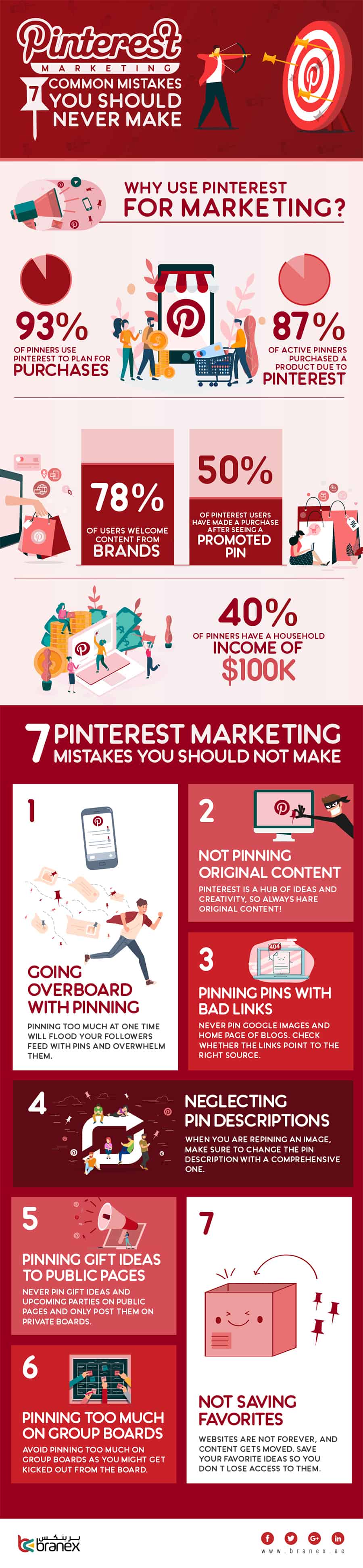
Branex share 7 Pinterest marketing mistakes to avoid in this infographic.
Here’s a quick summary:
- Going overboard
- Not pinning original content
- Pinning with bad links
- Neglecting descriptions
- Pinning gift ideas on public pages
- Pinning too much on group boards
- Not saving favourites
Check out the infographic for more detail.
Pinterest is a powerful platform for businesses looking to drive traffic, increase brand awareness, and engage with their audience. With over 450 million monthly users, it offers a unique opportunity to showcase your products and services in a visually appealing way. However, many businesses make mistakes that can hinder their success on Pinterest. To help you make the most out of your Pinterest marketing strategy, here are seven common mistakes to avoid:
Going Overboard
In the fast-paced world of social media, it’s easy to get caught up in the excitement of Pinterest and start pinning content excessively. However, going overboard can lead to several issues that might undermine your Pinterest marketing efforts. Understanding how to strike the right balance between quantity and quality is crucial for maintaining an engaged audience and achieving your marketing goals.
The Risks of Over-Pinning
- Audience Fatigue: Posting too frequently can overwhelm your audience. When users are bombarded with too many pins, they might experience content fatigue and become less likely to engage with your posts. This can lead to a decrease in overall engagement rates and reduced effectiveness of your marketing strategy.
- Diluted Brand Message: Excessive pinning can dilute your brand message if your content lacks focus. When users are exposed to too many pins, they might struggle to understand what your brand stands for and what you offer, leading to confusion and disengagement.
- Lower Engagement Rates: Pinterest’s algorithm rewards high engagement rates. Over-pinning can result in lower engagement per pin as your content gets scattered across a larger number of posts. This can negatively impact your visibility and reach on the platform.
Tips for Finding the Right Balance
- Develop a Content Calendar: Creating a content calendar is essential for managing your Pinterest strategy effectively. Plan out your pinning schedule in advance to ensure a consistent flow of content without overwhelming your audience. Your calendar should include the types of content you want to post, the frequency of posting, and any seasonal or promotional events.
Tip: Use tools like Trello or Asana to organize your content calendar and keep track of your pinning schedule. This will help you stay organized and ensure that you’re posting content that aligns with your marketing goals.
- Focus on Quality Over Quantity: Instead of posting a high volume of pins, prioritize creating high-quality, visually appealing content. Invest time in designing pins that stand out and provide value to your audience. High-quality pins are more likely to be repinned, clicked on, and shared, which can lead to better engagement and results.
Tip: Use design tools like Canva or Adobe Spark to create eye-catching pins with compelling visuals and clear messaging. Ensure that your pins are well-designed and aligned with your brand’s aesthetic.
- Monitor Performance Metrics: Regularly review your Pinterest analytics to monitor the performance of your pins. Pay attention to metrics such as engagement rates, click-through rates, and repins. Analyzing these metrics will help you understand which types of content are resonating with your audience and adjust your strategy accordingly.
Tip: Use Pinterest Analytics or third-party tools like Tailwind to track your pin performance. Identify trends and patterns to determine the optimal frequency and types of content that drive the most engagement.
- Use Scheduling Tools: To maintain a consistent presence on Pinterest without overloading your audience, consider using scheduling tools. These tools allow you to plan and schedule your pins in advance, ensuring that you post regularly without the need for constant manual updates.
Tip: Tools like Tailwind, Buffer, or Hootsuite can help you schedule your pins and manage your Pinterest account more efficiently. Take advantage of their features to automate your pinning process and maintain a balanced posting schedule.
- Engage with Your Audience: Engagement is a two-way street. Instead of focusing solely on pinning content, make sure to interact with your audience. Respond to comments, engage with other users’ content, and participate in relevant group boards. Building relationships and fostering engagement can help you create a more meaningful presence on Pinterest.
Tip: Set aside time each week to engage with your followers and other Pinterest users. This can help you build a loyal community and encourage more interaction with your pins.
- Test and Adjust: Pinterest marketing is not a one-size-fits-all approach. Experiment with different pinning frequencies and content types to find what works best for your audience. A/B testing can help you determine the optimal number of pins per day or week and identify the types of content that drive the most engagement.
Tip: Run small experiments by varying your pinning frequency and monitoring the results. Use this data to refine your strategy and optimize your pinning schedule for better performance.
- Set Clear Goals: Establish clear goals for your Pinterest marketing efforts. Define what you want to achieve, whether it’s driving traffic to your website, increasing brand awareness, or generating leads. Having specific goals will help you determine the right balance between pinning frequency and content quality.
Tip: Use SMART (Specific, Measurable, Achievable, Relevant, Time-bound) criteria to set your Pinterest goals. Regularly review your progress and adjust your strategy based on your performance and goals.
Conclusion
Finding the right balance between pinning frequency and quality is essential for effective Pinterest marketing. By developing a content calendar, focusing on high-quality content, monitoring performance metrics, using scheduling tools, engaging with your audience, testing and adjusting, and setting clear goals, you can avoid the pitfalls of over-pinning and achieve better results on Pinterest.
Remember, Pinterest is a visual discovery platform, and your goal is to create a positive and engaging experience for your audience. By striking the right balance and avoiding the mistake of going overboard, you can enhance your Pinterest strategy and drive meaningful results for your business.
Not Pinning Original Content
Pinterest thrives on originality and creativity. While repinning content from others can be part of your strategy, relying too heavily on this practice can limit your brand’s visibility and engagement potential. Pinning original content is crucial for establishing your brand’s authority, standing out in a crowded marketplace, and driving meaningful interactions with your audience. Here’s how to make the most of original content on Pinterest and why it’s so important for your marketing strategy.
Why Original Content Matters
- Builds Brand Identity: Original content allows you to showcase your brand’s unique voice, style, and expertise. By creating content that reflects your brand’s personality and values, you can differentiate yourself from competitors and build a strong brand identity.
- Enhances Engagement: Unique and high-quality pins are more likely to capture attention and encourage engagement. When users see fresh, original content, they’re more likely to repin, click through, and interact with your posts.
- Improves SEO and Discoverability: Pinterest’s algorithm favors original content. Pins that link to your website or blog can drive traffic and improve your SEO. By pinning original content, you increase the likelihood of your pins being seen and shared by a broader audience.
- Establishes Authority: Original content positions you as an authority in your niche. Sharing unique insights, tips, and resources demonstrates your expertise and provides value to your audience, helping you build credibility and trust.
Tips for Creating and Pinning Original Content
- Invest in Quality Visuals: High-quality visuals are essential for standing out on Pinterest. Invest in professional photography or graphic design to create visually appealing pins that capture attention and convey your message effectively.
Tip: Use design tools like Canva or Adobe Spark to create visually stunning pins. Ensure that your visuals are high-resolution, well-composed, and aligned with your brand’s aesthetic.
- Create Value-Driven Content: Focus on creating content that provides value to your audience. This could include how-to guides, infographics, case studies, or educational resources. Value-driven content is more likely to be shared and repinned, increasing your reach and engagement.
Tip: Conduct audience research to understand what type of content resonates with your followers. Use this insight to create pins that address their needs and interests.
- Develop Unique Content Themes: Establish specific themes or series for your Pinterest content. This could include seasonal guides, product tutorials, behind-the-scenes looks, or industry trends. Consistent themes help reinforce your brand’s identity and keep your content fresh and engaging.
Tip: Plan content around upcoming events, holidays, or industry trends. Creating a content calendar with themed pins can help you maintain consistency and relevance.
- Use Rich Pins: Rich Pins provide additional information directly on your pin, such as product details, pricing, or article summaries. They enhance the user experience and make your pins more informative and engaging.
Tip: Apply for Rich Pins through Pinterest’s website and ensure that your website is set up to support them. Rich Pins can increase the visibility and effectiveness of your original content.
- Leverage Video Pins: Video pins are an effective way to capture attention and convey more information than static images. They can showcase product demos, tutorials, or behind-the-scenes content in a dynamic format.
Tip: Create short, engaging videos that are optimized for Pinterest’s vertical format. Use captions and clear calls to action to make your videos more impactful.
- Incorporate Branded Elements: Include branded elements in your pins, such as your logo, brand colors, or unique design elements. This helps reinforce your brand identity and ensures that your pins are easily recognizable.
Tip: Use consistent branding across all your pins to create a cohesive look. This can help increase brand recognition and make your content more memorable.
- Share User-Generated Content: Encourage your customers to create and share content related to your brand. User-generated content (UGC) can be a powerful way to showcase real-life experiences and build social proof.
Tip: Create a branded hashtag and promote it on your website and social media channels. Feature the best user-generated content on your Pinterest boards, giving credit to the creators and engaging with your community.
- Optimize Pin Descriptions and Titles: Craft compelling descriptions and titles for your original pins. Use relevant keywords to improve discoverability and provide clear, engaging information that encourages users to click through to your website or blog.
Tip: Conduct keyword research to identify popular search terms related to your content. Incorporate these keywords naturally into your pin descriptions and titles to improve visibility.
- Monitor and Analyze Performance: Regularly review the performance of your original pins to understand what works and what doesn’t. Use Pinterest Analytics to track metrics such as engagement rates, click-through rates, and impressions.
Tip: Analyze your top-performing pins to identify patterns and trends. Use this data to refine your content strategy and create more of the content that resonates with your audience.
Conclusion
Pinning original content is a crucial aspect of a successful Pinterest marketing strategy. By focusing on quality visuals, creating value-driven content, developing unique themes, using Rich Pins and video pins, incorporating branded elements, sharing user-generated content, optimizing descriptions and titles, and monitoring performance, you can enhance your Pinterest presence and drive meaningful results.
Remember, Pinterest is a platform that thrives on creativity and originality. By investing in creating and sharing original content, you not only differentiate yourself from competitors but also build a stronger connection with your audience and achieve better engagement and results.
Pinning with Bad Links
One of the most frustrating experiences for Pinterest users is clicking on a pin only to encounter a broken or misleading link. For businesses, pinning with bad links not only hampers user experience but also undermines your credibility, reduces engagement, and potentially damages your brand’s reputation. Ensuring that all your pins link to relevant, functional, and high-quality content is crucial for an effective Pinterest marketing strategy. Here’s how to avoid the pitfalls of bad links and maintain a positive experience for your audience.
Why Bad Links Are a Problem
- User Frustration: Clicking on a pin that leads to a broken or irrelevant page can frustrate users and erode their trust in your brand. If users consistently encounter bad links, they may stop engaging with your content altogether.
- Lower Engagement Rates: Pins with broken links or misleading destinations can result in lower engagement rates. Users who find that your content doesn’t deliver on its promise may be less likely to repin, comment, or click through in the future.
- Negative Impact on SEO: Bad links can negatively impact your website’s SEO performance. If users frequently leave your site quickly due to broken links, it can affect your bounce rate and overall search engine rankings.
- Missed Opportunities: Bad links mean missed opportunities to drive traffic to your website or landing pages. Ensuring that your links work properly helps you capture and convert potential leads or customers.
Tips for Ensuring Your Links Are Effective
- Regularly Test Your Links: Regularly check all your pins to ensure that the links are functional and lead to the intended content. This includes verifying that your URLs are correct and that the destination pages are live and accessible.
Tip: Set a reminder to review your links on a monthly or quarterly basis. Use tools like Screaming Frog SEO Spider or Broken Link Checker to automate the process of identifying broken links on your website.
- Use URL Shorteners and Trackers: Utilize URL shorteners and tracking tools to manage and monitor your links. Services like Bitly or Google Analytics can help you track the performance of your links, monitor click-through rates, and identify any issues.
Tip: Create custom short links with branded elements to maintain consistency and track performance more effectively. This also helps in monitoring which pins drive the most traffic and engagement.
- Ensure Relevant and Quality Content: Make sure that the content your pins link to is relevant, valuable, and high-quality. Users should find content that matches the expectations set by your pin and provides a positive experience.
Tip: Review your destination pages regularly to ensure they align with your current marketing objectives and offer up-to-date information or products. Update or refresh content as needed to keep it relevant.
- Avoid Redirects and Cloaked URLs: Avoid using URLs that redirect users to different pages or use cloaked links. Redirects can lead to broken links or confuse users, while cloaked URLs can be flagged as suspicious by Pinterest or search engines.
Tip: Use direct links to ensure that users are taken straight to the content they expect. If you must use redirects, make sure they are properly configured and lead to the intended destination without errors.
- Provide Clear Calls to Action: Include clear and compelling calls to action (CTAs) in your pin descriptions and on your destination pages. Let users know what to expect when they click on your pin and what action you want them to take.
Tip: Use action-oriented language in your CTAs, such as “Shop Now,” “Learn More,” or “Download Here.” Ensure that the CTAs on your destination pages are also prominent and easy to follow.
- Maintain Consistency Across Pins: Ensure that all your pins are consistent in terms of messaging, branding, and link destinations. This helps build trust and ensures that users have a cohesive experience when interacting with your content.
Tip: Create a style guide for your Pinterest pins to maintain consistency. This includes guidelines for visuals, messaging, and link destinations.
- Monitor and Respond to User Feedback: Pay attention to feedback from users regarding broken or problematic links. Address any issues promptly and use feedback to improve your pinning strategy.
Tip: Monitor comments and messages related to your pins for any reports of broken links or issues. Respond quickly to resolve problems and reassure users that you value their experience.
- Update Old Pins: Periodically review and update older pins to ensure that they still lead to relevant and functional content. Old pins with outdated links can create a negative user experience and diminish your Pinterest effectiveness.
Tip: Revisit your top-performing pins from the past and check their link destinations. Update any outdated or broken links and consider repinning updated content to keep it fresh and relevant.
Conclusion
Pinning with bad links can severely impact your Pinterest marketing efforts by frustrating users, lowering engagement rates, and damaging your brand’s reputation. By regularly testing your links, using URL shorteners, ensuring relevant content, avoiding redirects, providing clear CTAs, maintaining consistency, monitoring user feedback, and updating old pins, you can ensure that your Pinterest strategy remains effective and user-friendly.
Remember, the key to successful Pinterest marketing is to create a seamless and positive experience for your audience. By prioritizing functional and relevant links, you can enhance user satisfaction, drive more traffic to your website, and achieve better results with your Pinterest marketing efforts.
Neglecting Descriptions
On Pinterest, the visual appeal of your pins is crucial, but it’s equally important to pay attention to the descriptions that accompany them. Neglecting to write effective and engaging descriptions can undermine your pin’s potential, reduce its visibility in search results, and fail to convey your message effectively. A well-crafted description not only enhances your pin’s attractiveness but also plays a vital role in driving engagement and traffic. Here’s why pin descriptions matter and how to optimize them for better results.
Why Descriptions Matter
- Enhances Search Visibility: Pinterest is a search engine as well as a social platform. Descriptions that include relevant keywords can improve your pin’s visibility in search results, making it easier for users to discover your content.
- Provides Context: A compelling description provides context for your pin, helping users understand what the pin is about and why it’s relevant. This context is crucial for encouraging clicks and interactions.
- Drives Engagement: Engaging descriptions can prompt users to take action, such as visiting your website, repinning your content, or making a purchase. A well-written description can increase the likelihood of users engaging with your pin.
- Builds Brand Identity: Descriptions offer an opportunity to reinforce your brand’s voice and personality. Consistent and on-brand messaging helps build a recognizable and cohesive brand identity.
Tips for Crafting Effective Pin Descriptions
- Use Relevant Keywords: Incorporate relevant keywords naturally into your pin descriptions to improve searchability. Conduct keyword research to identify terms and phrases that your target audience is likely to use when searching for content related to your niche.
Tip: Use tools like Pinterest Trends or Google Keyword Planner to find popular keywords in your industry. Include these keywords in your descriptions to enhance your pin’s visibility in search results.
- Be Descriptive and Informative: Provide clear and informative descriptions that convey the value of your content. Explain what the pin is about, what users can expect to find, and why it’s worth their time.
Tip: Highlight key benefits, features, or unique aspects of your content in the description. Use bullet points or short paragraphs to make the information easy to digest.
- Include a Strong Call to Action: Encourage users to take specific actions by including a call to action (CTA) in your descriptions. Whether you want users to visit your website, shop for products, or sign up for a newsletter, a clear CTA can help drive engagement.
Tip: Use action-oriented language in your CTA, such as “Shop Now,” “Learn More,” or “Get the Recipe.” Make sure the CTA aligns with the content and purpose of the pin.
- Keep Descriptions Concise but Engaging: While it’s important to provide enough information, avoid making your descriptions too long or overwhelming. Aim for a balance between being informative and keeping the description concise and engaging.
Tip: Limit your descriptions to a few sentences or a short paragraph. Use engaging language and make every word count to capture the reader’s attention.
- Use Rich Media Descriptions: Enhance your descriptions with rich media elements, such as hashtags, emojis, or links to related content. These elements can make your descriptions more visually appealing and interactive.
Tip: Incorporate relevant hashtags to increase the discoverability of your pins. Use emojis to add personality and draw attention, but ensure they are appropriate for your brand and audience.
- Align Descriptions with Pin Images: Ensure that your descriptions are aligned with the content of your pin images. The description should complement and expand upon the visual content, providing additional context and value.
Tip: Match the tone and style of your description with the visual elements of your pin. If your pin features a product, for example, include details about the product’s features and benefits in the description.
- Test Different Approaches: Experiment with different types of descriptions to see what resonates best with your audience. A/B testing can help you determine which descriptions drive the most engagement and click-throughs.
Tip: Create variations of your pin descriptions and monitor their performance using Pinterest Analytics. Use insights from these tests to refine your description strategy.
- Review and Revise Regularly: Regularly review and update your pin descriptions to ensure they remain relevant and effective. As trends and audience preferences evolve, updating your descriptions can help keep your content fresh and engaging.
Tip: Set a schedule to review and revise your pin descriptions periodically. Update any outdated information and adjust your descriptions to reflect current trends or changes in your marketing strategy.
Conclusion
Neglecting descriptions can significantly impact the effectiveness of your Pinterest marketing efforts. By crafting relevant, informative, and engaging descriptions, you can improve your pin’s visibility, provide valuable context, drive user engagement, and reinforce your brand identity.
Focus on using relevant keywords, including clear CTAs, keeping descriptions concise yet engaging, and aligning them with your pin images. Experiment with different approaches, review and revise regularly, and ensure that your descriptions add value to your audience’s Pinterest experience.
By investing time and effort into creating compelling descriptions, you can enhance your Pinterest strategy and achieve better results for your business.
Pinning Gift Ideas on Public Pages
Pinning gift ideas on public pages can be a highly effective way for small businesses to engage with potential customers, especially around holidays, birthdays, or special events. However, it’s essential to approach this strategy thoughtfully to maximize its impact and avoid common pitfalls. When done correctly, showcasing gift ideas can enhance your brand’s visibility, drive traffic to your website, and increase sales. Here’s how to effectively pin gift ideas on public pages and leverage this strategy for your business.
Why Pinning Gift Ideas on Public Pages Matters
- Seasonal and Trend-Based Engagement: Gift ideas often resonate with users who are looking for inspiration for upcoming holidays or events. By pinning relevant gift ideas, you tap into seasonal trends and increase the likelihood of your content being discovered and repinned.
- Increased Visibility and Reach: Public pages, such as group boards or public boards with high follower counts, offer an opportunity to reach a broader audience. Pinning gift ideas on these pages can amplify your content’s visibility and attract potential customers who might not have otherwise seen your brand.
- Enhances Brand Awareness: Featuring your products or services as gift ideas helps increase brand awareness and positions your business as a go-to resource for thoughtful and unique gifts. This can drive traffic to your website and encourage users to explore your offerings further.
- Encourages User Interaction: Gift ideas often generate higher engagement rates because they are highly relevant to users actively seeking inspiration. This increased interaction can lead to more repins, clicks, and potential conversions.
Tips for Pinning Gift Ideas Effectively
- Tailor Content to the Season or Occasion: Align your gift ideas with relevant seasons, holidays, or special occasions. This ensures that your content is timely and resonates with users who are actively searching for gift inspiration.
Tip: Create seasonal boards dedicated to specific holidays (e.g., Christmas, Valentine’s Day) or events (e.g., weddings, birthdays). Populate these boards with curated gift ideas that match the occasion.
- Curate High-Quality and Diverse Gift Ideas: Provide a variety of gift ideas that cater to different tastes, budgets, and preferences. High-quality visuals and diverse options ensure that your content appeals to a broad audience and increases the chances of engagement.
Tip: Include a mix of products, from high-end to budget-friendly, and consider different categories (e.g., tech gadgets, handmade crafts). Use professional images and detailed descriptions to highlight the appeal of each gift idea.
- Use Engaging and Descriptive Titles: Craft compelling and descriptive titles for your gift ideas to capture attention and convey the essence of each item. Titles should be clear, concise, and include relevant keywords to improve searchability.
Tip: Use titles that emphasize the benefits or unique features of the gift ideas (e.g., “Top 10 Unique Gifts for Tech Lovers” or “Perfect Handmade Gifts for Her”). Incorporate keywords related to the occasion and target audience.
- Incorporate Strong Calls to Action: Encourage users to take action by including clear calls to action (CTAs) in your pin descriptions. Whether you want users to visit your website, explore more gift ideas, or make a purchase, a strong CTA can drive engagement and conversions.
Tip: Use actionable language in your CTAs, such as “Shop Now,” “Discover More,” or “Get the Look.” Make sure your CTA aligns with the content and leads users to relevant pages on your website.
- Optimize Pins for Search and Engagement: Incorporate relevant keywords into your pin descriptions and titles to improve search visibility. Ensure that your pins are optimized for both Pinterest’s search algorithm and user engagement.
Tip: Conduct keyword research to identify popular search terms related to gift ideas. Include these keywords naturally in your descriptions and titles to increase the likelihood of your pins being discovered.
- Utilize Rich Pins for Added Value: Rich Pins provide additional information directly on the pin, such as product details, pricing, and availability. Using Rich Pins can enhance the user experience and make it easier for users to learn more about your gift ideas.
Tip: Apply for Rich Pins through Pinterest and ensure that your website is set up to support them. Rich Pins can provide valuable information and drive traffic to your product pages.
- Monitor and Analyze Performance: Regularly track the performance of your gift idea pins to understand what resonates with your audience. Use Pinterest Analytics to monitor metrics such as impressions, clicks, and repins.
Tip: Analyze the performance of different gift ideas to identify trends and preferences. Use this data to refine your content strategy and focus on the types of gift ideas that drive the most engagement.
- Engage with Your Audience: Respond to comments and messages related to your gift idea pins. Engaging with your audience helps build relationships and shows that you value their feedback and inquiries.
Tip: Monitor your pins for user interactions and respond promptly to comments or questions. Provide helpful information and show appreciation for user engagement.
- Create Seasonal and Themed Boards: Organize your gift ideas into themed boards to make it easier for users to find and explore relevant content. Seasonal and occasion-based boards can help users quickly access ideas that match their needs.
Tip: Create separate boards for different occasions, such as “Mother’s Day Gifts” or “Holiday Gift Ideas.” Use visually appealing cover images and descriptions to attract users to these boards.
Conclusion
Pinning gift ideas on public pages can be a powerful strategy for small businesses to enhance brand visibility, drive traffic, and engage with potential customers. By tailoring your content to seasonal events, curating high-quality and diverse gift options, using engaging titles and CTAs, and optimizing for search and engagement, you can make the most of this approach.
Remember to monitor performance, engage with your audience, and organize your content into seasonal and themed boards to maximize the impact of your gift ideas on Pinterest. With a thoughtful and strategic approach, you can leverage gift ideas to attract new customers and boost your business’s success.
Pinning Too Much on Group Boards
Group boards on Pinterest can be a powerful tool for amplifying your content’s reach, connecting with a wider audience, and building relationships with other pinners. However, pinning too much on group boards can have unintended consequences, such as overwhelming the board with your content, diminishing your credibility, and potentially alienating other contributors. To use group boards effectively, it’s crucial to strike a balance and employ a strategic approach. Here’s how to manage your pinning activity on group boards to maximize its benefits while avoiding common pitfalls.
Why Pinning Too Much on Group Boards Can Be a Problem
- Overwhelming the Board: When you pin too frequently to a group board, it can overshadow contributions from other members, creating an imbalance and reducing the variety of content. This can lead to frustration among other contributors and a less engaging experience for users.
- Perceived Spamming: Excessive pinning can be perceived as spammy behavior. If your pins dominate the group board, it might come across as self-promotional rather than collaborative, which can damage your reputation and credibility.
- Reduced Engagement: Over-pinning can lead to decreased engagement on your pins. If users see too many of your pins in a short period, they may become less likely to interact with them, leading to fewer repins, clicks, and overall engagement.
- Impact on Board Quality: Group boards thrive on a diverse range of content that offers value to users. Over-pinning can dilute the quality of the board and make it less appealing to users who are looking for varied and interesting content.
Tips for Managing Your Pinning Activity on Group Boards
- Follow Group Board Guidelines: Each group board may have its own set of rules and guidelines for pinning frequency and content types. Familiarize yourself with these guidelines to ensure that your pinning activity aligns with the board’s expectations and maintains a positive relationship with other contributors.
Tip: Review the board’s description and any posted rules before you start pinning. If you’re unsure about the guidelines, reach out to the board owner or admin for clarification.
- Maintain a Balanced Pinning Frequency: Avoid pinning too frequently to group boards. Instead, aim for a balanced approach that allows you to contribute valuable content without overwhelming the board. Consider setting a limit on the number of pins you add per day or week.
Tip: Create a pinning schedule to manage your contributions effectively. For example, you might limit yourself to a few pins per week per group board, ensuring a steady but not excessive presence.
- Focus on Quality Over Quantity: Prioritize the quality of your pins over the quantity. Ensure that each pin you contribute is relevant, well-designed, and offers value to the board’s audience. High-quality pins are more likely to engage users and reflect positively on your brand.
Tip: Before pinning, evaluate each pin to ensure it aligns with the board’s theme and provides valuable content. Use high-resolution images, compelling descriptions, and relevant keywords.
- Diversify Your Pinning Strategy: Instead of focusing solely on group boards, diversify your pinning strategy by also contributing to your own boards and other types of boards (e.g., personal boards, niche boards). This helps distribute your content and reduces the risk of over-pinning on any single group board.
Tip: Create and maintain your own boards that showcase your content and expertise. This not only helps balance your pinning activity but also enhances your brand’s presence on Pinterest.
- Engage with Other Contributors: Actively engage with other contributors on group boards by repinning their content, leaving comments, and participating in discussions. Building positive relationships with other pinners fosters a collaborative environment and encourages reciprocal engagement.
Tip: Take time to interact with content from other contributors. Leave thoughtful comments, repin relevant content, and show appreciation for their contributions.
- Monitor and Adjust Your Pinning Activity: Regularly monitor the performance of your pins and assess the impact of your pinning activity on group boards. If you notice a decline in engagement or receive feedback from other contributors, adjust your pinning frequency and strategy accordingly.
Tip: Use Pinterest Analytics to track the performance of your pins on group boards. Pay attention to metrics such as impressions, clicks, and engagement rates to gauge the effectiveness of your pinning strategy.
- Collaborate with Board Owners: Communicate with the owners or admins of the group boards to discuss your pinning strategy and get feedback. Collaboration and open communication help ensure that your pinning activity aligns with the board’s goals and contributes positively to the community.
Tip: Reach out to board owners periodically to provide updates on your content and discuss any potential changes to the pinning guidelines. This helps maintain a healthy relationship and ensures your contributions are valued.
- Avoid Repeating Content Excessively: Refrain from pinning the same content repeatedly to group boards. While it’s important to share your content, avoid over-representing any single pin or piece of content. Instead, focus on diversifying the content you share.
Tip: Create a content calendar to plan and manage the variety of pins you share. Rotate between different types of content and avoid repinning the same pin too frequently.
Conclusion
Pinning too much on group boards can dilute the quality of the board, reduce engagement, and damage your reputation. By following group board guidelines, maintaining a balanced pinning frequency, focusing on quality, diversifying your strategy, and engaging with other contributors, you can manage your pinning activity effectively and make a positive impact.
Remember to monitor your performance, communicate with board owners, and adjust your strategy as needed to ensure that your contributions are valuable and well-received. With a thoughtful approach, you can leverage group boards to enhance your Pinterest presence and achieve your marketing goals.
Not Saving Favourites
On Pinterest, saving your favourite pins is more than just a personal bookmarking tool; it’s a strategic practice that can significantly enhance your marketing efforts and streamline your content curation process. Failing to save and organize your favourite pins can lead to missed opportunities, disorganization, and inefficiencies in your marketing strategy. Here’s why saving favourites is important and how small businesses can leverage this feature effectively.
Why Saving Favourites Matters
- Streamlines Content Curation: Saving favourite pins helps you keep track of valuable content that can inspire or inform your own pinning strategy. By organizing these pins, you can easily reference them for future content creation or marketing campaigns.
- Enhances Competitive Analysis: Saving pins from competitors or industry leaders allows you to analyze their strategies, trends, and content ideas. This insight can help you understand market trends and refine your own Pinterest strategy.
- Improves Idea Generation: Curating a collection of favourite pins provides a source of inspiration for creating your own content. Whether it’s design ideas, content formats, or marketing strategies, having a repository of favourites can spark creativity and innovation.
- Facilitates Efficient Planning: Organizing your favourite pins into themed boards can help streamline your content planning and scheduling. This allows you to quickly access and utilize relevant content for upcoming campaigns or seasonal promotions.
Tips for Effectively Saving and Organizing Favourites
- Create Specific Boards for Different Categories: Instead of saving all your favourites to a single board, create multiple boards based on categories or themes. This helps in organizing your content and makes it easier to find and use relevant pins when needed.
Tip: Set up boards such as “Inspirational Designs,” “Competitor Insights,” “Content Ideas,” or “Seasonal Campaigns” to categorize your saved pins. This organization allows for quicker access and better planning.
- Regularly Review and Update Your Favourites: Periodically review your saved pins to ensure they are still relevant and valuable. Remove any outdated or irrelevant content and update your boards with fresh, high-quality pins.
Tip: Schedule a monthly or quarterly review of your favourite pins. This ensures that your content remains current and useful for your marketing efforts.
- Use Descriptive Titles and Descriptions: When saving pins, use descriptive titles and add notes or descriptions if necessary. This can provide context and make it easier to understand the relevance of each pin when you revisit it later.
Tip: Include keywords and brief descriptions in the titles or notes of your saved pins to provide context. This helps in quickly identifying the purpose or inspiration behind each pin.
- Pin from a Diverse Range of Sources: Save pins from a variety of sources, including competitors, industry leaders, and content creators. This diversity ensures that you have a broad range of ideas and insights, which can enhance your content strategy.
Tip: Follow boards and pinners from different industries or niches that are relevant to your business. This exposes you to a wider range of content and trends.
- Implement a Tagging System: Use Pinterest’s tagging features or add descriptive tags to your boards and pins to facilitate easier searching and organization. Tags can help you quickly locate specific types of content.
Tip: Create a tagging system that aligns with your business needs. For example, use tags like “Graphic Design,” “Marketing Tips,” or “Product Inspiration” to categorize your saved content effectively.
- Leverage Saved Pins for Content Planning: Incorporate your saved favourites into your content planning process. Use them as references for creating your own pins, developing new content ideas, or identifying trends to address in your marketing strategy.
Tip: Create a content calendar that includes ideas and inspiration from your saved pins. Plan your posts around these ideas and schedule them accordingly.
- Engage with the Content You Save: Interact with the content you save by repinning, commenting, or sharing it. Engaging with the content not only helps build relationships with other pinners but also enhances the visibility of your own profile.
Tip: Leave thoughtful comments on pins that you find particularly inspiring or valuable. Engage with the creators of the content to build connections and foster a collaborative community.
- Analyze Saved Pins for Insights: Regularly analyze your saved pins to identify patterns, trends, and insights. Look for common themes or types of content that resonate with you or your audience.
Tip: Use Pinterest Analytics or manually review your saved pins to assess which types of content perform well. Use these insights to refine your own pinning strategy and content creation.
- Integrate Saved Ideas into Your Strategy: Apply the ideas and inspiration from your saved pins into your Pinterest marketing strategy. This can include creating similar content, adopting successful strategies, or addressing trends identified through your saved pins.
Tip: Develop content that reflects the successful elements or themes found in your saved pins. Incorporate these insights into your own pin designs, descriptions, and overall strategy.
Conclusion
Not saving your favourite pins can result in missed opportunities for inspiration, content planning, and competitive analysis. By actively saving and organizing your favourite pins, you can streamline your content curation process, enhance idea generation, and improve your overall Pinterest strategy.
Remember to create specific boards, regularly review and update your favourites, use descriptive titles and tags, and engage with the content you save. By leveraging these practices, you can make the most of Pinterest’s features and create a more effective and organized marketing approach for your business.
Conclusion
Pinterest offers a wealth of opportunities for businesses to connect with their audience and drive traffic to their website. However, avoiding common mistakes is crucial to maximizing your success on the platform. By focusing on quality over quantity, pinning original content, ensuring that links are functional, crafting compelling descriptions, targeting gift ideas effectively, managing group board contributions, and saving favourites for inspiration, you can enhance your Pinterest marketing strategy and achieve better results.
Remember, Pinterest marketing is an ongoing process that requires continuous learning and adaptation. Stay updated on best practices, monitor your performance, and adjust your strategy as needed to ensure that you’re making the most out of this powerful platform.

Author:
Mark Ford