
Is your social media strategy failing to generate desired results? Are you concerned your social media efforts are doing more harm than good to your brand?
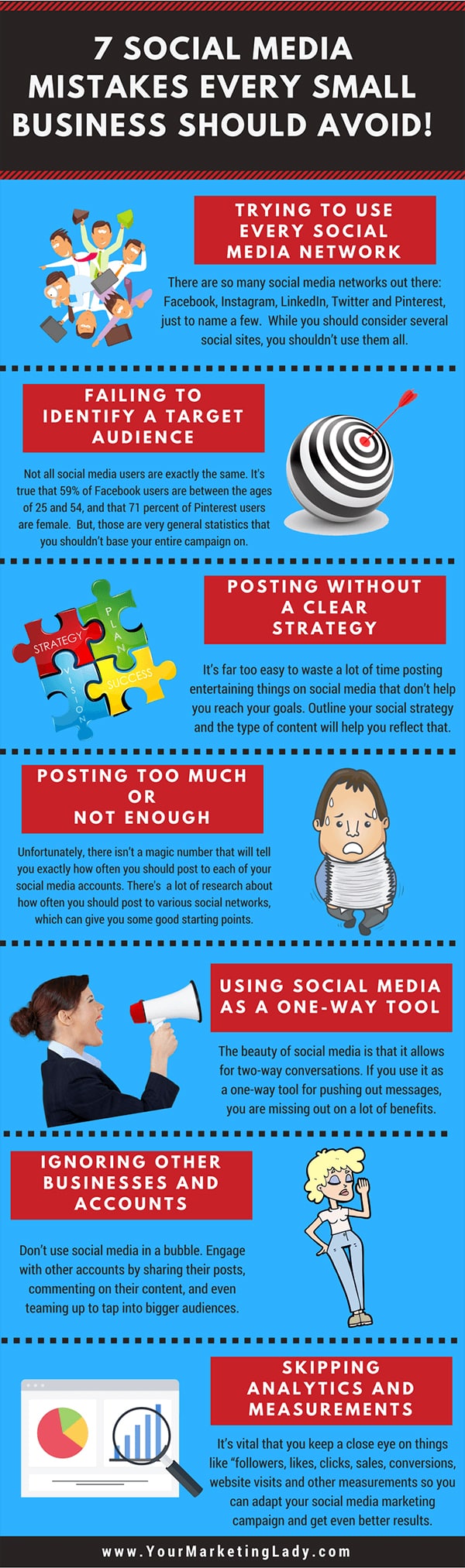
Your Marketing Lady share 7 social media mistakes to avoid in this infographic.
Here’s a quick summary:
- Trying to use every social media network
- Failing to identify a target audience
- Posting without a clear strategy
- Posting too much or not enough
- Using social media as a one-way tool
- Ignoring other businesses and accounts
- Skipping analytics and measurements
Check out the infographic for more detail.
In today’s digital landscape, social media marketing is more than just a trend; it’s a necessity for businesses of all sizes. However, despite its importance, many brands make rookie mistakes that can severely undermine their marketing efforts.
Whether you’re a small business owner just starting out or a seasoned marketer trying to refine your strategy, avoiding these common pitfalls can save you time, money, and frustration.
Let’s explore seven rookie mistakes that might be ruining your social media marketing strategy.
Trying to Use Every Social Media Network
Many small businesses fall into the trap of believing they need to be present on every social media platform to reach their audience effectively.
While it might seem beneficial to spread your brand across multiple channels, this approach can lead to mixed messages, ineffective campaigns, and wasted resources. Instead, a more focused strategy is essential for building a strong online presence.
Understanding the Landscape of Social Media
Social media platforms serve different purposes and attract different demographics. Here’s a brief overview of some popular networks:
- Facebook: Good for reaching a broad audience and sharing various content types. It’s effective for local businesses looking to engage with the community.
- Instagram: Highly visual and ideal for brands in fashion, food, and lifestyle sectors. It’s great for showcasing products through images and stories.
- Twitter: Excellent for real-time updates and customer engagement. It’s effective for brands that want to share news, insights, or connect with customers directly.
- LinkedIn: The go-to platform for B2B marketing and professional networking. Ideal for businesses looking to establish authority and connect with industry professionals.
- TikTok: A rapidly growing platform ideal for short, entertaining videos. It’s great for brands targeting younger demographics.
- Pinterest: A visual discovery platform primarily used for DIY, fashion, food, and home decor. Ideal for businesses that can showcase their products in a visually appealing way.
Tips for Choosing the Right Platforms
Conduct Audience Research:
- Identify where your target audience spends their time. Utilize tools like Google Analytics and social media insights to understand demographic information about your followers.
- Consider conducting surveys or polls to gather insights directly from your customers about their preferred platforms.
Focus on Your Industry:
- Look at your competitors and industry leaders to see which platforms they use successfully. Identify the platforms where they engage most with their audience.
- Research industry-specific trends that can guide your decision. For example, if you’re in the fashion industry, Instagram and Pinterest may be more effective than LinkedIn.
Evaluate Your Resources:
- Consider the time, budget, and human resources you have available. Managing multiple platforms requires consistent content creation, engagement, and monitoring.
- Prioritize quality over quantity; it’s better to have a strong presence on a few platforms than a weak one across many.
Set Clear Goals:
- Determine what you want to achieve on social media. Are you looking to drive traffic to your website, build brand awareness, or generate leads?
- Different platforms serve different purposes; aligning your goals with the appropriate networks will help you focus your efforts.
Test and Adapt:
- Start by selecting two or three platforms that align best with your target audience and goals. Create a pilot campaign to see how it performs.
- Monitor engagement levels, follower growth, and conversions. If you find one platform is performing significantly better than others, consider doubling down on that channel.
Creating a Tailored Strategy for Each Platform
Once you’ve identified the platforms to focus on, tailor your content strategy to suit each one:
- Content Type: Different platforms support different content types. For example, Instagram is highly visual, so invest in high-quality images and videos. Twitter requires concise messaging, while LinkedIn benefits from long-form content and articles.
- Posting Frequency: Determine how often you will post on each platform. For instance, posting multiple times a day may work for Twitter but might overwhelm followers on Instagram.
- Engagement Style: Tailor your engagement approach to the platform. Facebook allows for more in-depth interactions, while Instagram focuses on visual engagement. Use stories and polls to engage followers on Instagram, while leveraging groups for Facebook.
Building a Community Instead of Just a Following
Engagement is key to building a loyal community around your brand:
- Interact with Followers: Respond to comments and messages promptly. Encourage discussions and ask open-ended questions to stimulate interaction.
- Share User-Generated Content: Highlight content created by your customers or followers. This builds a sense of community and encourages more people to engage with your brand.
- Collaborate with Influencers: Partner with influencers or brands in your industry to broaden your reach. This allows you to tap into their audience while providing valuable content to your followers.
Regularly Review and Adjust Your Strategy
- Analytics and Insights: Use the analytics tools provided by each social media platform to track engagement, reach, and conversions. This data will help you understand which content resonates most with your audience.
- A/B Testing: Test different types of content and posting times to see what works best for your audience. For example, experiment with video content versus static images on Instagram.
- Stay Informed: Social media is constantly evolving, with new trends and features emerging regularly. Stay updated on the latest changes and adapt your strategy accordingly.
Conclusion
In summary, trying to use every social media network is a common rookie mistake that can dilute your efforts and hinder your marketing success.
By focusing on a few key platforms that align with your audience and business goals, you can create a more effective social media strategy. Conduct thorough research, tailor your content to each platform, and engage actively with your followers. Remember, quality engagement is more valuable than a broad but shallow presence.
By implementing these strategies, small businesses can build a strong social media presence that drives engagement, fosters community, and ultimately leads to growth and success.
Failing to Identify a Target Audience
Identifying a target audience is one of the foundational elements of a successful social media marketing strategy.
Unfortunately, many small businesses overlook this critical step, leading to ineffective campaigns that fail to resonate with potential customers. Without a clear understanding of who your audience is, you risk wasting time and resources on content that doesn’t engage or convert.
Here’s a deeper dive into the importance of identifying your target audience and practical tips for doing so effectively.
Why Identifying Your Target Audience Matters
- Enhanced Engagement: Knowing your audience allows you to create content that speaks directly to their needs, interests, and preferences. This increases the likelihood of engagement, including likes, shares, and comments.
- Resource Optimization: By targeting a specific audience, you can focus your marketing efforts and budget more effectively, reducing waste on channels or messages that don’t resonate.
- Improved Conversion Rates: Tailoring your messaging and content to your audience’s pain points and desires makes it more likely that they will take action, whether it’s visiting your website, signing up for a newsletter, or making a purchase.
- Brand Loyalty: When your audience feels understood and appreciated, they are more likely to become loyal customers who advocate for your brand.
Steps to Identify Your Target Audience
Analyze Your Existing Customers
- Customer Demographics: Start by examining your current customer base. What are their ages, genders, locations, and occupations? Use your sales data or CRM system to gather this information.
- Buying Behavior: Understand what motivates your customers to make purchases. What products or services are they interested in, and why do they choose your brand over competitors?
- Feedback and Reviews: Analyze customer feedback and reviews to gain insights into what customers appreciate about your products and where they feel improvements are needed.
Conduct Market Research
- Surveys and Polls: Create surveys or polls to gather information about your audience’s preferences, pain points, and expectations. Tools like SurveyMonkey or Google Forms can help you easily distribute these.
- Focus Groups: Consider organizing focus groups to have more in-depth conversations with a small group of your target customers. This allows you to ask follow-up questions and dive deeper into their motivations.
- Competitor Analysis: Study your competitors to understand their target audiences. Analyze their social media profiles, customer reviews, and marketing strategies to identify gaps or opportunities for your business.
Create Buyer Personas
- Develop Detailed Profiles: Use the data collected to create detailed buyer personas that represent different segments of your audience. Include information such as demographics, interests, pain points, and buying behaviors.
- Name and Visualize Your Personas: Give each persona a name and a face (use stock photos or illustrations) to humanize them. This helps your team better understand and relate to your audience.
- Update Regularly: Your buyer personas should evolve over time as you gather more data and insights. Regularly review and update them to ensure they remain relevant.
Utilize Social Media Analytics
- Platform Insights: Most social media platforms, such as Facebook, Instagram, and Twitter, provide analytics tools that offer valuable information about your followers, including demographics, interests, and behaviors.
- Engagement Metrics: Monitor which posts get the most engagement. Analyze the type of content that resonates with your audience to refine your strategy and tailor future posts to meet their interests.
Segment Your Audience
- Create Targeted Campaigns: Once you’ve identified your target audience, consider segmenting them into different groups based on shared characteristics or behaviors. This allows for more personalized marketing efforts.
- Tailor Messaging: Develop tailored messaging and content strategies for each audience segment to ensure your marketing resonates with each group effectively.
Monitor and Adjust
- Continuous Evaluation: Your audience may change over time due to market trends, shifts in consumer behavior, or changes in your product offerings. Regularly review your target audience and make adjustments as needed.
- A/B Testing: Use A/B testing for different campaigns to determine which messages, images, or content types resonate best with your audience. Analyze the results and adjust your approach accordingly.
Common Pitfalls to Avoid
- Making Assumptions: Don’t assume you know your audience based on your own preferences or experiences. Always base your understanding on data and research.
- Overgeneralizing: Avoid creating overly broad target audiences. The more specific you are, the better you can tailor your messaging.
- Neglecting Non-Current Customers: While focusing on existing customers is important, don’t forget to research potential customers who haven’t engaged with your brand yet. Consider how you can attract new audiences.
- Failing to Reassess: The market is dynamic, and consumer behaviors change. Failing to regularly reassess your audience can lead to outdated strategies that don’t connect with your current market.
Conclusion
Identifying your target audience is crucial for developing an effective social media marketing strategy.
By investing time in research and analysis, creating detailed buyer personas, and continuously monitoring your audience’s behavior, small businesses can craft messaging that resonates and drives engagement. Remember, a well-defined target audience leads to better content, improved engagement, and increased conversions.
Ultimately, knowing who you are speaking to enables you to build meaningful connections that foster loyalty and growth.
Posting Without a Clear Strategy
Posting on social media without a clear strategy is a common mistake that can undermine your marketing efforts and diminish your brand’s potential.
Without a well-defined strategy, businesses often find themselves posting inconsistently, sharing irrelevant content, and failing to engage their audience effectively. A strategic approach to social media not only helps to maintain focus and consistency but also maximizes the impact of your marketing efforts.
Here’s an in-depth look at why having a clear social media strategy is essential and how small businesses can develop one.
Why a Clear Strategy Matters
- Consistent Branding: A clear strategy ensures that all your posts align with your brand identity, voice, and values. Consistency in branding builds trust and recognition, making it easier for audiences to connect with your business.
- Enhanced Engagement: When you have a strategy, you can create content tailored to your audience’s preferences, leading to increased engagement. This can include likes, shares, comments, and other interactions that help build a community around your brand.
- Better Resource Management: A strategic approach allows you to allocate your resources—time, budget, and personnel—more effectively. You’ll spend less time scrambling to create content and more time on planning and execution.
- Measurable Results: With a strategy in place, you can set specific goals and KPIs (Key Performance Indicators) to measure your success. This data-driven approach helps you refine your strategy over time.
- Crisis Management: A clear strategy prepares you to handle potential crises or negative feedback effectively. Knowing how to respond can mitigate damage and maintain your brand’s reputation.
Steps to Develop a Clear Social Media Strategy
Define Your Goals
- Set SMART Goals: Establish goals that are Specific, Measurable, Achievable, Relevant, and Time-bound. For instance, instead of saying “I want more followers,” say “I want to increase my Instagram followers by 20% in the next three months.”
- Align Goals with Business Objectives: Ensure that your social media goals support your overall business objectives, whether it’s increasing brand awareness, driving website traffic, or generating leads.
Identify Your Target Audience
- Create Buyer Personas: As discussed earlier, develop detailed profiles of your ideal customers, including demographics, interests, and pain points. This helps tailor your content to meet their needs.
- Understand Audience Behavior: Use social media analytics tools to identify when your audience is most active and what types of content they engage with. This information informs your posting schedule and content strategy.
Choose the Right Platforms
- Focus on Relevant Channels: Identify which social media platforms are most effective for reaching your target audience. Concentrating on the platforms that matter to your audience maximizes your impact and engagement.
- Tailor Content to Each Platform: Each platform has its unique characteristics and audience expectations. Develop content that aligns with the specific platform, whether it’s visually-driven for Instagram or more text-focused for LinkedIn.
Create a Content Calendar
- Plan Your Content: A content calendar helps you organize and schedule your posts in advance, ensuring consistency and a balanced mix of content types (promotional, educational, entertaining, etc.).
- Incorporate Important Dates: Include holidays, industry events, and seasonal promotions in your calendar. This allows you to create timely and relevant content that resonates with your audience.
Develop Content Guidelines
- Establish Brand Voice and Tone: Define how you want to communicate with your audience. Your brand voice should be consistent across all platforms, whether it’s professional, casual, or humorous.
- Create Visual Style Guidelines: Set standards for your visual content, including color schemes, fonts, and image styles. This ensures a cohesive look that reinforces your brand identity.
Engage with Your Audience
- Two-Way Communication: Social media is not just about broadcasting your message; it’s about engaging with your audience. Respond to comments, answer questions, and participate in conversations to build relationships.
- Encourage User-Generated Content: Invite your followers to share their experiences with your brand. This not only fosters community but also provides you with authentic content to share.
Monitor and Analyze Performance
- Track Key Metrics: Use analytics tools to monitor engagement, reach, conversions, and other relevant metrics. Identify which types of content perform best and adjust your strategy accordingly.
- Conduct Regular Reviews: Schedule regular reviews of your social media strategy to assess what’s working and what isn’t. Use this data to make informed decisions and optimize your approach.
Stay Updated on Trends
- Monitor Industry Trends: Social media is constantly evolving, with new trends and features emerging regularly. Stay informed about changes in algorithms, new platforms, and emerging best practices to keep your strategy relevant.
- Be Adaptable: Be willing to adjust your strategy based on audience feedback, analytics, and industry trends. Flexibility allows you to capitalize on new opportunities and respond to challenges quickly.
Common Pitfalls to Avoid
- Inconsistency: Posting irregularly can confuse your audience and diminish your brand’s visibility. Stick to your content calendar and ensure a consistent posting schedule.
- Ignoring Analytics: Failing to monitor your performance means missing out on valuable insights. Use analytics to inform your strategy and make data-driven decisions.
- Overly Promotional Content: While promoting your products is important, excessively promotional posts can turn off your audience. Strive for a balance between promotional and value-driven content.
- Neglecting Visuals: In today’s social media landscape, visual content is crucial. Avoid posting text-heavy updates without accompanying visuals, as they are less likely to engage your audience.
- Lack of Clear CTAs: Every post should have a clear call to action (CTA) that guides your audience on what to do next, whether it’s visiting your website, signing up for a newsletter, or sharing your content.
Conclusion
Posting on social media without a clear strategy can lead to missed opportunities, inconsistent branding, and lackluster engagement.
By developing a well-defined strategy that includes setting goals, understanding your audience, creating a content calendar, and regularly monitoring performance, small businesses can maximize their social media efforts. A strategic approach not only enhances your brand’s online presence but also fosters community, drives engagement, and ultimately leads to business growth.
Remember, a clear strategy is the foundation of successful social media marketing—don’t underestimate its importance!
Posting Too Much or Not Enough
Finding the right balance in social media posting frequency is crucial for small businesses aiming to engage their audience effectively.
Posting too much can overwhelm and annoy followers, leading to disengagement and unfollows, while posting too infrequently can cause your brand to fade from your audience’s memory. Striking the right balance ensures your content remains relevant, engaging, and valuable to your audience.
Here’s an in-depth exploration of the issues surrounding posting frequency and practical tips for small businesses.
The Importance of Finding the Right Balance
- Audience Fatigue: Posting too frequently can lead to audience fatigue. When followers are inundated with content, they may become overwhelmed and start to ignore your posts or unfollow your account altogether.
- Reduced Engagement: Excessive posting can result in diminished engagement rates. If your audience feels bombarded with content, they might not take the time to engage with your posts, leading to lower likes, shares, and comments.
- Lost Opportunities: Conversely, not posting enough can cause your audience to forget about your brand. When followers don’t see regular updates, they may assume you’re inactive or no longer relevant, leading to lost opportunities for engagement and conversions.
- Brand Perception: Your posting frequency contributes to how your brand is perceived. Posting too often may come across as desperate for attention, while infrequent posting can make your brand appear unprofessional or disinterested.
Determining the Right Posting Frequency
Know Your Audience
- Understand Preferences: Different audiences have varying preferences for how often they want to hear from brands. Conduct surveys or polls to gather insights on how frequently your audience prefers to receive updates.
- Engagement Patterns: Analyze engagement metrics to determine when your audience is most active. This information can help you tailor your posting frequency to maximize reach and engagement.
Utilize Platform Guidelines
- Research Recommendations: Different social media platforms have different norms regarding posting frequency. For instance:
- Facebook: 1-2 posts per day is generally recommended to maintain visibility without overwhelming followers.
- Instagram: 3-7 times per week is often ideal, depending on the content and audience.
- Twitter: Due to its fast-paced nature, posting 3-5 times per day can be effective.
- LinkedIn: 1 post per day is recommended to maintain professional relevance.
- Test and Adjust: Use these guidelines as a starting point but be willing to adjust based on your specific audience and engagement rates.
Create a Content Calendar
- Plan Your Posts: Developing a content calendar allows you to visualize your posting schedule and ensure you’re posting consistently without overwhelming your audience.
- Variety in Content: Mix different types of content (promotional, educational, entertaining) to keep your audience engaged while managing frequency. This also helps prevent redundancy.
Monitor Engagement and Adjust Accordingly
- Track Engagement Metrics: Use social media analytics tools to monitor engagement rates and audience interactions. Identify patterns in your audience’s response to different posting frequencies.
- Experiment with Timing: Test different posting frequencies and times to find what works best for your audience. Analyze the results and refine your strategy based on the data collected.
Quality Over Quantity
- Prioritize Quality Content: Focus on creating high-quality, valuable content rather than simply posting for the sake of posting. Engaging, relevant content will resonate more with your audience, regardless of frequency.
- Craft Meaningful Messages: Ensure each post has a clear purpose and provides value to your audience. This can help maintain engagement even with a lower posting frequency.
Utilize Automation Tools
- Scheduling Posts: Use social media management tools like Buffer, Hootsuite, or Sprout Social to schedule posts in advance. This allows you to maintain a consistent posting schedule without feeling pressured to post in real-time.
- Monitor Performance: Automation tools can help track engagement and provide insights on the effectiveness of your posting frequency, allowing for adjustments as needed.
Engage with Your Audience Outside of Posting
- Respond to Comments: Actively engage with your audience by responding to comments and messages promptly. This shows that you value their input and helps maintain a connection between posts.
- Participate in Conversations: Engage with industry-related content or participate in discussions relevant to your niche. This keeps your brand visible without relying solely on your posts.
Common Pitfalls to Avoid
- Inconsistent Posting: Irregular posting can lead to audience disengagement. Strive for consistency, whether that means daily, weekly, or bi-weekly posts, based on your audience’s preferences.
- Neglecting Analytics: Failing to monitor engagement and performance metrics can result in missed opportunities for improvement. Regularly review analytics to understand what resonates with your audience.
- Ignoring Platform-Specific Norms: Each social media platform has its own culture and norms regarding posting frequency. Ignoring these can lead to decreased engagement and a negative perception of your brand.
- Over-Reliance on Automation: While scheduling tools are beneficial, relying solely on automation can make your social media presence feel robotic. Ensure you’re engaging with your audience in real time when necessary.
- Failure to Adapt: Audience preferences can change over time. Be willing to adapt your posting frequency based on feedback, engagement, and shifts in market trends.
Conclusion
Finding the right balance between posting too much and not enough is vital for small businesses aiming to maximize their social media presence.
By understanding your audience, leveraging platform guidelines, and utilizing a content calendar, you can establish a posting frequency that fosters engagement and brand loyalty. Remember, the goal is not just to fill your feed but to provide meaningful, high-quality content that resonates with your audience.
By prioritizing quality and consistency over quantity, your social media marketing efforts will yield better results, ultimately driving growth and success for your business.
Using Social Media as a One-Way Tool
Social media platforms offer unique opportunities for businesses to engage with their audience, foster community, and build brand loyalty.
However, many small businesses fall into the trap of using social media merely as a one-way communication tool, focusing solely on broadcasting their messages rather than engaging in meaningful interactions. This approach can limit the effectiveness of your social media marketing strategy and may alienate your audience.
Here’s a deeper exploration of the implications of using social media as a one-way tool, along with practical tips for small businesses to foster two-way communication.
Understanding the Importance of Engagement
- Building Relationships: Social media is fundamentally about connection. Engaging with your audience helps build trust and rapport, transforming one-time customers into loyal advocates for your brand.
- Gathering Feedback: Two-way communication allows you to gather valuable feedback from your audience. Understanding their preferences, pain points, and suggestions can help you improve your products and services.
- Boosting Engagement: Engaging your audience encourages interaction, leading to higher engagement rates. Posts that invite comments, shares, and likes can increase your visibility on social media platforms, expanding your reach.
- Creating a Community: By fostering dialogue and encouraging discussions, you can create a community around your brand. This sense of belonging can lead to increased customer loyalty and advocacy.
- Responding to Trends: Engaging with your audience allows you to stay on top of trends and conversations relevant to your industry. This insight can help you adjust your marketing strategies and remain competitive.
Tips for Encouraging Two-Way Communication
Ask Open-Ended Questions
- Engage Your Audience: Use open-ended questions in your posts to encourage followers to share their thoughts, experiences, and preferences. For example, instead of asking, “Do you like our new product?” consider asking, “What features would you like to see in our next product line?”
- Create Polls and Surveys: Utilize social media features such as polls and surveys to gather feedback. This interactive approach encourages participation and gives followers a voice in your decision-making process.
Respond to Comments and Messages
- Timely Interaction: Make it a priority to respond to comments and direct messages promptly. Acknowledging your audience’s input shows that you value their opinions and fosters a sense of community.
- Personalize Responses: Whenever possible, personalize your responses. Addressing followers by their names and referring to their specific comments can enhance the quality of the interaction.
Share User-Generated Content
- Encourage Contributions: Invite your audience to share their experiences with your products or services by using a specific hashtag or tagging your business. This not only fosters engagement but also provides you with authentic content to share.
- Feature Customers: Highlight user-generated content on your social media channels. Sharing posts from satisfied customers demonstrates appreciation and encourages others to engage.
Host Live Q&A Sessions or AMAs
- Real-Time Interaction: Hosting live question-and-answer sessions or “Ask Me Anything” (AMA) events can create a direct line of communication with your audience. This allows followers to ask questions and receive real-time responses.
- Showcase Expertise: Use these sessions to showcase your expertise in your industry. This not only positions you as a thought leader but also encourages followers to engage with your content.
Create Interactive Content
- Use Quizzes and Games: Interactive content such as quizzes or games can engage your audience and encourage participation. For example, a fun quiz related to your industry can spark conversation and encourage sharing.
- Leverage Stories and Live Videos: Use platform features like Instagram Stories or Facebook Live to share behind-the-scenes content, conduct polls, or engage in real-time conversations.
Share Industry News and Trends
- Start Conversations: Share relevant industry news, trends, or thought-provoking articles to stimulate discussions among your audience. Encourage followers to share their perspectives and insights on the topic.
- Position Your Brand: By sharing valuable content, you position your brand as a knowledgeable resource in your industry, encouraging your audience to engage with you.
Showcase Your Team and Culture
- Humanize Your Brand: Share behind-the-scenes content that showcases your team, company culture, and day-to-day operations. This humanizes your brand and encourages followers to connect on a personal level.
- Encourage Employee Engagement: Encourage your employees to engage on social media, sharing their experiences and insights. This can enhance the authenticity of your brand and encourage customer engagement.
Utilize Feedback to Make Improvements
- Act on Suggestions: Show your audience that their feedback is valued by making changes based on their suggestions. Share updates or improvements that result from their input to demonstrate that you’re listening.
- Celebrate Community Input: Publicly acknowledge and celebrate your audience’s contributions. Highlighting a customer’s suggestion that led to a positive change can strengthen community ties.
Monitor Conversations and Trends
- Listen Actively: Use social media listening tools to monitor conversations about your brand, industry, and competitors. Understanding what your audience is saying can help you engage more effectively.
- Join Relevant Discussions: Participate in conversations relevant to your industry or niche. This demonstrates your commitment to the community and positions your brand as an engaged participant rather than a passive observer.
Common Pitfalls to Avoid
- Ignoring Audience Feedback: Failing to acknowledge or act on feedback can lead to disengagement. Always show appreciation for audience input and consider implementing changes based on their suggestions.
- Over-Automating Responses: While automation tools can be helpful, relying too heavily on them can make your brand appear robotic. Ensure you maintain a human touch in your interactions.
- Being Unresponsive: Neglecting comments and messages can create a negative perception of your brand. Prioritize timely responses to demonstrate that you value your audience’s engagement.
- Only Posting Promotional Content: Focusing solely on self-promotion can alienate your audience. Aim for a balanced mix of promotional and engaging content that encourages interaction.
- Failing to Adapt: Social media is dynamic, and audience preferences can change over time. Be willing to adapt your engagement strategies based on feedback and evolving trends.
Conclusion
Using social media as a one-way communication tool limits the potential of your marketing strategy and can hinder relationship-building efforts with your audience.
By fostering two-way communication and engaging your followers in meaningful conversations, small businesses can build trust, encourage loyalty, and create a vibrant community around their brand.
Embrace social media’s interactive nature, prioritize engagement, and watch your brand flourish through authentic connections with your audience.
Ignoring Other Businesses and Accounts
Social media platforms offer unique opportunities for businesses to engage with their audience, foster community, and build brand loyalty.
However, many small businesses fall into the trap of using social media merely as a one-way communication tool, focusing solely on broadcasting their messages rather than engaging in meaningful interactions. This approach can limit the effectiveness of your social media marketing strategy and may alienate your audience.
Here’s a deeper exploration of the implications of using social media as a one-way tool, along with practical tips for small businesses to foster two-way communication.
Understanding the Importance of Engagement
- Building Relationships: Social media is fundamentally about connection. Engaging with your audience helps build trust and rapport, transforming one-time customers into loyal advocates for your brand.
- Gathering Feedback: Two-way communication allows you to gather valuable feedback from your audience. Understanding their preferences, pain points, and suggestions can help you improve your products and services.
- Boosting Engagement: Engaging your audience encourages interaction, leading to higher engagement rates. Posts that invite comments, shares, and likes can increase your visibility on social media platforms, expanding your reach.
- Creating a Community: By fostering dialogue and encouraging discussions, you can create a community around your brand. This sense of belonging can lead to increased customer loyalty and advocacy.
- Responding to Trends: Engaging with your audience allows you to stay on top of trends and conversations relevant to your industry. This insight can help you adjust your marketing strategies and remain competitive.
Tips for Encouraging Two-Way Communication
Ask Open-Ended Questions
- Engage Your Audience: Use open-ended questions in your posts to encourage followers to share their thoughts, experiences, and preferences. For example, instead of asking, “Do you like our new product?” consider asking, “What features would you like to see in our next product line?”
- Create Polls and Surveys: Utilize social media features such as polls and surveys to gather feedback. This interactive approach encourages participation and gives followers a voice in your decision-making process.
Respond to Comments and Messages
- Timely Interaction: Make it a priority to respond to comments and direct messages promptly. Acknowledging your audience’s input shows that you value their opinions and fosters a sense of community.
- Personalize Responses: Whenever possible, personalize your responses. Addressing followers by their names and referring to their specific comments can enhance the quality of the interaction.
Share User-Generated Content
- Encourage Contributions: Invite your audience to share their experiences with your products or services by using a specific hashtag or tagging your business. This not only fosters engagement but also provides you with authentic content to share.
- Feature Customers: Highlight user-generated content on your social media channels. Sharing posts from satisfied customers demonstrates appreciation and encourages others to engage.
Host Live Q&A Sessions or AMAs
- Real-Time Interaction: Hosting live question-and-answer sessions or “Ask Me Anything” (AMA) events can create a direct line of communication with your audience. This allows followers to ask questions and receive real-time responses.
- Showcase Expertise: Use these sessions to showcase your expertise in your industry. This not only positions you as a thought leader but also encourages followers to engage with your content.
Create Interactive Content
- Use Quizzes and Games: Interactive content such as quizzes or games can engage your audience and encourage participation. For example, a fun quiz related to your industry can spark conversation and encourage sharing.
- Leverage Stories and Live Videos: Use platform features like Instagram Stories or Facebook Live to share behind-the-scenes content, conduct polls, or engage in real-time conversations.
Share Industry News and Trends
- Start Conversations: Share relevant industry news, trends, or thought-provoking articles to stimulate discussions among your audience. Encourage followers to share their perspectives and insights on the topic.
- Position Your Brand: By sharing valuable content, you position your brand as a knowledgeable resource in your industry, encouraging your audience to engage with you.
Showcase Your Team and Culture
- Humanize Your Brand: Share behind-the-scenes content that showcases your team, company culture, and day-to-day operations. This humanizes your brand and encourages followers to connect on a personal level.
- Encourage Employee Engagement: Encourage your employees to engage on social media, sharing their experiences and insights. This can enhance the authenticity of your brand and encourage customer engagement.
Utilize Feedback to Make Improvements
- Act on Suggestions: Show your audience that their feedback is valued by making changes based on their suggestions. Share updates or improvements that result from their input to demonstrate that you’re listening.
- Celebrate Community Input: Publicly acknowledge and celebrate your audience’s contributions. Highlighting a customer’s suggestion that led to a positive change can strengthen community ties.
Monitor Conversations and Trends
- Listen Actively: Use social media listening tools to monitor conversations about your brand, industry, and competitors. Understanding what your audience is saying can help you engage more effectively.
- Join Relevant Discussions: Participate in conversations relevant to your industry or niche. This demonstrates your commitment to the community and positions your brand as an engaged participant rather than a passive observer.
Common Pitfalls to Avoid
- Ignoring Audience Feedback: Failing to acknowledge or act on feedback can lead to disengagement. Always show appreciation for audience input and consider implementing changes based on their suggestions.
- Over-Automating Responses: While automation tools can be helpful, relying too heavily on them can make your brand appear robotic. Ensure you maintain a human touch in your interactions.
- Being Unresponsive: Neglecting comments and messages can create a negative perception of your brand. Prioritize timely responses to demonstrate that you value your audience’s engagement.
- Only Posting Promotional Content: Focusing solely on self-promotion can alienate your audience. Aim for a balanced mix of promotional and engaging content that encourages interaction.
- Failing to Adapt: Social media is dynamic, and audience preferences can change over time. Be willing to adapt your engagement strategies based on feedback and evolving trends.
Conclusion
Using social media as a one-way communication tool limits the potential of your marketing strategy and can hinder relationship-building efforts with your audience.
By fostering two-way communication and engaging your followers in meaningful conversations, small businesses can build trust, encourage loyalty, and create a vibrant community around their brand.
Embrace social media’s interactive nature, prioritize engagement, and watch your brand flourish through authentic connections with your audience.
Skipping Analytics and Measurements
In the realm of social media marketing, the importance of analytics and measurements cannot be overstated.
Yet, many small businesses overlook this critical aspect of their strategy, focusing solely on content creation and engagement without assessing their performance. By skipping analytics, businesses miss valuable insights that can inform and optimize their marketing efforts.
Here’s a detailed exploration of why analytics matter, what metrics to track, and practical tips for effectively leveraging analytics in your social media marketing strategy.
The Importance of Analytics in Social Media Marketing
- Understanding Audience Behavior: Analytics provide insights into how your audience interacts with your content. By analyzing engagement patterns, you can tailor your approach to better meet their preferences and interests.
- Measuring Campaign Effectiveness: Tracking performance metrics helps you evaluate the success of your social media campaigns. Understanding which campaigns resonate with your audience allows you to allocate resources effectively and improve future efforts.
- Identifying Trends and Opportunities: Regularly monitoring analytics can reveal emerging trends and opportunities within your industry. Staying ahead of these trends allows you to adapt your content and marketing strategy accordingly.
- Justifying Marketing Spend: Analytics provide the data needed to justify your marketing budget. By demonstrating the return on investment (ROI) of your social media efforts, you can secure ongoing support and resources for your initiatives.
- Enhancing Content Strategy: Analyzing which types of content perform best enables you to refine your content strategy. By focusing on what resonates with your audience, you can create more effective and engaging posts.
Key Metrics to Track
Engagement Metrics
- Likes, Shares, and Comments: These basic metrics indicate how well your content resonates with your audience. High engagement rates suggest that your audience finds your content valuable and engaging.
- Engagement Rate: This metric is calculated by dividing the total engagement (likes, shares, comments) by your total followers or impressions. It provides a more accurate measure of how effectively your content engages your audience.
Reach and Impressions
- Reach: This metric shows the number of unique users who have seen your content. Understanding your reach helps gauge brand awareness and visibility.
- Impressions: This metric counts how many times your content has been displayed, regardless of whether it was clicked. High impressions with low engagement may indicate that your content needs optimization.
Follower Growth
- Tracking your follower growth over time helps assess the effectiveness of your content and engagement strategies. Sudden spikes or drops can indicate changes in audience interest or satisfaction.
Website Traffic
- Use tools like Google Analytics to track how much traffic is driven to your website from social media. This metric helps evaluate the effectiveness of your social media efforts in generating leads or sales.
Conversion Rate
- If your goal is to drive specific actions (e.g., sign-ups, purchases), track your conversion rates. This metric tells you how many users took the desired action after interacting with your content.
Click-Through Rate (CTR)
- This metric measures the percentage of users who clicked on a link in your post compared to the number of users who viewed it. A high CTR indicates effective calls-to-action and content relevance.
Customer Feedback and Sentiment
- Monitor comments, reviews, and mentions to gauge customer sentiment towards your brand. Tools like sentiment analysis can help you understand how your audience feels about your products or services.
Tips for Effectively Leveraging Analytics
- Set Clear Goals and Objectives: Before diving into analytics, define your social media marketing goals. Are you aiming to increase brand awareness, drive website traffic, or generate leads? Establishing clear objectives helps you identify relevant metrics to track.
- Choose the Right Tools: Utilize social media analytics tools like Facebook Insights, Twitter Analytics, Instagram Insights, or third-party tools like Hootsuite, Sprout Social, or Google Analytics. These tools provide valuable data to help you measure performance effectively.
- Create Regular Reports: Establish a routine for analyzing and reporting your social media metrics. Whether weekly, monthly, or quarterly, regular reports allow you to track progress, identify trends, and make informed decisions based on data.
- Segment Your Audience: Use analytics tools to segment your audience based on demographics, interests, or behavior. Understanding different audience segments allows you to tailor your content and engagement strategies effectively.
- A/B Testing: Experiment with different types of content, posting times, or formats to see what performs best. A/B testing allows you to compare two versions of a post and determine which one resonates more with your audience.
- Monitor Competitors: Keep an eye on your competitors’ social media performance. Analyzing their engagement metrics, content strategies, and audience interactions can provide valuable insights and inspiration for your own efforts.
- Adapt Your Strategy: Use the insights gained from analytics to refine your social media strategy. If certain types of content perform better, adjust your focus accordingly. Don’t be afraid to pivot your approach based on data-driven insights.
- Encourage Audience Feedback: Actively seek feedback from your audience about your content and engagement strategies. Use surveys or polls to gather insights and incorporate their suggestions into your strategy.
- Train Your Team: Ensure that your team understands the importance of analytics and how to interpret data. Providing training on using analytics tools and interpreting metrics empowers your team to make data-driven decisions.
- Stay Updated on Trends: Social media is constantly evolving. Stay informed about the latest trends and updates in analytics tools, features, and best practices to ensure your strategies remain effective.
Common Pitfalls to Avoid
- Ignoring Data Trends: Avoid the temptation to focus solely on immediate results. Pay attention to long-term trends and patterns, as these provide a more comprehensive view of your performance.
- Overcomplicating Metrics: While it’s important to track various metrics, avoid overwhelming yourself with data. Focus on a few key metrics that align with your goals to keep your analysis manageable.
- Failing to Act on Insights: Collecting data without making changes based on insights is counterproductive. Ensure that you take action based on your findings to continually optimize your social media strategy.
- Neglecting Sentiment Analysis: Metrics like engagement rates and conversions are important, but don’t overlook customer sentiment. Understanding how your audience feels about your brand can inform your content strategy and engagement approach.
- Not Comparing Against Benchmarks: Establish benchmarks based on industry standards or your historical performance. Comparing your metrics against these benchmarks helps you understand where you stand and identify areas for improvement.
Conclusion
Skipping analytics and measurements in your social media marketing strategy can severely limit your potential for growth and engagement.
By prioritizing analytics, small businesses can gain valuable insights into audience behavior, measure campaign effectiveness, and refine their strategies for optimal results. Embrace the power of data, and use it to inform your social media efforts, ultimately leading to a more successful and impactful marketing strategy.
Remember, the key to success lies not just in collecting data but in using it to drive meaningful action and engagement with your audience.
Conclusion
Avoiding these seven rookie mistakes can significantly enhance your social media marketing strategy. By focusing your efforts on the right platforms, understanding your audience, and developing a clear strategy, you can create a more effective and engaging social media presence.
Remember, social media marketing is an ongoing process that requires regular adjustments and improvements. Stay informed, engage with your audience, and continuously measure your success to ensure your strategy remains effective and relevant.
With the right approach, you can turn your social media channels into powerful tools for building brand awareness, driving traffic, and generating leads.

Author:
Mark Ford