
Are you in the process of starting a new business? Are you about to embark on a new marketing campaign for your startup?
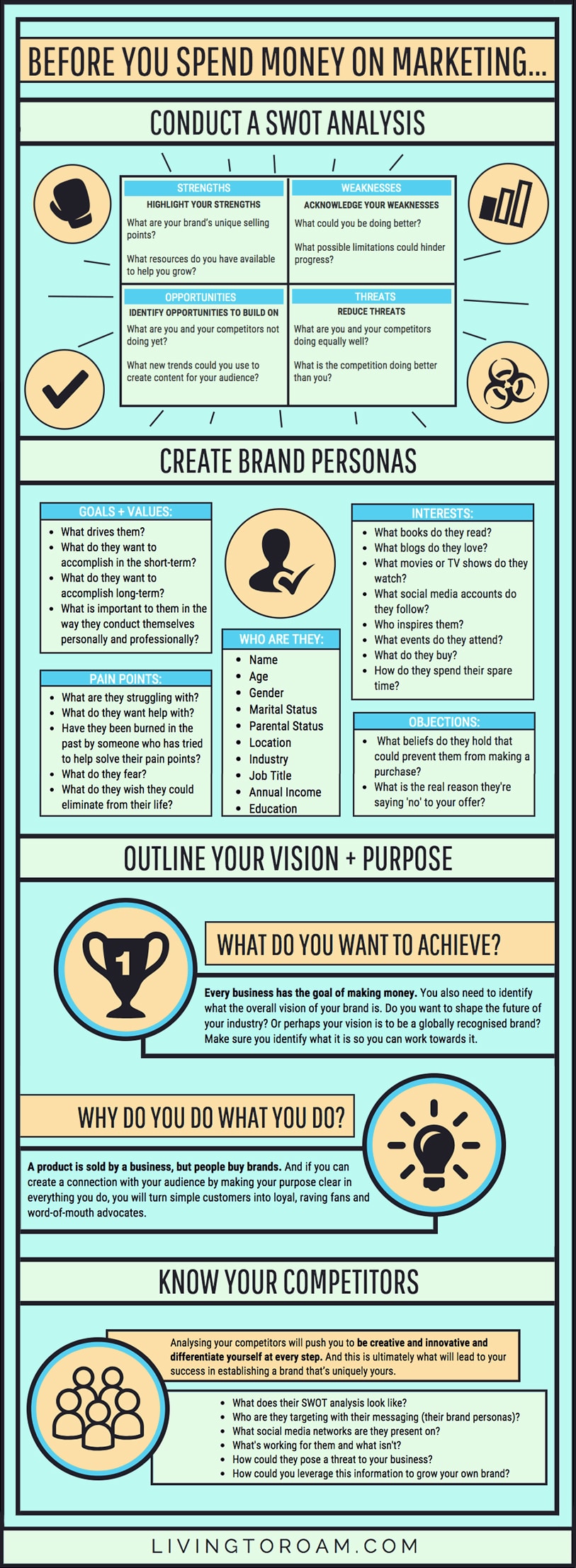
Living to Roam share their pre-marketing checklist in this infographic.
Here’s a quick summary:
- Conduct a SWOT analysis
- Create brand personas
- Outline your vision and purpose
- Know your competitors
Check out the infographic for more detail.
Before you dive into the exciting world of marketing, it’s crucial to lay a solid foundation. Spending money on marketing without a clear strategy can lead to wasted resources and missed opportunities.
To ensure your marketing efforts yield the best results, here are four essential tasks you should complete before spending a single penny.
Conduct a SWOT Analysis
A SWOT analysis (Strengths, Weaknesses, Opportunities, and Threats) is an essential tool for any small business looking to develop an effective marketing strategy. It helps you assess your current position in the market and identify areas for improvement.
Here’s an in-depth look at how to conduct a thorough SWOT analysis and leverage it to enhance your marketing efforts.
Gather Your Team
Involve key stakeholders from various departments—marketing, sales, finance, and operations—to get a comprehensive view of your business. Diverse perspectives will enrich the discussion and lead to a more rounded analysis.
Consider conducting a brainstorming session where team members can freely share their insights and ideas.
Create a SWOT Matrix
Draw a four-quadrant matrix on a whiteboard or digital document. Label each quadrant as follows:
- Top left: Strengths
- Top right: Weaknesses
- Bottom left: Opportunities
- Bottom right: Threats
This visual format allows you to see the relationships between different aspects of your business more clearly.
Identify Strengths
Strengths are internal factors that give your business a competitive advantage. Consider the following areas:
- Unique Selling Proposition (USP): What makes your product or service unique?
- Resources: What do you have that others don’t? This can include financial resources, skilled employees, patents, or technology.
- Customer Relationships: Do you have a loyal customer base or strong community ties?
- Brand Reputation: How do customers perceive your brand in comparison to competitors?
Tips for Identifying Strengths:
- Conduct surveys or interviews with employees and customers to gain insights.
- Analyze performance metrics such as customer satisfaction scores, sales figures, and online reviews.
Recognize Weaknesses
Weaknesses are internal factors that could hinder your business’s success. Consider these aspects:
- Resource Limitations: Are you short on funds, staff, or technology?
- Brand Awareness: Is your brand known in the market, or are you struggling to gain visibility?
- Operational Inefficiencies: Are there processes that slow down your business or affect product quality?
Tips for Identifying Weaknesses:
- Encourage open and honest feedback from employees about internal challenges.
- Use customer feedback and reviews to identify common complaints or issues.
Spot Opportunities
Opportunities are external factors that could benefit your business. Analyze the market and industry trends to identify areas for growth:
- Emerging Markets: Are there new customer segments or geographic areas you can target?
- Technological Advances: Can new technologies enhance your operations or customer experience?
- Regulatory Changes: Are there upcoming regulations that you can leverage for competitive advantage?
Tips for Identifying Opportunities:
- Research industry reports, market analyses, and consumer behavior trends.
- Network with other businesses or attend industry conferences to gain insights into emerging opportunities.
Evaluate Threats
Threats are external factors that could pose challenges to your business. These might include:
- Competitors: Are new competitors entering the market or existing ones expanding aggressively?
- Economic Changes: Are there economic downturns or changes that could impact consumer spending?
- Technological Disruption: Could new technologies undermine your current business model?
Tips for Identifying Threats:
- Monitor competitors’ activities and industry news to stay informed about potential threats.
- Utilize SWOT analysis tools or business intelligence software to keep track of market changes.
Analyzing and Utilizing Your SWOT Analysis
Once you’ve completed your SWOT matrix, the next step is to analyze the findings and develop strategies based on your insights.
Identify Connections
Look for relationships between different elements of your SWOT analysis. For example, can you leverage your strengths to take advantage of opportunities?
Can you mitigate threats by addressing your weaknesses? Mapping out these connections can help you develop actionable strategies.
Develop Strategic Initiatives
Based on your analysis, create specific initiatives that capitalize on your strengths and opportunities while addressing weaknesses and threats. For example:
- Leverage Strengths: If your brand is known for excellent customer service, consider launching a referral program that emphasizes this aspect.
- Address Weaknesses: If your product quality is an issue, invest in quality control measures before launching new marketing campaigns.
- Explore Opportunities: If you identify a growing market trend, develop targeted marketing campaigns to attract that audience.
- Mitigate Threats: If a competitor is gaining traction, consider diversifying your product offerings or improving your marketing efforts.
Set Measurable Goals
Use the insights from your SWOT analysis to establish SMART (Specific, Measurable, Achievable, Relevant, Time-bound) goals for your marketing strategy.
For example, if your analysis reveals a strength in your online presence but a weakness in customer loyalty, you might set a goal to increase repeat purchases by 20% over the next six months through targeted email marketing campaigns.
Monitor Progress and Adjust
Regularly review and update your SWOT analysis to reflect changes in your business environment. This ongoing assessment will help you stay agile and adapt your marketing strategies as needed.
Set regular check-ins (e.g., quarterly) to evaluate your progress toward your goals and adjust your strategies based on new insights or changing circumstances.
Conclusion
Conducting a thorough SWOT analysis is a critical step for small businesses looking to optimize their marketing efforts. By understanding your internal strengths and weaknesses and external opportunities and threats, you can develop a strategic marketing plan that maximizes your resources and aligns with your business goals.
Taking the time to analyze your position in the market ensures that when you do invest in marketing, you’re doing so with a clear understanding of your competitive landscape and a roadmap for success.
Create Brand Personas
Creating brand personas is a crucial step for small businesses looking to tailor their marketing efforts effectively.
A brand persona represents your ideal customer, encompassing their demographics, preferences, behaviors, and pain points. By understanding who your customers are, you can create targeted marketing strategies that resonate with them.
Here’s an in-depth guide to creating effective brand personas and leveraging them in your marketing strategy.
Research Your Audience
Before developing your brand personas, conduct thorough research to gather data about your target audience. Use a combination of quantitative and qualitative methods:
- Surveys and Questionnaires: Create surveys to collect information directly from your customers about their demographics, preferences, and challenges.
- Interviews: Conduct one-on-one interviews with existing customers to gain deeper insights into their motivations and experiences with your brand.
- Analytics Tools: Use website analytics tools (like Google Analytics) to track user behavior, demographics, and interests. Social media insights can also provide valuable information about your audience.
Segment Your Audience
Based on your research, segment your audience into different groups based on shared characteristics. Common segmentation criteria include:
- Demographics: Age, gender, income level, education, occupation, etc.
- Geographics: Location, climate, and urban vs. rural settings.
- Psychographics: Personality traits, values, interests, and lifestyles.
- Behavioral Factors: Purchase behavior, brand loyalty, and product usage patterns.
Tip: Aim for a balance between having enough segments to accurately represent your audience and not creating so many that your marketing efforts become diluted.
Develop Detailed Personas
For each segment, create detailed brand personas. Each persona should include the following elements:
- Name and Photo: Give each persona a name and select a representative photo to humanize them. This helps your team visualize and empathize with the persona.
- Demographic Profile: Include age, gender, income, education level, and job title. This data helps contextualize the persona.
- Background: Briefly describe the persona’s background, including family situation, education, and work experience.
- Goals and Objectives: Identify what the persona hopes to achieve (both personally and professionally) and what drives their decisions.
- Challenges and Pain Points: Highlight the specific challenges or pain points the persona faces that your product or service can address.
- Values and Motivations: Understand what values guide the persona’s decisions, including ethical considerations, lifestyle choices, and brand loyalty.
- Preferred Communication Channels: Identify where the persona spends their time online, such as social media platforms, blogs, or forums. This information is crucial for choosing effective marketing channels.
Example Persona:
- Name: Sarah, the Sustainable Shopper
- Demographics: 32 years old, female, $70,000 income, college-educated, works as a marketing manager.
- Background: Lives in a suburban area with her partner, passionate about sustainability and eco-friendly products.
- Goals: Wants to live a more sustainable lifestyle and support brands that align with her values.
- Challenges: Struggles to find affordable eco-friendly products that are also high quality.
- Values: Values transparency, ethical sourcing, and community involvement.
- Preferred Channels: Active on Instagram and Pinterest, enjoys reading blogs about sustainable living.
Validate Your Personas
After creating your brand personas, validate them by testing your assumptions against real customer data. Use feedback from current customers or conduct A/B testing on marketing campaigns to see if the personas accurately predict behavior and preferences.
If certain aspects don’t resonate, be prepared to adjust your personas accordingly.
Integrate Personas into Your Marketing Strategy
Once validated, integrate your brand personas into all aspects of your marketing strategy:
- Content Creation: Tailor your content to speak directly to your personas. For example, if your persona values sustainability, create blog posts and social media content that highlight your eco-friendly practices.
- Product Development: Use insights from your personas to inform product development. If a persona indicates a desire for more eco-friendly options, consider launching sustainable product lines.
- Advertising: Create targeted ad campaigns that speak to specific personas. Use demographics and interests to refine your audience targeting on platforms like Facebook and Google Ads.
- Customer Experience: Tailor your customer experience to align with your personas. If your persona values quick service and efficiency, ensure your customer service team is trained to deliver on those expectations.
Update and Refine Personas Regularly
Your brand personas should be living documents that evolve as your business grows and market conditions change. Schedule regular reviews (at least annually) to ensure your personas remain accurate.
Incorporate new data and insights from customer interactions, feedback, and market trends. As your audience shifts, so too should your marketing strategies.
Benefits of Creating Brand Personas
- Improved Targeting: By understanding your ideal customers, you can create marketing messages that resonate more deeply with your audience. This targeted approach increases engagement, conversion rates, and overall marketing effectiveness.
- Enhanced Customer Experience: Brand personas help you design a better customer experience. By aligning your offerings and services with what your customers value, you build stronger relationships and enhance customer loyalty.
- Streamlined Marketing Efforts: When your team is aligned around clear personas, it streamlines marketing efforts and ensures consistency across all channels. This cohesion fosters a stronger brand identity and clearer messaging.
- Informed Decision-Making: Personas provide a solid foundation for making strategic decisions. Whether launching a new product, developing content, or choosing marketing channels, personas guide your choices, making them more data-driven and less guesswork.
Conclusion
Creating brand personas is an essential task for small businesses looking to optimize their marketing efforts. By understanding your ideal customers’ demographics, motivations, and pain points, you can create targeted marketing strategies that resonate and drive engagement.
As you develop and refine your brand personas, you’ll find that your marketing efforts become more focused, effective, and aligned with your customers’ needs. Taking the time to create and utilize brand personas will ultimately lead to increased brand loyalty, customer satisfaction, and business growth.
Outline Your Vision and Purpose
Establishing a clear vision and purpose is vital for small businesses seeking to differentiate themselves in a competitive market.
Your vision defines your long-term aspirations, while your purpose articulates the core reasons for your business’s existence. Together, they serve as a foundation for decision-making, strategic planning, and effective marketing.
Here’s an in-depth guide on how to outline your vision and purpose, along with actionable tips for small businesses.
Understand the Importance of Vision and Purpose
Before you start crafting your vision and purpose statements, it’s essential to understand why they matter:
- Guides Decision-Making: A clear vision and purpose help guide your strategic choices and keep your team aligned with your goals.
- Inspires Employees: When employees understand the purpose behind their work, they are more motivated and engaged.
- Attracts Customers: Consumers are increasingly seeking brands that resonate with their values. A strong vision and purpose can attract loyal customers who share your beliefs.
Reflect on Your Values
Start by reflecting on your personal and organizational values. Consider what principles are most important to you and your business. Ask yourself:
- What do you stand for?
- What beliefs drive your decision-making?
- What ethical considerations are non-negotiable for your business?
Tip: Involve your team in this reflection process. Hold discussions or workshops to gather input from employees and ensure their values align with the company’s direction.
Define Your Purpose
Your purpose statement should articulate why your business exists beyond making a profit. It should capture the impact you aim to have on your customers, community, and industry. To create a compelling purpose statement, consider the following:
- Identify Your Audience: Who are you serving, and how do you help them?
- Highlight the Impact: What positive change does your business create in the lives of your customers or the community?
- Be Specific and Concise: Your purpose statement should be clear, memorable, and easy to communicate.
Example Purpose Statements:
- “To empower individuals to achieve their fitness goals through accessible and personalized coaching.”
- “To provide sustainable products that enhance everyday life while protecting the planet.”
Craft Your Vision Statement
A vision statement outlines where you see your business in the future. It should inspire and motivate both employees and customers. When crafting your vision statement, consider the following elements:
- Future Focus: Envision your business five, ten, or even twenty years down the line. What impact do you want to have?
- Ambition: Your vision should be aspirational, pushing your organization to strive for greater heights.
- Alignment with Purpose: Ensure that your vision aligns with your purpose, creating a cohesive narrative about your business’s goals.
Example Vision Statements:
- “To be the leading provider of eco-friendly household products, making sustainability accessible for everyone.”
- “To transform the fitness industry by creating the largest online community of empowered athletes.”
Engage Your Team
Once you have drafted your vision and purpose statements, engage your team in the review process. Encourage open discussions about these statements and solicit feedback.
This collaboration ensures buy-in from employees and fosters a sense of ownership over the company’s direction.
Communicate Your Vision and Purpose
After finalizing your vision and purpose, it’s crucial to communicate them effectively throughout your organization and to your customers. Consider the following methods:
- Company Website: Feature your vision and purpose prominently on your website, especially on the “About Us” page.
- Internal Communications: Share your vision and purpose in team meetings, newsletters, and onboarding materials for new employees.
- Marketing Materials: Incorporate your vision and purpose into marketing campaigns, social media content, and customer communications to reinforce your brand message.
Align Business Strategies with Vision and Purpose
Ensure that all aspects of your business align with your vision and purpose. This alignment should be reflected in:
- Product Development: Innovate and develop products that support your purpose and move you closer to your vision.
- Customer Service: Train your team to deliver exceptional customer service that embodies your brand values and supports your mission.
- Corporate Social Responsibility: Implement initiatives that demonstrate your commitment to your purpose, such as community service or sustainability efforts.
Review and Revise Regularly
As your business evolves, your vision and purpose may need to be adjusted. Regularly review these statements to ensure they remain relevant and aligned with your goals.
Schedule annual reviews or strategic planning sessions to assess whether your vision and purpose continue to resonate with your team and customers.
Benefits of Outlining Your Vision and Purpose
- Clarity and Focus: A well-defined vision and purpose provide clarity and focus for your business. They help your team prioritize tasks and align their efforts toward common goals.
- Increased Employee Engagement: Employees who understand the vision and purpose of their organization are more engaged and motivated. They feel a sense of belonging and commitment to the company’s mission.
- Stronger Brand Identity: A compelling vision and purpose can strengthen your brand identity, making it easier for customers to connect with your business on an emotional level. This connection fosters brand loyalty and advocacy.
- Better Decision-Making: With a clear vision and purpose, decision-making becomes more straightforward. Your team can evaluate options against these guiding statements to ensure alignment with the company’s goals.
Conclusion
Outlining your vision and purpose is a fundamental step for small businesses aiming for long-term success. By clearly articulating why your business exists and where it’s headed, you can guide your team, inspire your customers, and create a brand that resonates in a competitive marketplace.
Investing the time to define and communicate your vision and purpose will lead to greater employee engagement, stronger brand loyalty, and a more cohesive business strategy, ultimately setting the stage for sustainable growth and success.
Know Your Competitors
Understanding your competitors is crucial for small businesses aiming to carve out a niche in a crowded marketplace. By analyzing your competition, you can identify market trends, uncover potential opportunities, and refine your marketing strategies to better meet customer needs.
Here’s a comprehensive guide on how to effectively assess your competitors, along with actionable tips for small businesses.
Identify Your Competitors
Start by identifying who your competitors are. This involves looking at both direct and indirect competition:
- Direct Competitors: These are businesses that offer the same or similar products or services to the same target audience. For example, if you run a local coffee shop, other coffee shops in your area are your direct competitors.
- Indirect Competitors: These are businesses that provide alternative solutions to the same problem your product or service addresses. For instance, if you sell coffee, tea shops or cafes that offer different beverages would be considered indirect competitors.
Tip: Use online tools like Google Maps, Yelp, or industry-specific directories to help identify competitors in your local area or niche.
Conduct a Competitor Analysis
Once you’ve identified your competitors, conduct a thorough competitor analysis. This involves examining various aspects of their business to understand their strengths, weaknesses, and market position. Focus on the following areas:
- Product/Service Offerings: Assess the range of products or services your competitors offer. What makes their offerings unique? Are there gaps in the market that you could fill?
- Pricing Strategy: Analyze how your competitors price their products or services. Are they positioned as budget-friendly, mid-range, or premium? Understanding their pricing strategy can help you determine your own pricing model.
- Marketing Strategies: Review your competitors’ marketing efforts, including their advertising channels, messaging, and promotional tactics. What seems to resonate with their audience? Identify what works well and what doesn’t.
- Customer Experience: Investigate the customer experience offered by your competitors. This includes their website usability, customer service interactions, and overall brand presence. Analyzing customer reviews can provide valuable insights into their strengths and weaknesses.
Utilize Competitive Analysis Tools
Leverage various tools and resources to gather data about your competitors. Some useful tools include:
- SEMrush or Ahrefs: These tools help you analyze your competitors’ online presence, including their website traffic, keyword rankings, and backlink profiles.
- Social Media Monitoring Tools (like Hootsuite or Sprout Social): Track your competitors’ social media performance, engagement levels, and content strategies.
- BuzzSumo: Use this tool to identify the most shared content within your competitors’ niches, helping you understand what type of content resonates with your shared audience.
Analyze Customer Reviews
Customer reviews can provide a wealth of information about your competitors. Use platforms like Google Reviews, Yelp, and social media to read what customers are saying about their experiences. Pay attention to:
- Common Complaints: Identify recurring issues customers face with your competitors. This could present an opportunity for you to differentiate your business by addressing these pain points.
- Positive Feedback: Analyze what customers appreciate most about your competitors. This insight can help you understand market expectations and set your offerings apart.
Identify Competitive Advantages and Gaps
After conducting your analysis, summarize your findings to identify your competitors’ competitive advantages and gaps:
- Strengths: What do your competitors do well? Consider aspects like product quality, brand reputation, customer service, and marketing effectiveness.
- Weaknesses: Identify areas where competitors fall short. Are there gaps in their offerings? Do they struggle with customer service or online presence?
- Opportunities: Look for opportunities to differentiate your business based on the weaknesses you’ve identified. This could include offering better customer service, a unique product feature, or more competitive pricing.
Monitor Competitor Activity Regularly
Competitor analysis should be an ongoing process. Regularly monitor your competitors’ activities to stay informed about their changes in strategy, product launches, and marketing campaigns.
Set up Google Alerts for their business names and relevant industry keywords to receive updates directly in your inbox.
Tip: Create a competitor monitoring calendar to check in on their websites and social media profiles periodically. This keeps you updated on their latest efforts and allows you to adapt your strategies accordingly.
Leverage Your Competitor Insights
Use the insights gained from your competitor analysis to inform your business strategy. Consider the following actions:
- Refine Your Value Proposition: Based on your understanding of competitors’ strengths and weaknesses, refine your value proposition to highlight what makes your business unique and why customers should choose you.
- Adjust Your Marketing Strategy: Tailor your marketing messages and channels based on what resonates with your target audience. If a competitor excels on social media, consider investing in that channel to reach your audience effectively.
- Innovate Your Offerings: If you’ve identified gaps in your competitors’ offerings, consider developing new products or services to fill those gaps and meet customer needs.
Benefits of Knowing Your Competitors
- Enhanced Market Positioning: By understanding your competitors, you can better position your business in the market. Knowing what differentiates you allows you to communicate your unique selling propositions (USPs) effectively.
- Improved Strategic Planning: Competitor analysis provides valuable insights that inform your business strategies, from product development to marketing tactics. This data-driven approach increases the likelihood of success.
- Increased Agility: Staying informed about competitors enables you to respond quickly to market changes. If a competitor launches a new product or marketing campaign, you can adjust your strategy to stay competitive.
- Stronger Customer Relationships: Understanding what customers appreciate and dislike about your competitors helps you tailor your offerings to better meet their needs, ultimately leading to stronger customer relationships.
Conclusion
Knowing your competitors is essential for small businesses looking to thrive in today’s competitive landscape. By conducting a thorough competitor analysis and leveraging the insights gained, you can refine your business strategies, enhance your market positioning, and better serve your customers.
Embrace competitor analysis as an ongoing practice, and you’ll be better equipped to navigate the challenges of the market while capitalizing on opportunities for growth and differentiation.
Conclusion
Before spending any money on marketing, it’s vital to conduct a thorough SWOT analysis, create brand personas, outline your vision and purpose, and understand your competitors. These foundational tasks will provide clarity and direction, enabling you to develop effective marketing strategies that resonate with your target audience.
By taking the time to complete these essential tasks, you’ll position your business for success in the competitive marketplace. With a solid foundation in place, you can confidently invest in marketing efforts that drive engagement, conversions, and ultimately, growth for your business.
Remember, the key to successful marketing isn’t just about spending money; it’s about spending it wisely.

Author:
Mark Ford

10 New Year’s Marketing Resolutions to Grow a Small Business Sustainably
Are you struggling to make your marketing efforts deliver steady growth instead of short bursts of activity? Wondering how to build a marketing approach that supports your small business over the long term without constant trial and error? […]
10 Marketing Trends for 2026: What Smart Businesses Will Focus On Next
Are you looking to understand how marketing is shifting in 2026 and what today’s smartest brands are prioritising? Want to know which strategic trends will shape how businesses attract, convert, and retain customers over the next year? […]
How to Build a Marketing Technology Stack That Actually Works Together
Are you trying to figure out how to connect your marketing tools so they actually support each other instead of working in isolation? Want to understand the key steps to building a marketing technology stack that runs smoothly across your entire customer journey? […]