

Are you looking for ways to increase brand loyalty? Want to know how to use simple psychology to turn customers into life-long fans?
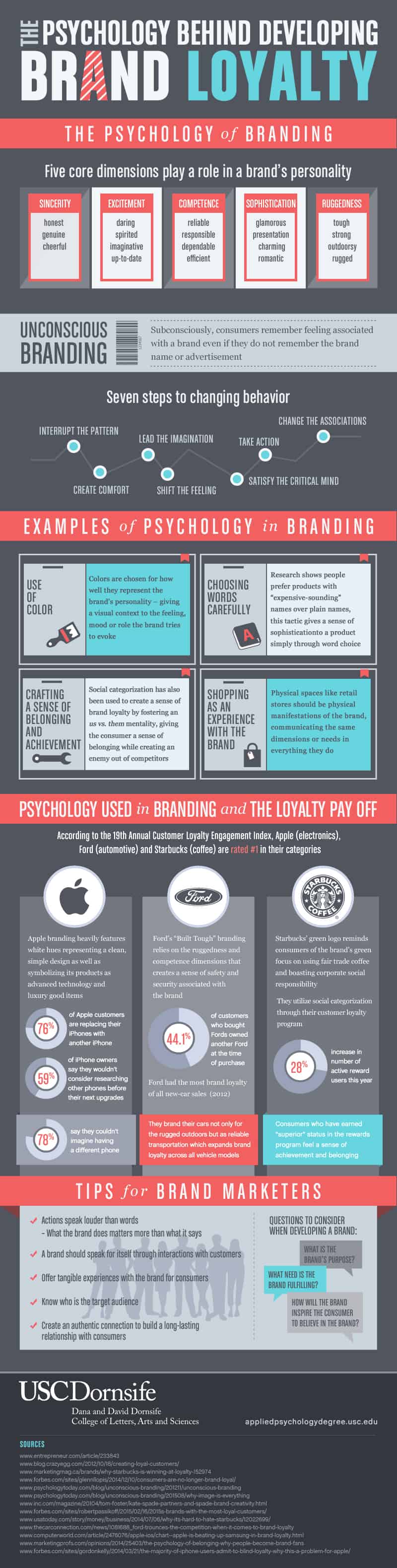
USC Dornsife share their guide to branding and psychology in this infographic.
Here’s what they cover:
- The core dimensions of brand personality
- Steps to changing consumer behaviour
- Use of colour
- Choosing words carefully
- Creating a sense of belonging
- Shopping as an experience
- Examples of branding psychology
Check out the infographic for more detail.
Brand loyalty is one of the most coveted goals in marketing. A loyal customer base not only drives consistent sales but also creates a community of advocates who promote the brand through word-of-mouth. Understanding the psychology behind brand loyalty can significantly enhance marketing strategies and build long-lasting relationships with consumers. This post delves into the core dimensions of brand personality, steps to changing consumer behavior, the use of color, careful word choice, creating a sense of belonging, and shopping as an experience, while also providing examples of branding psychology in action.
The Core Dimensions of Brand Personality
Understanding brand personality is crucial for small businesses seeking to establish a strong market presence and build lasting customer relationships. Brand personality refers to the human traits attributed to a brand, making it relatable and memorable to consumers. By effectively leveraging the five core dimensions of brand personality identified by Jennifer Aaker—sincerity, excitement, competence, sophistication, and ruggedness—small businesses can create a unique identity that resonates with their target audience. Here’s a more in-depth exploration of each dimension, along with actionable tips for small businesses.
- Sincerity
Characteristics:
- Traits: Genuine, friendly, honest, wholesome.
- Consumer Perception: Brands perceived as sincere are trusted, creating a sense of safety and reliability.
Tips for Small Businesses:
- Authentic Storytelling: Share your brand’s origin story and values transparently. Authenticity resonates well with consumers who appreciate brands that are open about their mission.
- Community Engagement: Get involved in local community events or causes that align with your brand values. This fosters goodwill and shows that you care about more than just profit.
- Customer Feedback: Encourage customer reviews and testimonials, and respond to them openly. Addressing concerns shows that you value consumer opinions and are committed to improvement.
- Consistent Messaging: Ensure that your messaging across all platforms—website, social media, and advertising—is consistent and true to your brand values.
- Excitement
Characteristics:
- Traits: Daring, spirited, imaginative, and innovative.
- Consumer Perception: Brands that embody excitement appeal to consumers looking for adventure and new experiences.
Tips for Small Businesses:
- Dynamic Marketing Campaigns: Utilize creative and bold marketing strategies, such as eye-catching visuals, unconventional ads, or interactive campaigns that engage your audience.
- Promote Newness: Regularly launch new products or services that push the boundaries of your industry. Limited-edition releases or seasonal offerings can create a sense of urgency and excitement.
- Engage with Influencers: Partner with influencers who embody excitement and innovation. Their endorsement can introduce your brand to a wider audience while maintaining that spirited image.
- Host Unique Events: Organize events that resonate with your brand’s adventurous spirit. For example, a local café could host a coffee-tasting night with experimental flavors.
- Competence
Characteristics:
- Traits: Reliable, intelligent, successful, efficient.
- Consumer Perception: Competent brands instill confidence in their consumers, making them feel assured about their purchase decisions.
Tips for Small Businesses:
- Showcase Expertise: Share expert content through blogs, webinars, or workshops that highlight your knowledge in your industry. This can position your brand as a thought leader and build consumer trust.
- Quality Assurance: Ensure that your products or services meet high-quality standards. Highlight certifications, awards, or endorsements to enhance your credibility.
- Responsive Customer Service: Provide exceptional customer service to demonstrate your reliability. Quick response times and effective problem resolution can enhance customer confidence.
- Leverage Data and Testimonials: Use data-driven results and case studies to showcase your effectiveness. Positive testimonials can reinforce your brand’s competence in the eyes of consumers.
- Sophistication
Characteristics:
- Traits: Elegant, prestigious, refined, and luxurious.
- Consumer Perception: Sophisticated brands attract consumers who value exclusivity, quality, and style.
Tips for Small Businesses:
- Premium Positioning: Price your products or services at a premium to convey exclusivity. High-quality materials or exceptional craftsmanship can justify the higher price point.
- Elegant Branding: Invest in sophisticated design elements for your logo, packaging, and website. A polished and elegant aesthetic enhances the perception of your brand.
- Curate Unique Experiences: Offer personalized services or unique customer experiences that reflect sophistication. For example, a boutique might provide personalized shopping appointments.
- Association with Luxury: Partner with other high-end brands or participate in luxury events to elevate your brand’s status. This association can enhance your credibility among sophisticated consumers.
- Ruggedness
Characteristics:
- Traits: Tough, durable, adventurous, and outdoorsy.
- Consumer Perception: Rugged brands appeal to consumers who value resilience and a connection to nature or adventure.
Tips for Small Businesses:
- Emphasize Authenticity and Durability: Highlight the rugged qualities of your products, such as durability or suitability for outdoor activities. Use descriptive language that resonates with adventure seekers.
- Engage in Outdoor Marketing: Participate in outdoor events, sponsorships, or partnerships with adventure-focused organizations to align your brand with the rugged lifestyle.
- Use Natural Imagery: Incorporate imagery and storytelling that evoke the great outdoors, adventure, and resilience in your marketing materials.
- Build Community: Foster a community of like-minded consumers who value adventure. Engage with them on social media by encouraging them to share their experiences with your brand.
Conclusion
By understanding and applying the core dimensions of brand personality, small businesses can effectively differentiate themselves in the marketplace and build strong emotional connections with consumers. Each dimension offers unique strategies and insights that can guide branding efforts, making it essential for businesses to evaluate which aspects resonate most with their target audience.
When developing brand loyalty, it’s crucial to remain authentic and consistent across all brand touchpoints. By embedding these dimensions into every aspect of your business—from marketing to customer service—you’ll foster a loyal customer base that not only supports your brand but also advocates for it within their networks. This holistic approach to brand personality can transform your small business into a beloved brand, driving long-term success.
Steps to Changing Consumer Behavior
Changing consumer behavior is a vital component of marketing strategy, particularly for small businesses that seek to foster brand loyalty and increase sales. Understanding how to effectively influence consumer choices involves a multi-faceted approach. Here’s a detailed exploration of the steps small businesses can take to influence consumer behavior, along with actionable tips and guidance.
- Understanding Consumer Motivations
Key Insight: Consumers are driven by various motivations—emotional, social, and rational. Identifying what motivates your target audience is crucial for shaping marketing strategies.
Tips for Small Businesses:
- Conduct Market Research: Use surveys, focus groups, and customer interviews to gather insights into your customers’ preferences, pain points, and motivations. Understanding these factors will help you tailor your offerings.
- Create Customer Personas: Develop detailed customer personas based on demographic and psychographic data. This will allow you to segment your audience effectively and address their specific needs and desires.
- Analyze Purchase Patterns: Use analytics tools to track consumer behavior on your website or in-store. Identify which products or services are most popular and which consumer behaviors lead to conversions.
- Building Awareness and Education
Key Insight: Many consumers may not be aware of the solutions your products or services provide. Educating them is a critical first step in changing their behavior.
Tips for Small Businesses:
- Content Marketing: Create valuable content (blogs, videos, infographics) that addresses common questions or challenges your target audience faces. This positions your brand as a helpful resource and builds trust.
- Workshops and Demos: Host workshops or product demonstrations that allow potential customers to experience your offerings firsthand. This experiential learning can change perceptions and encourage trial.
- Leverage Social Media: Use social media platforms to share informative content, engage with your audience, and create discussions around topics relevant to your brand. This can help raise awareness and educate potential customers.
- Establishing Trust and Credibility
Key Insight: Trust is a crucial factor in consumer decision-making. Building a reputation for reliability and quality can influence behavior positively.
Tips for Small Businesses:
- Customer Testimonials and Reviews: Encourage satisfied customers to leave reviews on your website and social media. Positive testimonials can serve as powerful endorsements that influence potential buyers.
- Transparency: Be open about your business practices, including sourcing, production methods, and pricing. Transparency fosters trust and makes consumers feel more comfortable with their purchasing decisions.
- Quality Assurance: Offer guarantees, return policies, or warranties that demonstrate confidence in your products. This reduces perceived risk for consumers and can motivate them to buy.
- Creating Emotional Connections
Key Insight: Emotions significantly influence consumer behavior. Brands that can connect with consumers on an emotional level often see greater loyalty and engagement.
Tips for Small Businesses:
- Storytelling: Use storytelling in your marketing to create emotional resonance. Share your brand’s journey, values, and the impact your products have on customers’ lives.
- Visual Branding: Invest in strong visual elements (logo, color scheme, packaging) that evoke positive emotions and align with your brand personality. Visuals can create immediate associations and feelings.
- Personalization: Tailor your communications and offers based on consumer preferences and past behaviors. Personalized experiences make consumers feel valued and understood.
- Encouraging Trial and Adoption
Key Insight: Often, changing consumer behavior requires them to try a product or service before they fully embrace it. Encouraging trial can lead to adoption.
Tips for Small Businesses:
- Promotional Offers: Provide limited-time discounts, free trials, or samples to incentivize consumers to try your offerings. This lowers the barrier to entry and encourages experimentation.
- Referral Programs: Create a referral program that rewards existing customers for bringing in new ones. This can motivate consumers to share your brand within their networks.
- Engage through Events: Organize or participate in local events where consumers can experience your products or services. Direct interaction can facilitate trial and encourage adoption.
- Reinforcing Positive Behavior
Key Insight: Once consumers change their behavior, it’s essential to reinforce that behavior to encourage repeat purchases and brand loyalty.
Tips for Small Businesses:
- Follow-Up Communications: Send follow-up emails or messages after a purchase to thank customers and ask for feedback. This reinforces their choice and keeps your brand top of mind.
- Loyalty Programs: Implement a loyalty program that rewards repeat purchases or encourages referrals. This creates a sense of belonging and incentivizes continued engagement with your brand.
- Regular Engagement: Maintain ongoing communication through newsletters, social media, or targeted marketing campaigns that keep customers informed about new products, promotions, or brand initiatives.
- Monitoring and Adapting Strategies
Key Insight: The market is dynamic, and consumer behaviors can change over time. Continuously monitoring your strategies and adapting them is crucial for sustained success.
Tips for Small Businesses:
- Analyze Performance Metrics: Use analytics to track the success of your marketing campaigns and customer engagement efforts. Identify what works and what doesn’t.
- Stay Informed: Keep abreast of industry trends, consumer preferences, and competitive strategies. This knowledge can inform adjustments to your approach.
- Solicit Feedback: Regularly seek feedback from customers about their experiences and preferences. This can provide insights into areas for improvement and new opportunities.
Conclusion
Changing consumer behavior is a complex but achievable goal for small businesses. By understanding consumer motivations, building awareness, establishing trust, creating emotional connections, encouraging trial, reinforcing positive behavior, and continuously adapting strategies, businesses can effectively influence their customers’ choices. Implementing these strategies can lead to increased loyalty, higher sales, and a stronger brand presence in the market. As small businesses apply these principles, they can create meaningful relationships with consumers that drive long-term success.
Use of Colour
Colour is a powerful tool in marketing, capable of evoking emotions, influencing perceptions, and driving consumer behavior. For small businesses, the strategic use of colour can enhance branding efforts, improve customer engagement, and differentiate their offerings in a crowded marketplace. Understanding colour psychology and its implications for branding can help small businesses create a more effective marketing strategy. Here’s an in-depth exploration of how to effectively use colour in marketing, along with actionable tips and guidance for small businesses.
- Understanding Colour Psychology
Key Insight: Different colours evoke different emotions and associations, which can influence consumer perceptions of a brand.
- Red: Often associated with excitement, passion, and urgency. It can stimulate appetite and is frequently used in food marketing (think fast-food chains).
- Blue: Conveys trust, security, and calmness. It’s popular among financial institutions and tech companies, as it promotes a sense of reliability.
- Green: Represents nature, health, and tranquility. It’s often used by brands in the wellness and environmental sectors.
- Yellow: Associated with optimism and cheerfulness, but can also be overwhelming in large doses. Used effectively, it can attract attention and stimulate mental activity.
- Purple: Evokes feelings of luxury, creativity, and sophistication. It’s often used in beauty and high-end products.
- Orange: Represents enthusiasm and energy. It can encourage impulse buying and is often used in discount promotions.
- Black: Symbolizes elegance, power, and sophistication. It is widely used in luxury branding and can create a strong, authoritative presence.
Tips for Small Businesses:
- Research Your Target Audience: Understand the cultural associations and emotional responses your target demographic has with different colours. This varies by culture, age group, and individual preferences.
- Match Colour with Brand Identity: Choose colours that reflect your brand’s personality and values. For example, a sustainable brand might lean towards earthy greens and browns, while a tech startup might choose sleek blues and grays.
- Creating a Colour Palette
Key Insight: A well-defined colour palette enhances brand recognition and creates a cohesive visual identity.
Tips for Small Businesses:
- Limit Your Palette: Choose a primary colour, secondary colours, and accent colours. Too many colours can confuse consumers and dilute brand identity. A common approach is to use two or three primary colours and one or two accent colours.
- Use Colour Harmony: Employ colour harmony principles, such as complementary, analogous, or triadic colour schemes, to create visual interest without overwhelming your audience.
- Complementary: Opposite colours on the colour wheel, like blue and orange, create vibrant contrasts.
- Analogous: Colours that are next to each other on the colour wheel, like blue, blue-green, and green, provide a harmonious look.
- Triadic: Using three equally spaced colours on the colour wheel, like red, yellow, and blue, offers balance and vibrancy.
- Test Your Palette: Conduct A/B testing to see how different colour combinations perform in your marketing materials, website, and product packaging.
- Applying Colour in Branding
Key Insight: Consistent use of colour across all brand touchpoints strengthens brand recognition and recall.
Tips for Small Businesses:
- Logo Design: Ensure your logo incorporates your chosen colour palette. A memorable logo with the right colours can significantly impact brand recognition.
- Website Design: Use your colour palette strategically on your website to enhance usability and user experience. Ensure that important calls-to-action (CTAs) stand out using contrasting colours from your palette.
- Packaging: For product-based businesses, packaging is a critical touchpoint. Ensure that your packaging reflects your colour scheme and resonates with your target audience. Eye-catching packaging can lead to higher sales and brand loyalty.
- Marketing Materials: Whether it’s business cards, flyers, or social media graphics, maintaining a consistent colour scheme helps create a professional appearance and reinforces brand identity.
- Considering Colour Accessibility
Key Insight: It’s essential to ensure that your colour choices are accessible to all consumers, including those with visual impairments.
Tips for Small Businesses:
- Contrast Ratios: Ensure sufficient contrast between text and background colours. High contrast improves readability, particularly for those with vision difficulties.
- Use Tools: Utilize online accessibility tools, like the WebAIM Contrast Checker, to ensure your colour choices meet accessibility standards (WCAG).
- Alternative Indicators: Use shapes or icons in addition to colour to convey information (e.g., using text labels along with coloured buttons).
- Testing and Iterating
Key Insight: Consumer preferences can evolve, and it’s important to remain adaptable in your approach to colour.
Tips for Small Businesses:
- Gather Feedback: Regularly solicit feedback from customers regarding your use of colour in branding and marketing materials. This can be done through surveys or direct engagement.
- Monitor Trends: Stay updated on colour trends in your industry and the broader market. Tools like Pantone’s Colour of the Year can provide inspiration and insight into consumer preferences.
- Adapt When Necessary: Be willing to adapt your colour palette based on feedback and market changes. A slight adjustment in colour can rejuvenate your brand and keep it relevant.
Conclusion
The strategic use of colour in marketing is essential for small businesses looking to establish a strong brand presence and influence consumer behavior. By understanding colour psychology, creating a cohesive colour palette, applying colours consistently across branding, considering accessibility, and remaining adaptable, small businesses can effectively leverage colour to connect with their audience and drive sales.
Ultimately, colour is more than just an aesthetic choice; it is a powerful tool that can shape perceptions, evoke emotions, and create lasting connections with consumers. By harnessing the psychology of colour, small businesses can enhance their marketing efforts and cultivate a loyal customer base.
Choosing Words Carefully
The words you choose in your marketing materials can significantly impact consumer perceptions, emotions, and behaviors. Effective communication not only conveys your message clearly but also resonates with your audience on a deeper level, helping to foster brand loyalty. For small businesses, using language thoughtfully can differentiate your brand, establish a strong voice, and influence consumer decisions. Here’s a comprehensive guide on how to choose words carefully in marketing, along with actionable tips and strategies for small businesses.
- Understand Your Audience
Key Insight: Tailoring your language to your target audience is essential for effective communication.
Tips for Small Businesses:
- Conduct Audience Research: Gather data on your target demographic, including their age, interests, and pain points. This will help you understand the language and tone that resonate with them.
- Develop Customer Personas: Create detailed personas that represent your ideal customers. Include information about their preferences, motivations, and challenges. Use these personas to guide your language choices in marketing.
- Engage with Your Audience: Interact with customers on social media, through surveys, or in person to understand their language and preferences. Pay attention to the terms they use when discussing your products or industry.
- Establish a Brand Voice
Key Insight: A consistent brand voice helps create a recognizable identity and builds trust with your audience.
Tips for Small Businesses:
- Define Your Brand Personality: Decide how you want your brand to be perceived. Is it friendly, authoritative, playful, or professional? Your brand personality should guide your language choices.
- Create a Style Guide: Develop a style guide that outlines your brand voice, tone, and preferred language. Include examples of how to communicate in various contexts (e.g., social media, email, website).
- Be Consistent: Ensure that all marketing materials reflect your established brand voice. Consistency across channels reinforces your brand identity and builds recognition.
- Use Clear and Concise Language
Key Insight: Clarity is crucial in communication. Clear and concise language improves understanding and engagement.
Tips for Small Businesses:
- Avoid Jargon: Use simple language that your audience can easily understand. Avoid industry-specific jargon unless you know your audience is familiar with it.
- Be Direct: Get to the point quickly. Use short sentences and avoid unnecessary filler words. This is particularly important for digital content, where attention spans are shorter.
- Break Up Text: Use headings, bullet points, and short paragraphs to make your content more readable. This helps consumers digest information quickly.
- Use Persuasive Language
Key Insight: Persuasive language can motivate consumers to take action, whether it’s making a purchase, signing up for a newsletter, or sharing your content.
Tips for Small Businesses:
- Incorporate Action Words: Use strong, action-oriented verbs that encourage engagement. Phrases like “discover,” “unlock,” and “transform” can inspire action and create a sense of urgency.
- Highlight Benefits: Focus on the benefits of your products or services rather than just the features. Clearly explain how your offerings can solve problems or improve the customer’s life.
- Create Urgency: Use time-sensitive language to encourage immediate action. Phrases like “limited time offer” or “while supplies last” can motivate consumers to act quickly.
- Evoke Emotion
Key Insight: Emotional language can create deeper connections with consumers and influence their decision-making processes.
Tips for Small Businesses:
- Tell Stories: Use storytelling to create emotional resonance. Share customer testimonials or brand stories that highlight your values and mission.
- Use Descriptive Language: Paint vivid pictures with your words. Instead of saying “high-quality,” describe how your product feels, smells, or looks. Descriptive language can engage the senses and create a stronger connection.
- Appeal to Values: Understand the values that matter to your audience (e.g., sustainability, community, innovation) and incorporate these into your messaging. Language that aligns with consumer values fosters loyalty.
- Optimize for Different Platforms
Key Insight: Different marketing channels require different approaches to language and tone.
Tips for Small Businesses:
- Social Media: Use a conversational and informal tone on social media platforms. Engage with followers through direct questions and interactive posts. Be responsive to comments and messages to foster a sense of community.
- Website Copy: Ensure that your website copy is clear and concise, emphasizing key information such as product descriptions, benefits, and CTAs. Use headings and bullet points for easy navigation.
- Email Marketing: Personalize your email communications. Use the recipient’s name and tailor the content based on their previous interactions with your brand. Keep emails focused and actionable.
- Test and Refine Your Language
Key Insight: Continuously testing and refining your language can lead to improved engagement and conversion rates.
Tips for Small Businesses:
- A/B Testing: Experiment with different word choices, headlines, and calls to action in your marketing materials. A/B testing allows you to compare the effectiveness of different approaches and refine your strategy accordingly.
- Analyze Engagement Metrics: Use analytics tools to track how different language choices affect engagement and conversion rates. Look for patterns and adjust your language based on what resonates most with your audience.
- Gather Feedback: Regularly seek feedback from customers regarding your communication. Ask questions about clarity, tone, and overall messaging. This can provide valuable insights into areas for improvement.
Conclusion
Choosing words carefully is an essential component of effective marketing for small businesses. By understanding your audience, establishing a consistent brand voice, using clear and concise language, incorporating persuasive elements, evoking emotions, optimizing for different platforms, and continuously testing and refining your language, you can create impactful messaging that resonates with consumers.
Ultimately, the right words can enhance brand perception, drive engagement, and foster loyalty. By investing the time and effort to choose your words thoughtfully, small businesses can effectively communicate their values and connect with their audience, leading to increased sales and long-term success.
Creating a Sense of Belonging
Creating a sense of belonging is essential for small businesses aiming to foster a loyal customer base. When consumers feel a connection to a brand or community, they are more likely to engage, advocate, and remain loyal. This emotional bond can turn casual customers into brand advocates. In this section, we’ll explore strategies for small businesses to create a sense of belonging through their marketing efforts, along with actionable tips and guidance.
- Build a Community Around Your Brand
Key Insight: Fostering a community gives customers a space to connect, share experiences, and engage with your brand on a deeper level.
Tips for Small Businesses:
- Leverage Social Media: Create dedicated social media groups or communities where customers can interact, share ideas, and connect with like-minded individuals. For instance, a fitness brand could establish a Facebook group for members to share workouts and nutrition tips.
- Host Events: Organize in-person or virtual events, such as workshops, webinars, or meet-ups, to bring your customers together. These events can focus on relevant topics that resonate with your audience, fostering connections and reinforcing brand loyalty.
- Encourage User-Generated Content: Invite customers to share their experiences with your products through photos, videos, or testimonials. Highlighting customer stories on your social media or website fosters a sense of ownership and belonging among your community.
- Align with Shared Values
Key Insight: When customers identify shared values with your brand, they are more likely to feel connected and loyal.
Tips for Small Businesses:
- Identify Core Values: Clearly define the values that your brand stands for, such as sustainability, community involvement, or innovation. Ensure that these values resonate with your target audience.
- Communicate Your Mission: Share your brand story and mission statement in your marketing materials. Highlight how your business contributes to the community or addresses social issues. This transparency can create emotional connections with customers who share those values.
- Collaborate with Like-minded Brands: Partner with other brands or organizations that align with your values. Collaborative campaigns can amplify your message and reach a wider audience, reinforcing the sense of belonging within your community.
- Personalize the Customer Experience
Key Insight: Personalized interactions make customers feel valued and understood, enhancing their sense of belonging.
Tips for Small Businesses:
- Use Customer Data: Utilize customer data to tailor marketing messages, recommendations, and promotions based on individual preferences. This could include personalized emails, product recommendations, or exclusive offers.
- Engage in Two-way Communication: Encourage feedback and actively respond to customer inquiries or comments. Creating an open line of communication shows customers that their opinions matter and fosters a deeper connection with your brand.
- Celebrate Milestones: Acknowledge customer milestones, such as birthdays or anniversaries, with personalized messages or offers. This gesture reinforces the emotional connection and makes customers feel special.
- Foster Inclusivity and Diversity
Key Insight: An inclusive brand that celebrates diversity can resonate with a broader audience and create a sense of belonging for various groups.
Tips for Small Businesses:
- Embrace Diverse Representation: Ensure that your marketing materials reflect diversity in terms of race, gender, age, and body types. This representation can help different groups feel seen and appreciated by your brand.
- Create Inclusive Campaigns: Develop marketing campaigns that address the needs and experiences of underrepresented communities. This not only broadens your reach but also fosters loyalty among those who feel represented.
- Invite Feedback from Diverse Audiences: Seek input from diverse customers to ensure that your messaging and branding resonate across various demographics. This can help you avoid missteps and create a more inclusive brand image.
- Leverage Storytelling
Key Insight: Storytelling can evoke emotions and create connections, making customers feel like they are part of something larger.
Tips for Small Businesses:
- Share Customer Stories: Highlight stories from your customers that reflect their journeys and experiences with your brand. This not only showcases your products but also humanizes your brand and strengthens the community.
- Use Brand Narratives: Develop a compelling brand narrative that outlines your journey, challenges, and successes. Sharing authentic stories can inspire customers and create a sense of shared history and belonging.
- Incorporate User-generated Content: Feature user-generated content that tells the stories of your customers. This can be through testimonials, reviews, or social media posts, showcasing how your brand positively impacts their lives.
- Create Engaging Content
Key Insight: Engaging content encourages interaction and connection, fostering a sense of belonging.
Tips for Small Businesses:
- Use Interactive Content: Develop quizzes, polls, or challenges that encourage customers to participate and engage with your brand. Interactive content creates a fun experience and strengthens community ties.
- Share Educational Content: Provide valuable information related to your industry, such as tips, tutorials, or insights. Educational content positions your brand as an authority and fosters a sense of belonging among customers seeking knowledge and support.
- Encourage Discussions: Create spaces for discussion on your social media channels or website where customers can share opinions, ask questions, and connect with others. This cultivates a sense of community and belonging.
- Reward Loyalty
Key Insight: Recognizing and rewarding customer loyalty reinforces their connection to your brand and fosters long-term relationships.
Tips for Small Businesses:
- Implement a Loyalty Program: Create a loyalty program that rewards customers for repeat purchases, referrals, or social media engagement. This incentivizes continued support and enhances the sense of belonging.
- Offer Exclusive Access: Provide loyal customers with exclusive access to new products, special events, or limited-time offers. This makes them feel valued and part of an exclusive community.
- Acknowledge Contributions: Recognize and thank loyal customers for their support publicly, whether through shout-outs on social media or highlighting their contributions in newsletters. This recognition strengthens the bond between your brand and your customers.
Conclusion
Creating a sense of belonging is crucial for small businesses looking to cultivate loyalty and long-term relationships with their customers. By building a community around your brand, aligning with shared values, personalizing experiences, fostering inclusivity, leveraging storytelling, creating engaging content, and rewarding loyalty, small businesses can effectively create emotional connections that drive customer engagement.
When customers feel like they are part of a community, they are more likely to advocate for your brand, make repeat purchases, and contribute to your overall success. Investing in strategies that foster belonging not only enhances customer satisfaction but also sets the foundation for sustainable growth in an increasingly competitive market.
Shopping as an Experience
In today’s highly competitive market, the act of shopping extends beyond merely purchasing a product; it encompasses an entire experience that can significantly influence consumer behavior and brand loyalty. For small businesses, transforming shopping into a memorable experience can lead to increased customer engagement, repeat business, and positive word-of-mouth. Here’s an in-depth exploration of how small businesses can enhance the shopping experience, along with actionable tips and guidance.
- Create a Welcoming Environment
Key Insight: A warm and inviting atmosphere can set the tone for the shopping experience, making customers feel comfortable and valued.
Tips for Small Businesses:
- Optimize Store Layout: Design your store layout to encourage exploration. Use intuitive navigation and clear signage to guide customers through the space. Consider creating distinct sections for different product categories, making it easy for customers to find what they need.
- Focus on Ambiance: Pay attention to the details that contribute to a welcoming environment, such as lighting, music, and scent. Soft, warm lighting, pleasant background music, and appealing scents can create a cozy and inviting atmosphere.
- Offer Comfortable Spaces: If space allows, create areas for customers to sit and relax, especially if your store involves longer shopping times. Providing comfortable seating can encourage customers to linger and explore more.
- Personalize Customer Interactions
Key Insight: Personalizing the shopping experience can make customers feel special and appreciated, enhancing their overall satisfaction.
Tips for Small Businesses:
- Train Your Staff: Equip your team with the skills to engage customers effectively. Encourage staff to greet customers warmly, ask about their needs, and offer personalized recommendations based on previous interactions.
- Use Customer Data: Leverage customer data to personalize interactions. For instance, if you have a loyalty program, use purchase history to tailor product suggestions and promotions.
- Send Personalized Follow-ups: After a purchase, send personalized follow-up emails thanking customers for their business and offering related product recommendations. This shows appreciation and reinforces their connection to your brand.
- Enhance the Online Shopping Experience
Key Insight: With the rise of e-commerce, providing an exceptional online shopping experience is crucial for capturing and retaining customers.
Tips for Small Businesses:
- Streamline Navigation: Ensure your website is easy to navigate with clear categories and a search function. Customers should be able to find products quickly and effortlessly.
- Invest in High-Quality Visuals: Use high-quality images and videos to showcase your products. Allow customers to zoom in and see details, and consider including lifestyle images that illustrate how the products can be used.
- Implement Live Chat: Offer live chat support on your website to assist customers in real-time. This can answer questions and provide personalized assistance, enhancing the online shopping experience.
- Offer Interactive Experiences
Key Insight: Interactive experiences can engage customers on a deeper level, making their shopping experience more memorable.
Tips for Small Businesses:
- Host Workshops or Events: Organize events or workshops related to your products. For example, if you sell cooking supplies, consider hosting cooking classes that allow customers to use your products in action.
- Incorporate Technology: Utilize technology to enhance the shopping experience. This could include interactive kiosks in-store, augmented reality features that allow customers to visualize products in their homes, or virtual try-ons for clothing and accessories.
- Create Gamified Experiences: Introduce gamification elements, such as scavenger hunts in-store or online challenges, where customers can earn rewards for participation. This adds an element of fun and encourages exploration.
- Build Emotional Connections
Key Insight: Establishing emotional connections with customers can transform shopping from a transactional experience into a relationship-driven one.
Tips for Small Businesses:
- Share Your Story: Use storytelling to communicate your brand’s mission, values, and journey. Authentic narratives can resonate with customers and foster emotional connections.
- Celebrate Customer Milestones: Acknowledge important customer milestones, such as birthdays or anniversaries, with personalized offers or messages. This demonstrates care and attention to detail.
- Encourage Community Interaction: Create opportunities for customers to engage with each other, such as hosting forums or social media groups where they can share experiences and advice related to your products.
- Provide Exceptional Customer Service
Key Insight: Exceptional customer service can significantly enhance the shopping experience, leading to increased satisfaction and loyalty.
Tips for Small Businesses:
- Empower Your Staff: Train your staff to be knowledgeable, friendly, and responsive. Empower them to make decisions that prioritize customer satisfaction, such as handling complaints or offering solutions promptly.
- Implement a Hassle-Free Return Policy: A clear and easy return policy can enhance the customer experience by reducing purchase anxiety. Ensure customers feel confident in their decisions, knowing they can return items if needed.
- Solicit Feedback: Regularly seek feedback from customers about their shopping experience. Use surveys or direct conversations to understand their needs and areas for improvement. This shows that you value their opinions and are committed to enhancing their experience.
- Create a Loyalty Program
Key Insight: A well-designed loyalty program can incentivize repeat purchases and enhance the overall shopping experience.
Tips for Small Businesses:
- Reward Customers for Engagement: Offer points for purchases, referrals, or social media interactions. This encourages ongoing engagement with your brand and fosters a sense of belonging.
- Provide Exclusive Benefits: Create tiered rewards that offer increasing benefits, such as exclusive discounts, early access to sales, or members-only events. This encourages customers to remain loyal to your brand.
- Personalize Loyalty Offers: Use customer data to tailor loyalty rewards and offers. For example, if a customer frequently buys a specific product, consider providing them with personalized discounts or related product suggestions.
- Continuously Innovate
Key Insight: The shopping experience should evolve with customer preferences and market trends to remain relevant and engaging.
Tips for Small Businesses:
- Stay Current with Trends: Regularly research industry trends and consumer preferences to adapt your offerings and shopping experience accordingly. This shows that you value innovation and are attuned to customer needs.
- Experiment with New Concepts: Don’t be afraid to test new ideas or formats, whether it’s a pop-up shop, themed sales events, or unique packaging. Gather customer feedback to understand what resonates and refine your approach.
- Foster a Culture of Improvement: Encourage your team to suggest ideas for enhancing the shopping experience. A culture of continuous improvement can lead to innovative solutions that delight customers.
Conclusion
Transforming shopping into a memorable experience is essential for small businesses aiming to cultivate customer loyalty and foster long-term relationships. By creating a welcoming environment, personalizing interactions, enhancing the online experience, offering interactive elements, building emotional connections, providing exceptional customer service, implementing loyalty programs, and continuously innovating, small businesses can elevate the shopping experience.
When customers feel valued and engaged throughout their shopping journey, they are more likely to return, recommend your brand to others, and become advocates for your business. Investing in the shopping experience not only enhances customer satisfaction but also lays the foundation for sustainable growth and success in a competitive market.
Examples of Branding Psychology
Branding psychology refers to the understanding of how psychological principles influence consumer behavior and decision-making in the context of branding. By tapping into these principles, small businesses can create a more compelling brand narrative, foster loyalty, and drive sales. Below are several key examples of branding psychology, along with in-depth tips and guidance for small businesses on how to effectively implement these strategies.
- The Power of Storytelling
Key Insight: Humans are naturally drawn to stories. A well-crafted brand narrative can evoke emotions, connect with consumers on a deeper level, and make the brand more memorable.
Tips for Small Businesses:
- Develop a Compelling Brand Story: Craft a narrative that reflects your brand’s mission, values, and unique selling proposition (USP). Highlight the challenges you overcame, the inspiration behind your products, and how your brand makes a positive impact.
- Incorporate Customer Stories: Share testimonials and success stories from satisfied customers. This not only validates your brand but also allows potential customers to envision themselves experiencing similar success.
- Use Multi-Channel Storytelling: Leverage various platforms (social media, website, email marketing) to tell your story consistently. Adapt the narrative to fit each medium while maintaining core messages to enhance brand recognition.
- Consistency and Familiarity
Key Insight: Consistency in branding—whether in messaging, visuals, or customer experience—helps build familiarity, which can foster trust and loyalty over time.
Tips for Small Businesses:
- Establish Brand Guidelines: Create a comprehensive guide that includes your brand’s voice, tone, color palette, typography, and visual elements. Ensure all marketing materials adhere to these guidelines for a cohesive brand identity.
- Reinforce Core Messages: Regularly communicate your brand’s key messages through advertising, social media, and customer interactions. Repetition helps reinforce these messages in the minds of consumers.
- Maintain Consistent Customer Experiences: Ensure that every touchpoint—from website navigation to in-store interactions—reflects your brand values and standards. A consistent experience builds trust and encourages repeat business.
- Leveraging Social Proof
Key Insight: Social proof, the phenomenon where people rely on the opinions and actions of others to guide their decisions, can significantly influence consumer behavior.
Tips for Small Businesses:
- Showcase Customer Reviews and Ratings: Highlight positive customer reviews prominently on your website and marketing materials. Potential customers are more likely to trust the opinions of their peers over traditional advertising.
- Feature User-Generated Content: Encourage customers to share their experiences with your products on social media. Repost this content on your channels to showcase real-life applications of your products and build community.
- Highlight Partnerships and Endorsements: Collaborate with influencers or reputable brands within your niche. Their endorsement can lend credibility to your brand and attract new customers who trust their recommendations.
- The Influence of Pricing Psychology
Key Insight: The way prices are presented can significantly impact consumer perception and purchasing decisions.
Tips for Small Businesses:
- Use Charm Pricing: Pricing items just below a whole number (e.g., $19.99 instead of $20) can create the perception of a better deal. This small change can have a substantial impact on consumer behavior.
- Offer Anchoring: Display the original price alongside a discounted price to create a perception of savings. This can make the current price appear more attractive, encouraging customers to buy.
- Create Tiered Pricing Structures: Offering multiple pricing options can cater to different customer segments. For example, create a basic, premium, and deluxe version of your product to appeal to varying budgets while guiding customers toward the higher-priced options.
- The Role of Emotion in Branding
Key Insight: Emotional connections can be a powerful motivator for consumer behavior. Brands that evoke strong emotions are more likely to foster loyalty.
Tips for Small Businesses:
- Identify Your Brand’s Emotional Appeal: Determine the emotions you want your brand to evoke—whether it’s happiness, nostalgia, trust, or excitement. Use these emotions to guide your branding strategy and messaging.
- Create Emotionally Charged Campaigns: Develop marketing campaigns that tell stories or address consumer pain points. Use visuals and language that resonate emotionally with your audience.
- Engage Through Cause Marketing: Align your brand with social causes that resonate with your target audience. This not only strengthens emotional connections but also positions your brand as a socially responsible entity.
- Utilizing Color Psychology
Key Insight: Colors evoke specific emotions and associations, making them a powerful tool in branding and marketing.
Tips for Small Businesses:
- Choose Colors Wisely: Research color psychology to select colors that align with your brand’s personality and the emotions you want to evoke. For example, blue often conveys trust, while red can evoke excitement.
- Consistent Color Usage: Ensure that the colors you choose are consistently used across all branding materials, including your logo, website, packaging, and social media. This consistency reinforces brand recognition.
- Test Color Variations: Conduct A/B testing with different color schemes in your marketing campaigns to see which colors yield better engagement and conversion rates.
- Creating a Sense of Exclusivity
Key Insight: Exclusivity can make consumers feel special and valued, driving demand and loyalty.
Tips for Small Businesses:
- Implement Limited-Time Offers: Create urgency with limited-time discounts or exclusive products. This encourages immediate action from customers who fear missing out (FOMO).
- Develop Membership or Loyalty Programs: Offer exclusive perks to members, such as early access to sales or unique products. This fosters a sense of belonging and appreciation among loyal customers.
- Create Unique Packaging: Use distinctive packaging for special editions or exclusive products. High-quality, unique packaging can enhance perceived value and create a sense of exclusivity.
- Engaging the Senses
Key Insight: Engaging multiple senses during the shopping experience can enhance consumer enjoyment and connection to the brand.
Tips for Small Businesses:
- Incorporate Aromas: Use pleasant scents in your store to create a welcoming atmosphere. Research shows that scent can enhance mood and influence purchasing behavior.
- Utilize Textures: Incorporate various textures in your packaging and store design. This tactile engagement can make the shopping experience more memorable.
- Use Sounds to Create Atmosphere: Curate background music that aligns with your brand personality. Music can influence mood and energy levels, affecting how customers feel about their shopping experience.
Conclusion
Understanding and applying the principles of branding psychology can significantly enhance how small businesses connect with consumers. By leveraging storytelling, consistency, social proof, emotional appeal, pricing strategies, color psychology, exclusivity, and sensory engagement, small businesses can create a compelling brand presence that resonates with their target audience.
Implementing these psychological principles not only helps in attracting and retaining customers but also builds lasting relationships that drive brand loyalty and ultimately contribute to long-term success. In a market where consumers are bombarded with choices, harnessing the power of branding psychology can set your business apart and foster meaningful connections.
Conclusion
Developing brand loyalty requires a deep understanding of the psychological factors that influence consumer behavior. By focusing on brand personality, changing consumer behavior, the use of color, careful word choice, creating a sense of belonging, and enhancing the shopping experience, brands can foster emotional connections with consumers. Successful brands like Coca-Cola, Nike, and Starbucks exemplify how leveraging psychology in marketing can lead to lasting loyalty. As marketers continue to explore the psychology behind brand loyalty, they can create more effective strategies that resonate with consumers and ultimately drive success.

Author:
Mark Ford