How successful is your SEO strategy? Are you putting in lots of time, effort and hard earned cash but not seeing the right results?
If you’re not using the correct techniques your hard work could be being undone by a Google algorithm. Google have lots of algorithms that help them decipher quality content from spam to ensure they serve the best possible search engine results.
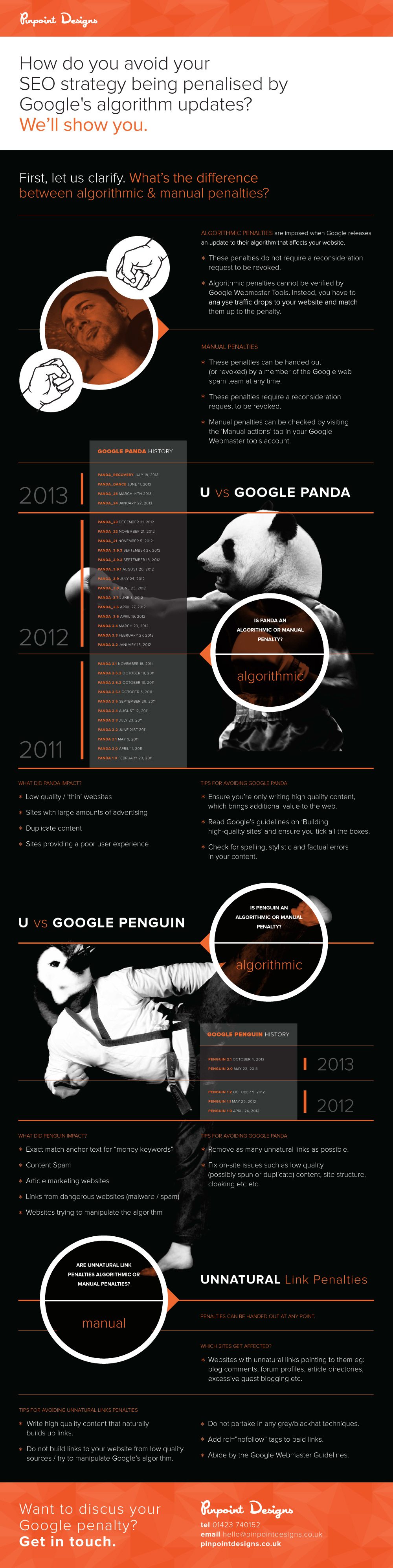
The team at Pinpoint Designs have put together the infographic below talking in more detail about the algorithms that are likely to affect your SEO and some tips to avoid a penalty.
Search Engine Optimization (SEO) is an ever-evolving field. The strategies and tactics that worked yesterday may not be as effective tomorrow. This is largely due to the frequent updates and changes made by search engines, especially Google. These updates can have a significant impact on your website’s rankings and traffic if you’re not prepared. In this blog post, we’ll explore some valuable SEO tips on how to avoid your strategy being ruined by a Google update.
1. Stay Informed About Google Updates
The first step in safeguarding your SEO strategy against Google updates is to stay informed. Google typically rolls out hundreds of algorithm updates each year, ranging from minor tweaks to major overhauls. To stay ahead of the curve, follow these best practices:
- Subscribe to Google’s Official Blog: Google often announces important updates on its official blog. Subscribing to it will help you receive timely information about changes that could affect your website’s rankings.
- Follow SEO News Websites: Several reputable websites, such as Moz, Search Engine Land, and Search Engine Journal, provide updates and analysis of Google’s algorithm changes. Regularly check these sources to stay informed.
- Join SEO Communities: Online communities and forums like Reddit’s r/SEO and various SEO-related Facebook groups are great places to discuss updates with fellow professionals. You can gain valuable insights and opinions from others who are also dealing with algorithm changes.
2. Diversify Your Traffic Sources
Relying solely on organic traffic from Google is risky. When Google updates its algorithms, it can lead to sudden drops in rankings and traffic. To mitigate this risk, diversify your traffic sources:
- Invest in Paid Advertising: Running paid advertising campaigns on platforms like Google Ads, Facebook Ads, and LinkedIn Ads can provide a consistent flow of traffic even if your organic rankings are affected by an update.
- Leverage Social Media: Build a strong presence on social media platforms like Facebook, Twitter, Instagram, and LinkedIn. Sharing your content and engaging with your audience can drive traffic independently of search engines.
- Email Marketing: Build and nurture an email list. Sending regular newsletters and updates to your subscribers can help maintain a steady stream of website visitors.
- Content Syndication: Share your content on platforms like Medium, LinkedIn Pulse, and industry-specific forums. This can increase your visibility and drive traffic from alternative sources.
3. Focus on Quality Content
One thing that remains constant in SEO is the importance of high-quality content. Google’s updates often prioritize content that is relevant, valuable, and user-friendly. Here are some tips to ensure your content meets these criteria:
- Keyword Research: Continuously conduct keyword research to identify trending topics and phrases. Create content around these keywords to increase your chances of ranking well.
- User Intent: Understand user intent behind their search queries. Create content that directly addresses their needs and questions. Google’s algorithms are becoming more adept at recognizing user intent.
- Comprehensive and Engaging Content: Aim to create comprehensive and engaging content that keeps users on your page. Longer articles, videos, and infographics can help achieve this.
- Regular Updates: Keep your content up to date. Google rewards websites that regularly update their content with fresh information.
4. Prioritize User Experience
User experience (UX) is another aspect that Google updates often target. A website that provides a seamless and enjoyable user experience is more likely to rank well. Here are some UX-focused SEO tips:
- Mobile Optimization: Ensure your website is mobile-friendly. Google’s mobile-first indexing means that it primarily uses the mobile version of a site for ranking and indexing.
- Fast Loading Speed: A slow website can lead to higher bounce rates. Use tools like Google PageSpeed Insights to identify and fix speed issues.
- Intuitive Navigation: Make your website easy to navigate. Users should be able to find the information they need quickly and effortlessly.
- SSL Certificate: Secure your website with an SSL certificate. Google considers HTTPS a ranking factor, and it’s important for user trust.
5. Build High-Quality Backlinks
Backlinks, or links from other websites to yours, continue to be a critical SEO factor. However, not all backlinks are created equal. Google updates often target low-quality and spammy links. To build high-quality backlinks:
- Natural Link Building: Focus on creating valuable content that naturally attracts backlinks from reputable websites in your industry.
- Guest Blogging: Write guest posts for authoritative websites in your niche. This can help you establish your expertise and earn quality backlinks.
- Monitor Your Backlink Profile: Regularly audit your backlink profile using tools like Ahrefs or Moz. Disavow toxic links that could harm your SEO efforts.
- Avoid Link Schemes: Steer clear of link schemes and paid links, as they can lead to penalties from Google.
6. Embrace Technical SEO
Technical SEO refers to the optimization of your website’s technical aspects to improve its search engine visibility. Google’s updates often involve changes to how it interprets technical signals. To stay ahead:
- Regular Site Audits: Conduct regular technical SEO audits of your website. Identify and fix issues like broken links, duplicate content, and crawl errors.
- Structured Data Markup: Implement structured data markup to enhance the appearance of your content in search results. This can lead to higher click-through rates.
- Optimize for Core Web Vitals: Google has introduced Core Web Vitals as a ranking factor, focusing on page loading, interactivity, and visual stability. Ensure your site meets these criteria.
- Mobile Optimization: As mentioned earlier, mobile optimization is crucial. Ensure that your site is responsive and functions well on all devices.
7. Monitor Your Analytics
Regularly monitoring your website’s analytics is essential for detecting any sudden drops in traffic or rankings that may result from a Google update. Key metrics to watch include:
- Traffic Trends: Monitor your website’s traffic over time. Sudden drops or spikes can be indicative of algorithm changes.
- Keyword Rankings: Keep an eye on your keyword rankings. Tools like Google Search Console and third-party SEO tools can help track changes.
- Conversion Rates: Analyze your conversion rates to see if changes in traffic are affecting your bottom line.
- Bounce Rate: A significant increase in bounce rate may indicate a problem with your content or user experience.
8. Be Prepared to Adapt
Google’s updates can be unpredictable, and sometimes they require quick adjustments to your SEO strategy. Here are some tips to help you adapt effectively:
- Have a Backup Plan: Develop contingency plans for various scenarios, such as a sudden drop in rankings. Knowing how to react can mitigate the impact of an update.
- Test and Experiment: Continuously test new SEO strategies and tactics. Experiment with different approaches to see what works best for your website.
- Stay Agile: Be willing to make changes to your SEO strategy as needed. Flexibility is key in the ever-changing world of SEO.
- Seek Professional Help: If you’re not confident in your ability to handle SEO strategy changes on your own, consider hiring an experienced SEO consultant or agency.
9. Maintain Patience and Persistence
SEO is a long-term game, and it requires patience and persistence. Google updates may cause temporary setbacks, but that doesn’t mean your strategy is ruined. Stay committed to your SEO efforts and continue to improve your website’s quality and relevance.
10. Focus on User Trust and Authority
Google increasingly values websites that users trust and consider authoritative sources of information. To build trust and authority:
- Online Reputation: Monitor and manage your online reputation. Respond to reviews, comments, and feedback in a professional and helpful manner.
- Expertise, Authoritativeness, and Trustworthiness (E-A-T): Ensure that your content demonstrates expertise in your field, establishes authoritativeness, and is seen as trustworthy.
- Back up Claims: Whenever you make claims or present data in your content, provide credible sources and references to support your statements.
Conclusion
Google updates are a constant challenge for SEO professionals, but they don’t have to spell disaster for your website. By staying informed, diversifying your traffic sources, focusing on quality content and user experience, and remaining adaptable, you can safeguard your SEO strategy against the ever-changing algorithms of Google. Remember, SEO is a dynamic field, and the ability to adapt and evolve is a valuable asset in the quest for long-term search engine success.

Author:
Mark Ford