In the ever-evolving landscape of digital marketing, two powerhouse strategies have emerged as frontrunners: Social Media Marketing (SMM) and Search Engine Optimization (SEO).
Both are crucial for businesses looking to establish a strong online presence and connect with their target audience. But when it comes to allocating resources and deciding which one to prioritize, many businesses find themselves at a crossroads.
Should they invest more in SMM, or should they focus on SEO? In this blog post, we will explore the strengths and weaknesses of each approach, helping you make an informed decision about where to channel your marketing efforts.
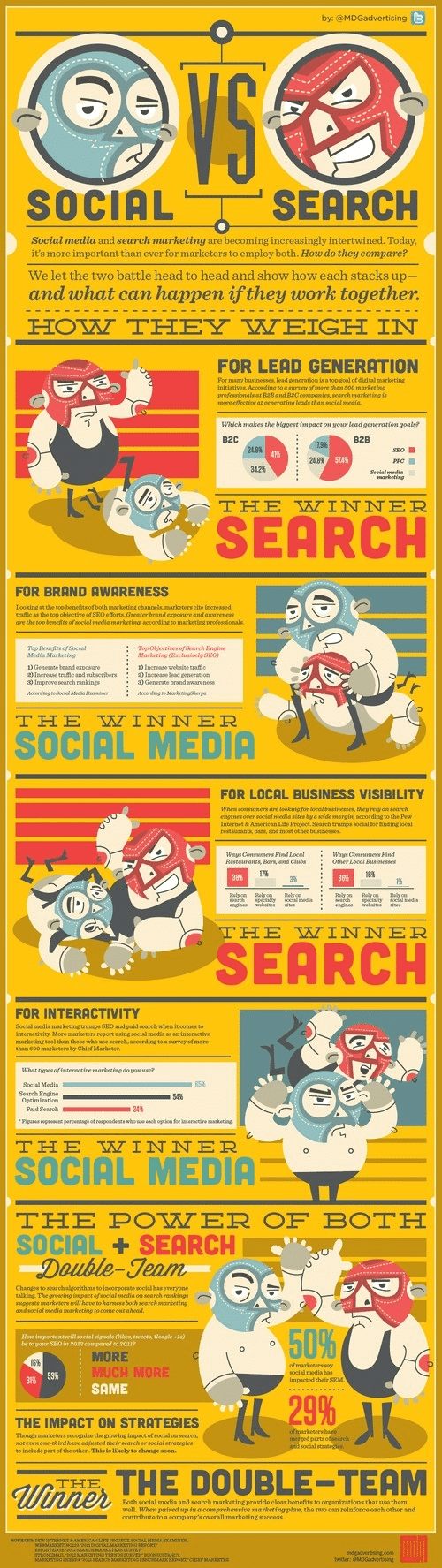
Infographic by MDG Advertising.
Understanding Social Media Marketing (SMM)
Social Media Marketing involves leveraging various social media platforms to promote your brand, products, or services. These platforms include Facebook, Instagram, Twitter, LinkedIn, Pinterest, TikTok, and many more. SMM aims to connect with your target audience, engage them, and ultimately drive traffic and conversions to your website or landing pages. Here are some key aspects of Social Media Marketing:
1. Audience Engagement
SMM is all about engaging your audience through content, conversations, and interactions. It allows you to build a community of loyal followers and engage with them in real-time. Social media platforms provide tools like comments, likes, shares, and direct messaging, making it easier to establish a two-way communication channel with your audience.
2. Brand Awareness
One of the primary benefits of SMM is its ability to boost brand visibility. By consistently posting relevant content and interacting with your audience, you can increase brand awareness and recognition. Moreover, the shareability of content on social media can lead to viral marketing, where your content spreads rapidly across the platform.
3. Targeted Advertising
Social media platforms offer highly targeted advertising options. You can create ads that reach specific demographics, interests, behaviors, and even lookalike audiences. This level of precision ensures that your marketing efforts are focused on reaching the right people at the right time.
4. Real-Time Analytics
SMM provides access to real-time analytics and insights. You can track the performance of your posts, ads, and campaigns, allowing you to adjust your strategy on the fly. This data-driven approach enables you to optimize your marketing efforts for better results.
5. Content Variety
Social media allows you to diversify your content strategy. You can use text, images, videos, stories, live streams, and even interactive content like polls and quizzes. This versatility enables you to cater to different audience preferences and keep your content fresh and engaging.
Understanding Search Engine Optimization (SEO)
Search Engine Optimization is the practice of optimizing your website and content to rank higher in search engine results pages (SERPs). The primary goal of SEO is to increase organic (non-paid) traffic to your website. It involves various on-page and off-page strategies to improve your website’s visibility on search engines like Google, Bing, and Yahoo. Here are some key aspects of SEO:
1. Keyword Research
SEO starts with keyword research. This process involves identifying the keywords and phrases that your target audience is searching for online. By optimizing your content around these keywords, you increase your chances of ranking higher in relevant search results.
2. On-Page Optimization
On-page SEO involves optimizing individual web pages for search engines. This includes optimizing meta titles, meta descriptions, headings, and ensuring that your content is well-structured and relevant to the target keywords. It also involves optimizing images, improving page load speed, and making your site mobile-friendly.
3. Off-Page Optimization
Off-page SEO focuses on activities outside your website that can influence your search engine rankings. This includes building high-quality backlinks from reputable websites, managing your online reputation, and participating in social media and other online communities.
4. Content Quality
Quality content is a cornerstone of effective SEO. Search engines favor informative, well-written, and relevant content. Creating valuable content that answers the questions and needs of your target audience not only improves your search rankings but also establishes your authority in your industry.
5. Long-Term Results
SEO is often seen as a long-term strategy. It can take time to see significant results, especially for competitive keywords. However, once your website ranks well, it can provide a steady stream of organic traffic over an extended period.
Comparing Social Media Marketing and SEO
Now that we have a clear understanding of both Social Media Marketing and SEO, let’s compare them in various aspects to determine which might be the better fit for your business:
1. Traffic Generation
- SMM: Social Media Marketing is excellent for generating immediate traffic. When you post engaging content or run paid advertising campaigns on social media, you can see results almost instantly. However, this traffic tends to be temporary and may require ongoing efforts to maintain.
- SEO: SEO, on the other hand, generates organic traffic over the long term. While it may take time to see substantial results, once your website ranks well, it can attract consistent, high-quality traffic without ongoing advertising expenses.
2. Targeting
- SMM: Social media platforms offer highly targeted advertising options, making it easier to reach specific demographics and interests. It’s a great choice if you want to narrow down your audience precisely.
- SEO: SEO relies on optimizing for specific keywords, which can be effective but may not offer the same granular targeting as SMM. However, SEO can capture a broader audience searching for related topics.
3. Brand Building
- SMM: Social Media Marketing excels at brand building and increasing brand awareness. Through engaging content, interactions, and storytelling, you can create a strong brand presence on social media.
- SEO: While SEO can enhance brand visibility, it often focuses more on driving organic traffic and may not be as effective at brand storytelling and engagement compared to SMM.
4. Cost
- SMM: The cost of Social Media Marketing can vary widely depending on your goals and the platforms you choose. Running paid advertising campaigns can become expensive, but organic social media marketing (posting content and engaging with followers) can be relatively cost-effective.
- SEO: SEO can be cost-effective in the long run, but it requires an initial investment in keyword research, content creation, and on-page optimization. Building high-quality backlinks may also require some financial investment.
5. Measurability
- SMM: Social Media Marketing provides real-time analytics and insights, allowing you to track the performance of your campaigns easily. You can see metrics like engagement, reach, and conversion rates.
- SEO: SEO analytics can be more complex, involving tools like Google Analytics and Search Console. While you can track traffic, keyword rankings, and other metrics, the data may not be as straightforward as SMM analytics.
6. Competition
- SMM: Social media platforms are highly competitive, with many businesses vying for users’ attention. Standing out and going viral can be challenging in such a crowded space.
- SEO: SEO can also be competitive, especially for popular keywords. However, with the right strategies and consistent effort, it’s possible to rank well in search results, even in competitive niches.
Making the Choice: When to Use SMM or SEO
The choice between Social Media Marketing and SEO depends on your specific business goals and resources. Here are some scenarios where one strategy might be more advantageous than the other:
Choose Social Media Marketing (SMM) if:
- You need immediate results: If you need to drive traffic and conversions quickly, SMM is the way to go. Paid social media advertising can deliver rapid results.
- Your target audience is active on social media: If your audience spends a significant amount of time on platforms like Facebook, Instagram, or Twitter, SMM is an excellent way to engage with them.
- You want to build a strong brand presence: SMM is ideal for storytelling and brand building. If you want to create a strong emotional connection with your audience, social media is the place to do it.
- You have a visual product or service: Visual content performs exceptionally well on social media. If your business relies on visuals, platforms like Instagram and Pinterest can be highly effective.
Choose Search Engine Optimization (SEO) if:
- You’re focused on long-term results: If you’re willing to invest time and resources into a strategy that will pay off over time, SEO is a solid choice. It can provide sustained organic traffic once your site ranks well.
- Your industry is competitive: In highly competitive industries, ranking well in search results can be a game-changer. SEO allows you to compete with established players.
- You want to capture a broad audience: SEO captures users searching for a wide range of topics related to your business. It can help you reach a broader audience compared to the narrow targeting of SMM.
- You have valuable, informative content: SEO thrives on high-quality content that answers user queries. If you have valuable information to share, SEO can position you as an authority in your field.
The Synergy of SMM and SEO
While we’ve discussed SMM and SEO as distinct strategies, the truth is that they can complement each other beautifully when used together. Here’s how they can work in harmony:
- Content Promotion: You can use social media to promote your SEO-optimized content. Sharing blog posts, infographics, and videos on social media can drive traffic to your website and improve your search rankings.
- Brand Building: Social media can enhance brand visibility and trust, which can indirectly benefit your SEO efforts. A strong brand presence can lead to more branded searches, which are favorable for SEO.
- Audience Engagement: Social media is an excellent platform for engaging with your audience and gathering feedback. This feedback can inform your content strategy and help you create content that ranks well in search results.
- Link Building: Engaging on social media can lead to valuable backlinks from authoritative sources. These backlinks can boost your SEO efforts and improve your website’s authority in the eyes of search engines.
- Local SEO: If you have a local business, social media can play a crucial role in your local SEO strategy. Consistent NAP (Name, Address, Phone Number) information across social profiles can improve your local search rankings.
Conclusion
In the battle between Social Media Marketing and SEO, there is no definitive winner. Instead, the choice between these two strategies should be based on your specific business goals, target audience, and resources.
Social Media Marketing excels at building brand awareness, engaging with your audience, and delivering immediate results. On the other hand, SEO offers a long-term, cost-effective approach to driving organic traffic and establishing your authority in your industry.
In reality, the best approach for most businesses is a combination of both SMM and SEO. When these two strategies work in harmony, they can amplify your digital marketing efforts, driving more traffic, engagement, and conversions to your website. So, rather than choosing a winner, consider how SMM and SEO can work together to achieve your marketing objectives effectively.

Author:
Mark Ford