
How do you know if your social media marketing strategy is working? Want some easy to measure metrics that can show if your efforts are paying off?
In today’s digital landscape, social media plays a pivotal role in both personal and business interactions. Whether you’re running a small startup or managing a multinational corporation, having a well-thought-out social media strategy is essential for connecting with your target audience, enhancing brand visibility, and driving engagement.
However, the world of social media is ever-evolving, and to determine the effectiveness of your social media efforts, it’s crucial to measure and analyze various metrics. In this comprehensive guide, we’ll explore over 40 key metrics that can help you assess how well your social media strategy is performing.
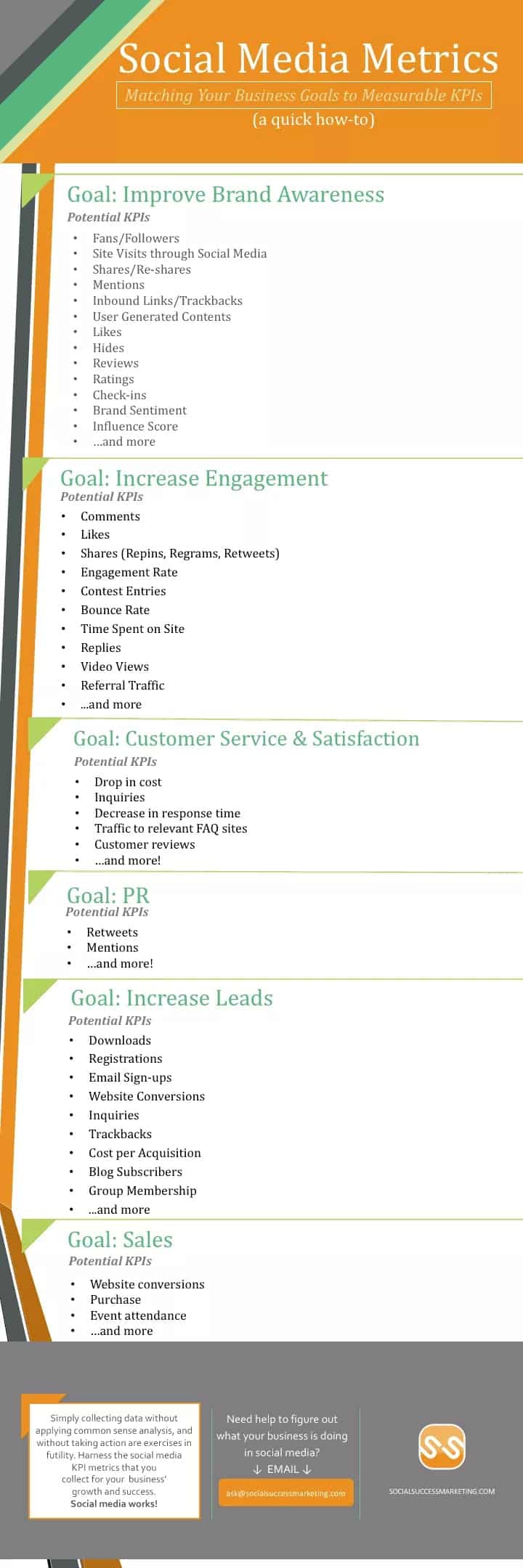
Social Success Marketing share the kind of metrics you should use in this infographic.
The Significance of Measuring Social Media Metrics
Before we dive into the metrics themselves, it’s important to understand why measuring social media metrics is imperative for your brand or business:
- Performance Assessment: Measuring social media metrics allows you to evaluate the performance of your social media campaigns. It helps you identify successful strategies and areas that need improvement.
- Data-Driven Decision-Making: Making informed decisions is vital for achieving success. By analyzing metrics, you can make data-driven adjustments to your strategy, ultimately optimizing it for better results.
- ROI Calculation: Calculating the return on investment (ROI) of your social media efforts is essential for determining whether the resources you’re investing are generating tangible outcomes.
- Audience Insights: Metrics provide valuable insights into your audience’s preferences and behaviors, enabling you to tailor your content to meet their needs and interests effectively.
- Competitive Analysis: Comparing your social media performance with that of your competitors serves as a benchmark for evaluating the effectiveness of your strategy.
Now that we’ve established the importance of measuring social media metrics, let’s explore these metrics grouped into categories for easier comprehension.
Engagement Metrics
Engagement metrics are among the most critical indicators of your social media strategy’s success. They measure how effectively your audience interacts with your content and brand.
- Likes/Favorites: The number of likes or favorites your posts receive, indicating the level of approval and interest.
- Comments: The number of comments on your posts, reflecting the level of engagement and conversation generated.
- Shares/Retweets: The number of times your content is shared or retweeted, indicating its virality and reach.
- Click-Through Rate (CTR): The percentage of people who clicked on a link within your post, measuring how effective your call-to-action is.
- Replies: The number of replies to your tweets or direct messages, showcasing direct interactions with your audience.
- Mentions: The number of times your brand or username is mentioned by others, indicating your brand’s visibility and influence.
- Followers/Fans Growth: The rate at which your social media following is increasing or decreasing.
- Profile Visits: The number of times users visit your social media profile, indicating interest in your brand.
- Engagement Rate: A holistic metric that considers likes, comments, shares, and followers/fans growth, providing an overall engagement picture.
Content Metrics
Content metrics focus on the quality and effectiveness of the content you share on social media.
- Post Reach: The number of unique users who have seen your content.
- Impressions: The total number of times your content has been displayed to users, including multiple views by the same user.
- Video Views: The number of times your videos have been viewed, offering insights into your video content’s popularity.
- Post Clicks: The number of clicks on links or media in your posts, measuring content effectiveness.
- Bounce Rate: The percentage of users who land on your content and leave without interacting further.
- Time Spent on Page: How long users spend viewing your content, indicating engagement and interest.
- Scroll Depth: How far users scroll down your content, showing how engaging your content is.
- Content Shares: The number of times your blog posts, articles, or other content are shared on social media platforms.
- Content Conversion Rate: The percentage of users who take a desired action after consuming your content, such as signing up for a newsletter or making a purchase.
Audience Metrics
Understanding your audience is essential for tailoring your social media strategy effectively.
- Demographics: Information about your audience’s age, gender, location, and interests.
- Audience Growth Rate: The rate at which your social media following is expanding.
- Audience Reach: The potential audience size you can reach on a particular platform.
- Audience Engagement: How actively your audience interacts with your content.
- Follower/Fan Demographics: Insights into the demographics of your followers or fans.
- Audience Sentiment: How your audience perceives your brand and content, based on comments and sentiment analysis.
Conversion Metrics
Conversion metrics help you assess how well your social media efforts are translating into tangible business outcomes.
- Conversion Rate: The percentage of users who take a specific action, such as making a purchase or signing up, after clicking on a social media post.
- Click-to-Conversion Time: The time it takes for a user to convert after clicking on your social media content.
- Cost Per Conversion: The amount spent on social media advertising divided by the number of conversions.
- Conversion Value: The monetary value of each conversion, helping you measure the direct impact of social media on revenue.
Reach and Impressions Metrics
Reach and impressions metrics focus on the visibility and exposure of your social media content.
- Organic Reach: The number of users who see your content without paid promotion.
- Paid Reach: The number of users who see your content through paid advertising.
- Viral Reach: The number of users who see your content because it was shared by others.
- Reach Growth: The rate at which your content’s reach is expanding.
- Frequency: The average number of times a user sees your content.
Customer Satisfaction Metrics
Customer satisfaction metrics help gauge how well your social media efforts are meeting your audience’s needs.
- Net Promoter Score (NPS): A measure of customer loyalty and willingness to recommend your brand to others.
- Customer Feedback: Direct feedback from customers about their experiences with your brand on social media.
- Response Time: The time it takes for your brand to respond to customer inquiries or comments on social media.
- Resolution Time: The time it takes to resolve customer issues or complaints on social media.
Competitive Metrics
Monitoring your competitors’ social media performance can provide valuable insights and benchmarks.
- Competitor Follower/Fan Growth: How quickly your competitors are gaining or losing followers/fans.
- Competitor Engagement: The level of engagement (likes, comments, shares) their content receives compared to yours.
In conclusion, determining whether your social media strategy is working requires a comprehensive assessment of various metrics. Social media has evolved into a powerful platform for both personal branding and business growth, making it essential to measure its impact effectively.
Throughout this guide, we’ve explored more than 40 key metrics grouped into several categories, each providing unique insights into the performance of your social media efforts.
Engagement metrics help you understand how well your content resonates with your audience, from likes and shares to comments and mentions. These metrics indicate the level of interaction and connection your brand has established in the digital sphere.
Content metrics shed light on the quality and effectiveness of the content you share. They allow you to evaluate the reach, impact, and conversion potential of your posts and articles, helping you refine your content strategy.
Audience metrics provide valuable insights into your followers and fans. Understanding their demographics, growth rate, and engagement levels helps you tailor your content to meet their preferences and needs.
Conversion metrics are crucial for assessing the direct impact of your social media efforts on your business’s bottom line. By measuring conversion rates, click-to-conversion times, and conversion values, you can gauge how effectively your social media campaigns drive desired actions.
Reach and impressions metrics focus on the visibility and exposure of your content, offering insights into how well your posts are reaching your target audience organically or through paid promotion.
Customer satisfaction metrics are vital for maintaining a positive brand image and fostering customer loyalty. Monitoring feedback, response times, and resolution times on social media can help you enhance the overall customer experience.
Lastly, competitive metrics allow you to benchmark your social media performance against that of your competitors, providing a broader context for your strategy’s effectiveness.
In today’s fast-paced digital environment, continuously monitoring these metrics is essential for adapting and optimizing your social media strategy. Regular analysis and adjustment based on the insights gained from these metrics will enable you to stay ahead in the competitive social media landscape and ensure that your efforts are driving real results.
Remember that the significance of each metric may vary depending on your specific goals and objectives. Therefore, it’s essential to align your measurement approach with your overarching social media strategy. By doing so, you’ll be well-equipped to assess, refine, and improve your social media efforts, ultimately ensuring that your strategy is not just working but thriving in the ever-evolving world of social media.

Author:
Mark Ford