
Thinking about launching your first blog but not sure where to begin? Want to avoid the common mistakes that hold new bloggers back from success?
You’ll find some blogging basics in this infographic.
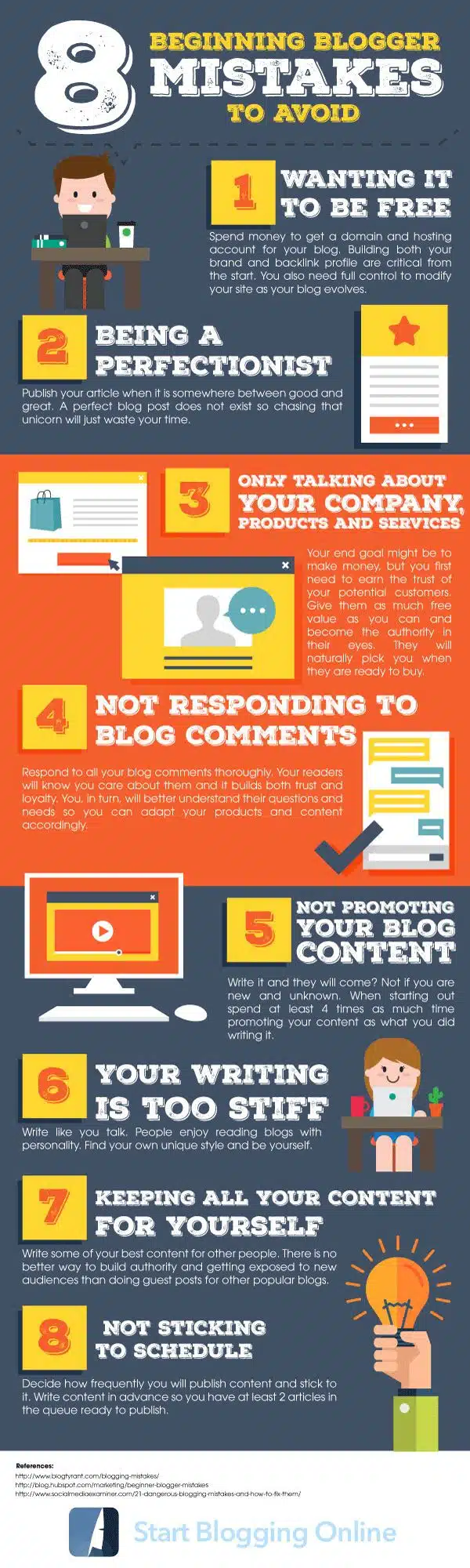
Here’s a summary of what’s covered:
- Wanting It to Be Free
- Being a Perfectionist
- Only Talking About Your Company, Products and Services
- Not Responding to Blog Comments
- Not Promoting Your Blog Content
- Your Writing Is Too Stiff
- Keeping All Your Content for Yourself
- Not Sticking to Schedule
Check out the post below for more.
Starting a blog is exciting. Whether you’re sharing personal stories, promoting a business, or building a community, blogging opens the door to countless opportunities. But many beginners fall into common traps that hold their progress back.
If you want to get off to a strong start, here are eight rookie mistakes you’ll want to avoid—plus practical tips for steering clear of them.
Wanting It to Be Free
It’s tempting to build your blog using free tools and platforms—but going the free route often means sacrificing control, credibility, and long-term growth. A professional blog should be treated as an investment, not a hobby. If you’re serious about success, don’t settle for second-rate solutions. Build a strong foundation from day one.
- Buy your own domain name to build authority and make your site look professional.
- Choose a reliable paid hosting service that offers scalability and strong customer support.
- Avoid free blogging platforms that restrict customisation and display third-party ads.
- View blogging as a business asset, not a cost to cut corners on.
Being a Perfectionist
Waiting for the “perfect” blog post will slow you down and stall your progress. Perfectionism might feel productive, but it’s a sneaky form of procrastination. Aim for progress, not perfection—your readers will appreciate your consistency far more than flawless writing. Publish, learn, and improve as you go.
- Set a deadline for each post so you don’t get stuck endlessly editing.
- Aim for clear, useful content—not literary genius.
- Remember that you can always update posts later if needed.
- Focus on solving your reader’s problem, not impressing them with perfection.
Only Talking About Your Company, Products and Services
Blogging should be about delivering value—not just pushing products or self-promotion. If every post is about you, readers will tune out fast. Instead, give generously with content that educates, entertains, or solves problems. Build trust first, and the sales will follow naturally.
- Answer common questions in your niche to demonstrate expertise and build credibility.
- Create how-to guides, tips, and tutorials that provide real value.
- Mix promotional content with helpful, evergreen topics to attract broader audiences.
- Position yourself as a helpful guide, not a salesperson.
Not Responding to Blog Comments
Comments are a sign that your content is resonating—don’t ignore them. When readers take the time to engage, responding shows that you value their input and are willing to build a relationship. It’s also a great way to spark conversations and learn more about your audience’s needs. Don’t treat comments like a chore—treat them like gold.
- Reply to every genuine comment to show appreciation and build loyalty.
- Use comments as a source of content ideas—what are readers asking or struggling with?
- Moderate spam, but allow discussion to keep your blog trustworthy and welcoming.
- Encourage readers to comment by ending posts with open-ended questions.
Not Promoting Your Blog Content
Publishing a blog post is just the beginning. If you don’t promote your content, hardly anyone will see it—especially when you’re just starting out. Effective bloggers spend more time promoting their posts than writing them. Without a promotion plan, even great content will go unnoticed.
- Share each post across all your social channels with compelling captions.
- Build an email list and send your latest posts to subscribers regularly.
- Join blogging communities and niche forums to share your content where it’s relevant.
- Repurpose posts into different formats like videos, infographics, or carousel posts.
Your Writing Is Too Stiff
If your blog reads like a textbook or a formal essay, you’ll struggle to keep people interested. Great blogging feels like a conversation. Write the way you talk, keep it natural, and let your personality shine through. People follow bloggers they feel a connection with—so don’t hide behind rigid language.
- Use a conversational tone to make your writing more relatable.
- Read your posts aloud to spot awkward or unnatural phrases.
- Write like you’re speaking to one person, not a crowd.
- Add your personality to the mix—it’s your voice that makes your blog unique.
Keeping All Your Content for Yourself
Sharing is growing. When you only post on your own blog, you limit your reach. Writing guest posts for other sites helps you build backlinks, expand your audience, and increase your credibility. It’s a powerful strategy for bloggers who want to grow faster and reach further.
- Pitch guest post ideas to relevant blogs in your niche with strong readership.
- Include a strong author bio with a link back to your site to build traffic and trust.
- Write guest content that’s as valuable as your own—don’t hold back the good stuff.
- Use guest blogging to build relationships with other content creators and influencers.
Not Sticking to Schedule
Inconsistent posting is one of the biggest reasons blogs fail. If you post once in a while with no rhythm, you’ll lose momentum and readers. Successful blogs have a content calendar and stick to it. Consistency builds trust, improves SEO, and makes blogging a habit—not a hassle.
- Create a realistic publishing schedule based on your availability and goals.
- Use a content calendar tool to plan your posts weeks or months in advance.
- Batch write your blog content so you always have something ready to go.
- Set reminders or deadlines to stay accountable and build discipline.
Final Thoughts
Blogging is one of the most powerful tools for building your brand, growing your audience, and sharing your ideas with the world. But only if you avoid the common traps that derail so many beginners. Treat your blog like a business, serve your readers first, and focus on showing up consistently.
Avoiding these rookie errors won’t just help you start stronger—it’ll set you up for long-term blogging success. Ready to hit publish? Do it with purpose, confidence, and the lessons in this post at your side.

Author:
Mark Ford