Are you considering starting a new business? Do you need some guidance on how to create a brand identity that stands out from your competitors?
Establishing an awesome brand identity from the outset can play a crucial role in the success of your startup business. Without a logo and website that sets you aside from your competitors you could struggle to win business and get customers through the door.
To ensure your brand kicks ass follow the 8 steps in this infographic from 99 Designs.
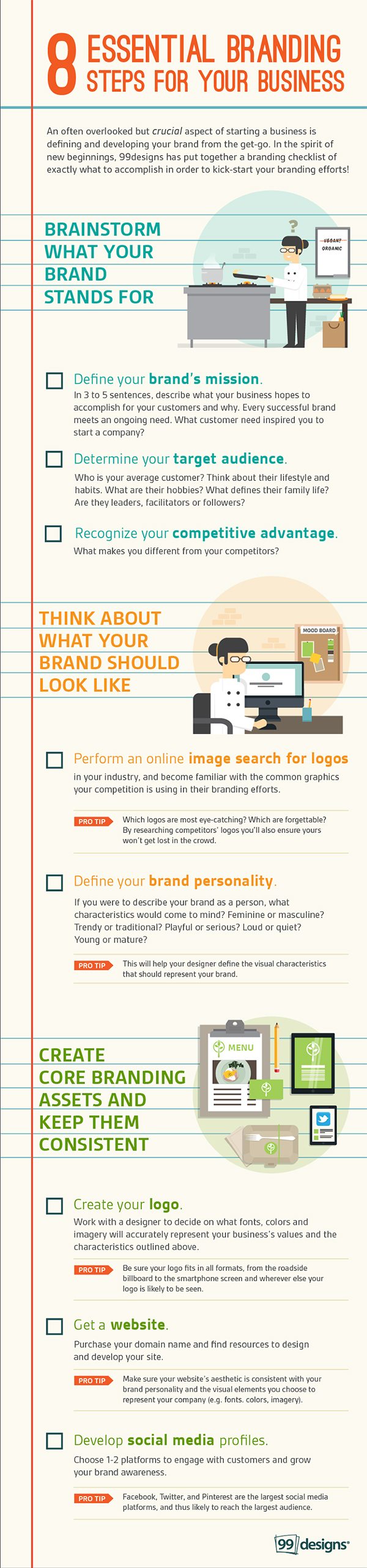
Starting a business is an exhilarating journey. You have an idea, a vision, and the determination to make it a reality. But in today’s competitive market, having a great product or service isn’t enough. To stand out and succeed, you need a kickass brand. Your brand is more than just a logo or a name; it’s the personality and identity of your business. In this blog post, we’ll explore eight crucial steps to help you create a kickass brand that resonates with your target audience and sets you apart from the competition.
1. Define Your Brand Identity
Before you can create a kickass brand, you need to define your brand identity. Start by asking yourself some fundamental questions:
- What is your business’s mission and purpose?
- What values and principles will guide your company?
- Who is your target audience, and what are their needs and preferences?
- What makes your product or service unique?
- What emotions do you want your brand to evoke in your customers?
These questions will help you clarify your brand’s core identity and personality. Your brand identity should be a reflection of your business’s values and the promises you make to your customers.
2. Conduct Market Research
Understanding your target audience and the competitive landscape is essential for creating a brand that resonates. Conduct thorough market research to gather insights into:
- Customer demographics and psychographics.
- Competitor strengths and weaknesses.
- Market trends and opportunities.
- Consumer pain points and needs.
This information will help you tailor your brand strategy to meet the specific needs and preferences of your target audience.
3. Craft Your Brand Message
Your brand message is the foundation of your brand communication. It should be concise, compelling, and consistent with your brand identity. Your message should answer the following questions:
- What does your business do?
- What problems does it solve?
- Why should customers choose you over competitors?
- What values and benefits do you offer?
Once you’ve crafted your brand message, ensure that it’s consistently communicated across all your marketing materials, including your website, social media profiles, and promotional materials.
4. Create a Memorable Logo and Visual Identity
A visually appealing logo and consistent visual identity are crucial for brand recognition. Your logo should be simple, unique, and reflective of your brand’s personality. Consider the color scheme, typography, and design elements that will be associated with your brand.
Remember that consistency is key. Use your visual identity consistently across all brand touchpoints, from your business cards to your website and social media profiles. Consistency helps build brand recognition and trust with your audience.
5. Develop Your Brand Voice
Your brand voice is the tone and style of communication you use to engage with your audience. It should align with your brand’s personality and resonate with your target demographic. Whether your brand voice is friendly and conversational or formal and authoritative, consistency is essential.
Your brand voice should be reflected in all written content, from your website copy and blog posts to social media updates and customer emails. A consistent brand voice helps create a cohesive brand experience for your customers.
6. Build a Strong Online Presence
In today’s digital age, having a strong online presence is vital for brand visibility and growth. Here are some essential steps to build an online presence:
- Create a User-Friendly Website: Your website is often the first point of contact with potential customers. Ensure it’s well-designed, easy to navigate, and optimized for mobile devices.
- Optimize for Search Engines (SEO): Implement SEO best practices to improve your website’s visibility on search engines like Google. This will help potential customers find your business online.
- Leverage Social Media: Choose the social media platforms that are most relevant to your target audience and engage with your followers regularly. Share valuable content, respond to comments, and use social media to showcase your brand’s personality.
- Content Marketing: Develop a content marketing strategy that includes blog posts, videos, and other types of content that provide value to your audience. High-quality content can establish your brand as an authority in your industry.
- Email Marketing: Build an email list and use email marketing to nurture leads and keep existing customers informed about your products or services.
7. Engage with Your Audience
Building a kickass brand involves actively engaging with your audience. Listen to their feedback, respond to their questions, and show appreciation for their support. Here are some ways to engage with your audience effectively:
- Social Media Interaction: Respond promptly to comments and messages on your social media profiles. Engage in meaningful conversations with your followers.
- Customer Support: Provide excellent customer support through various channels, including email, chat, or phone. Solve customer problems promptly and professionally.
- Feedback Surveys: Use surveys and feedback forms to gather input from your customers. Use this feedback to improve your products or services and enhance the customer experience.
- Community Building: Consider creating a community or forum where your customers can connect with each other and share their experiences. This can foster a sense of belonging and loyalty to your brand.
8. Monitor and Adapt
Creating a kickass brand is an ongoing process. It’s essential to monitor the effectiveness of your branding efforts and be willing to adapt when necessary. Here are some key metrics to track:
- Brand Awareness: Measure brand awareness through website traffic, social media engagement, and brand mentions.
- Customer Satisfaction: Use surveys and customer feedback to gauge satisfaction levels and identify areas for improvement.
- Conversion Rates: Track how many leads are converting into customers and identify any bottlenecks in the conversion process.
- Competitor Analysis: Continuously monitor your competitors’ branding efforts and stay agile to maintain your competitive edge.
- ROI on Marketing Investments: Evaluate the return on investment for your marketing efforts to ensure you’re allocating resources effectively.
In conclusion, creating a kickass brand is a critical component of starting and growing a successful business. By defining your brand identity, conducting market research, crafting a compelling brand message, and building a strong online presence, you can establish a brand that resonates with your target audience. Additionally, developing a consistent visual identity, brand voice, and engaging with your audience will help solidify your brand’s position in the market. Finally, ongoing monitoring and adaptation are essential to ensure your brand remains relevant and competitive in a constantly evolving business landscape. With these eight crucial steps, you can set your business on the path to brand success.

Author:
Mark Ford