In the digital age, having a website is essential for individuals, businesses, and organizations alike. A well-designed website can serve as a powerful tool for communication, marketing, and online presence.
However, not all websites are created equal. There are several ways to create a website, each with its own set of advantages and disadvantages.
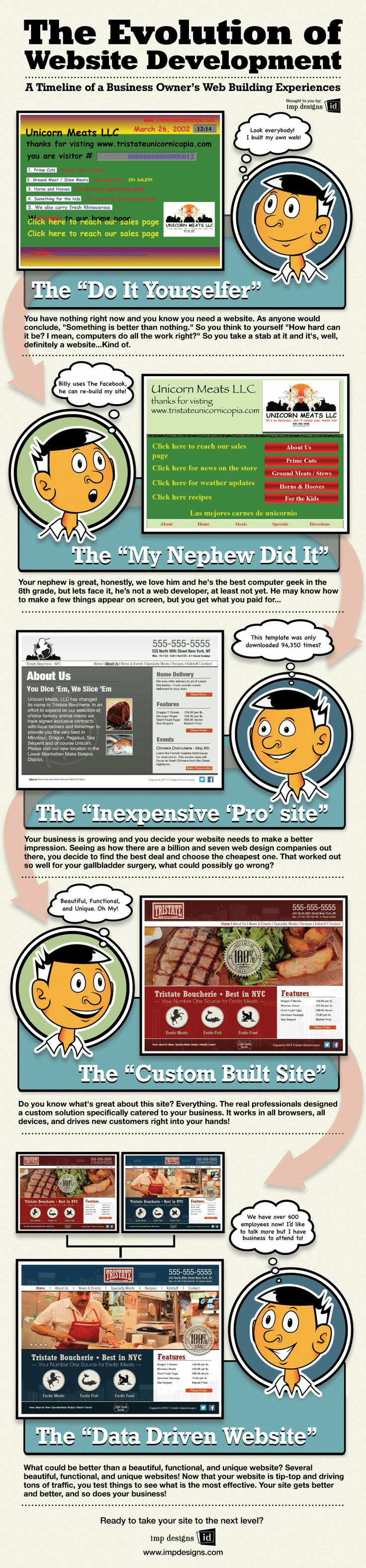
In this blog post, we will explore five common approaches to website creation, ranging from the do-it-yourself options to more professional and data-driven methods. While each approach has its merits, we’ll discuss why you should consider avoiding the first three methods and instead focus on the latter two for a website that truly stands out.
Infographic by IMP Designs.
- The “Do It Yourselfer”
Many aspiring website owners opt for the do-it-yourself (DIY) approach, primarily because it seems cost-effective and relatively straightforward. Numerous website builders and content management systems (CMS) like Wix, Weebly, and WordPress offer user-friendly interfaces and templates for creating websites. While DIY websites have their place, they come with some significant limitations.
Pros of the “Do It Yourselfer” Approach:
- Cost-effective: DIY website builders often offer free or low-cost plans, making them attractive to budget-conscious individuals and small businesses.
- User-friendly: These platforms are designed to be accessible to users with limited technical knowledge, allowing for quick and easy website creation.
- Templates: DIY website builders provide a variety of templates that can serve as a starting point for your website design.
Cons of the “Do It Yourselfer” Approach:
- Limited customization: DIY platforms have limitations when it comes to design and functionality. Users are often restricted to pre-designed templates and limited coding capabilities.
- Lack of uniqueness: Since many users rely on the same templates, DIY websites tend to look generic and lack individuality.
- Limited scalability: As your website grows, you may encounter limitations in terms of performance, customization, and features on DIY platforms.
Why You Should Avoid It: While the DIY approach may be suitable for personal blogs or small hobby websites, it falls short for businesses and organizations that aim to establish a strong online presence. The lack of customization and scalability can hinder your website’s growth and competitiveness in the long run.
- The “My Nephew Did It”
Another common approach to website creation involves seeking help from a friend or family member with some web design skills. This often results in websites created by well-meaning amateurs. While it might seem like a cost-effective solution, it comes with its share of challenges.
Pros of the “My Nephew Did It” Approach:
- Potentially lower cost: Enlisting the help of a friend or family member may seem like a more affordable option compared to hiring a professional web designer.
- Personal connection: You have direct communication with the person creating your website, making it easier to convey your vision and preferences.
Cons of the “My Nephew Did It” Approach:
- Lack of expertise: Unless your friend or family member is a professional web designer, the quality and functionality of the website may be subpar.
- Unpredictable timeline: Amateurs may not have a structured approach to web development, leading to delays and uncertainty.
- Strained relationships: If the project doesn’t go as planned, it could strain your personal relationship with the individual who helped create the site.
Why You Should Avoid It: While it’s great to have friends or family willing to help, a website is often a crucial aspect of your personal or business brand. Relying on someone without the necessary expertise can result in a website that doesn’t meet your objectives, and it may even damage your online reputation. It’s usually better to work with professionals who can deliver a polished and effective website.
- The Inexpensive “Pro” Site
Some website owners seek out affordable web design services that promise professional results at a fraction of the cost. While these budget-friendly options may seem tempting, they often come with significant trade-offs.
Pros of the Inexpensive “Pro” Site Approach:
- Lower upfront costs: These services typically offer cheaper rates than established web design agencies.
- Quick turnaround: Many inexpensive providers promise fast website delivery, which can be appealing if you need a site quickly.
Cons of the Inexpensive “Pro” Site Approach:
- Limited quality control: Low-cost providers may cut corners, resulting in subpar design, poor functionality, and potential security vulnerabilities.
- Lack of customization: Budget-friendly services often rely on templates or pre-made themes, leading to generic and uninspired websites.
- Hidden costs: Some providers may charge extra fees for essential features or support, negating the initial cost savings.
Why You Should Avoid It: While affordability is a valid concern, opting for an inexpensive “pro” site can lead to numerous issues down the road. Websites created through these services often lack the quality, uniqueness, and long-term support needed to succeed in a competitive online landscape.
- The Custom-Built Site
For those who value uniqueness and a high degree of control over their website, a custom-built site is a compelling option. Custom-built websites are designed from the ground up, tailored to your specific needs, branding, and functionality requirements.
Pros of the Custom-Built Site Approach:
- Uniqueness: Custom-built websites are one-of-a-kind, ensuring that your online presence stands out from the competition.
- Full control: You have complete control over the design, features, and functionality, allowing for a truly customized user experience.
- Scalability: Custom-built sites can grow and adapt as your needs change, making them suitable for businesses and organizations of all sizes.
Cons of the Custom-Built Site Approach:
- Higher upfront cost: Custom-built websites typically require a more significant initial investment compared to other methods.
- Longer development time: Building a custom site takes time, as it involves thorough planning, design, and development phases.
- Ongoing maintenance: Custom sites may require ongoing maintenance and updates to ensure optimal performance and security.
Why You Should Consider It: Custom-built websites are an excellent choice for businesses and organizations that prioritize a strong online presence and brand identity. While they require a higher initial investment, the long-term benefits in terms of uniqueness, scalability, and control can outweigh the costs.
- The Data-Driven Website
In the digital age, data is a valuable asset that can inform your website’s design, content strategy, and user experience. A data-driven website approach involves using analytics and user insights to continuously improve and optimize your online presence.
Pros of the Data-Driven Website Approach:
- Informed decision-making: Data allows you to make informed decisions about your website’s design, content, and user experience.
- Improved user satisfaction: By analyzing user behavior and feedback, you can tailor your site to meet the needs and preferences of your audience.
- Enhanced performance: Data-driven optimization can lead to better search engine rankings, increased traffic, and higher conversion rates.
Cons of the Data-Driven Website Approach:
- Requires ongoing effort: Maintaining a data-driven website involves regular analysis and adjustments, which can be time-consuming.
- Technical expertise: You may need technical skills or the assistance of professionals to implement data tracking and analysis tools effectively.
- Initial learning curve: If you’re new to data-driven strategies, there may be a learning curve in understanding how to interpret and apply the insights you gather.
Why You Should Consider It: In a rapidly evolving online landscape, data-driven decision-making is crucial for staying competitive and meeting user expectations. By continuously optimizing your website based on real user data, you can ensure that it remains effective and responsive to changing trends and user behaviors.
Conclusion
Creating a website is a significant step for individuals, businesses, and organizations looking to establish a strong online presence. While there are various approaches to website creation, it’s essential to consider your goals, budget, and long-term aspirations.
While the “Do It Yourselfer,” “My Nephew Did It,” and inexpensive “Pro” site approaches may seem appealing at first glance, they often come with limitations and potential drawbacks that can hinder your website’s success in the long run. Instead, consider investing in a custom-built website or embrace the data-driven approach to ensure your online presence not only meets your immediate needs but also evolves to stay competitive in the digital landscape. Your website is a critical asset, and choosing the right approach can make all the difference in achieving your online goals.

Author:
Mark Ford