
Are you struggling to get visitors to your new blog? Want to learn proven steps to start building traffic from day one?
You’ll find some blogging basics in this infographic.
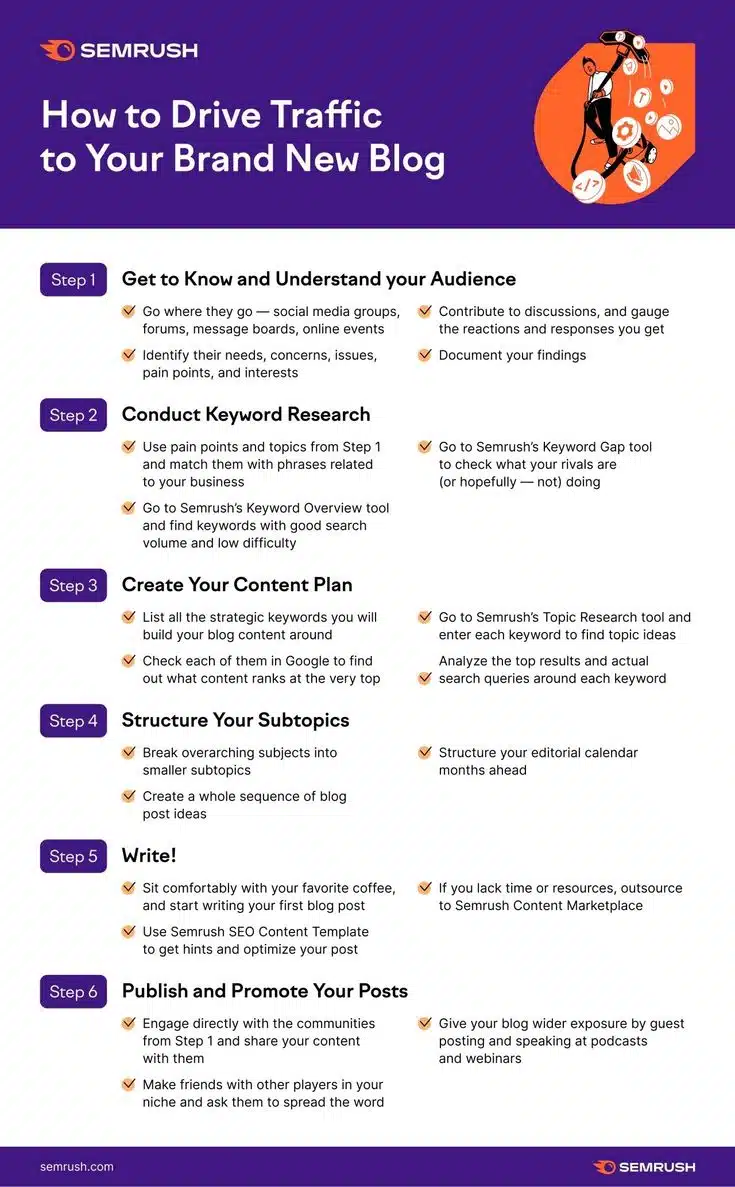
Here’s a summary of what’s covered:
- Understand Your Audience
- Conduct Keyword Research
- Plan Your Content
- Structure Your Subtopics
- Start Writing
- Promote Your Content
Check out the post below for more.
Launching a blog is exciting, but getting traffic is often the biggest hurdle new bloggers face. You can write the most insightful content in the world, but if no one sees it, it won’t make an impact.
Whether you’re blogging for business, building a personal brand, or simply sharing your expertise, driving traffic is the key to long-term success. This guide walks you through the foundational steps you need to bring visitors to your blog—starting from day one.
Step 1: Understand Your Audience
Before you can attract readers, you need to know who they are. Understanding your audience means learning where they spend time online, what they care about, and what kind of problems they’re looking to solve. This insight will inform everything from your topics to your tone of voice. The better you know your readers, the more effective your blog will be at earning their attention.
- Join social media groups, forums, and online communities relevant to your niche.
- Pay attention to frequently asked questions, complaints, and common challenges.
- Watch how your audience interacts with others and what type of content they share.
- Document your observations to create a clear picture of who you’re writing for.
Step 2: Conduct Keyword Research
Once you’ve identified what your audience cares about, it’s time to discover how they search for it online. Keyword research reveals the specific terms and phrases people type into Google when looking for information. This process ensures your blog posts align with real search intent, giving them the best chance of appearing in search results. Focus on keywords that strike a balance between search volume and competition.
- Use tools like SEMrush’s Keyword Overview to find low-difficulty, high-volume keywords.
- Match pain points and interests from your audience research to keyword ideas.
- Look at the keywords your competitors are targeting with the Keyword Gap tool.
- Choose keywords that are specific and relevant to your blog’s topic focus.
Step 3: Plan Your Content
With a strong keyword list in hand, the next step is to create a content plan. This helps you stay focused and ensures you’re consistently publishing posts that target valuable search terms. A clear plan also allows you to build topic authority and create a roadmap for future content. Don’t just write at random—write with purpose and structure.
- List out the core keywords you want to rank for and group them by topic.
- Google each keyword to understand what content currently ranks and why.
- Use topic research tools to generate blog post ideas based on search interest.
- Prioritise topics with high relevance and lower competition for faster wins.
Step 4: Structure Your Subtopics
Broad blog topics are difficult to rank for and overwhelming to write. Breaking these down into smaller, more specific subtopics helps you cover the subject in depth. It also creates opportunities to publish multiple related posts that link to one another, improving SEO. Think of your blog as a content ecosystem, with each post supporting others in the same cluster.
- Identify the smaller subtopics that fall under each major theme or keyword.
- Map out a sequence of posts that could be connected through internal links.
- Plan cornerstone articles and supporting content to build topical authority.
- Use your editorial calendar to space posts logically over weeks or months.
Step 5: Start Writing
Now it’s time to turn your research and planning into published blog content. Your goal is to create posts that are helpful, engaging, and optimised for both users and search engines. Focus on clarity, structure, and solving real problems. Don’t wait for perfection—start writing and improve with each post you publish.
- Use an SEO content template to structure your post around your chosen keyword.
- Make sure your content has clear headings, short paragraphs, and helpful formatting.
- Write in a tone that matches your audience—whether it’s professional, friendly, or informal.
- Don’t be afraid to outsource content creation if time or skill is a barrier.
Step 6: Promote Your Content
Publishing a blog post isn’t the finish line—it’s the starting point for promotion. To get traffic, you need to put your content in front of the people who’ll benefit from it. That means sharing it across the channels your audience uses and encouraging others to help spread the word. With the right promotional strategy, even a brand-new blog can get noticed.
- Share your post in the social media groups and communities you researched earlier.
- Build relationships with influencers or niche experts who can help amplify your content.
- Repurpose your blog post into short tips or quotes for LinkedIn, Twitter, or Instagram.
- Explore guest posting or podcast opportunities to reach new audiences with your expertise.
Conclusion: Start Small, Stay Consistent
Driving traffic to a new blog takes time, effort, and patience—but it’s entirely possible with the right approach.
Begin by learning about your audience, researching keywords, and planning strategically. Write content that genuinely helps people and share it where they’re most likely to see it. Stay consistent, stay visible, and your blog will grow with every post.
Let your content work for you—build authority, connect with readers, and drive traffic that lasts.

Author:
Mark Ford