
Are you preparing to launch a new business and want to avoid the mistakes that slow most founders down in their first year? Curious which habits and behaviours quietly hold entrepreneurs back from achieving momentum early on?
You’ll find the key pitfalls to avoid in this guide.
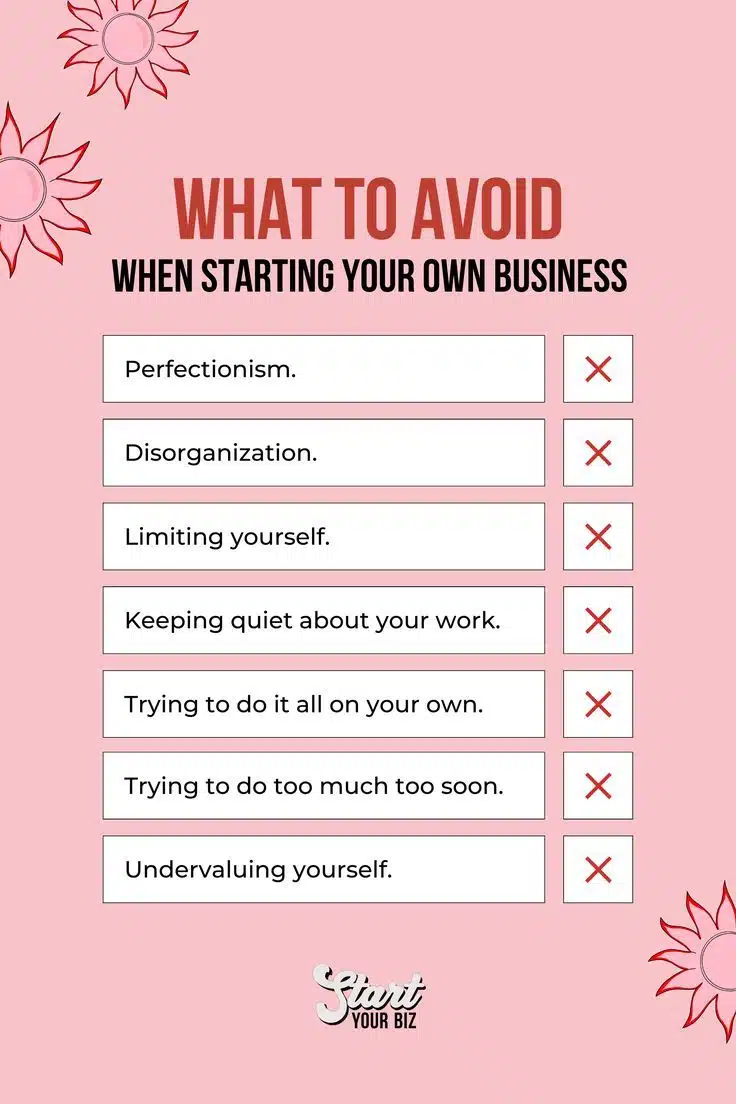
Here’s a summary of what’s covered:
- Perfectionism
- Disorganisation
- Limiting Yourself
- Keeping Quiet About Your Work
- Trying to Do It All on Your Own
- Trying to Do Too Much Too Soon
- Undervaluing Yourself
Check out the post below for more.
Starting a business is exciting, nerve-wracking, and endlessly rewarding. Yet that first year is often a steep learning curve where enthusiasm can easily collide with inexperience. New founders bring big dreams, but also habits and assumptions that can quietly block progress. Knowing what to avoid from day one makes the journey smoother and your business much stronger.
This guide explores the most common pitfalls faced by new entrepreneurs and how to sidestep them. Instead of trial and error, you get a clear map of what not to do, along with practical ways to stay on track. Build awareness early, and you build resilience too. The sooner you recognise these traps, the faster you grow.
Perfectionism
Many entrepreneurs set out believing their brand, website, product, or offer must be flawless before launching. While attention to detail is great, perfectionism delays progress, stalls momentum, and often leads to missed opportunities. Customers value clarity and delivery more than endless polishing. Your first version does not need to be perfect, it simply needs to exist.
Focusing on improvement rather than perfection brings speed, confidence, and feedback. The market will shape your offering better than internal overthinking ever could. Launching early and learning quickly beats waiting forever. Progress is where business growth lives, not in obsessive fine-tuning.
- Launch version one and refine as you go with real user feedback
- Set deadlines for tasks so you avoid getting stuck in endless tweaks
- Use “good enough to test” as a success metric for first drafts
- Adopt a growth mindset by celebrating improvements instead of perfection
Disorganisation
During the first year, chaos can creep in quickly if you do not establish systems early. Without structure, tasks pile up, deadlines slip, and finances become messy. Disorganisation drains time, energy, and confidence, making simple tasks feel overwhelming. It also affects how others perceive your professionalism.
Strong organisation habits build a business that runs smoothly even when demands increase. Clear routines, tools, and documented processes help you stay calm and in control. When you manage your time and operations well, you free space for creativity and growth. Order is not bureaucracy; it is business protection.
- Use project management tools to plan and track tasks
- Maintain clear financial records and review them weekly
- Block your calendar for admin, marketing, and delivery tasks
- Create repeatable systems for inquiries, onboarding, and follow-up
Limiting Yourself
New entrepreneurs sometimes restrict their potential without realising it. This can look like thinking too small, avoiding new opportunities, or believing success is only for others. Self-imposed limits keep you comfortable, but comfort rarely leads to growth. Ambition requires stepping into uncertainty and backing yourself.
When you expand your thinking, you create space for bigger achievements. Success often comes from taking calculated risks and believing your skills can grow with the challenges you take on. Growth starts with mindset, and confidence rises when you stop shrinking your goals to fit your fears.
- Set goals that stretch you beyond your comfort zone
- Surround yourself with ambitious peers and role models
- Replace limiting statements with growth-focused language
- Say yes to opportunities before you feel fully “ready”
Keeping Quiet About Your Work
Many new founders hesitate to talk about their business because they fear judgment, rejection, or appearing “salesy.” Yet silence is one of the biggest barriers to early success. If people do not know what you do, they cannot buy from you or refer you. Visibility drives opportunity, trust, and momentum.
Talking proudly and consistently about your business is not bragging; it is part of your job. Sharing your story builds connection, credibility, and curiosity. The more visible you are, the more familiar your audience becomes with your brand. Every conversation is a seed planted for future growth.
- Share your business journey regularly on social platforms
- Talk confidently about your services when networking socially or professionally
- Create a simple elevator pitch to introduce what you do
- Ask satisfied clients to share your work with others
Trying to Do It All on Your Own
Entrepreneurs often begin with a “lone warrior” mindset, thinking they must handle every task themselves. While independence is admirable, doing everything alone leads to burnout and slows down growth. Time spent learning or performing tasks outside your expertise is time not spent building your core strengths.
Seeking help is not a sign of weakness; it is smart business strategy. Collaboration expands your skill set, increases efficiency, and opens doors to new ideas and opportunities. Support structures, mentors, and networks make the journey lighter and more productive. Success happens faster when you do not try to carry everything alone.
- Delegate tasks that drain your time or energy
- Join business communities or mentorship groups
- Outsource specialist work like accounting, design, or admin
- Build relationships with people who complement your strengths
Trying to Do Too Much Too Soon
In the excitement of year one, it is easy to take on too many projects, services, or ideas at once. Overstretching leads to stress, diluted focus, and inconsistent results. Growth is not about doing everything, but doing the right things in the right order. Pace matters as much as ambition.
Start small, refine your offers, and build a solid foundation before expanding. Consistency beats speed when it comes to sustainable business growth. Long-term success comes from mastering one thing at a time rather than scattering your attention. Progress accelerates when your focus is clear.
- Prioritise tasks that directly support your core goals
- Offer a simplified service list until demand grows
- Track your workload to avoid overwhelm and fatigue
- Set quarterly goals instead of trying to scale instantly
Undervaluing Yourself
Many new entrepreneurs underprice their services or doubt their worth. It can come from fear of rejection, comparison, or feeling inexperienced. Yet undervaluing yourself attracts the wrong clients, reduces motivation, and limits financial growth. Confidence in your value is essential for business health and reputation.
Pricing reflects more than time spent; it reflects expertise, results, and commitment. Your early pricing decisions shape your future brand perception. Believe in the value you bring and charge fairly for your skill, effort, and service quality. When you value yourself, others follow.
- Base pricing on value delivered, not hours worked
- Review and raise rates as your experience grows
- Avoid discounting just to secure clients
- Practice speaking confidently about your prices and expertise
Conclusion
The first year in business is a powerful foundation for everything that follows. By steering clear of perfectionism, building structure, embracing visibility, seeking support, pacing yourself, and valuing your worth, you create conditions for real success. Every entrepreneur meets challenges, but those who recognise and avoid these pitfalls move faster and more confidently toward their goals.
You do not need to get everything right from day one. What matters is learning, adapting, and staying committed to growth. Treat mistakes as lessons, celebrate progress, and remember that building a business is a journey. With awareness and intention, your first year can be the start of something extraordinary.

Author:
Mark Ford