In the fast-paced world of online marketing, content is king. Whether it’s blog posts, social media updates, videos, or emails, the content you create plays a crucial role in attracting and engaging your target audience.
One question that often arises is, “What is the ideal length for online marketing content?” In this blog post, we will delve deep into this topic and explore the ideal content lengths for various online marketing channels and formats.
While there’s no one-size-fits-all answer, understanding the best practices for content length can help you make informed decisions and optimize your marketing strategy for better results.
Infographic by Sumall.
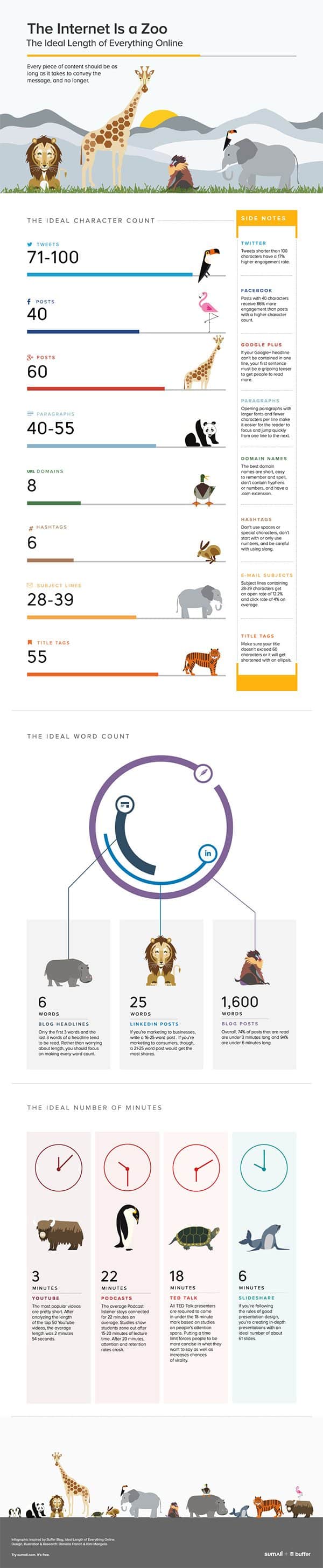
- Blog Posts
Blog posts are a staple of content marketing. They allow you to share valuable information, establish your authority, and connect with your audience. However, the ideal length for a blog post can vary depending on your goals and target audience.
- Short-form blog posts (Under 500 words): Short blog posts are concise and to the point. They are suitable for delivering quick tips, updates, or announcements. They can be effective for engaging busy readers or addressing straightforward topics.
- Medium-length blog posts (Between 500 and 1,000 words): Medium-length blog posts strike a balance between brevity and depth. They allow you to provide valuable insights, answer common questions, and delve into a topic without overwhelming the reader. This length is suitable for most blog posts and can cater to a wide range of readers.
- Long-form blog posts (Over 1,000 words): Long-form blog posts are in-depth, comprehensive pieces of content. They are ideal for tackling complex subjects, conducting thorough research, or offering comprehensive guides and tutorials. Long-form content tends to perform well in search engine rankings and can establish your website as an authority in your niche.
The ideal length for your blog posts depends on your audience’s preferences and your content’s purpose. To determine the sweet spot for your blog, consider conducting A/B testing to see which length resonates best with your readers.
- Social Media Posts
Social media platforms are popular channels for sharing bite-sized content that engages your audience. However, the ideal length for social media posts can vary from one platform to another.
- Twitter: Twitter is known for its brevity, with a character limit of 280 characters (as of my last knowledge update). Ideal tweets are often concise, engaging, and leave room for retweets and comments. However, longer threads can be effective for storytelling or providing step-by-step instructions.
- Facebook: Facebook allows for more extensive posts, but shorter, attention-grabbing content tends to perform better. Aim for posts that are around 40-80 characters for higher engagement. For longer content, consider using Facebook Notes or linking to a blog post.
- Instagram: Instagram’s focus is visual, but captions play a significant role in engaging your audience. Captions can be up to 2,200 characters long, but shorter, compelling captions that complement your visuals tend to perform better. Stories and IGTV allow for longer video content.
- LinkedIn: LinkedIn is a platform for professionals, so longer, informative posts are well-received. Posts of 1,300-2,000 characters that provide valuable insights or share industry knowledge tend to perform best.
- Videos
Video marketing has surged in popularity in recent years, and video length is a critical consideration for this format.
- Short videos (Under 1 minute): Short videos are excellent for quick tips, product demos, or teaser content. Platforms like TikTok and Instagram Reels thrive on short, engaging videos.
- Medium-length videos (1-5 minutes): Medium-length videos allow you to explore topics in more depth. They are suitable for tutorials, interviews, and behind-the-scenes content.
- Long videos (Over 5 minutes): Long videos are best for comprehensive content, such as webinars, online courses, or in-depth explorations of complex subjects. YouTube is a platform where longer videos are commonly found.
The ideal video length depends on your content and platform. Keep in mind that capturing and maintaining the viewer’s attention is crucial, so ensure your content is engaging from start to finish.
- Email Marketing
Email Marketing remains a potent tool for engaging your audience and driving conversions. The ideal length for marketing emails depends on the type of email and your goals.
- Subject lines: Keep email subject lines concise, typically under 50 characters. An intriguing subject line can entice recipients to open your email.
- Marketing emails: For promotional emails, aim for brevity and clarity. Most marketing emails should be around 100-200 words, providing a clear call to action and value proposition.
- Newsletters: Newsletters can vary in length, but a balance between concise highlights and more in-depth content often works well. Segment your email list to send longer newsletters to subscribers who prefer in-depth updates.
- Welcome emails: Welcome emails are an opportunity to make a strong first impression. They can be a bit longer, around 300-500 words, introducing your brand, products, and the benefits of being a subscriber.
- Landing Pages
Landing pages are designed to convert visitors into leads or customers. The ideal length of a landing page depends on its purpose and the complexity of your offer.
- Short landing pages: For a straightforward offer or call to action, a short landing page can work well. These can be as brief as a single page with a compelling headline, a brief description, and a call to action.
- Medium-length landing pages: Medium-length landing pages often provide more information, addressing potential concerns and objections. These can range from 500 to 1,000 words and may include testimonials, benefits, and features.
- Long landing pages: Long landing pages are used for complex offers or products that require detailed explanations. These pages can exceed 1,000 words and include extensive information, frequently asked questions, and social proof.
The length of your landing page should align with your audience’s needs and the complexity of your offer. A/B testing can help determine the most effective length for your specific landing page.
- Podcasts
Podcasts are a popular medium for sharing audio content, and their ideal length can vary based on your content and target audience.
- Mini-episodes (Under 10 minutes): Mini-episodes are short, focused segments that provide quick insights, tips, or updates. They are suitable for maintaining audience engagement between longer episodes.
- Standard episodes (20-60 minutes): Most podcasts fall within the 20-60 minute range, allowing for in-depth discussions, interviews, and storytelling.
- Long-form episodes (Over 60 minutes): Long-form podcasts are ideal for in-depth exploration of complex topics, interviews, or storytelling that requires more time.
Consider your audience’s preferences and the nature of your content when determining the ideal length for your podcast episodes. Regularity and consistency in episode length can also help retain listeners.
Conclusion
The ideal length for your online marketing content depends on a variety of factors, including your goals, target audience, and the platform you’re using. There’s no one-size-fits-all answer, and flexibility is key. It’s essential to continually analyze the performance of your content and make adjustments based on data and feedback.
Remember that quality always trumps quantity. Regardless of length, your online marketing content should provide value, engage your audience, and align with your brand’s message. By understanding the ideal content lengths for different formats and platforms, you can create more effective marketing strategies that resonate with your audience and drive better results.

Author:
Mark Ford