
Are you looking to sharpen your PPC strategy by targeting the right audiences and keywords more effectively? Want to learn the proven steps behind building ads that reach motivated searchers and convert clicks into customers?
You’ll find essential PPC targeting fundamentals in this guide.
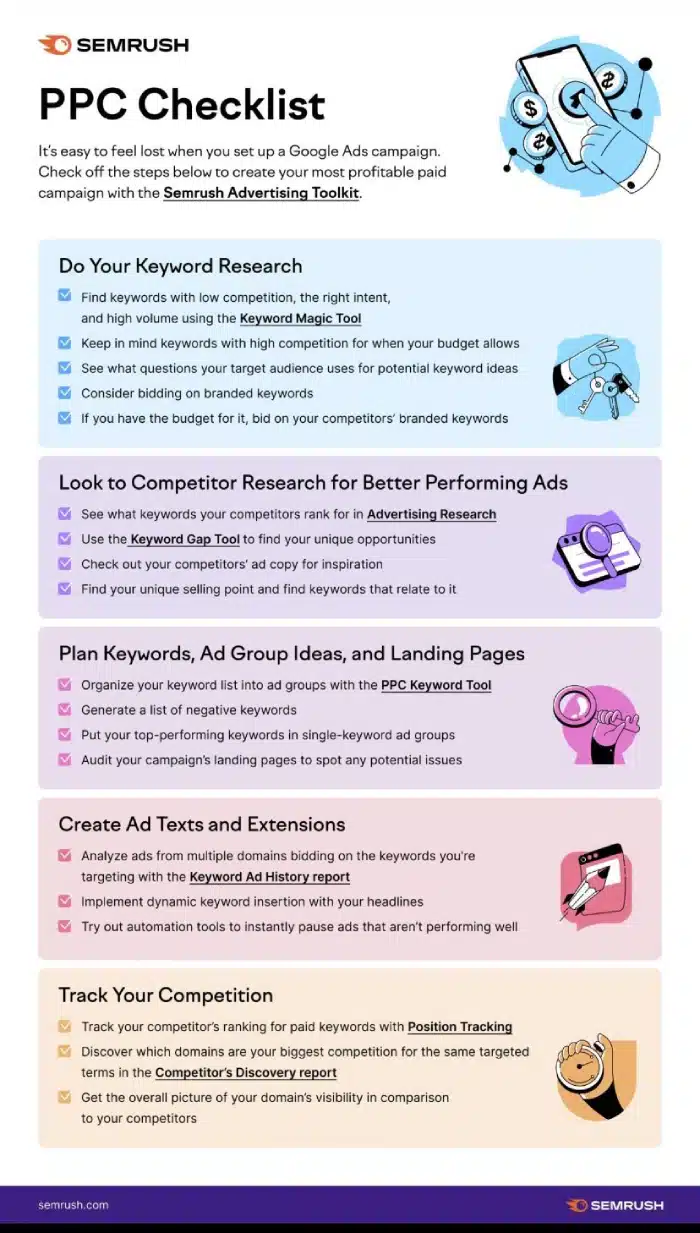
Here’s a summary of what’s covered:
- Do Your Keyword Research
- Look to Competitor Research for Better Performing Ads
- Plan Keywords, Ad Group Ideas, and Landing Pages
- Create Ad Texts and Extensions
- Track Your Competition
Check out the post below for more.
Pay-per-click advertising can feel like a moving target. With rising competition, evolving platforms, and increasingly savvy users, successful PPC campaigns rely on far more than simply choosing a few keywords and hitting launch. To consistently attract the right audience and convert clicks into customers, marketers must understand the full targeting journey — from keyword research to competitor monitoring and campaign optimisation.
This guide walks you through a strategic and structured approach to PPC audience and keyword targeting, showing you how to plan, refine, and scale campaigns based on the same framework used by top paid-media professionals. If you want PPC results that feel intentional, predictable, and profitable, this is your roadmap.
Do Your Keyword Research
Effective PPC starts with keyword research, and not just a quick scan of obvious terms. Successful marketers focus on understanding the language their audience uses, the intent driving those searches, and the competitive landscape surrounding those phrases. When you build campaigns around audience intent rather than guesswork, your ads become more relevant, your targeting sharper, and your budget more efficient.
Keyword research is also about balance. You want low-competition terms while still keeping an eye on high-value keywords you can target once your campaign matures. In addition, branded keywords — both your own and competitors’ — can play a strategic role in protecting your market share and capturing ready-to-convert traffic.
- Find low-competition, high-volume terms with strong intent using keyword research tools
- Keep future growth in mind by noting competitive keywords for later targeting
- Explore audience questions and industry search behaviour to uncover new ideas
- Consider bidding on branded and competitor-branded keywords for strategic positioning
Look to Competitor Research for Better Performing Ads
Your competitors are one of the richest sources of PPC insight available. By analysing where they rank, how they position themselves, and which messaging they lead with, you gain a shortcut to understanding market demand and user motivation. Competitor research helps reveal gaps in your keyword approach, as well as opportunities to outshine brands chasing the same audience.
It is not about copying another advertiser’s strategy. Instead, competitor research helps refine your unique value and identify the angles others may be missing. Use this stage to build a differentiated keyword list, spot ad copy trends, and align your offers with actual market dynamics.
- Identify competitor keyword rankings to guide your own targeting
- Use keyword gap tools to uncover missed opportunities
- Review competitor ad messaging for tone, structure, and value proposition ideas
- Map your unique selling point to search queries that align with your strengths
Plan Keywords, Ad Group Ideas, and Landing Pages
Once you have your keyword insights, structured planning becomes essential. Grouping keywords correctly ensures that your ads remain tightly aligned to search queries, improving both click-through rates and relevance scores. The way you organise this foundation will impact cost, performance, and ad clarity throughout the campaign lifecycle.
Landing pages are just as important as the ads themselves. Even the most precise keyword targeting can fall flat if your landing page experience does not deliver on the promise of your ad. Focus on relevance, messaging consistency, and user experience to convert traffic more effectively and protect your ad spend.
- Use keyword tools to organise targeted terms into structured ad groups
- Build a negative keyword list to filter irrelevant or low-value searches
- Place your highest-value terms into single-keyword ad groups for precision bidding
- Audit landing pages to ensure message alignment and friction-free user experience
Create Ad Texts and Extensions
With your structure in place, your next step is crafting compelling ad copy and selecting the right extensions. Strong PPC ads do more than list features — they reflect user intent, directly address needs, and offer a clear path forward. This is where keyword strategy meets messaging, turning data into clicks and conversions.
Extensions also play a significant role by expanding the information visible on your ad and increasing your real estate on the results page. Combined with automation and intelligent keyword insertion, this stage ensures your ads remain competitive, targeted, and efficient at scale.
- Review ad history data from competing domains to understand messaging performance
- Use dynamic keyword insertion in headlines where appropriate to boost relevance
- Implement structured ad extensions to expand visibility and encourage engagement
- Test automated rules to pause poor-performing ads and prioritise stronger variations
Track Your Competition
Even once your ads are live, the work does not stop. PPC is dynamic, and competitors continually adjust their strategies. Monitoring their movements gives you a proactive advantage, allowing you to defend your position, identify new keyword opportunities, and understand shifts in bidding behaviour or messaging trends.
Competitive tracking is not just about staying even — it is about staying ahead. By monitoring ranking positions and comparing domain visibility, you can adapt your strategy quickly and avoid wasting spend on declining or overcrowded terms.
- Track paid keyword positions to monitor competitor movement and market shifts
- Analyse competing domains to identify your toughest PPC rivals
- Use discovery tools to understand who is targeting the same search terms
- Compare visibility metrics to ensure your campaigns remain competitive and effective
Conclusion
Effective PPC audience and keyword targeting is not a single task but an ongoing, structured process built on data, insight, and consistent optimisation. When you treat keyword research, competitor analysis, ad creation, and monitoring as interconnected steps rather than isolated activities, your campaigns become more powerful and cost-efficient.
This strategic approach gives you clarity, control, and confidence — allowing you to refine messaging, protect your market position, and continuously scale performance. Whether you are launching your first campaign or fine-tuning a mature advertising strategy, focusing on intent, structure, and competitive insight will always deliver stronger results and more profitable clicks.

Author:
Mark Ford