Are you struggling to re-engage visitors who leave your website without converting? Want to discover how personalised remarketing can turn missed opportunities into loyal customers?
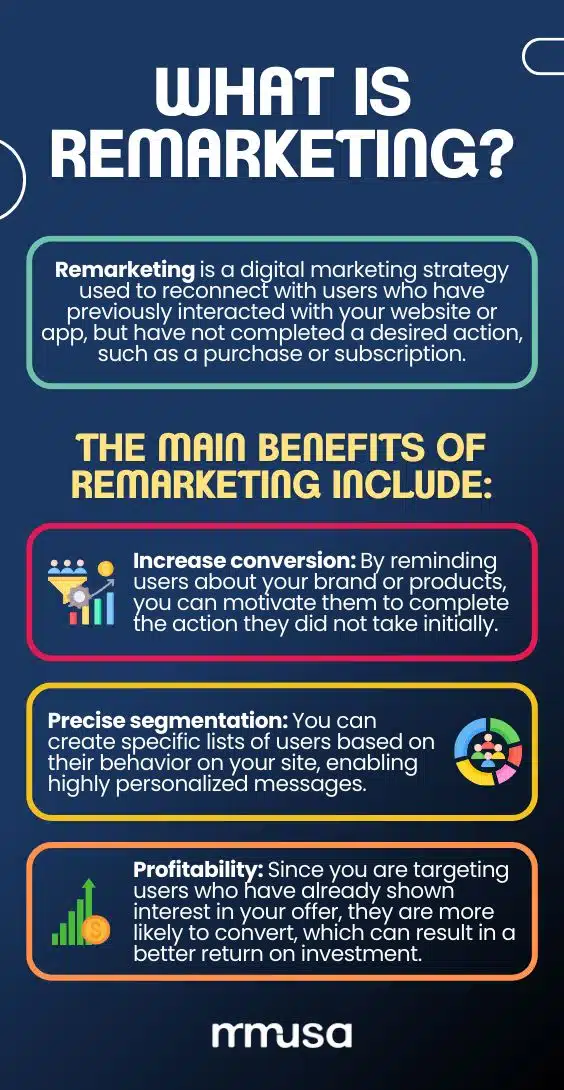
You’ll find some advertising basics in this infographic.
Here’s a summary of what’s covered:
- What Is Remarketing?
- Increase Conversion
- Precise Segmentation
- Profitability
- Builds Familiarity and Trust
- Supports the Buyer’s Journey
- Enhances Ad Relevance
- Improves Campaign Efficiency
- Enables Cross-Channel Consistency
- Drives Long-Term Engagement
Check out the post below for more.
In today’s crowded digital space, grabbing your audience’s attention once isn’t enough. Many visitors will leave your site without taking any action, no matter how compelling your offering may be.
That’s where remarketing comes in—an essential strategy that re-engages users after their initial visit. When paired with personalisation, remarketing becomes even more powerful, helping you drive conversions, improve ROI, and create meaningful connections.
What Is Remarketing?
Remarketing is a digital strategy used to reconnect with people who’ve previously visited your website or app but didn’t convert. Instead of letting them slip away, remarketing reminds them of what they viewed and encourages them to return. It’s a way of staying top-of-mind with an audience that’s already expressed interest. This makes it a highly efficient tool in any marketer’s toolbox.
- Target visitors who browsed but didn’t buy or sign up.
- Re-engage users through email, social ads, or display ads.
- Highlight products or services they previously viewed.
- Drive traffic back to your site with tailored messaging.
Increase Conversion
Most visitors won’t convert on their first visit—but that doesn’t mean the opportunity is lost. Remarketing helps bridge the gap by nudging users back toward the action you want them to take. When you remind people of what they’ve seen, you reignite their interest and boost the chances they’ll follow through. This directly leads to higher conversion rates over time.
- Show dynamic ads based on viewed products or categories.
- Use time-sensitive offers to create urgency.
- Offer exclusive discounts for returning visitors.
- Remind users of abandoned baskets with cart recovery emails.
Precise Segmentation
One of the greatest strengths of remarketing lies in its ability to target the right users with the right message. By segmenting audiences based on behaviour—such as pages viewed, time spent, or funnel stage—you can deliver laser-focused content. This ensures your message feels relevant rather than repetitive, helping you stand out rather than annoy.
- Create segments based on product pages or categories viewed.
- Target users who visited pricing pages or contact forms.
- Build audiences based on time spent or scroll depth.
- Serve different messages to first-time vs. returning visitors.
Profitability
Remarketing doesn’t just improve engagement—it makes your marketing spend more efficient. By focusing on users who’ve already shown intent, you’re investing in an audience more likely to convert. This often leads to a lower cost per acquisition and stronger return on ad spend. In short, personalised remarketing is one of the most cost-effective ways to grow revenue.
- Focus budget on high-intent users to lower acquisition costs.
- Improve ROI by reducing wasted impressions on cold audiences.
- Use A/B testing to optimise messaging for remarketing segments.
- Measure conversion uplift and lifetime value from remarketing campaigns.
Builds Familiarity and Trust
Personalised remarketing creates a sense of familiarity by keeping your brand in the user’s mind. Instead of being a forgotten stop in their browsing history, you become a recognisable presence. Familiarity builds trust, and trust drives engagement. When users repeatedly see tailored ads, they’re more likely to associate your brand with relevance and reliability.
- Use consistent branding and design in remarketing ads.
- Reinforce your brand story through repeated exposure.
- Retarget with content that builds authority (e.g. blogs, testimonials).
- Maintain frequency caps to avoid appearing intrusive.
Supports the Buyer’s Journey
Different users are at different stages in the decision-making process. Remarketing helps guide them forward by providing the right content at the right moment. Whether they’re researching options or ready to buy, personalised remarketing can deliver nudges tailored to their needs. This keeps your funnel flowing and prevents users from falling off the path to conversion.
- Deliver educational content to users in the awareness stage.
- Use product comparisons or case studies for those in consideration.
- Serve testimonials or reviews to reinforce credibility.
- Provide strong CTAs for users who’ve already shown buying intent.
Enhances Ad Relevance
Generic ads often get ignored, but personalised ones grab attention. Remarketing allows you to tailor your messaging based on what users have already seen or done. This makes your ads more relevant, more timely, and more likely to spark action. The result? Better engagement, more clicks, and a stronger brand connection.
- Customise ad copy based on product interests or behaviours.
- Use dynamic creative to update ads with fresh, relevant content.
- Align visual elements with previous user interactions.
- Test different value propositions for different audience segments.
Improves Campaign Efficiency
Remarketing allows marketers to use their resources more efficiently. Instead of casting a wide net and hoping for results, you’re focusing spend on those who already know your brand. This strategic targeting reduces waste and improves the overall performance of your campaigns. The better your segmentation and personalisation, the more you can do with less.
- Allocate more budget to top-performing remarketing segments.
- Pause or adjust campaigns that aren’t converting efficiently.
- Use insights from remarketing data to refine your wider strategy.
- Scale high-performing remarketing campaigns with confidence.
Enables Cross-Channel Consistency
Remarketing doesn’t just happen on one platform. You can retarget users across multiple channels—Google, Facebook, email, LinkedIn, and more. When done right, this creates a seamless user experience and reinforces your message at multiple touchpoints. Personalisation ensures that each ad or email still feels like part of a unified brand conversation.
- Retarget users via display ads, social media, and email marketing.
- Keep messaging consistent across platforms and devices.
- Use platform-specific formats that best suit your audience.
- Sync remarketing lists across ad platforms for maximum reach.
Drives Long-Term Engagement
Even if a user doesn’t convert right away, remarketing can help keep them in your ecosystem. Over time, you can continue to educate, inspire, and engage until they’re ready to act. This builds a stronger relationship and increases the likelihood of repeat business or referrals. Remarketing isn’t just about the short game—it’s about nurturing long-term connections.
- Set up drip email sequences for non-converting leads.
- Share valuable blog content or how-to guides in retargeting campaigns.
- Promote upcoming offers, events, or new products to past visitors.
- Encourage newsletter sign-ups or social follows as lower-barrier actions.
Conclusion
Remarketing is more than just a second chance—it’s a smart, cost-effective way to build engagement and drive growth. When personalised effectively, it enables you to target users with the right message at the right time, creating a smoother, more relevant experience.
Whether you’re aiming to increase conversions, improve ROI, or foster long-term brand loyalty, remarketing should be a key part of your digital strategy. Harness its power, and you’ll turn missed opportunities into meaningful results.

Author:
Mark Ford