
Are you struggling to find the time to create a structured marketing plan for your business? Want a clear, step-by-step blueprint that helps you turn ideas into measurable results?
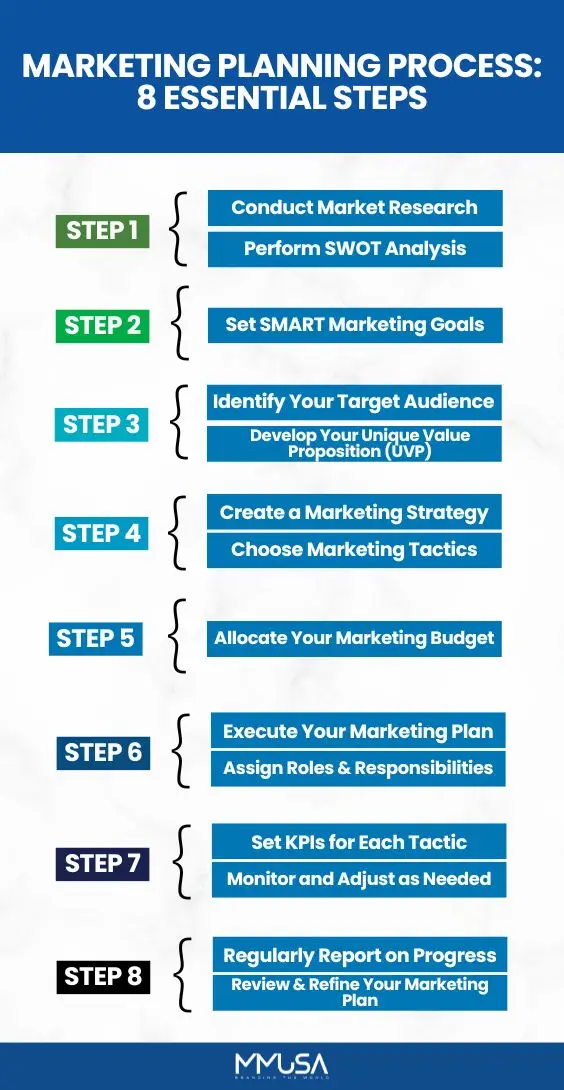
You’ll find some marketing basics in this infographic.
Here’s a summary of what’s covered:
- Research & Analysis
- Goal Setting
- Audience & Positioning
- Strategy & Tactics
- Budget Planning
- Plan Execution
- Tracking & Optimisation
- Reporting & Refinement
Check out the post below for more.
Running a business means juggling a lot of moving parts, and marketing can easily get pushed down the list. Yet without a solid plan, your efforts risk becoming scattered and ineffective. A well-structured marketing plan gives your business clarity, direction, and measurable results.
This blueprint will guide you step by step so you can create a marketing plan that works — even if you have a busy schedule.
Research & Analysis
Before you can make decisions about where to focus your marketing efforts, you need to understand the landscape you’re operating in. Research allows you to gather data on your industry, customers, and competitors. Analysing this information helps you identify opportunities and avoid wasting resources. Start with market research, then assess your internal strengths and weaknesses with a SWOT analysis.
- Conduct surveys or interviews to understand customer needs, preferences, and pain points.
- Analyse competitors’ websites, ads, and messaging to spot gaps you can fill.
- Use industry reports and data tools to uncover trends and market potential.
- Perform a SWOT analysis to map strengths, weaknesses, opportunities, and threats.
Goal Setting
Setting clear goals gives your marketing plan direction and helps you measure success. Without them, you risk spreading your efforts too thin and missing opportunities. SMART goals (Specific, Measurable, Achievable, Relevant, Time-bound) keep you focused and accountable. These goals will inform your budget, strategy, and tactics.
- Define what you want to achieve, such as lead generation, brand awareness, or sales growth.
- Make goals measurable with numbers, percentages, or deadlines.
- Ensure goals are realistic based on your current resources and capabilities.
- Align goals with wider business objectives to stay on track strategically.
Audience & Positioning
Your marketing will only work if it speaks to the right people in the right way. Identifying your target audience allows you to focus on prospects most likely to buy from you. Once you know who they are, create a unique value proposition (UVP) that communicates why your business is the best choice. This is the foundation of effective messaging.
- Build detailed customer personas including demographics, motivations, and buying behaviour.
- Segment audiences if you have multiple customer types with different needs.
- Craft a clear UVP that highlights the main benefit you offer and what sets you apart.
- Test your messaging on real customers and refine based on feedback.
Strategy & Tactics
A strategy is your high-level plan, while tactics are the specific actions you’ll take to make that plan work. This stage is about connecting the dots between your research, goals, and audience insights. Choose channels and activities that reach your audience effectively and fit your budget and resources.
- Select a mix of digital and offline channels based on where your audience spends time.
- Map out a customer journey to plan touchpoints from awareness to purchase.
- Prioritise tactics that give the best return on investment for your objectives.
- Document your strategy so everyone involved has a clear reference point.
Budget Planning
Even the best marketing strategy will fail without realistic funding. Budgeting ensures you can execute your plan consistently over time. A good marketing budget covers advertising costs, tools, software, content creation, and labour. This step helps prevent overspending and keeps your strategy sustainable.
- Base your budget on a percentage of revenue or a fixed allocation that matches growth goals.
- Break down costs by channel and campaign to track spending more accurately.
- Factor in hidden expenses such as design, copywriting, and marketing software.
- Leave some budget aside for testing and new opportunities that arise mid-year.
Plan Execution
Now it’s time to put everything into action. Execution is where planning becomes reality, and assigning roles ensures accountability. When everyone knows what they’re responsible for, campaigns run more smoothly and deadlines are met. This is a crucial step for busy business owners to avoid bottlenecks and confusion.
- Create a timeline or content calendar to map activities across weeks and months.
- Assign tasks clearly to team members, contractors, or agencies.
- Hold regular check-ins to ensure progress is on schedule and issues are addressed quickly.
- Keep communication open so everyone stays aligned with the overall strategy.
Tracking & Optimisation
Marketing isn’t a “set it and forget it” process. Tracking performance helps you see what’s working and what isn’t so you can make adjustments. Regular optimisation saves money, improves results, and keeps your marketing plan relevant as market conditions change.
- Choose key performance indicators (KPIs) that align with your goals for each tactic.
- Use analytics tools to measure traffic, engagement, leads, and conversions.
- Identify underperforming areas and tweak messaging, channels, or targeting.
- Celebrate successes and double down on the tactics producing the best results.
Reporting & Refinement
The final step is to review your results and learn from them. Reporting gives you a big-picture view of how your efforts are paying off. Use these insights to refine your plan and improve future campaigns. This is a continuous cycle that keeps your marketing plan effective over the long term.
- Create regular reports summarising performance against your KPIs.
- Share results with stakeholders to demonstrate ROI and maintain buy-in.
- Look for patterns that reveal which tactics drive the most value.
- Adjust your strategy and goals based on the data to keep improving.
Conclusion
A strong marketing plan doesn’t have to be complicated, but it does need structure. By following this eight-step blueprint, you can focus your efforts, use your budget wisely, and create campaigns that truly move the needle for your business.
As a busy business owner, this process gives you clarity and control — freeing you to concentrate on serving your customers while knowing your marketing is working hard behind the scenes.

Author:
Mark Ford

85 Game-Changing Tools for Creators, Marketers, and Entrepreneurs
Are you searching for powerful yet free tools to help you grow your brand, streamline your workflow, and boost your online presence? Want to discover game-changing platforms that every creator, marketer, and entrepreneur should be using right now? […]