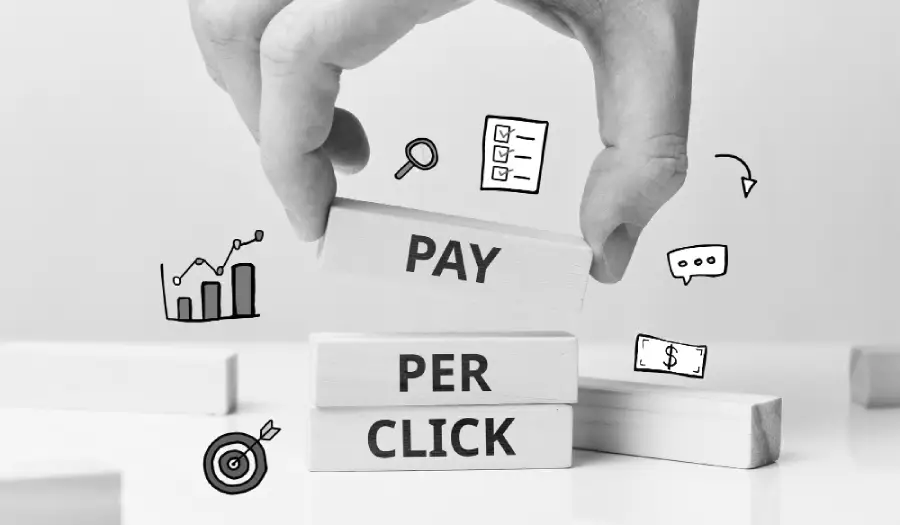
Are you struggling to turn your ad spend into real results with PPC? Want to learn the essential steps to build a profitable, high-performing PPC campaign?
You’ll find some PPC basics in this infographic.
Here’s a summary of what’s covered:
- Clear Goals and Objectives
- Thorough Keyword Research
- Compelling Ad Copy
- Landing Page Optimisation
- Bid Management
- Continuous Monitoring and Analysis
- A/B Testing
Check out the post below for more.

Running a successful pay-per-click (PPC) campaign is about more than just setting up an ad and watching the clicks roll in. It takes strategic planning, continuous refinement, and a deep understanding of your target audience.
If you want to make your PPC budget work harder and deliver measurable results, you need a checklist that covers every essential element. Below, we walk through the seven crucial steps to help you build and maintain a PPC campaign that drives profitability.
Clear Goals and Objectives
Before launching any PPC campaign, you need to define what success looks like. Setting clear goals ensures every decision—from budget to ad copy—is aligned with a measurable outcome. Whether your focus is lead generation, ecommerce sales, or boosting website traffic, your campaign’s structure should reflect those aims. Clear objectives also help you track performance and evaluate ROI accurately.
- Define your primary goal (e.g., sales, leads, awareness) before building the campaign.
- Choose the right conversion metrics for each campaign type.
- Align ad messaging and targeting with your end objectives.
- Use goal-setting frameworks like SMART to guide planning and optimisation.
Thorough Keyword Research
The backbone of every successful PPC campaign is a solid keyword strategy. By identifying the exact terms your audience is searching for, you can create ads that match intent and maximise relevance. Skipping keyword research often leads to wasted spend and low-quality clicks. Invest time upfront to ensure your ads are seen by the right people at the right time.
- Use tools like Google Keyword Planner or SEMrush to discover relevant terms.
- Focus on long-tail keywords to capture high-intent searches.
- Organise keywords by themes to improve Quality Score and ad relevance.
- Include negative keywords to filter out irrelevant traffic.
Compelling Ad Copy
Your ad copy is what convinces someone to stop scrolling and click. It needs to be clear, persuasive, and relevant to the user’s search intent. Good copy stands out by addressing pain points and highlighting unique benefits. Remember, you have only a few seconds to make an impression, so every word matters.
- Use strong, benefit-led headlines that match keyword intent.
- Include a clear call to action that tells users what to do next.
- Highlight unique selling points like discounts, speed, or free trials.
- Use ad extensions to add extra value and improve click-through rates.
Landing Page Optimisation
Once someone clicks your ad, your landing page needs to close the deal. A poorly optimised landing page can derail even the best PPC campaign. Your page should deliver exactly what the ad promised and make it easy for users to take the next step. From design to messaging, everything should feel seamless and relevant.
- Match your landing page content to your ad headline and keywords.
- Optimise for mobile speed and usability to reduce bounce rates.
- Include a single, prominent call to action above the fold.
- Use trust signals like testimonials, reviews, or secure checkout icons.
Bid Management
Getting the most out of your ad spend means managing your bids intelligently. You need to strike the right balance between cost per click and return on investment. Underbidding might lose you visibility, while overbidding can drain your budget quickly. A data-driven approach ensures you stay competitive without overspending.
- Use automated bidding strategies for efficiency if you lack manual control time.
- Adjust bids based on device, location, and time-of-day performance.
- Monitor your cost-per-acquisition to stay within profitable margins.
- Test manual bidding on high-value keywords to refine control.
Continuous Monitoring and Analysis
Launching your campaign is just the beginning—ongoing monitoring is where success is shaped. Without regular analysis, you can’t identify what’s working and what needs improvement. Monitoring helps you spot issues early and make adjustments before they impact your budget. Data should guide every decision, from ad tweaks to audience targeting.
- Review campaign data at least weekly to stay ahead of trends.
- Set up conversion tracking to measure performance accurately.
- Compare performance across campaigns, devices, and audiences.
- Pause underperforming ads and reallocate budget to high-converting ones.
A/B Testing
What works in one campaign might flop in another, which is why testing is crucial. A/B testing allows you to compare variations and refine your approach based on results. By isolating individual elements, such as headlines or calls to action, you can optimise performance methodically. Continuous testing leads to smarter, more effective campaigns over time.
- Test one variable at a time to measure its direct impact.
- Experiment with different headlines, images, CTAs, and ad formats.
- Analyse test results objectively and implement winning variations.
- Repeat the testing cycle regularly to keep improving your campaigns.
Conclusion
PPC success doesn’t happen by accident—it’s the result of planning, execution, and refinement. By following this seven-step checklist, you can build campaigns that don’t just generate clicks, but deliver meaningful business outcomes.
From setting clear goals to running strategic A/B tests, each step plays a vital role in increasing your return on ad spend. Stick to the checklist, adapt based on performance data, and keep fine-tuning—because in PPC, small improvements can lead to big results.

Author:
Mark Ford