
Are you struggling to build followers on Twitter? Are you losing followers just as fast as you’re gaining them?
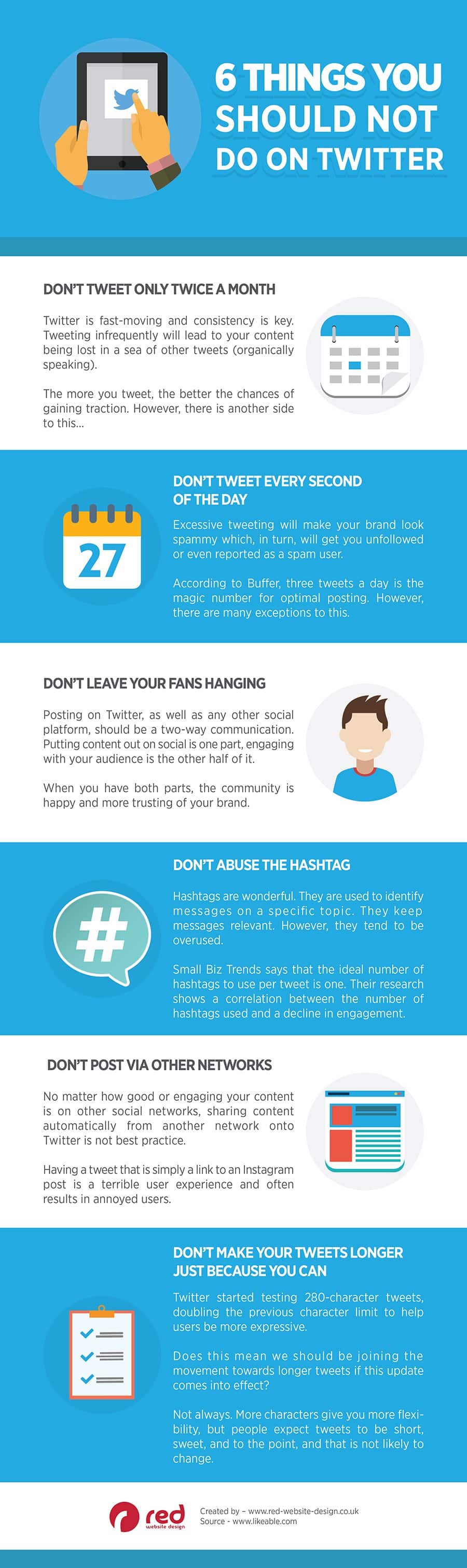
We share 6 things you shouldn’t do on Twitter in this infographic.
I’ve summarised the key points below:
- Don’t tweet only twice a month
- Don’t tweet every second of the day
- Don’t leave your fans hanging
- Don’t abuse the hashtag
- Don’t post via other networks
- Don’t make your tweets longer just because you can
Hope the infographic helps!
In the fast-paced world of social media, maintaining an active and engaged following on Twitter is a delicate balancing act. With millions of tweets sent out every day, it’s easy to get lost in the noise or, worse, alienate your audience.
Here are six common mistakes that can lead to unfollows and how to avoid them.
Don’t Tweet Only Twice a Month
For small businesses, maintaining a strong presence on Twitter is crucial for brand visibility, customer engagement, and driving sales. Consistency in posting is key to staying relevant in the fast-paced world of social media.
When you tweet regularly, you keep your brand at the forefront of your audience’s minds. This helps in building brand recognition and trust over time.
Establishing a Posting Schedule
One of the first steps to avoiding the pitfall of tweeting only twice a month is to establish a regular posting schedule. Here’s how small businesses can achieve this:
- Content Calendar: Create a monthly content calendar to plan your tweets in advance. This should include a mix of promotional content, industry news, customer testimonials, and engaging questions or polls. Planning ahead ensures you have a steady stream of content and helps avoid the last-minute scramble for ideas.
- Daily and Weekly Themes: Assign specific themes or topics to certain days of the week. For instance, you could have “Tip Tuesdays” where you share useful advice related to your industry, or “Throwback Thursdays” to post about your company’s history or milestones. This approach not only makes planning easier but also gives your followers something to look forward to.
- Automated Scheduling Tools: Utilize tools like TweetDeck, Hootsuite, or Buffer to schedule your tweets. These tools allow you to plan and automate your posts, ensuring your account remains active even during busy periods. Automation can help maintain consistency without requiring you to be online 24/7.
Crafting Engaging Content
Regular posting is essential, but the content you share must also be engaging and valuable to your audience. Here are some tips for small businesses to create compelling tweets:
- Know Your Audience: Understand who your followers are and what interests them. Use Twitter Analytics to gain insights into their demographics, interests, and engagement patterns. Tailor your content to meet their preferences and needs.
- Mix of Content Types: Variety is crucial. Alternate between different types of content such as text posts, images, videos, infographics, and links to blog posts or articles. Visual content, in particular, tends to attract more engagement.
- Calls to Action: Encourage interaction by including clear calls to action in your tweets. Ask questions, invite followers to share their opinions, or prompt them to retweet or click on a link. Engaging directly with your audience fosters a sense of community and keeps them coming back for more.
- User-Generated Content: Highlight content created by your customers. Retweet their posts, share their testimonials, or feature their photos using your products. This not only provides you with content but also builds a stronger connection with your audience.
Leveraging Trends and Hashtags
Staying current with trending topics and relevant hashtags can significantly boost your visibility on Twitter. Here’s how small businesses can effectively leverage trends:
- Trending Topics: Keep an eye on the trending section on Twitter and participate in conversations that are relevant to your industry or audience. This can increase your reach and attract new followers who are interested in those topics.
- Industry Hashtags: Use popular hashtags within your niche to increase the discoverability of your tweets. For example, if you’re in the fitness industry, hashtags like #FitFam or #HealthyLiving can help connect you with a larger audience.
- Create Your Own Hashtag: Develop a unique hashtag for your brand. Encourage your followers to use it when they mention your products or services. This can help create a sense of community and make it easier to track conversations about your brand.
Monitoring and Adapting
Regularly monitor the performance of your tweets to understand what works best for your audience. Here’s how:
- Twitter Analytics: Use Twitter Analytics to track the performance of your tweets. Pay attention to metrics such as engagement rate, likes, retweets, and clicks. This data can help you identify which types of content resonate most with your audience.
- Feedback Loop: Encourage feedback from your followers. Ask them what type of content they enjoy and what they’d like to see more of. This can provide valuable insights and help you tailor your content strategy to better meet their needs.
- Adapt and Iterate: Be prepared to adapt your strategy based on the performance data and feedback you receive. If certain types of posts consistently perform well, focus on creating more of that content. Conversely, if some content doesn’t engage your audience, consider phasing it out or trying a different approach.
Consistent Engagement
Consistency in posting also means being consistently engaged with your audience. Here’s how to maintain active engagement:
- Respond to Interactions: Make it a habit to respond to comments, questions, and mentions. This shows your followers that you value their input and are attentive to their needs.
- Engage with Others: Don’t just focus on your own tweets. Engage with tweets from other users, especially those from influencers, customers, or industry leaders. Retweet interesting posts, comment on relevant discussions, and show your support for others in your community.
- Monitor Mentions: Keep track of mentions of your brand or products. Use tools like TweetDeck to set up alerts for specific keywords related to your business. This allows you to quickly respond to any conversations involving your brand.
Highlighting Promotions and Events
Regular tweeting provides an excellent opportunity to promote your business’s events, sales, and special offers. Here’s how to do it effectively:
- Plan Promotions: Use your content calendar to schedule tweets about upcoming promotions or events. Tease the event in advance, provide updates as it approaches, and post reminders on the day of the event.
- Live Tweets: If you’re hosting a live event or participating in a conference, use Twitter to provide real-time updates. This can help generate excitement and make your followers feel included in the experience.
- Exclusive Offers: Offer exclusive discounts or promotions to your Twitter followers. This not only incentivizes following but also rewards your most engaged audience members.
Encouraging Cross-Platform Engagement
While it’s important to create content specifically for Twitter, you can also use the platform to drive traffic to your other online presences. Here’s how:
- Promote Blog Posts: Share links to your latest blog posts or articles with a brief summary or an intriguing question to encourage clicks.
- Highlight Other Social Media: Occasionally promote your other social media accounts. For example, invite your Twitter followers to check out your Instagram for behind-the-scenes content or your LinkedIn for professional updates.
- Email Newsletter: Encourage your Twitter followers to subscribe to your email newsletter for more in-depth content and exclusive offers.
For small businesses, avoiding the pitfall of tweeting only twice a month is crucial for maintaining an engaged and growing audience on Twitter.
By establishing a regular posting schedule, crafting engaging content, leveraging trends and hashtags, monitoring performance, maintaining consistent engagement, highlighting promotions, and encouraging cross-platform engagement, you can create a vibrant and active Twitter presence.
This not only helps in building brand recognition and trust but also drives customer engagement and business growth. Remember, the key is to stay consistent, relevant, and responsive to your audience’s needs.
Don’t Tweet Every Second of the Day
For small businesses, the temptation to tweet excessively can be strong, especially if you have a lot of information to share or want to stay top-of-mind with your audience. However, over-tweeting can lead to several negative consequences, including:
- Audience Fatigue: Constant tweeting can overwhelm your followers, causing them to feel bombarded by your content. This can lead to frustration and annoyance, resulting in unfollows.
- Dilution of Key Messages: When you tweet too frequently, important updates or promotions can get lost in the noise. Your audience may miss key messages because they’re buried under a deluge of other tweets.
- Perception of Spamming: Excessive tweeting can make your account look spammy and desperate for attention. This can damage your brand’s reputation and make it appear unprofessional.
Finding the Right Balance
To avoid the pitfalls of over-tweeting, it’s essential to find a balance that keeps your audience engaged without overwhelming them. Here are some strategies to achieve this:
- Optimal Tweet Frequency: Research suggests that tweeting 3-5 times per day is a sweet spot for many businesses. This frequency keeps your account active and visible without inundating your followers. However, the optimal number can vary depending on your audience and industry, so it’s important to experiment and find what works best for you.
- Quality Over Quantity: Focus on the quality of your tweets rather than the quantity. Each tweet should provide value to your followers, whether it’s informative, entertaining, or engaging. High-quality content is more likely to be liked, retweeted, and commented on, enhancing your reach and engagement.
Crafting High-Impact Tweets
Instead of tweeting constantly, aim to create high-impact tweets that resonate with your audience. Here’s how:
- Be Concise and Clear: Twitter users appreciate brevity. Craft your tweets to be concise and to the point, ensuring your message is clear and easily digestible. Avoid unnecessary fluff and focus on delivering your key points effectively.
- Use Visuals: Visual content such as images, GIFs, and videos can significantly boost engagement. Tweets with visuals are more likely to catch the eye and encourage interaction. Ensure your visuals are relevant and high-quality to enhance their impact.
- Engaging Content: Create tweets that encourage interaction. Ask questions, run polls, and prompt your followers to share their opinions or experiences. Engaging content fosters a sense of community and keeps your audience interested.
Scheduling and Timing
Effective scheduling and timing can help you maintain a balanced tweet frequency without overwhelming your followers. Here’s how:
- Peak Engagement Times: Use Twitter Analytics or tools like Tweriod to identify when your audience is most active. Schedule your tweets during these peak times to maximize visibility and engagement.
- Spacing Out Tweets: Avoid posting multiple tweets in quick succession. Space out your tweets throughout the day to ensure your content reaches a wider audience and doesn’t flood their feeds. Tools like Buffer and Hootsuite can help automate and optimize your posting schedule.
- Content Calendar: Develop a content calendar to plan your tweets in advance. This helps you maintain a consistent posting schedule without the risk of over-tweeting. A content calendar also ensures a diverse mix of content, keeping your feed interesting and engaging.
Monitoring and Adjusting
Regularly monitoring your tweet performance is crucial to avoid over-tweeting and to refine your strategy. Here’s how:
- Track Engagement Metrics: Use Twitter Analytics to track the performance of your tweets. Pay attention to metrics like likes, retweets, replies, and click-through rates. Identify patterns and determine which types of content and posting times generate the most engagement.
- Listen to Your Audience: Pay attention to feedback from your followers. If you notice a drop in engagement or an increase in unfollows, it might be a sign that you’re tweeting too much. Adjust your strategy based on audience feedback to maintain a positive relationship with your followers.
- Competitor Analysis: Observe the tweeting habits of successful competitors or industry leaders. Analyze their frequency, content types, and engagement levels. This can provide valuable insights and help you fine-tune your own strategy.
Building a Content Strategy
A well-defined content strategy can help you maintain an optimal tweet frequency while ensuring your content remains engaging and valuable. Here’s how to build one:
- Content Pillars: Identify key themes or topics that align with your brand and audience interests. These content pillars should guide your tweet creation and ensure a consistent and focused messaging strategy. For example, a fitness brand might focus on workout tips, nutrition advice, and success stories.
- Content Mix: Diversify your content to keep your feed interesting. Mix promotional tweets with educational content, industry news, customer testimonials, and engaging questions. A varied content mix keeps your audience engaged and reduces the risk of over-tweeting.
- Campaign Planning: Plan content campaigns around specific events, promotions, or themes. Campaigns provide structure to your tweeting schedule and help maintain a consistent narrative. For example, you might run a week-long campaign focused on a new product launch, with daily tweets highlighting different features and benefits.
Engaging with Your Audience
Active engagement with your audience can help you maintain a balanced tweet frequency while fostering a strong community. Here’s how:
- Respond to Interactions: Make it a priority to respond to comments, mentions, and direct messages. Engaging with your audience shows that you value their input and builds stronger relationships. It also provides content for your feed without the need for excessive tweeting.
- User-Generated Content: Encourage your followers to create and share content related to your brand. Retweeting user-generated content not only provides social proof but also reduces the need for you to create every tweet. Celebrate and showcase your customers’ experiences to build a sense of community.
- Join Conversations: Participate in relevant conversations and trending topics within your industry. Engaging with existing discussions can increase your visibility and position your brand as an active and informed participant in your field.
Leveraging Analytics and Feedback
Continuous improvement is key to maintaining an effective Twitter strategy. Leverage analytics and feedback to refine your approach:
- Regular Reviews: Conduct regular reviews of your Twitter performance. Analyze engagement metrics, audience growth, and content effectiveness. Use this data to adjust your tweeting frequency and content strategy as needed.
- A/B Testing: Experiment with different tweet frequencies, content types, and posting times. Conduct A/B tests to determine what resonates best with your audience. For example, you might test the performance of tweets posted three times a day versus five times a day.
- Feedback Loop: Create a feedback loop with your audience. Encourage them to share their thoughts on your content and posting frequency. Use this feedback to make informed adjustments and improve your overall strategy.
For small businesses, avoiding the trap of tweeting every second of the day is crucial for maintaining a positive and engaging Twitter presence.
By finding the right balance, crafting high-impact tweets, scheduling effectively, monitoring performance, building a solid content strategy, engaging with your audience, and leveraging analytics and feedback, you can ensure your tweets resonate without overwhelming your followers.
This balanced approach not only helps maintain a loyal and engaged audience but also strengthens your brand’s reputation and effectiveness on Twitter.
Don’t Leave Your Fans Hanging
Engagement is at the heart of social media success, especially for small businesses looking to build a loyal customer base. When followers interact with your content by commenting, liking, or retweeting, it’s essential to acknowledge their efforts.
Ignoring these interactions can make your followers feel undervalued and disconnected from your brand, which can lead to disengagement and unfollows.
Prompt and Personalized Responses
One of the most effective ways to avoid leaving your fans hanging is by responding promptly and personally to their interactions. Here’s how to achieve this:
- Timely Replies: Aim to respond to comments, mentions, and direct messages as quickly as possible. Timeliness shows that you are attentive and care about your audience’s input. Set aside specific times each day to check and respond to interactions to ensure no comment or message goes unnoticed.
- Personal Touch: Personalize your responses to make your followers feel special. Use their names when replying and reference specific points they’ve made. Personalization shows that you’re not just giving generic replies but are genuinely engaged in the conversation.
- Thank You Messages: Always thank your followers for their support, whether they’re sharing your content, leaving positive comments, or providing valuable feedback. A simple “thank you” can go a long way in building goodwill and encouraging continued engagement.
Encouraging Interaction
To foster a more engaged community, actively encourage interaction and make it easy for your followers to engage with your content. Here’s how:
- Ask Questions: End your tweets with questions to prompt your followers to share their thoughts and experiences. For example, if you’re a bakery, you might tweet, “What’s your favorite dessert from our menu? Let us know in the comments!”
- Run Polls: Use Twitter’s polling feature to ask your audience’s opinion on various topics related to your business. Polls are a fun and interactive way to engage your followers and gather insights. For instance, a fitness studio could run a poll asking, “What’s your preferred workout time? Morning, Afternoon, or Evening?”
- Contests and Giveaways: Organize contests and giveaways that require followers to interact with your tweets, such as liking, retweeting, or commenting. This not only boosts engagement but also increases your visibility and reach.
Handling Negative Feedback
Not all interactions will be positive, and how you handle negative feedback can significantly impact your brand’s reputation. Here’s how to manage negative comments effectively:
- Address Complaints Quickly: Respond to negative comments or complaints promptly. Ignoring them can escalate the situation and damage your reputation. Acknowledge the issue, apologize if necessary, and provide a solution or direct the conversation to a private message to resolve the matter.
- Stay Professional: Always maintain a professional and courteous tone, even when dealing with difficult customers. Avoid getting defensive or argumentative. Show empathy and understanding, and focus on resolving the issue amicably.
- Learn from Feedback: Use negative feedback as an opportunity to learn and improve. Analyze the complaints to identify common issues and take steps to address them. Publicly demonstrating that you’re willing to learn and improve can turn a negative experience into a positive one.
Creating a Community
Building a sense of community around your brand encourages ongoing engagement and loyalty. Here’s how to create a strong community on Twitter:
- Showcase User-Generated Content: Highlight content created by your customers, such as photos, testimonials, and reviews. Retweet or share these posts, and give credit to the original creators. This not only provides you with additional content but also makes your customers feel valued and appreciated.
- Engage with Influencers: Collaborate with influencers within your industry to expand your reach and build credibility. Engage with their content by commenting and sharing, and involve them in your campaigns when possible. Their endorsement can encourage their followers to engage with your brand.
- Host Twitter Chats: Organize and host Twitter chats on topics relevant to your industry. Promote the chat in advance and use a specific hashtag to track the conversation. Twitter chats provide a platform for in-depth discussions and allow you to interact with your audience in real-time.
Consistent Engagement Strategy
Having a consistent engagement strategy ensures that you’re regularly interacting with your audience and not leaving them hanging. Here’s how to develop and implement one:
- Set Engagement Goals: Define clear goals for your engagement efforts, such as increasing the number of replies, comments, or retweets. Setting specific, measurable goals helps you track progress and adjust your strategy as needed.
- Use Engagement Tools: Utilize social media management tools like TweetDeck, Hootsuite, or Sprout Social to monitor interactions and streamline your engagement efforts. These tools allow you to track mentions, comments, and messages in one place, making it easier to respond promptly.
- Regular Engagement Activities: Schedule regular activities that encourage interaction, such as weekly Q&A sessions, live tweeting during events, or themed days where you focus on specific topics. Consistent activities create anticipation and habit among your followers.
Training Your Team
If you have a team managing your social media, ensure they are well-trained in engagement best practices. Here’s how to effectively train your team:
- Standard Responses: Develop a set of standard responses for common questions and situations. While it’s important to personalize replies, having templates can help maintain consistency and efficiency.
- Customer Service Training: Train your team in customer service skills, including how to handle difficult situations and provide excellent support. Emphasize the importance of empathy, professionalism, and problem-solving.
- Regular Updates: Keep your team updated on any changes in your engagement strategy or policies. Regular meetings or briefings can help ensure everyone is on the same page and aligned with your brand’s approach to customer interaction.
Leveraging Analytics
Regularly analyzing your engagement metrics helps you understand what’s working and where there’s room for improvement. Here’s how to use analytics effectively:
- Engagement Rate: Track your engagement rate, which includes likes, comments, retweets, and shares. A high engagement rate indicates that your content resonates with your audience.
- Response Time: Measure your average response time to comments and messages. Aim to reduce this time to show your followers that you’re attentive and responsive.
- Feedback Analysis: Analyze the feedback you receive, both positive and negative. Look for patterns and recurring themes that can provide insights into your audience’s preferences and pain points.
For small businesses, not leaving your fans hanging is crucial for building and maintaining a loyal and engaged following on Twitter.
By responding promptly and personally, encouraging interaction, handling negative feedback effectively, creating a sense of community, implementing a consistent engagement strategy, training your team, and leveraging analytics, you can ensure your audience feels valued and connected to your brand.
Engaging consistently and thoughtfully with your followers not only enhances their experience but also strengthens your brand’s reputation and fosters long-term loyalty.
Don’t Abuse the Hashtag
Hashtags are a powerful tool on Twitter that help categorize content, increase visibility, and engage with broader conversations. However, the misuse or overuse of hashtags can have negative consequences for your small business, making your tweets look spammy and unprofessional.
Here’s how to use hashtags effectively to enhance your Twitter presence without overdoing it.
The Risks of Hashtag Abuse
Before diving into tips, it’s essential to understand why abusing hashtags can be detrimental:
- Spammy Appearance: Using too many hashtags can make your tweets look cluttered and spammy, deterring followers and potential customers.
- Reduced Engagement: Overloading tweets with hashtags can reduce readability and engagement. Followers might ignore or skim over such tweets.
- Irrelevant Audience: Using irrelevant or overly popular hashtags might attract the wrong audience, leading to low-quality engagement and potentially damaging your brand’s reputation.
Best Practices for Using Hashtags
To avoid the pitfalls of hashtag abuse, small businesses should follow these best practices:
- Limit the Number of Hashtags: Aim to use no more than two to three hashtags per tweet. This keeps your content clean and focused, making it easier for followers to read and engage with your message.
- Use Relevant Hashtags: Ensure that the hashtags you use are relevant to the content of your tweet and your business. This helps attract an audience genuinely interested in your brand and its offerings.
- Research Popular Hashtags: Use tools like Hashtagify, RiteTag, or Twitter’s own search function to find popular hashtags within your industry. Participating in trending hashtags can increase your visibility but make sure they are relevant to your message.
Creating and Promoting Your Own Hashtag
Creating a unique, branded hashtag can help build your business’s identity and foster a sense of community among your followers. Here’s how to create and promote your own hashtag effectively:
- Choose a Simple and Memorable Hashtag: Your branded hashtag should be short, easy to spell, and memorable. Avoid complex or lengthy phrases that might be hard for followers to remember or use.
- Promote Your Hashtag: Consistently use your branded hashtag in your tweets and encourage your followers to use it as well. Feature it in your bio, marketing materials, and at the end of your tweets.
- Engage with Your Hashtag: Monitor the usage of your branded hashtag and engage with users who use it. Retweet, like, and reply to their posts to encourage further use and foster a sense of community.
Participating in Trending Hashtags
Trending hashtags can provide a significant boost in visibility if used correctly. Here’s how to participate in trending hashtags without appearing opportunistic:
- Stay Relevant: Only use trending hashtags that are relevant to your business or the content you’re sharing. Irrelevant usage can make your brand look out of touch or desperate for attention.
- Add Value: When participating in trending hashtags, ensure your content adds value to the conversation. Share insights, useful information, or thoughtful opinions rather than just jumping on the bandwagon.
- Be Timely: Trending topics can change quickly, so it’s essential to join the conversation while it’s still relevant. Use tools like Twitter Trends to stay updated on current trends and plan your content accordingly.
Leveraging Niche Hashtags
Niche hashtags can help you reach a more targeted audience interested in your specific industry or product. Here’s how to find and use niche hashtags effectively:
- Research Industry-Specific Hashtags: Identify hashtags that are popular within your industry but not overly broad. These can help you connect with a more focused audience.
- Combine Broad and Niche Hashtags: Use a mix of broader and niche hashtags to maximize your reach. For example, a local bakery might use both #Bakery (broad) and #ArtisanBread (niche) in their tweets.
- Engage with Niche Communities: Participate in conversations within your niche by using relevant hashtags. Engage with other users and share valuable content to establish your brand as an authority in your industry.
Monitoring and Adjusting Your Hashtag Strategy
Regularly monitoring the performance of your hashtags and adjusting your strategy accordingly is crucial for ongoing success. Here’s how to do it:
- Track Hashtag Performance: Use Twitter Analytics or third-party tools to track the performance of your hashtags. Pay attention to engagement metrics like likes, retweets, replies, and click-through rates.
- Analyze Engagement: Analyze which hashtags generate the most engagement and why. Look for patterns and trends that can inform your future hashtag usage.
- Adjust Your Strategy: Based on your analysis, adjust your hashtag strategy to focus on those that perform well and resonate with your audience. Don’t be afraid to experiment with new hashtags and track their performance.
Educating Your Audience
Help your audience understand the importance and use of your branded hashtags. Here’s how to educate them:
- Explain the Hashtag: Clearly explain the purpose of your branded hashtag and how your followers can use it. Include this information in your bio, pinned tweets, and other prominent locations.
- Showcase Examples: Highlight examples of your followers using the hashtag correctly. This can provide inspiration and encourage others to join in.
- Create Hashtag Campaigns: Run specific campaigns that revolve around your branded hashtag. For example, a photo contest where followers use your hashtag to submit entries. This can drive usage and engagement.
Avoiding Common Hashtag Mistakes
To ensure your hashtag strategy is effective, avoid these common mistakes:
- Overloading Hashtags: Resist the temptation to use too many hashtags in a single tweet. This can make your message look cluttered and reduce engagement.
- Ignoring Analytics: Don’t neglect to track and analyze the performance of your hashtags. Without this data, you can’t refine and improve your strategy.
- Using Banned or Sensitive Hashtags: Be cautious about using hashtags that could be associated with spam or sensitive topics. Research any hashtag thoroughly before incorporating it into your strategy to avoid potential backlash.
For small businesses, using hashtags effectively on Twitter can significantly enhance visibility and engagement.
By limiting the number of hashtags, ensuring relevance, creating and promoting your own branded hashtags, participating in trending and niche hashtags, monitoring performance, educating your audience, and avoiding common mistakes, you can harness the power of hashtags without falling into the trap of abuse.
A thoughtful and strategic approach to hashtag use will help you build a stronger presence on Twitter, connect with your target audience, and achieve your business goals.
Don’t Post via Other Networks
Each social media platform has its own unique culture, features, and audience expectations. What works well on Instagram or Facebook might not translate effectively to Twitter.
Cross-posting content without adapting it can lead to several issues, such as poor engagement, lower reach, and a perception that your brand is not fully invested in each platform.
The Pitfalls of Cross-Posting
Before diving into tips, it’s essential to understand why posting via other networks can be detrimental:
- Content Formatting Issues: Different platforms have varying character limits, image dimensions, and media formats. Cross-posting can result in truncated posts, improperly formatted images, or broken links, making your content look unprofessional.
- Tone and Style Mismatch: Each platform has a distinct tone and style. For instance, Instagram is visual and often casual, while LinkedIn is professional and formal. Twitter, known for its brevity and immediacy, requires concise and punchy messaging. Cross-posting can lead to tone and style mismatches that alienate your audience.
- Engagement Features: Platforms offer different engagement features (e.g., hashtags on Twitter, Stories on Instagram, groups on Facebook). Failing to utilize these features properly can limit your content’s reach and effectiveness.
Tailoring Content for Twitter
To maximize engagement and effectiveness on Twitter, small businesses should create content specifically tailored for the platform. Here’s how:
- Concise Messaging: Twitter’s character limit encourages brevity. Craft your tweets to be concise and to the point, focusing on delivering clear and impactful messages. Avoid lengthy introductions and get straight to the main point.
- Utilize Hashtags Effectively: Hashtags are integral to Twitter’s ecosystem. Use relevant and trending hashtags to increase your tweets’ visibility. However, avoid overloading your tweets with hashtags—two to three relevant ones per tweet are usually sufficient.
- Engage with Visuals: While Twitter is text-centric, incorporating visuals like images, GIFs, and videos can significantly boost engagement. Ensure your visuals are properly formatted for Twitter and add value to your message.
- Leverage Twitter-Specific Features: Make use of Twitter’s unique features such as polls, threads, and moments. Polls can drive engagement by encouraging followers to participate, while threads allow you to share more in-depth information without exceeding character limits.
Creating Platform-Specific Content
Creating content specifically for each platform demonstrates that you understand and respect the unique aspects of each social media environment. Here’s how to approach this:
- Understand Audience Expectations: Research and understand what your Twitter audience expects from your brand. This includes the type of content they enjoy, the tone they prefer, and the times they are most active.
- Content Variability: Ensure your content varies across platforms to match audience expectations. For example, while Instagram might feature high-quality images and Stories, Twitter could focus on quick updates, industry news, and engaging questions.
- Platform-Specific Campaigns: Design campaigns that leverage the strengths of each platform. For Twitter, this might involve real-time updates, live-tweeting events, or engaging in trending conversations. Tailor each campaign to fit the platform’s features and audience behavior.
Tools and Strategies for Effective Posting
Utilizing the right tools and strategies can help streamline your content creation process while ensuring each post is tailored for its respective platform:
- Social Media Management Tools: Use tools like Hootsuite, Buffer, or Sprout Social to manage your social media accounts. These tools allow you to create and schedule posts tailored to each platform’s specifications, ensuring your content is optimized for Twitter, Facebook, Instagram, and others.
- Content Calendars: Develop a content calendar that outlines your posting schedule for each platform. This helps you plan and organize your content, ensuring consistency and relevance while allowing for platform-specific customization.
- Cross-Promotion, Not Cross-Posting: Instead of cross-posting the same content, consider cross-promoting. For instance, you can promote your Twitter account on Instagram by sharing a tweet as an image and encouraging followers to join the conversation on Twitter.
Engaging with Your Twitter Audience
Engagement is crucial for building a loyal following on Twitter. Here’s how to engage effectively:
- Monitor and Respond: Regularly monitor your mentions, comments, and direct messages. Respond promptly to questions, thank followers for their support, and engage in conversations. This shows that you value your audience and are attentive to their needs.
- Participate in Trending Topics: Stay updated on trending topics and hashtags relevant to your industry. Join these conversations to increase your visibility and show that your brand is current and engaged with broader discussions.
- Share User-Generated Content: Encourage your followers to create and share content related to your brand. Retweeting or featuring user-generated content not only provides you with fresh content but also builds a sense of community and loyalty among your followers.
Measuring and Analyzing Performance
Regularly measuring and analyzing the performance of your Twitter content is essential for refining your strategy and improving engagement. Here’s how:
- Track Key Metrics: Use Twitter Analytics to track key metrics such as tweet impressions, engagement rate, retweets, likes, and replies. These metrics provide insights into what types of content resonate with your audience.
- Set Goals and Benchmarks: Establish clear goals for your Twitter presence, such as increasing follower count, improving engagement rate, or driving website traffic. Set benchmarks to measure your progress and adjust your strategy as needed.
- Analyze Content Performance: Identify which tweets perform best and analyze why. Look for patterns in content type, timing, and engagement tactics. Use these insights to inform your future content strategy and focus on what works best for your audience.
For small businesses, avoiding the trap of posting via other networks is crucial for building a strong and engaging Twitter presence.
By tailoring your content specifically for Twitter, understanding audience expectations, leveraging platform-specific features, utilizing the right tools, engaging effectively with your audience, and continuously measuring performance, you can maximize your impact on Twitter.
This approach not only enhances your brand’s credibility and professionalism but also fosters a more engaged and loyal following. Remember, the key is to respect the unique culture of each platform and create content that truly resonates with your audience.
Don’t Make Your Tweets Longer Just Because You Can
Twitter initially gained popularity for its 140-character limit, which forced users to be concise and creative. In 2017, Twitter doubled this limit to 280 characters, giving users more room to express their thoughts.
While this change provides more flexibility, it also presents a temptation to use all available characters, which can sometimes lead to overly long and less engaging tweets.
The Risks of Long Tweets
Longer tweets can have several drawbacks, especially if not used strategically:
- Reduced Readability: Lengthy tweets can be harder to read quickly, which is contrary to the fast-paced nature of Twitter where users scroll rapidly through their feeds.
- Loss of Impact: The core message of a tweet can get lost in unnecessary details, diluting its impact and reducing engagement.
- Lower Engagement: Twitter users generally prefer short, punchy updates. Long tweets may receive fewer likes, retweets, and replies, as users might not have the time or inclination to read them fully.
Best Practices for Tweet Length
To maximize engagement and effectiveness, small businesses should focus on brevity and clarity in their tweets. Here’s how:
- Stay Concise: Even with 280 characters available, aim to keep your tweets short and to the point. Deliver your main message quickly and clearly, avoiding unnecessary words or filler.
- Focus on One Idea: Each tweet should convey a single idea or piece of information. Trying to include too many points in one tweet can confuse your audience and weaken the overall message.
- Use Visuals: Images, GIFs, and videos can convey more information quickly and effectively than text alone. Visual content is also more engaging and can enhance your message without requiring additional characters.
Crafting Effective Tweets
Here are some strategies to ensure your tweets are impactful without being overly long:
- Hook Your Audience: Start with a strong opening that grabs attention. Whether it’s a provocative question, a surprising fact, or an intriguing statement, the first few words should compel users to read more.
- Use Bullet Points or Lists: When conveying multiple pieces of information, consider using bullet points or lists. This format is easier to read quickly and helps break down information into digestible parts.
- Incorporate Calls to Action: Encourage engagement by including a clear call to action (CTA). Whether it’s asking followers to retweet, reply, or visit a link, a CTA gives your audience a specific next step to take.
Utilizing Threads for Longer Content
If you have more information to share than fits comfortably in a single tweet, consider using Twitter threads. Here’s how to effectively use threads:
- Plan Your Thread: Outline the main points you want to cover in your thread before you start tweeting. This ensures a logical flow and helps you stay focused on the key messages.
- Number Your Tweets: Clearly number each tweet in the thread (e.g., “1/5”, “2/5”, etc.) to help followers keep track of the sequence and understand that there’s more content to follow.
- Engage with Each Tweet: Make sure each tweet in the thread is engaging and valuable on its own. This encourages users to read the entire thread and increases the likelihood of retweets and replies on individual tweets.
Examples of Concise and Effective Tweets
To illustrate how to craft concise and effective tweets, here are some examples:
- Promotional Tweet:
-
- Too Long: “Our new eco-friendly water bottles are made from 100% recycled materials, available in three sizes, and come in a variety of colors. They’re perfect for staying hydrated on the go and help reduce plastic waste. Order now and get a 10% discount with code ECO10!”
- Concise: “Stay hydrated with our eco-friendly water bottles made from 100% recycled materials. Available in 3 sizes & multiple colors. Get 10% off with code ECO10! 🌱💧 #EcoFriendly #StayHydrated”
- Informational Tweet:
-
- Too Long: “We’re excited to announce that we’ve been awarded the Best Small Business Award by the Local Business Association for our innovative products and exceptional customer service. Thank you to our loyal customers and team for making this possible!”
- Concise: “Proud to be awarded Best Small Business by the Local Business Association! 🎉 Thanks to our amazing customers and team! 🙏 #SmallBusiness #Award”
- Engagement Tweet:
-
- Too Long: “What’s your favorite way to use our organic honey? Do you prefer it in your tea, on your toast, or as a natural sweetener in your recipes? Let us know in the comments below. We’d love to hear from you!”
- Concise: “How do you use our organic honey? 🍯 Tea, toast, or recipes? Comment below! 👇 #OrganicHoney #SweetTreat”
Monitoring and Adjusting Your Tweet Strategy
Regularly analyzing the performance of your tweets can help you refine your strategy and ensure your content remains engaging. Here’s how:
- Track Engagement Metrics: Use Twitter Analytics to monitor key metrics such as likes, retweets, replies, and click-through rates. Identify which tweets perform best and analyze why.
- Experiment with Length: Test different tweet lengths to see what resonates most with your audience. Pay attention to how shorter tweets compare to longer ones in terms of engagement.
- Gather Feedback: Encourage your followers to provide feedback on your content. Ask them directly what they like or dislike about your tweets and use this information to make improvements.
Leveraging Twitter’s Character Limit for Creativity
Embracing Twitter’s character limit can actually enhance your creativity and help you craft more compelling content. Here are some tips:
- Use Strong Language: Choose powerful, descriptive words that convey your message clearly and concisely. Avoid vague or redundant language.
- Incorporate Emojis: Emojis can add personality and visual appeal to your tweets without taking up much space. Use them to highlight key points or convey emotions quickly.
- Use Shortened Links: Use URL shorteners like Bitly to save space and make your tweets look cleaner. This also allows you to track link performance and gain insights into your audience’s behavior.
For small businesses, making tweets longer just because you can is a trap that can lead to reduced readability, lower engagement, and diluted messages.
By focusing on brevity, clarity, and the strategic use of Twitter’s features, you can create impactful and engaging content. Tailoring your tweets to the platform’s unique style, utilizing threads for longer content, and regularly monitoring performance will help you maintain an effective Twitter presence.
Embrace the character limit as an opportunity for creativity and precision, ensuring each tweet delivers maximum value to your audience.
Conclusion
Twitter is a dynamic platform that rewards engagement, relevance, and authenticity. Avoiding these six common mistakes can help you maintain a loyal and engaged following.
Remember, the key to success on Twitter is finding the right balance between activity and restraint, quality and quantity, and automation and genuine interaction. By doing so, you can foster a vibrant community that values and enjoys your presence on the platform.

Author:
Mark Ford

How to Create Engaging Instagram Reels Without Ever Showing Your Face
Are you looking for creative ways to make engaging Instagram Reels without stepping in front of the camera? Want to discover proven content ideas that help your brand stand out on social media while keeping your privacy intact? […]