
Are you looking for ways to improve your social media presence? Want to know how to create killer social media images that make you look the part online?
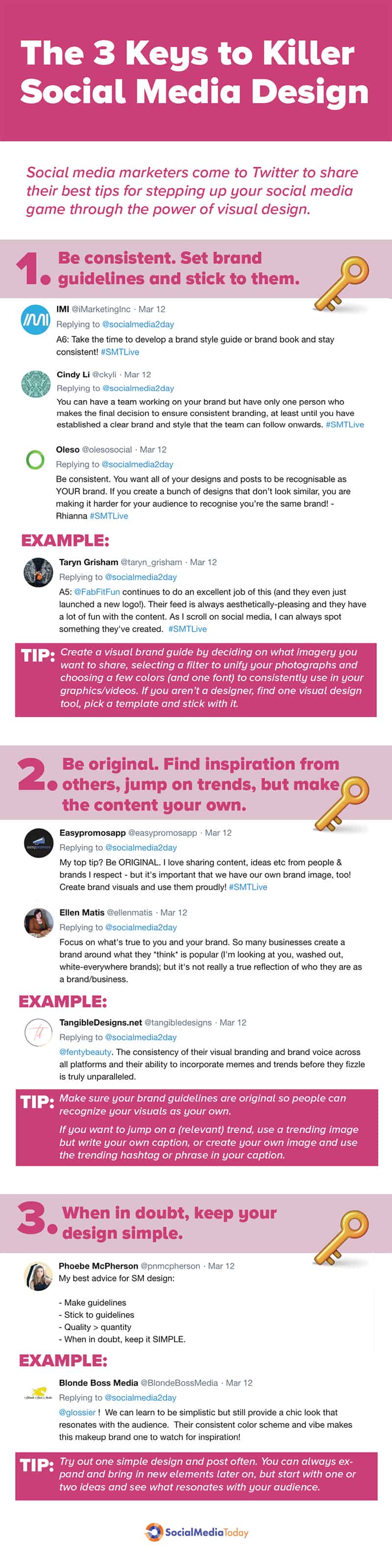
Social Media Today share tips from a recent #SMTLive Twitter chat in this infographic.
Here’s a quick summary:
- Be consistent – set brand guideline and stick to them
- Be original – Find inspiration from trends, but make the content your own
- When in doubt, keep your design simple
Check out the infographic for more detail.
In the fast-paced digital world, a strong visual presence on social media is not just an advantage; it’s a necessity. A well-executed design can capture attention, convey your brand message, and engage your audience effectively. However, achieving a killer visual strategy requires careful consideration and execution. This post will delve into three essential social media design tips: maintaining consistency through brand guidelines, fostering originality by finding inspiration from trends, and embracing simplicity when needed. By implementing these strategies, you can elevate your social media presence and drive better results.
Be Consistent – Set Brand Guidelines and Stick to Them
The Importance of Consistency
Establishing consistency in your brand’s visual identity is crucial for small businesses looking to make a lasting impression on their audience. A well-defined brand guideline serves as a roadmap, ensuring that your brand is represented uniformly across all platforms and touchpoints. This section will delve deeper into the importance of brand guidelines and provide in-depth tips and guidance for small businesses to create and maintain consistency.
Understanding Brand Guidelines
Brand guidelines, also known as brand style guides, outline how your brand should be visually represented. They encompass various elements that define your brand’s identity, including:
- Logo Usage: Specifications on how to use your logo correctly, including sizing, spacing, and variations.
- Color Palette: A defined set of colors that represent your brand, including color codes for digital and print.
- Typography: Fonts and typefaces that align with your brand’s personality and how to use them effectively.
- Imagery Style: Guidelines on the types of images, illustrations, and graphics that reflect your brand’s essence.
- Tone of Voice: Guidance on the language and communication style that aligns with your brand personality.
Tips for Creating Effective Brand Guidelines
- Conduct a Brand Audit
- Evaluate Existing Branding: Before creating brand guidelines, assess your current branding. Identify inconsistencies in logo usage, color schemes, and typography across your platforms.
- Gather Feedback: Solicit input from employees, customers, and stakeholders about what they perceive your brand to be. This feedback can help shape your guidelines.
- Define Your Brand Identity
- Mission and Values: Clearly articulate your brand’s mission and core values. This foundational understanding will guide your design choices and messaging.
- Target Audience: Identify your ideal customers and what appeals to them. Understanding your audience will help tailor your visual identity to resonate with their preferences.
- Create a Comprehensive Brand Document
- Organized Structure: Develop a well-organized document that is easy to navigate. Sections should include logo usage, color palette, typography, imagery style, and tone of voice.
- Visual Examples: Include visual examples for each guideline. For instance, show acceptable and unacceptable uses of your logo, as well as examples of the color palette in action.
- Include Detailed Specifications
- Color Codes: Provide color codes in various formats (RGB, HEX, CMYK) to ensure accurate reproduction across digital and print platforms.
- Font Pairings: Specify primary and secondary fonts, including sizes, weights, and styles for headings, body text, and captions.
- Create Usage Guidelines
- Logo Placement: Outline where and how to place your logo on various materials, ensuring it is prominent but not overpowering.
- Color Combinations: Suggest effective color combinations for backgrounds, text, and graphics to maintain visual harmony.
- Keep Your Guidelines Accessible
- Centralized Location: Store your brand guidelines in a centralized, easily accessible location, such as a shared drive or cloud service.
- Share with Team Members: Ensure that all employees and contractors have access to the guidelines and understand their importance.
Implementing Your Brand Guidelines
- Train Your Team
- Conduct Workshops: Organize training sessions to familiarize your team with the brand guidelines. This ensures everyone understands how to represent the brand consistently.
- Provide Resources: Offer resources and tools, such as templates and design assets, that adhere to your guidelines.
- Use Design Tools and Templates
- Design Software: Utilize design software like Canva or Adobe Creative Cloud to create branded templates for social media posts, presentations, and marketing materials.
- Consistent Layouts: Develop consistent layouts for different content types to maintain visual coherence across platforms.
- Monitor and Enforce Guidelines
- Regular Audits: Conduct periodic reviews of your marketing materials to ensure adherence to your brand guidelines. This can help identify areas for improvement or inconsistencies.
- Feedback Mechanism: Establish a feedback mechanism for employees to report any issues with branding or suggest improvements.
- Adapt and Evolve
- Stay Relevant: While consistency is vital, your brand guidelines should be adaptable to changing trends and audience preferences. Regularly review and update your guidelines as necessary.
- Incorporate Feedback: Be open to feedback from your team and customers. If certain elements of your brand are not resonating, consider refining your guidelines.
The Benefits of Consistency in Branding
- Enhanced Recognition
- Consistent branding helps your audience recognize your brand across different channels. This recognition fosters familiarity and can lead to increased engagement and loyalty.
- Increased Trust and Credibility
- A professional and consistent brand image builds trust with your audience. People are more likely to engage with a brand that appears reliable and cohesive.
- Stronger Emotional Connection
- When your brand presents a unified identity, it can evoke stronger emotional connections with your audience. Consistent messaging and visuals can resonate with their values and preferences.
- Improved Marketing Effectiveness
- Consistency in branding can enhance the effectiveness of your marketing efforts. Cohesive campaigns that align with your brand guidelines are more likely to leave a lasting impression on your audience.
Conclusion
For small businesses, setting brand guidelines and sticking to them is essential for creating a consistent and recognizable brand identity. By conducting a thorough brand audit, defining your brand identity, creating a comprehensive brand document, implementing your guidelines, and regularly monitoring your branding efforts, you can establish a strong visual presence that resonates with your audience. Emphasizing consistency not only enhances recognition and trust but also fosters emotional connections and improves marketing effectiveness. By prioritizing these practices, your small business can build a solid foundation for success in the competitive digital landscape.
Be Original – Find Inspiration from Trends, but Make the Content Your Own
The Balance Between Inspiration and Originality
In the fast-paced world of social media, originality is crucial for standing out amidst the noise. While it’s important to stay aware of current trends and popular styles, it’s equally vital to infuse your unique brand personality into your content. This section explores how small businesses can draw inspiration from trends while creating original content that reflects their brand identity.
The Importance of Originality
- Differentiation: In a crowded marketplace, originality helps you differentiate your brand from competitors. Unique content captures attention and builds a memorable identity.
- Authenticity: Consumers increasingly value authenticity. When your content is genuine and reflects your brand’s voice, it resonates more deeply with your audience.
- Brand Loyalty: Original content fosters a connection with your audience. When customers relate to your unique perspective, they’re more likely to engage and remain loyal to your brand.
Tips for Finding Inspiration While Staying Original
- Follow Industry Trends, but Don’t Copy
- Identify Trends: Use tools like Google Trends, social media platforms, and industry blogs to identify current trends relevant to your niche.
- Analyze, Don’t Imitate: Instead of replicating popular content, analyze what makes it successful. Consider elements like tone, format, and audience engagement, then adapt those insights to fit your brand’s voice.
- Put Your Unique Spin on Popular Content
- Add Personal Insights: Share your experiences or insights on a trending topic. This could involve offering a new perspective, sharing a case study, or providing actionable tips based on your knowledge.
- Create Original Visuals: Instead of using stock images or widely-shared graphics, create your visuals that incorporate your branding elements. Custom illustrations, infographics, and original photography can help establish your unique style.
- Blend Multiple Influences
- Cross-Pollinate Ideas: Combine different trends or influences to create something fresh. For example, if you see a popular aesthetic in one industry, think about how it could be adapted to fit your brand.
- Innovative Formats: Experiment with various formats (e.g., videos, carousels, memes) to deliver your message in a way that aligns with both your brand and current trends.
- Incorporate Your Brand Story
- Share Your Journey: Use your brand’s history, values, and mission as a foundation for content. Personal stories and anecdotes can resonate with audiences and set you apart.
- Engage Emotionally: Original content that evokes emotion—whether through humor, nostalgia, or inspiration—can create a stronger connection with your audience.
- Engage with Your Audience
- Ask for Input: Encourage your followers to share their thoughts on trending topics or ask for their opinions. This interaction not only provides inspiration but also fosters community engagement.
- Utilize User-Generated Content: Showcase content created by your audience that reflects your brand. This not only provides fresh perspectives but also strengthens community ties.
- Monitor Competitors Creatively
- Analyze Competitor Content: Look at what your competitors are doing well and where they may be falling short. This can inspire your original take on similar topics or themes.
- Avoid Direct Imitation: Take inspiration from your competitors’ successes but avoid copying their content directly. Find ways to innovate or present similar ideas uniquely.
- Stay True to Your Brand Values
- Know Your Core Values: Make sure that the content you create aligns with your brand’s core values and mission. Originality shines when it’s rooted in authenticity.
- Maintain Consistency in Voice: Your tone and voice should remain consistent across all platforms. This consistency, even when adapting trends, reinforces your brand identity.
Practical Strategies for Creating Original Content
- Content Calendars and Brainstorming
- Plan Ahead: Develop a content calendar to schedule posts around relevant trends and topics while allowing flexibility for spontaneous content ideas.
- Collaborative Brainstorming: Involve your team in brainstorming sessions. Diverse perspectives can spark creativity and lead to original content ideas.
- Utilize Content Formats Creatively
- Mix Formats: Experiment with a mix of formats—blog posts, videos, podcasts, and infographics—to keep your content fresh and engaging.
- Interactive Content: Consider creating polls, quizzes, or interactive stories that invite audience participation and can provide unique insights into their preferences.
- Evaluate and Iterate
- Analyze Performance: Regularly evaluate how your original content performs. Use analytics tools to measure engagement, reach, and conversion rates to inform future content decisions.
- Learn from Feedback: Be open to audience feedback and willing to adjust your content strategy based on what resonates most with your audience.
The Balance Between Inspiration and Originality
Finding the right balance between taking inspiration from trends and creating original content is key. Here’s how to achieve that balance:
- Stay Flexible: Trends are constantly evolving, so be adaptable in your approach. Allow your content strategy to evolve with these changes while maintaining your brand’s core identity.
- Cultivate a Creative Environment: Encourage creativity within your team by providing resources, time, and space for brainstorming. A culture of innovation fosters original thinking.
- Emphasize Quality Over Quantity: While it’s important to be timely, prioritize creating high-quality, original content over simply churning out posts to follow trends.
Conclusion
Being original in your social media strategy involves finding inspiration from trends while making content uniquely yours. By following these tips and embracing your brand’s distinct identity, you can create engaging and authentic content that resonates with your audience. Remember, originality not only sets you apart but also builds trust and loyalty among your followers. Stay true to your brand, keep an eye on trends, and never shy away from expressing your unique voice—this will lead to a powerful and impactful visual online strategy for your small business.
When in Doubt, Keep Your Design Simple
The Power of Simplicity
In an age where visual clutter is rampant, simplicity in design can be a powerful differentiator for small businesses. A straightforward, clean design not only enhances user experience but also effectively communicates your message. This section will explore the significance of simplicity in design and provide in-depth tips and guidance for small businesses to create impactful, uncomplicated visuals.
The Importance of Simple Design
- Enhanced Clarity: Simple designs allow your message to shine through without distractions. Clarity in visual communication is essential for effectively conveying your brand’s message.
- Better User Experience: Users appreciate straightforward designs that are easy to navigate. A clean layout improves usability, leading to increased engagement and satisfaction.
- Faster Load Times: Simplicity often translates to faster-loading pages, which is critical for retaining users. A streamlined design can enhance overall site performance and SEO.
- Timeless Appeal: Simple designs tend to age better than overly complex ones. They remain relevant over time, ensuring longevity in your branding efforts.
Tips for Creating Simple Designs
- Embrace White Space
- Balance Elements: Use white space effectively to create balance between elements. Adequate spacing can make your content easier to read and your layout more aesthetically pleasing.
- Focus Attention: White space helps guide the viewer’s attention to key messages and calls to action (CTAs). Avoid overcrowding your design with too much information or visuals.
- Limit Color Palette
- Choose a Few Colors: Select a limited color palette that reflects your brand identity. Stick to two to three primary colors, with additional accent colors as needed.
- Consider Color Psychology: Understand the psychological impact of colors and choose hues that align with your brand’s message and audience preferences.
- Use Simple Typography
- Select Readable Fonts: Choose fonts that are easy to read both on screen and in print. Avoid overly decorative fonts that may hinder readability.
- Limit Font Styles: Stick to one or two font styles in your designs. Too many font variations can create visual chaos; consistency enhances clarity and cohesion.
- Focus on Essential Elements
- Prioritize Content: Identify the core message or information you want to convey. Eliminate unnecessary elements that do not contribute to the main point.
- Clear CTAs: Make your calls to action prominent and easy to understand. Use concise language and contrasting colors to draw attention to these elements.
- Consistent Branding
- Unified Visuals: Maintain consistency across all design elements—logos, colors, fonts, and imagery. This uniformity reinforces brand identity and helps your audience recognize your brand quickly.
- Use Templates: Create templates for social media posts, marketing materials, and website elements. Templates ensure consistency and save time in the design process.
- Leverage Simple Graphics
- Minimalist Icons: Use clean, minimalist icons to convey messages without overwhelming your audience. Icons can simplify complex concepts and enhance user understanding.
- Quality Imagery: Opt for high-quality images that align with your brand. Avoid cluttered or low-resolution images that can detract from your design’s overall simplicity.
- Test and Iterate
- Seek Feedback: Share your designs with trusted team members or customers to gather feedback. They can provide insights into what works and what may be confusing or overwhelming.
- A/B Testing: Experiment with different design versions to determine which resonates best with your audience. A/B testing can guide your choices and refine your design approach.
Practical Strategies for Keeping Design Simple
- Establish Clear Objectives
- Define Goals: Before starting a design project, clearly define its goals. Knowing what you want to achieve will help keep your design focused and aligned with your objectives.
- Target Audience Consideration: Tailor your design to the preferences and needs of your target audience. A clear understanding of your audience ensures your design is relevant and effective.
- Create a Style Guide
- Document Design Elements: Develop a style guide that outlines your brand colors, fonts, logo usage, and design principles. This guide serves as a reference to maintain consistency across all materials.
- Include Examples: Provide visual examples in your style guide to illustrate how design elements should be applied. This ensures everyone involved in design understands your vision.
- Use Design Tools
- Leverage Design Software: Use user-friendly design tools like Canva, Adobe Spark, or Figma that provide templates and resources for creating simple designs.
- Incorporate Design Systems: Consider implementing design systems that provide a collection of reusable components and guidelines, streamlining the design process.
- Analyze Competitor Designs
- Research Competitors: Look at how your competitors are designing their visual content. Identify what works well and how you can simplify your approach while differentiating your brand.
- Learn from Best Practices: Examine successful brands that utilize simplicity effectively. Identify design principles they apply and consider how to adapt those principles for your brand.
- Continuous Learning
- Stay Updated: Keep up with design trends that emphasize simplicity. Regularly explore design blogs, webinars, and courses to refine your skills and knowledge.
- Gather Inspiration: Create a collection of simple designs that inspire you. Analyze what makes them effective and think about how you can apply similar principles to your work.
The Power of Minimalism in Design
Minimalism is a design philosophy that aligns well with the concept of simplicity. Embracing minimalism involves focusing on the essentials and eliminating the non-essential. Here are a few reasons why minimalism is effective:
- Visual Clarity: Minimalist designs enhance visual clarity, allowing viewers to focus on the intended message without distraction.
- Easy Navigation: In web and mobile design, minimalist interfaces often lead to better user navigation, improving the overall user experience.
- Timeless Quality: Minimalist designs tend to remain relevant over time, avoiding the risk of looking dated as trends evolve.
Conclusion
When in doubt, keeping your design simple can significantly enhance your brand’s visual identity and effectiveness. By embracing simplicity, small businesses can create impactful designs that resonate with their audience, enhance user experience, and communicate messages clearly. Focus on white space, limit your color palette, use simple typography, prioritize essential elements, and maintain consistent branding to achieve design success. As you implement these strategies, remember that the goal is to create visuals that are not only attractive but also effective in conveying your brand’s unique identity and message. By prioritizing simplicity in your design approach, your small business can stand out in the crowded digital landscape, fostering stronger connections with your audience.
Conclusion
Incorporating these three social media design tips into your visual strategy can significantly enhance your online presence. By being consistent with your brand guidelines, finding inspiration while maintaining originality, and embracing simplicity, you can create compelling visual content that resonates with your audience. As the digital landscape continues to evolve, these principles will help you stay ahead of the competition and build a strong brand identity. Start implementing these tips today, and watch your social media engagement soar!

Author:
Mark Ford

How to Create Engaging Instagram Reels Without Ever Showing Your Face
Are you looking for creative ways to make engaging Instagram Reels without stepping in front of the camera? Want to discover proven content ideas that help your brand stand out on social media while keeping your privacy intact? […]