Is your website looking out of date? Want to know a way you can bring it into the 21st century?
Technology moves fast and it can be easy for your website to start looking as appealing as an 80s front room wallpaper if not kept up to date. A modern website design will give the right impression to your customers.
To keep up with trends TIS India have created this infographic for you.
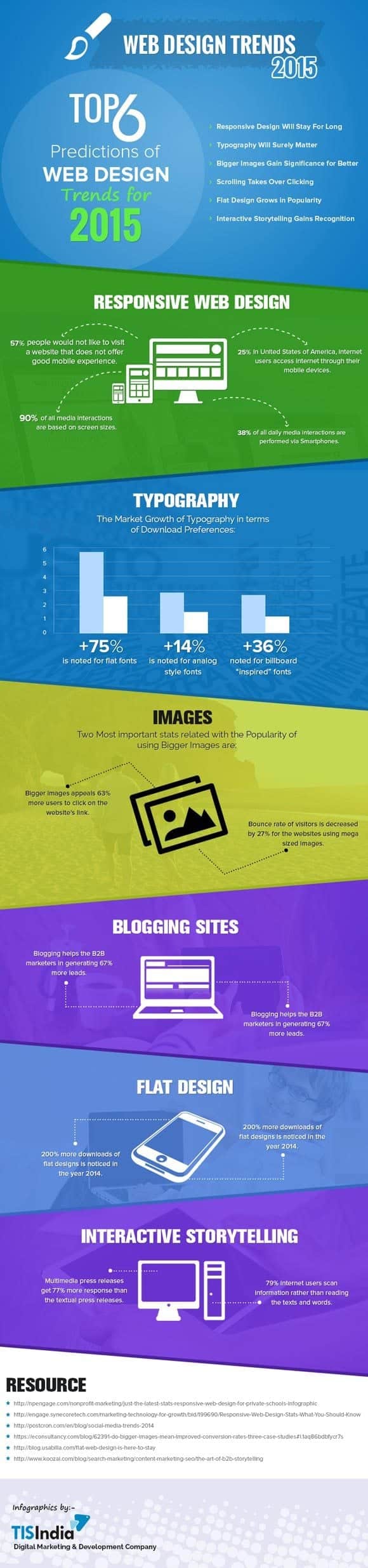
In the ever-evolving world of web design, staying up-to-date with the latest trends is crucial to creating a modern and visually appealing website. In 2015, web designers pushed the boundaries of creativity, introducing exciting new design elements and approaches. If you’re looking to give your website a fresh and contemporary look, here are the six top design trends from 2015 that you should consider incorporating into your site.
- Flat Design
Flat design was one of the most prominent web design trends in 2015. This design style is characterized by the absence of unnecessary embellishments, such as gradients, shadows, and three-dimensional effects. Instead, it relies on simple shapes, clean lines, and vibrant colors to create a visually appealing and user-friendly interface.
One of the reasons flat design gained popularity is its compatibility with responsive web design. Flat elements scale seamlessly across different screen sizes and devices, making it an excellent choice for mobile optimization. The use of bold and contrasting colors also made flat design stand out in a crowded digital landscape.
Notable examples of flat design in 2015 included Microsoft’s Windows 10 interface and Google’s Material Design, both of which embraced the principles of simplicity and minimalism.
- Minimalism and White Space
Minimalism continued to be a significant design trend in 2015. Minimalist websites prioritize content and functionality over excessive decoration. By using ample white space, designers create a sense of elegance and simplicity that enhances user experience.
This design approach is not just visually pleasing but also helps improve website load times, making it a practical choice for modern websites. Minimalist designs often feature clean typography, simple navigation menus, and a focus on high-quality images and content.
Apple’s website in 2015 is a prime example of minimalist design. Its clean layout and use of white space emphasized product imagery and key information, making for an efficient and user-friendly browsing experience.
- Responsive Web Design
Responsive web design was not a new concept in 2015, but it continued to be a crucial trend. As mobile device usage continued to surge, websites that adapted to different screen sizes and resolutions became a necessity.
Responsive web design ensures that your website looks and functions well on smartphones, tablets, laptops, and desktops. It involves using flexible grid layouts, media queries, and scalable images to create a seamless user experience across various devices.
One notable example of responsive design in 2015 was the Boston Globe’s website. It effectively adjusted its layout and content to suit the user’s device, providing a consistent and user-friendly experience.
- Parallax Scrolling
Parallax scrolling was a captivating design trend in 2015 that added depth and interactivity to websites. It involves the background and foreground elements moving at different speeds as the user scrolls down the page. This creates a visually engaging 3D effect that draws visitors into the website’s narrative.
Parallax scrolling is particularly effective for storytelling, as it allows designers to guide users through a visual journey. It can be used to showcase products, tell a brand’s story, or provide an immersive browsing experience.
The “Snow Fall” article by The New York Times is a classic example of parallax scrolling in action. It combined multimedia elements and parallax effects to create an immersive long-form storytelling experience.
- Large Hero Images and Videos
In 2015, websites embraced the power of large hero images and videos to create a striking first impression. A hero image or video is a prominent visual element displayed at the top of a webpage, often accompanied by a concise message or call-to-action.
Using high-quality images or videos can immediately capture visitors’ attention and convey the essence of your brand or message. It’s an effective way to create a visually appealing and memorable introduction to your website.
Airbnb’s homepage in 2015 is a prime example of using large hero images to convey a sense of adventure and exploration. The captivating images of unique accommodations around the world invited users to explore further.
- Card-Based Layouts
Card-based layouts gained significant popularity in 2015, largely due to their adaptability and user-friendliness. This design trend involves organizing content into distinct cards or modules, each containing a piece of information, an image, or a call-to-action.
Card-based layouts make it easy for users to scan and digest content, especially on mobile devices. They can be rearranged and resized dynamically to fit different screen sizes and orientations. This approach is inspired by the concept of responsive design and provides a visually appealing way to organize and present information.
Pinterest’s user interface in 2015 is a prominent example of card-based design. It used cards to display a variety of content, from images and articles to user profiles and recommendations, in an organized and visually pleasing manner.
Conclusion
Web design in 2015 was marked by a combination of simplicity, functionality, and visual appeal. The trends of flat design, minimalism, responsive web design, parallax scrolling, large hero images and videos, and card-based layouts shaped the digital landscape, providing a roadmap for creating modern and user-friendly websites.
While these trends were prominent in 2015, it’s important to note that web design is an ever-evolving field. As technology advances and user preferences change, new trends and design approaches continue to emerge. Therefore, staying informed about current design trends and adapting your website accordingly is essential to maintaining a modern and engaging online presence.
Whether you’re embarking on a website redesign or creating a new site from scratch, drawing inspiration from the design trends of 2015 can still be valuable. By incorporating elements of flat design, embracing minimalism, prioritizing responsive web design, experimenting with parallax scrolling, using large hero images and videos, and adopting card-based layouts, you can create a visually appealing and user-friendly website that resonates with today’s audience.
In the fast-paced world of web design, keeping your finger on the pulse of design trends is key to staying ahead of the curve and ensuring that your website remains relevant and effective.

Author:
Mark Ford