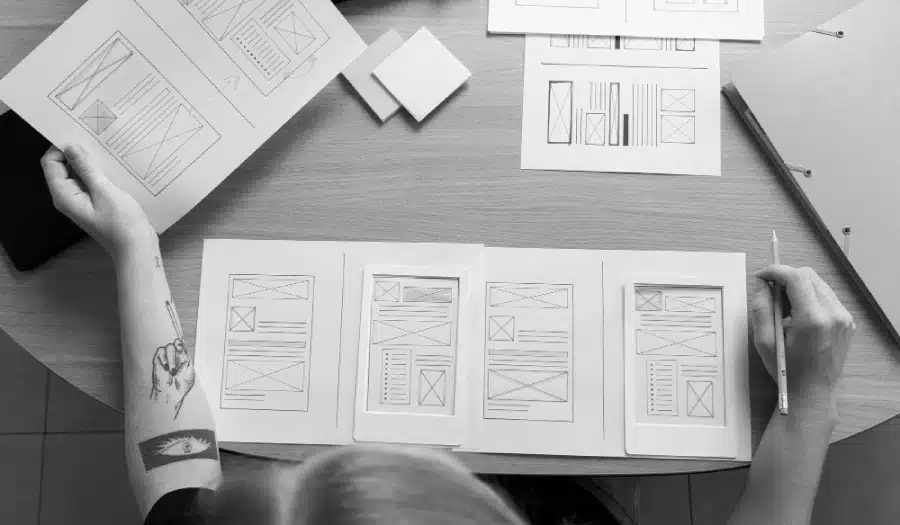
Do you want to convert more website visitors into customers? Want to know how you should be structuring your landing page design?
If you have landing pages on your site for SEO or PPC campaigns the main focus should be convincing your visitors to convert. Whether that’s filling in a form, visiting another page, or calling you, it’s imperative your page is laid out to guide your visitors towards that goal.
For some guidance creating landing pages that convert take a look at this infographic from Peak Inbound.
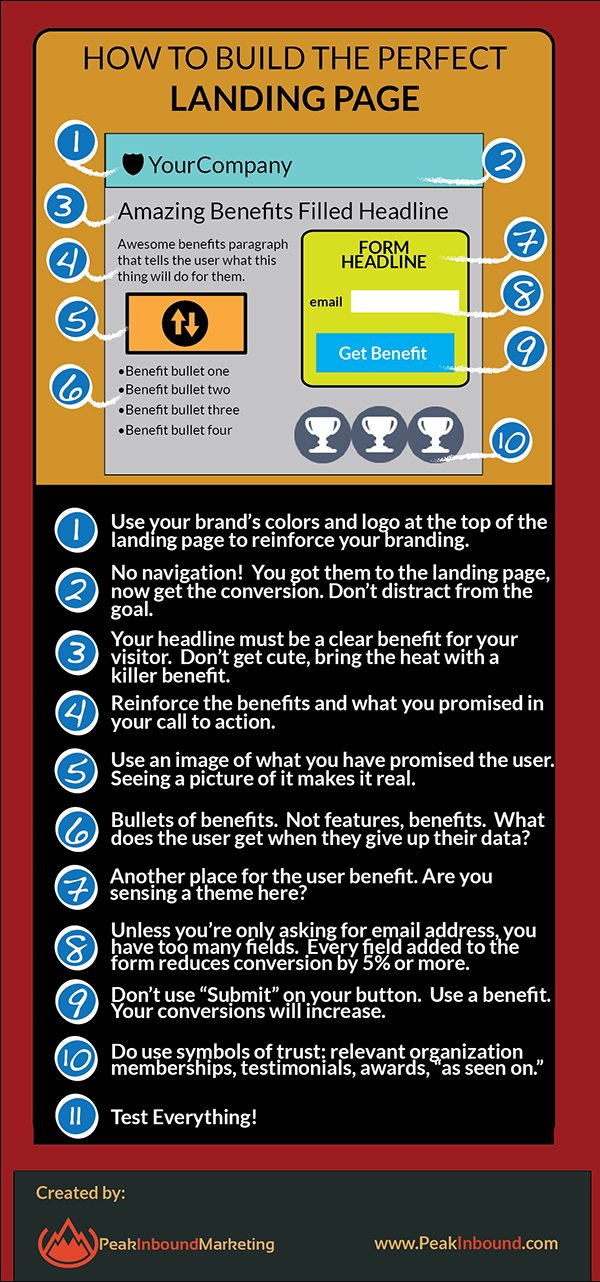
In the ever-evolving landscape of digital marketing, the landing page remains a critical component of any successful online marketing campaign. Whether you’re running a pay-per-click (PPC) ad campaign, sending out email newsletters, or promoting your products and services on social media, a well-optimized landing page can make all the difference in turning visitors into customers. In this blog post, we’ll explore some essential tips and strategies to help you boost your landing page conversions and ultimately drive more customers to your business.
1. Craft a Compelling Headline
Your landing page’s headline is the first thing visitors see, and it’s often the deciding factor in whether they continue reading or bounce away. A compelling headline should be clear, concise, and address the visitor’s pain points or desires. Use persuasive language that communicates the unique value proposition of your product or service. Make sure it’s large and prominent on the page so that it captures immediate attention.
2. Create a Visually Appealing Design
A cluttered or unattractive landing page can drive visitors away faster than you can say “conversion.” Invest in a clean, professional design that aligns with your brand and provides a seamless user experience. Use high-quality images, readable fonts, and a pleasing color scheme. Ensure that the layout is intuitive and that important elements, like your call-to-action (CTA) buttons, stand out.
3. Keep it Simple
While you want your landing page to look great, you also want to keep it simple. Too much information or too many elements can overwhelm visitors. Focus on the essentials and remove distractions. Use concise and persuasive copy to communicate your message clearly.
4. Craft Persuasive and Informative Copy
Your landing page copy is where you can elaborate on the benefits of your product or service. Address the pain points of your target audience and explain how your offering can solve their problems or fulfill their desires. Use clear, concise language, and avoid jargon or overly technical terms that might confuse visitors. Highlight key features and benefits, and use persuasive language to encourage action.
5. Include Trust Signals
Building trust with your visitors is crucial to increasing conversions. Incorporate trust signals on your landing page, such as customer testimonials, reviews, awards, certifications, and security badges. These elements reassure visitors that your business is credible and trustworthy.
6. Use Compelling Visuals
Visual content, such as images and videos, can significantly impact your landing page’s effectiveness. Use high-quality visuals that resonate with your target audience and enhance your product or service’s appeal. Consider using videos to demonstrate how your product works or to tell a compelling brand story.
7. Optimize for Mobile Devices
With a growing number of users accessing the internet on mobile devices, it’s essential to ensure that your landing page is mobile-responsive. Test your page on various devices and screen sizes to ensure a seamless experience for all visitors. A mobile-friendly design can significantly improve your conversion rates.
8. Implement Clear Call-to-Action (CTA) Buttons
Your CTA is the gateway to conversions. Make sure it’s prominently displayed, and use action-oriented language that encourages visitors to take the desired action, whether it’s making a purchase, signing up for a newsletter, or requesting more information. Experiment with different CTA button colors and placement to see what works best for your audience.
9. A/B Test Everything
Testing is the key to continuous improvement. A/B testing involves creating two versions of your landing page with slight variations and then measuring which one performs better. You can test different headlines, images, CTA buttons, or even the overall layout. Over time, A/B testing will help you refine your landing page and increase its conversion rate.
10. Reduce Loading Times
Slow-loading pages can frustrate visitors and lead to higher bounce rates. Optimize your landing page for speed by compressing images, minimizing code, and using reliable hosting. Faster-loading pages not only improve the user experience but also contribute to better search engine rankings.
11. Personalize the User Experience
Personalization is a powerful tool in increasing conversions. Tailor your landing page content to match the needs and preferences of your target audience. Use dynamic content and personalized recommendations based on user behavior or demographics. When visitors feel that your offering is specifically relevant to them, they are more likely to convert.
12. Offer Social Proof
People tend to follow the crowd. If your product or service has a substantial user base or customer following, showcase this on your landing page. Mention the number of satisfied customers, social media followers, or subscribers you have. Social proof can boost confidence and persuade hesitant visitors to convert.
13. Provide a Clear Value Proposition
Your value proposition is the unique benefit that sets your product or service apart from the competition. Clearly articulate what makes your offering special and why visitors should choose you over alternatives. Use concise and persuasive language to communicate your value proposition effectively.
14. Minimize Form Fields
If your landing page includes a lead generation form, keep it short and sweet. Only ask for the information that is absolutely necessary. The more fields visitors have to fill out, the less likely they are to complete the form. Consider using multi-step forms to gradually collect information.
15. Offer Incentives
Sometimes, a little extra incentive can push visitors over the conversion threshold. Offer something valuable in exchange for their action, such as a discount, free trial, ebook, or access to exclusive content. Clearly communicate the benefits of this incentive on your landing page.
16. Leverage Urgency and Scarcity
Creating a sense of urgency or scarcity can encourage visitors to take action quickly. Use phrases like “limited-time offer” or “only a few spots left” to convey the idea that they should act now to avoid missing out. However, be honest and transparent when using these tactics.
17. Implement Remarketing
Not all visitors will convert on their first visit to your landing page. Implementing remarketing campaigns allows you to target those who left without converting with relevant ads as they browse other websites. Remarketing can help re-engage visitors and bring them back to your landing page.
18. Monitor and Analyze Data
Regularly monitor the performance of your landing page using analytics tools. Track key metrics such as conversion rate, bounce rate, and traffic sources. Analyze this data to identify areas for improvement and make data-driven decisions to optimize your landing page further.
19. Test Load Times and Performance
Fast-loading pages are critical for user satisfaction and SEO rankings. Use tools like Google PageSpeed Insights or GTmetrix to analyze and optimize your landing page’s load times. Compress images, minify code, and leverage browser caching to enhance performance.
20. Conduct User Testing
Sometimes, you can be too close to your landing page to see its flaws. Conduct user testing by asking individuals who fit your target audience to visit your landing page and provide feedback. Their insights can help you uncover issues you might have missed and provide valuable suggestions for improvement.
Conclusion
A high-converting landing page is a valuable asset for any digital marketing campaign. By implementing these tips and strategies, you can create landing pages that capture the attention of your target audience, build trust, and ultimately drive more conversions. Remember that optimization is an ongoing process, and regular testing and analysis are essential to staying ahead in the competitive world of online marketing. With dedication and attention to detail, you can transform your landing pages into powerful tools for attracting and converting customers.

Author:
Mark Ford