Do you want more relevant and targeted traffic being sent to your website? Are you looking for ways to get more people on your site who are actually interested in what you offer?
There are tons of ways to drive traffic to your site, we’ve featured a few of them here, but there are 3 tactics that should be an integral part of EVERY website owners marketing strategy. Fail to implement these tactics and the chances are your business will fail online.
To find out what these 3 tactics are take a look at the infographic below from Impact.
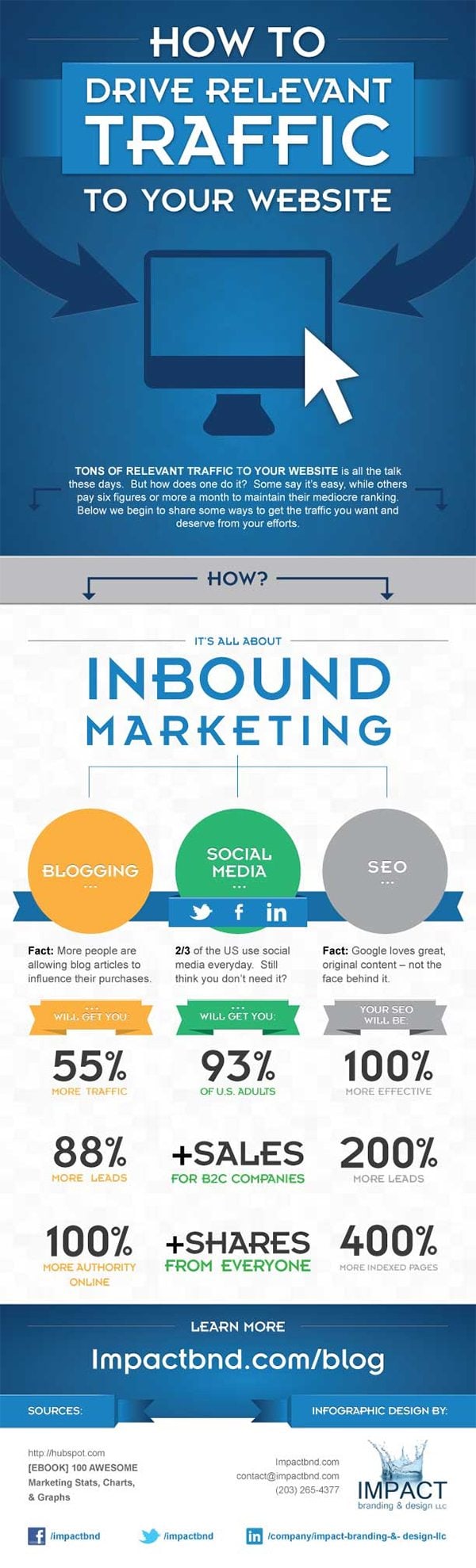
In today’s digital age, driving traffic to your website is essential for the success of your online presence. However, not all traffic is created equal. While getting more visitors to your website is a good start, the real goal is to attract relevant traffic that is more likely to convert into customers, subscribers, or engaged users. In this blog post, we will explore three essential tactics to help you generate more relevant website traffic.
- Search Engine Optimization (SEO)
Search Engine Optimization, or SEO, is the foundation of any effective online marketing strategy. It involves optimizing your website’s content and structure to improve its visibility on search engines like Google, Bing, and Yahoo. When done correctly, SEO can drive organic, high-quality traffic to your website.
Here are some key aspects of SEO to consider:
1.1 Keyword Research
Keyword research is the first step in SEO. It involves identifying the search terms and phrases that your target audience is using to find products, services, or information related to your niche. Tools like Google Keyword Planner, Ahrefs, and SEMrush can help you discover relevant keywords with high search volumes.
Once you’ve identified these keywords, you can strategically incorporate them into your website’s content, including blog posts, product descriptions, and meta tags. This ensures that your website ranks higher in search results when users search for those specific keywords.
1.2 On-Page SEO
On-page SEO refers to optimizing the individual pages of your website to make them more search engine-friendly. This includes optimizing titles, headings, meta descriptions, and URLs. Additionally, you should focus on creating high-quality, informative, and engaging content that satisfies the user’s search intent.
1.3 Off-Page SEO
Off-page SEO involves building backlinks from other reputable websites to yours. Quality backlinks are a crucial ranking factor for search engines. They signal to search engines that your website is trustworthy and authoritative. To build backlinks, you can engage in guest posting, outreach to industry influencers, or create shareable content that naturally attracts links.
1.4 Technical SEO
Technical SEO ensures that your website’s infrastructure is optimized for search engines. This includes improving website speed, mobile-friendliness, and fixing any broken links or error pages. An efficient and well-structured website not only improves SEO but also provides a better user experience.
1.5 Local SEO
If your business serves a local audience, optimizing for local search is essential. This includes creating and optimizing your Google My Business listing, obtaining online reviews, and ensuring consistent NAP (Name, Address, Phone Number) information across the web.
- Content Marketing
Content Marketing is a powerful strategy for attracting and retaining relevant website traffic. It involves creating and sharing valuable, informative, and engaging content that addresses the needs and interests of your target audience. Here’s how you can leverage content marketing to drive more relevant traffic:
2.1 Blogging
Maintaining a blog on your website is an effective way to regularly publish fresh, informative content. Blog posts can target specific keywords and provide solutions to common problems within your industry. By consistently delivering high-quality blog content, you can position your website as a valuable resource and attract a loyal readership.
2.2 Guest Posting
Guest posting involves writing articles for other websites within your industry or niche. By contributing valuable content to authoritative websites, you can establish your expertise and earn backlinks to your own site. Guest posting not only drives traffic directly from the host site but also improves your site’s SEO.
2.3 Video Marketing
Video content is increasingly popular, and platforms like YouTube are powerful sources of website traffic. Create informative and engaging videos related to your niche, and optimize them for search engines with relevant keywords and descriptions. You can embed these videos on your website and promote them through social media channels.
2.4 Social Media Marketing
Leverage social media platforms to share your content and engage with your audience. Each social media channel has its own unique audience, so tailor your content to suit the preferences and demographics of each platform. Share blog posts, videos, infographics, and other valuable content to drive traffic to your website.
2.5 Email Marketing
Email marketing is a highly effective way to nurture leads and drive repeat traffic to your website. Build an email list of subscribers who are interested in your content or products. Send them regular newsletters, updates, and exclusive offers to keep them engaged and encourage them to revisit your site.
- Paid Advertising
While organic traffic is valuable, paid advertising can also play a significant role in driving relevant traffic to your website. Paid advertising allows you to target specific audiences based on demographics, interests, and online behavior. Here are some paid advertising tactics to consider:
3.1 Pay-Per-Click (PPC) Advertising
PPC advertising, often through platforms like Google Ads and Bing Ads, allows you to bid on keywords and display ads to users searching for those keywords. You only pay when someone clicks on your ad. By carefully selecting keywords and creating compelling ad copy, you can attract highly relevant traffic to your website.
3.2 Social Media Advertising
Platforms like Facebook, Instagram, Twitter, and LinkedIn offer sophisticated advertising options. You can create targeted ads to reach specific demographics, interests, and behaviors. Social media advertising can be particularly effective for e-commerce businesses and brands looking to build awareness.
3.3 Display Advertising
Display advertising involves placing visual ads, such as banners or video ads, on websites and apps within your niche. You can use display advertising to raise brand awareness and drive traffic to your website. Retargeting ads, which show your ads to users who have previously visited your site, are especially effective at bringing back relevant visitors.
3.4 Influencer Marketing
Collaborating with influencers in your industry can help you tap into their engaged and relevant audience. Influencers can promote your products or services through sponsored content or endorsements, driving targeted traffic to your website.
Conclusion
In the competitive world of online marketing, attracting relevant website traffic is crucial for the success of your business or online presence. By implementing these three essential tactics—Search Engine Optimization (SEO), Content Marketing, and Paid Advertising—you can drive more relevant traffic to your website, increase conversions, and ultimately achieve your online goals. Remember that these strategies work best when integrated into a comprehensive digital marketing plan tailored to your specific audience and objectives. With dedication and ongoing optimization, you can watch your website traffic grow and your online presence thrive.

Author:
Mark Ford

How to Create Engaging Instagram Reels Without Ever Showing Your Face
Are you looking for creative ways to make engaging Instagram Reels without stepping in front of the camera? Want to discover proven content ideas that help your brand stand out on social media while keeping your privacy intact? […]