In the ever-evolving landscape of digital marketing, search engine optimization (SEO) remains a crucial strategy for businesses aiming to enhance their online visibility and reach a broader audience.
However, SEO is not a static field, and what worked a few years ago may not be as effective today. One key aspect of modern SEO that has gained immense prominence is content marketing.
In this blog post, we will explore why content marketing is essential for SEO success and how these two strategies are interconnected.
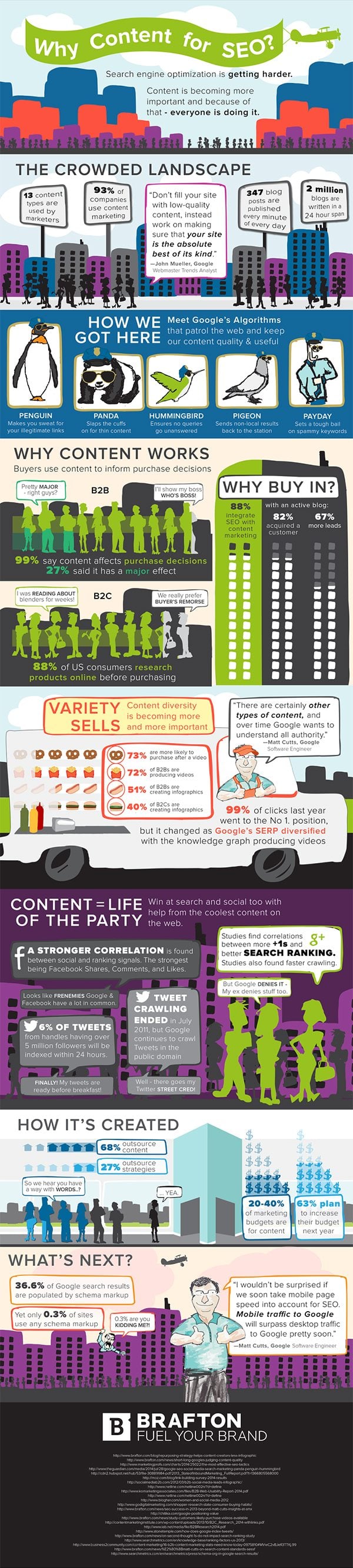
Infographic by Brafton.
The Evolution of SEO
To understand the symbiotic relationship between content marketing and SEO, it’s important to recognize how SEO itself has evolved over the years. In its early days, SEO was primarily about optimizing websites for search engines. This often involved manipulating keywords, meta tags, and backlinks to achieve higher rankings on search engine results pages (SERPs). While these tactics were effective to some extent, they often led to poor user experiences, with content that was created primarily for search engines rather than human readers.
Search engines, particularly Google, recognized the need to improve the quality of their search results. This led to the development of complex algorithms that could assess the relevance and value of content, not just its keyword density. As a result, SEO evolved from a technical game to a holistic strategy that encompasses various aspects of online marketing.
The Rise of Content Marketing
Content marketing, on the other hand, has its roots in the age-old practice of storytelling and sharing information. It involves creating and distributing valuable, relevant, and consistent content to attract and engage a specific target audience. While content marketing has been around for centuries, it gained new prominence in the digital age, thanks to the internet and social media.
With the proliferation of online platforms, businesses realized the potential of content marketing to connect with their audiences on a deeper level. Content marketing isn’t just about creating promotional material; it’s about providing value, educating, entertaining, and building trust with your audience.
The Interplay between Content Marketing and SEO
Now that we understand the evolution of SEO and the rise of content marketing, let’s delve into why content marketing is essential for SEO success.
1. Quality Content is King
In today’s SEO landscape, quality content is paramount. Search engines aim to provide users with the best possible answers to their queries. This means that websites with high-quality, informative, and engaging content are more likely to rank well in search results.
Content marketing is the vehicle through which you can create and deliver this high-quality content. By consistently producing valuable content that addresses the needs and interests of your target audience, you not only improve your chances of ranking higher on SERPs but also keep visitors engaged and coming back for more.
2. Content Generates Keywords Naturally
While keyword research is still an essential part of SEO, the old practice of keyword stuffing is no longer effective and can even harm your rankings. Search engines have become much smarter in understanding context and semantics.
When you create content that is focused on providing value to your audience, you naturally incorporate relevant keywords and phrases. This “natural” use of keywords is far more effective and doesn’t compromise the readability and user experience of your content.
3. Link Building Opportunities
High-quality content naturally attracts backlinks from other websites. When you create informative and authoritative content, other websites are more likely to reference and link to it as a valuable resource. These backlinks are a crucial component of SEO, as they signal to search engines that your content is reputable and worth ranking higher.
Content marketing and link building go hand in hand. By consistently producing shareable content, you increase your chances of earning valuable backlinks from reputable sources.
4. Improved User Experience
User experience is a significant ranking factor for search engines. If visitors to your website find it difficult to navigate, slow to load, or lacking in valuable content, they are likely to bounce back to the search results page. This high bounce rate can negatively impact your SEO rankings.
Content marketing plays a pivotal role in enhancing user experience. By creating content that is easy to read, visually appealing, and well-structured, you can keep visitors on your site longer and reduce bounce rates. This, in turn, sends positive signals to search engines, indicating that your website provides a good user experience.
5. Long-Term Sustainability
One of the challenges of some traditional SEO tactics is their short-term focus. For example, chasing after the latest keyword trends may yield quick results, but these gains can be fleeting as search engine algorithms change.
Content marketing, on the other hand, is a long-term strategy. By consistently producing valuable content, you build a library of resources that can continue to attract organic traffic for months or even years. This long-term sustainability is essential for SEO success, as it provides a stable foundation for your search engine rankings.
6. Social Signals Matter
Social media has become an integral part of the online landscape, and social signals play a role in SEO. When your content is shared and engaged with on social platforms, it sends positive signals to search engines about its relevance and value.
Content marketing is closely linked to social media marketing. By creating shareable content and promoting it on social channels, you can amplify your reach and potentially earn more social signals, which can indirectly benefit your SEO efforts.
How to Align Content Marketing with SEO
Now that we’ve established the importance of content marketing for SEO, let’s explore some practical steps to align these two strategies effectively:
1. Keyword Research and Content Planning
Start by conducting keyword research to identify relevant keywords and topics for your industry. Use tools like Google Keyword Planner, SEMrush, or Ahrefs to find keywords with reasonable search volume and low to medium competition. These keywords will serve as the foundation for your content strategy.
Once you have a list of target keywords, create a content plan that outlines the topics you’ll cover and how they align with your keywords. Remember that the goal is to provide value to your audience while incorporating keywords naturally into your content.
2. High-Quality Content Creation
Invest in creating high-quality content that stands out from the competition. Your content should be well-researched, informative, and engaging. Use a variety of formats, such as blog posts, videos, infographics, and podcasts, to cater to different audience preferences.
Maintain a consistent publishing schedule to keep your audience engaged and to signal to search engines that your website is regularly updated with fresh content.
3. On-Page SEO Optimization
While content marketing focuses on creating valuable content, on-page SEO optimization ensures that search engines can understand and index your content effectively. Pay attention to the following on-page SEO elements:
- Title Tags and Meta Descriptions: Craft compelling and relevant title tags and meta descriptions for each piece of content. Include your target keywords naturally.
- Header Tags: Use header tags (H1, H2, H3, etc.) to structure your content logically. This makes it easier for both readers and search engines to navigate your content.
- Internal Linking: Include internal links to other relevant pages on your website. This helps distribute authority across your site and keeps visitors engaged.
- Optimize Images: Compress and optimize images to improve page load times, and use descriptive alt text for accessibility and SEO.
4. Promotion and Outreach
Creating great content is only half the battle. You also need to promote it to reach a wider audience. Share your content on social media, email newsletters, and relevant online communities. Engage with your audience and encourage them to share your content.
Consider reaching out to influencers or industry experts for collaboration or guest posting opportunities. Their endorsement and audience can help boost the visibility of your content.
5. Measure and Iterate
Regularly monitor the performance of your content and SEO efforts. Use tools like Google Analytics and Google Search Console to track organic traffic, keyword rankings, and user behavior. Pay attention to which pieces of content are performing well and which ones need improvement.
Based on your findings, iterate on your content strategy. Update and refresh older content, create new content to fill gaps, and adjust your keyword targeting as needed.
Conclusion
In the dynamic world of digital marketing, the synergy between content marketing and SEO is undeniable. Content marketing provides the fuel that powers SEO success, and SEO provides the framework for content marketing to reach its full potential. By understanding the interplay between these two strategies and aligning them effectively, businesses can achieve higher search engine rankings, attract more organic traffic, and ultimately, drive growth and success in the online arena. Embrace content marketing as an essential component of your SEO strategy, and you’ll be well-positioned to thrive in the ever-evolving digital landscape.

Author:
Mark Ford