
Are you struggling to understand why your ecommerce marketing isn’t bringing in the results you expected? Want to learn the most common reasons ecommerce marketing fails and how you can turn things around?
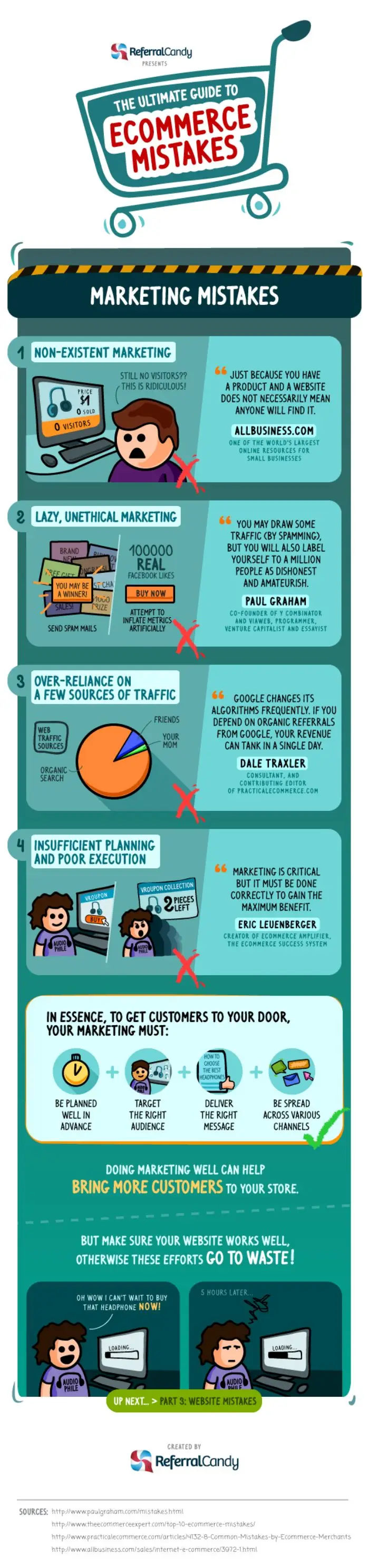
You’ll find some ecommerce basics in this infographic.
Here’s a summary of what’s covered:
- Non-Existent Marketing
- Lazy or Unethical Marketing
- Over-Reliance on a Few Traffic Sources
- Poor Planning and Execution
- How to Build an Effective Ecommerce Marketing Strategy
- The Role of Consistency in Marketing Success
- Why Technology and Tools Matter
- Learning from Failures
- Balancing Short-Term and Long-Term Goals
Check out the post below for more.
Marketing is the heartbeat of every ecommerce business, yet it’s also one of the most common areas where stores go wrong. Many entrepreneurs assume that simply having a website and products online is enough to generate sales.
In reality, without a strong marketing strategy, your store can quickly become invisible. This post explores the most common ecommerce marketing mistakes and shows you how to fix them for long-term success.
Non-Existent Marketing
One of the biggest mistakes ecommerce businesses make is assuming that customers will find them without any effort. Launching a website is just the beginning, not the end. If you fail to actively promote your store, you won’t attract the visitors needed to generate sales. Effective marketing is about reaching your audience consistently and making sure they know why your products matter.
- Invest in ongoing digital marketing rather than relying on one-off campaigns.
- Use multiple channels like SEO, social media, and email to attract traffic.
- Build awareness through content that educates and entertains.
- Set clear goals to measure the impact of your marketing efforts.
Lazy or Unethical Marketing
Some businesses take shortcuts by spamming, buying fake followers, or inflating performance metrics. While these tactics may boost numbers temporarily, they damage credibility and drive customers away. Modern consumers value authenticity, and they can spot dishonest marketing from a mile away. Ethical, thoughtful marketing builds trust and ensures your business grows on a solid foundation.
- Focus on building genuine relationships with your audience.
- Avoid misleading claims or aggressive sales tactics.
- Use transparent reporting to evaluate campaign performance honestly.
- Prioritise long-term brand reputation over short-term results.
Over-Reliance on a Few Traffic Sources
Depending on a single marketing channel is one of the riskiest mistakes in ecommerce. For example, if all your traffic comes from organic search, a single algorithm update could cause sales to collapse overnight. Diversifying your traffic sources spreads risk and ensures stability even if one channel underperforms. A balanced approach also means you can reach different segments of your audience more effectively.
- Develop a marketing mix that combines paid, organic, and referral channels.
- Experiment with new platforms to broaden your reach.
- Build an email list so you’re not reliant on third-party algorithms.
- Regularly analyse performance to adjust strategies before problems arise.
Poor Planning and Execution
Even the best ideas will fail if they’re poorly planned or executed. Many ecommerce businesses rush campaigns without considering timing, audience, or delivery. This results in wasted budget, missed opportunities, and underwhelming results. A structured marketing plan ensures that campaigns are consistent, targeted, and aligned with business goals.
- Map out campaigns with clear timelines and responsibilities.
- Define your target audience before creating any content or ads.
- Allocate realistic budgets that match your objectives.
- Test campaigns on a smaller scale before rolling them out widely.
How to Build an Effective Ecommerce Marketing Strategy
Fixing these mistakes starts with creating a clear, structured strategy. This means understanding your audience, choosing the right channels, and ensuring consistency across all marketing activities. A strong plan doesn’t just attract customers—it nurtures them through the buying journey and encourages repeat purchases. By taking a proactive approach, you can future-proof your business against market changes.
- Conduct detailed customer research to shape your campaigns.
- Align your messaging with the values and needs of your target audience.
- Ensure every channel—from social media to email—works together seamlessly.
- Track performance data to continually refine and improve your strategy.
The Role of Consistency in Marketing Success
Consistency is the thread that ties together all successful ecommerce marketing. Sporadic efforts confuse customers and make it hard to build momentum. Whether it’s posting on social media, sending emails, or running ads, showing up regularly keeps your brand top of mind. A consistent presence builds familiarity and trust, two essentials for driving conversions.
- Develop a content calendar to plan regular campaigns.
- Maintain consistent branding across all platforms.
- Balance promotional messages with valuable, customer-focused content.
- Review results monthly to ensure efforts stay on track.
Why Technology and Tools Matter
Modern ecommerce marketing is powered by tools and technology that simplify and enhance campaigns. Failing to adopt these can leave your business lagging behind competitors. From automation platforms to analytics dashboards, the right tools help streamline processes and reveal insights you’d otherwise miss. Leveraging technology ensures your strategy is efficient, scalable, and data-driven.
- Use analytics tools to track customer behaviour and conversion paths.
- Automate repetitive tasks like email campaigns and social posting.
- Test and optimise ads with A/B testing tools.
- Integrate platforms to ensure smooth workflows and accurate reporting.
Learning from Failures
Every failed campaign offers lessons that can improve your future strategies. The danger lies in ignoring failures or repeating the same mistakes. Analysing what went wrong gives you the insight to make better decisions next time. Ecommerce businesses that treat failures as opportunities for growth tend to innovate and adapt more successfully.
- Conduct post-mortems on underperforming campaigns.
- Identify whether the issue was with the message, timing, or audience.
- Document lessons learned and apply them to future efforts.
- Encourage a culture where experimentation and learning are valued.
Balancing Short-Term and Long-Term Goals
Many ecommerce businesses focus too much on short-term sales, neglecting long-term growth. While promotions and discounts can drive quick wins, they don’t always build sustainable customer relationships. A successful marketing approach balances immediate results with long-term brand building. This dual focus ensures steady growth and resilience in a competitive market.
- Run promotions strategically without overusing discounts.
- Invest in content marketing that provides long-term value.
- Build loyalty programmes to encourage repeat purchases.
- Keep customer lifetime value in mind when planning campaigns.
Conclusion
Most ecommerce marketing fails because businesses underestimate the importance of planning, consistency, and diversification. Relying on quick fixes or single channels may seem convenient, but it leaves your business vulnerable.
By avoiding lazy, unethical practices and instead focusing on a balanced, well-executed strategy, you can attract more customers and build a brand that lasts. The key is to treat marketing as an ongoing investment, not a one-time effort. With the right approach, your ecommerce store can thrive in even the most competitive markets.

Author:
Mark Ford