Search Engine Optimization (SEO) is a constantly evolving field, and staying ahead of the curve is crucial for online success.
While many SEO strategies are well-known, there are some hidden gems buried deep within Google’s Quality Guidelines that can give your website an edge.
In this blog post, we’ll uncover 10 of these hidden SEO gems that are often overlooked by website owners and marketers.
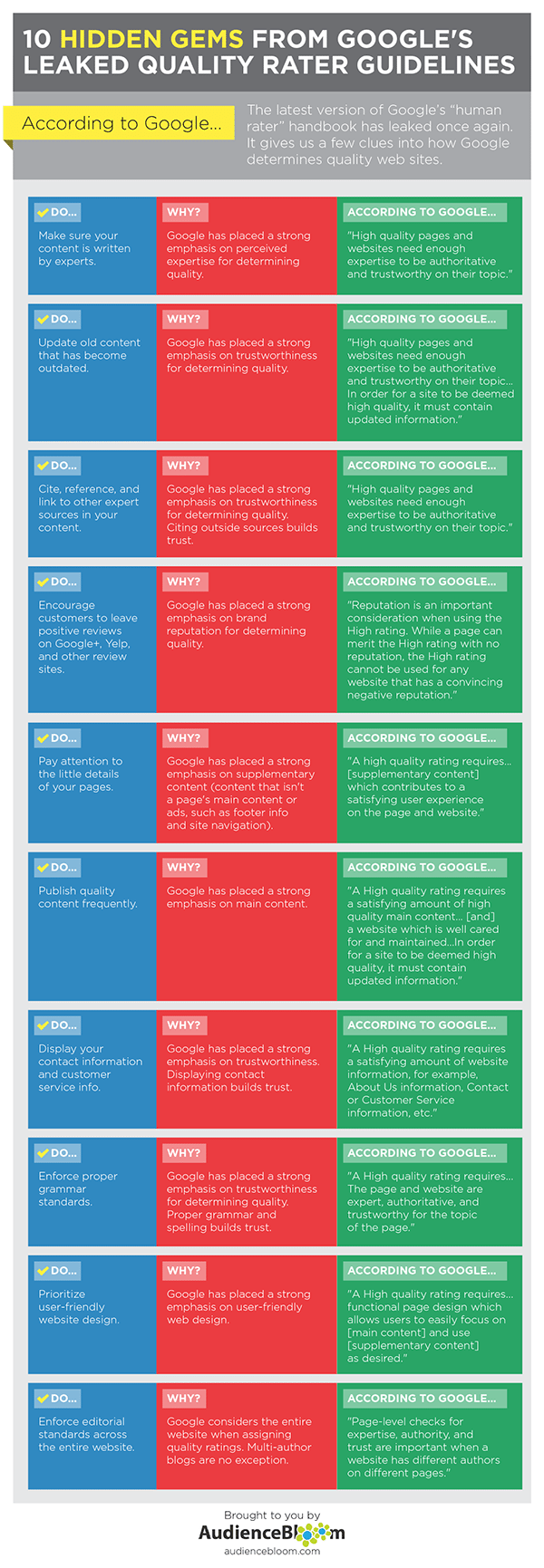
Infographic by Audience Bloom.
- Mobile-Friendly Design is Non-Negotiable
Google’s commitment to mobile-first indexing is no secret. However, the Quality Guidelines emphasize the importance of a mobile-friendly website design even more. Your website must not only be responsive but also provide a seamless user experience on mobile devices. Neglecting this aspect can lead to a significant drop in your search rankings.
- Page Speed Matters More Than Ever
Page speed has been a ranking factor for some time, but the Quality Guidelines stress its importance. Slow-loading pages can frustrate users and lead to high bounce rates. Google recommends optimizing images, using browser caching, and minimizing server response times to ensure your site loads quickly.
- High-Quality Content is King
While this may not be a hidden gem, the emphasis on high-quality content cannot be overstated. Google’s Quality Guidelines make it clear that content should be original, informative, and valuable to users. Avoid duplicate content and focus on creating in-depth, authoritative articles that address users’ needs.
- User Experience (UX) is a Ranking Factor
Google is increasingly prioritizing user experience in its search rankings. Elements like intuitive navigation, clear calls-to-action, and a user-friendly layout can positively impact your SEO. Ensure that your website is designed with the user’s journey in mind.
- Schema Markup Enhances Visibility
Schema markup is a form of structured data that helps search engines understand the content on your website. While it might seem technical, the Quality Guidelines recommend implementing schema markup to enhance your site’s visibility in search results. This can result in rich snippets, which can increase click-through rates.
- Natural Link Building is Key
The guidelines emphasize that unnatural link building practices, such as buying links or participating in link schemes, can lead to penalties. Instead, focus on earning high-quality, natural backlinks through compelling content and outreach to authoritative websites in your niche.
- Local SEO is Not to Be Neglected
For businesses targeting local customers, the Quality Guidelines stress the importance of local SEO. Ensure your Google My Business profile is complete and accurate, and encourage customers to leave reviews. Local citations from reputable directories can also boost your local search rankings.
- Website Security is a Ranking Factor
Google has been encouraging website owners to implement HTTPS for a while now, but the Quality Guidelines underline the importance of website security. Secure sites (those with an SSL certificate) are favored in search results, as they provide a safer browsing experience for users.
- Voice Search Optimization is Emerging
Voice search is on the rise, and the Quality Guidelines hint at its importance for SEO. To optimize for voice search, focus on natural language, long-tail keywords, and FAQs on your website. Ensure that your content answers common voice search queries concisely.
- Regularly Update and Maintain Your Site
Lastly, the guidelines stress the importance of regularly updating and maintaining your website. Outdated content and broken links can harm your SEO efforts. Consistently review and refresh your content to keep it relevant and valuable to users.
Conclusion
Google’s Quality Guidelines provide valuable insights into the search engine giant’s expectations for websites. By uncovering these 10 hidden SEO gems, you can enhance your website’s performance in search results, attract more organic traffic, and ultimately achieve your online goals. Remember, SEO is an ongoing process, so stay informed about the latest updates and continue refining your strategies to stay ahead of the competition.

Author:
Mark Ford