Are you ready to create a brand identity that’s consistent, memorable, and instantly recognisable? Want to learn the 12 visual branding elements every business needs to master for long-term success?
You’ll find some branding basics in this infographic.
Here’s a summary of what’s covered:
- Logo Design
- Colour Palette
- Typography
- Iconography
- Patterns & Textures
- Layout Systems
- Shapes
- Packaging
- Motion Graphics
- Signage
- Web Design
- Merchandise
Check out the post below for more.
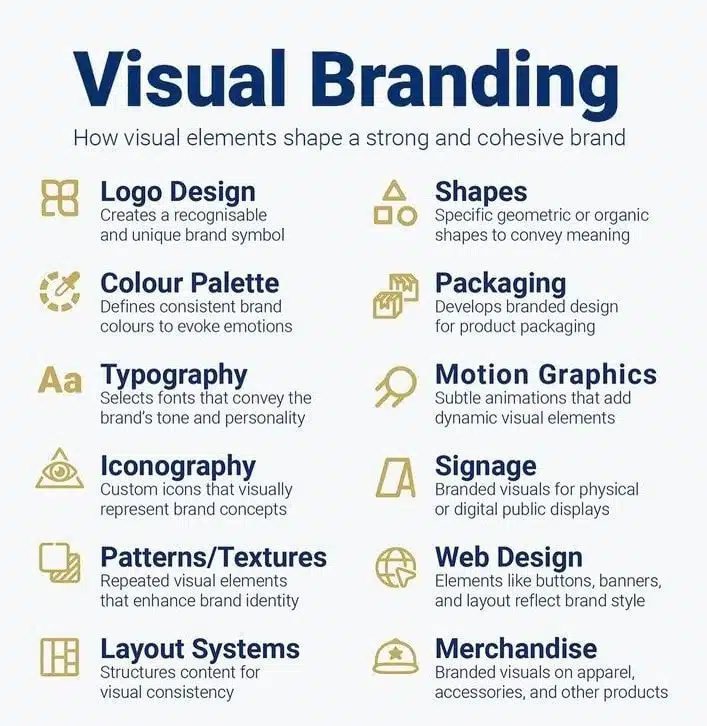
Creating a strong brand isn’t just about having a good product or service—it’s also about how you visually present yourself to the world. Visual branding is the language your business speaks without words, shaping how people perceive, trust, and connect with your brand. Every element, from your logo to your packaging, contributes to a cohesive identity that builds recognition and loyalty.
In this post, we’ll explore 12 key visual branding elements every business needs to master. Each one plays a vital role in creating a professional, consistent, and memorable brand presence.
Logo Design
Your logo is the face of your brand and often the first thing people notice. A strong logo is unique, instantly recognisable, and communicates your business values at a glance. It should work across multiple platforms, from social media profiles to print materials, without losing impact. A well-designed logo forms the foundation of your visual branding strategy.
- Keep the design simple yet distinctive so it’s easy to recognise.
- Ensure scalability so it works in large formats and small icons.
- Use colours and shapes that reflect your brand identity.
- Avoid trends that will quickly date the logo.
Colour Palette
Colours influence emotions and perceptions, making your colour palette a powerful branding tool. A consistent set of colours reinforces brand recognition and helps create an emotional connection with your audience. The right palette can make your brand feel trustworthy, exciting, or sophisticated, depending on your goals. Choosing and applying colours strategically is essential for brand cohesion.
- Limit your palette to a few core colours with supporting accents.
- Use colour psychology to align shades with brand values.
- Apply colours consistently across all marketing materials.
- Ensure accessibility with contrast for readability and inclusivity.
Typography
Typography is more than just choosing a font; it sets the tone and personality of your brand. Fonts can make a business appear modern, traditional, playful, or serious, depending on how they’re used. Consistency in typography helps unify your materials and builds familiarity for your audience. By selecting fonts carefully, you create a professional and cohesive brand identity.
- Choose no more than two or three complementary font families.
- Ensure readability across digital and print platforms.
- Match font style with brand voice and personality.
- Use consistent font hierarchies for headlines, subheads, and body text.
Iconography
Icons are small but powerful visual tools that can simplify communication and enhance brand recognition. Custom iconography helps businesses visually express concepts without relying on lengthy text. They can be used in apps, websites, and marketing materials to guide users and reinforce identity. Thoughtfully designed icons strengthen your brand’s visual language.
- Create a consistent style across all icons.
- Use icons to simplify complex information.
- Ensure icons align with your brand’s overall design system.
- Avoid generic stock icons that dilute brand uniqueness.
Patterns & Textures
Patterns and textures provide depth and personality to your brand’s visuals. They can be subtle or bold, used in backgrounds, packaging, or promotional materials to reinforce identity. Consistent use of patterns and textures helps your brand stand out while adding visual richness. When applied well, they make your branding instantly recognisable.
- Develop signature patterns that reflect your brand style.
- Use textures sparingly to avoid visual clutter.
- Apply them consistently across digital and physical platforms.
- Balance patterns with white space for a polished look.
Layout Systems
A clear and structured layout ensures your content is visually consistent and easy to navigate. Layout systems define how information is presented, from website pages to brochures. They give a professional and cohesive look to your brand’s materials while improving the user experience. By standardising layouts, businesses maintain consistency across every touchpoint.
- Establish grid systems for digital and print designs.
- Use alignment and spacing rules to maintain consistency.
- Ensure layouts prioritise readability and clarity.
- Apply the same structure across all brand communications.
Shapes
Shapes are subtle design elements that convey meaning and personality. Geometric shapes like squares and triangles can suggest stability or precision, while organic shapes feel natural and approachable. Choosing the right shapes for your visuals helps align design with your brand’s identity. Consistent use of shapes strengthens recognition and builds a cohesive style.
- Select shapes that reflect your brand’s values and tone.
- Apply shapes consistently in backgrounds, icons, or patterns.
- Use rounded edges for a softer, friendlier feel.
- Choose sharp, angular shapes for modern, bold impressions.
Packaging
For product-based businesses, packaging is a critical element of visual branding. It’s often the first physical interaction customers have with your brand, shaping their perception instantly. Well-designed packaging communicates professionalism, quality, and attention to detail. It also reinforces your brand’s visual identity in a competitive marketplace.
- Align packaging design with your brand colours and fonts.
- Prioritise functionality alongside visual appeal.
- Use sustainable materials to align with consumer expectations.
- Include consistent logos and graphics across all packaging.
Motion Graphics
Motion graphics bring static visuals to life with subtle movement and animation. They can be used in videos, websites, and social media to grab attention and add a dynamic layer to branding. Animations make brand experiences more engaging and memorable for audiences. By using them strategically, businesses can modernise their branding and stand out.
- Keep animations subtle to avoid overwhelming viewers.
- Use motion to guide attention to key messages.
- Maintain consistent style and speed with brand identity.
- Optimise file sizes for fast loading across platforms.
Signage
Signage is essential for businesses with physical locations or public-facing presences. It provides a tangible way to showcase your branding in the real world, whether through storefronts, events, or exhibitions. Effective signage reinforces your brand’s identity and leaves a lasting impression. When designed consistently, it helps extend your visual branding into the physical environment.
- Ensure signage uses brand colours, fonts, and logos consistently.
- Design for readability from a distance.
- Choose durable materials for long-term use.
- Adapt signage to digital formats for events and displays.
Web Design
Your website is often the hub of your brand presence, making web design a critical element of visual branding. The design should reflect your identity through colours, fonts, layouts, and imagery. A well-branded website improves credibility, builds trust, and enhances user experience. Consistency in web design reinforces your brand across all digital interactions.
- Use a consistent colour scheme and typography across pages.
- Ensure navigation is simple and user-friendly.
- Design responsive layouts for mobile and desktop users.
- Incorporate branded elements like icons, banners, and buttons.
Merchandise
Branded merchandise extends your visual identity into the physical world. Products like apparel, accessories, and stationery give your brand visibility beyond traditional channels. Merchandise can serve as both marketing tools and revenue streams while strengthening brand loyalty. When designed well, it turns customers into brand ambassadors.
- Select merchandise that aligns with your audience’s lifestyle.
- Apply brand logos, colours, and typography consistently.
- Focus on quality to reflect your brand’s reputation.
- Use merchandise for events, giveaways, and promotional campaigns.
Conclusion
Mastering visual branding requires more than just a good logo—it’s about building a complete system of consistent, recognisable elements. Each component, from colour palettes to motion graphics, plays a role in shaping how people see and remember your brand. By investing in these 12 visual branding elements, businesses can create a powerful, cohesive identity that builds trust and loyalty.
Consistency is key. When all elements work together, they create a brand presence that not only looks professional but also resonates deeply with customers. Visual branding isn’t just design—it’s strategy in action.

Author:
Mark Ford