
How successful is your social media marketing strategy? Are you building a relevant follower base and generating lots of retweets, likes and web traffic, or are people just ignoring you and engaging with your competitors instead?
In today’s digital age, social media has become an integral part of any successful marketing strategy. With billions of users across various platforms, social media offers businesses an unprecedented opportunity to connect with their target audience, build brand awareness, and drive sales.
However, to harness the full potential of social media marketing, it’s essential to follow a set of best practices while avoiding common pitfalls. In this blog post, we’ll explore 13 dos and don’ts for a successful social media marketing strategy.
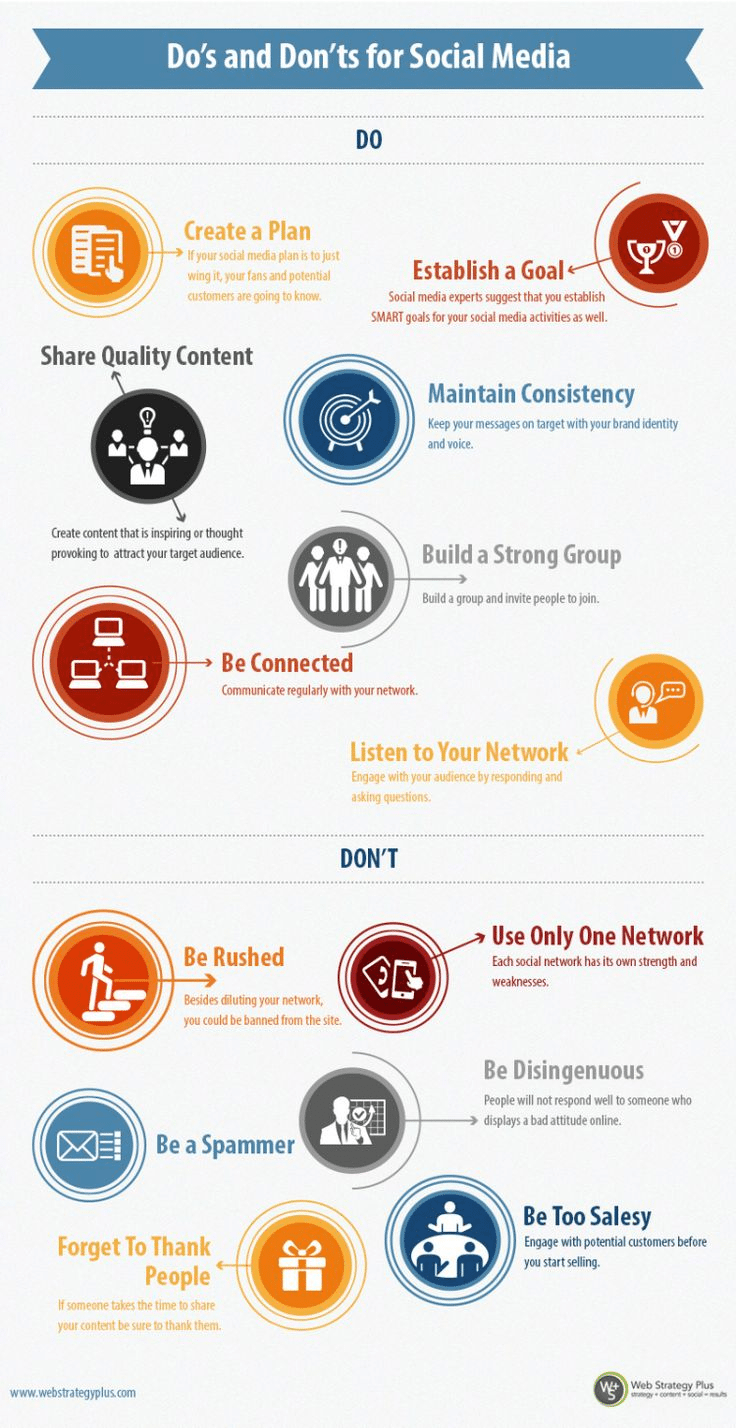
If you feel there’s room for improvement take a look at the infographic below from Web Strategy Plus which gives you 13 do’s and don’ts to apply to your daily efforts.
The Dos
1. Set Clear Goals and Objectives
Before diving into the world of social media marketing, define your goals and objectives. What do you want to achieve through your social media efforts? Whether it’s increasing brand awareness, driving website traffic, or generating leads, having clear objectives will guide your strategy and help you measure success effectively.
2. Know Your Audience
Understanding your target audience is crucial for crafting content that resonates with them. Conduct market research to identify your audience’s demographics, interests, and pain points. This knowledge will enable you to tailor your messaging and choose the right social platforms to reach them.
3. Create Quality Content
Quality trumps quantity when it comes to social media content. Develop engaging, informative, and visually appealing posts that provide value to your audience. Use a mix of formats, including text, images, videos, and infographics, to keep your content fresh and interesting.
4. Consistency is Key
Consistency in posting is vital for maintaining an active and engaged following. Create a content calendar that outlines when and what you’ll post. Regular posting not only keeps your audience engaged but also signals to algorithms that your account is active.
5. Engage with Your Audience
Social media is a two-way street. Respond promptly to comments, messages, and mentions. Engage in conversations with your followers, answer their questions, and address their concerns. Building a strong online community can lead to loyal customers and brand advocates.
6. Use Hashtags Wisely
Hashtags can increase the discoverability of your content, but don’t overdo it. Use relevant and trending hashtags sparingly, and avoid using them in excess. Research popular hashtags within your niche to reach a broader audience.
7. Monitor Analytics
Track the performance of your social media efforts using analytics tools provided by platforms or third-party services. Analyze metrics such as engagement, reach, clicks, and conversions to gauge the effectiveness of your strategy. Use this data to make informed adjustments and improvements.
8. Invest in Paid Advertising
While organic reach is valuable, consider allocating a budget for paid social media advertising. Platforms like Facebook, Instagram, and LinkedIn offer highly targeted advertising options that can boost your reach and conversions. Experiment with different ad formats to see what works best for your goals.
9. Collaborate with Influencers
Partnering with social media influencers can be a powerful way to extend your reach and credibility. Identify influencers within your niche whose audience aligns with your target demographic. Collaborate on campaigns or sponsored posts to leverage their influence.
10. Stay Updated with Trends
Social media trends evolve rapidly. Stay current with platform updates, algorithm changes, and emerging trends in your industry. Being aware of these shifts allows you to adapt your strategy and remain relevant.
11. A/B Test Your Content
Experiment with different types of content, posting times, and messaging to see what resonates best with your audience. A/B testing can provide valuable insights into what drives engagement and conversions, helping you refine your strategy over time.
12. Humanize Your Brand
Show the human side of your brand by sharing behind-the-scenes glimpses, employee stories, and customer testimonials. Authenticity and transparency can build trust and foster a deeper connection with your audience.
13. Stay Compliant with Regulations
Be aware of the legal and ethical considerations related to social media marketing. Ensure that your posts adhere to copyright laws, privacy regulations, and platform-specific guidelines. Failure to do so can result in legal issues and reputational damage.
The Don’ts
1. Don’t Over-Promote
While it’s essential to showcase your products or services, avoid constant self-promotion. An excessive focus on sales can turn off your audience. Instead, aim for a balanced mix of promotional and non-promotional content that provides value and engages your followers.
2. Don’t Ignore Negative Feedback
Negative comments and reviews are inevitable, but ignoring them can harm your reputation. Address negative feedback professionally and empathetically. Use it as an opportunity to improve and demonstrate your commitment to customer satisfaction.
3. Don’t Automate Everything
Automation tools can save time, but don’t rely solely on them. Personalized interactions and authentic engagement are essential for building a loyal audience. Balance automation with genuine human interaction to maintain a meaningful presence on social media.
4. Don’t Buy Followers or Engagement
Buying followers or engagement may seem like a quick way to boost your social media presence, but it’s a deceptive tactic that can damage your credibility. Authentic growth takes time and effort, so focus on building a genuine, organic following.
5. Don’t Neglect Your Profile
A complete and up-to-date social media profile is essential. Ensure that your profile picture, cover photo, bio, and contact information are accurate and reflect your brand identity. A neglected or incomplete profile can deter potential followers and customers.
6. Don’t Be Inconsistent with Branding
Maintain a consistent brand identity across all your social media profiles. Use the same logo, color scheme, and messaging to reinforce your brand’s recognition and authenticity.
7. Don’t Delete Negative Comments
Deleting negative comments may seem like a way to protect your brand’s image, but it can backfire. Transparency and addressing concerns openly can demonstrate your commitment to customer satisfaction and authenticity.
8. Don’t Forget Mobile Users
Many social media users access platforms via mobile devices. Ensure that your content is mobile-friendly, with legible fonts, responsive design, and appropriately sized images and videos.
9. Don’t Engage in Public Disputes
Avoid engaging in public disputes or arguments on social media, especially with competitors or disgruntled customers. Take conflicts to private messages to maintain a professional image.
10. Don’t Neglect Analytics
Don’t ignore the data and insights provided by social media analytics tools. Regularly review your performance metrics to identify areas for improvement and track progress toward your goals.
11. Don’t Jump on Every Trend
While staying updated with trends is important, not every trend will align with your brand or audience. Be selective and choose trends that fit your messaging and values.
12. Don’t Post Without a Strategy
Posting haphazardly without a clear strategy can lead to inconsistency and ineffectiveness. Every post should align with your overarching social media marketing strategy and contribute to your goals.
13. Don’t Neglect Security
Social media accounts can be vulnerable to hacking and unauthorized access. Implement strong security measures, such as two-factor authentication, to protect your accounts and sensitive information.
In conclusion, a successful social media marketing strategy requires a thoughtful approach that balances creativity, consistency, and engagement. By following these dos and don’ts, you can create a strong online presence, connect with your target audience, and achieve your marketing objectives effectively. Keep in mind that social media is an ever-evolving landscape, so stay adaptable and continue to refine your strategy as trends and technologies evolve.

Author:
Mark Ford