Are you looking for ways to make better use of your happy customers? Want to know how customer reviews can help improve SEO and website conversion rates?
In today’s digital age, customer reviews have become a cornerstone of business success. They serve as a powerful tool for building trust, improving products and services, and attracting new customers. If you’re not actively leveraging customer reviews in your business strategy, you’re missing out on a valuable resource that can help you grow and thrive.
In this blog post, we’ll explore four effective ways to use customer reviews to build your business. From enhancing your online reputation to making data-driven improvements, these strategies will empower you to harness the full potential of customer feedback.
TrustPilot share the stats you need to know in this infographic.
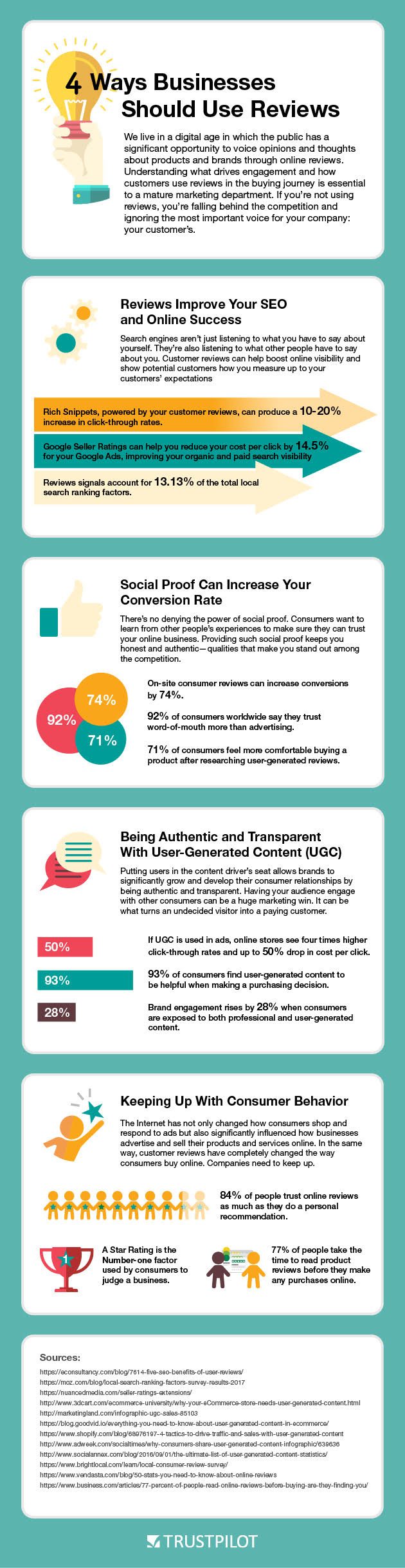
1. Boost Your Online Reputation
In the age of the internet, your online reputation can make or break your business. Potential customers often turn to online reviews to assess the credibility and reliability of a company before making a purchase. Therefore, it’s crucial to actively manage and improve your online reputation using customer reviews.
Encourage Positive Reviews
One of the most straightforward ways to boost your online reputation is to encourage satisfied customers to leave positive reviews. You can do this by sending follow-up emails after a purchase, asking for feedback on your website, or even offering incentives like discounts or small gifts in exchange for reviews.
When requesting reviews, be sure to make the process as convenient as possible. Include direct links to your review profiles on platforms like Google, Yelp, and Facebook, and provide clear instructions on how to leave a review. The easier it is for customers to leave feedback, the more likely they are to do so.
Respond to Negative Reviews
Negative reviews are inevitable, but how you handle them can make a significant difference in how potential customers perceive your business. When you receive a negative review, it’s essential to respond promptly and professionally. Acknowledge the customer’s concerns, apologize for any inconvenience, and offer a solution or resolution if possible.
By addressing negative reviews openly and constructively, you demonstrate your commitment to customer satisfaction. This can turn a negative experience into a positive one and show potential customers that you genuinely care about their feedback and experiences.
Showcase Positive Reviews
Once you’ve gathered a collection of positive reviews, don’t let them go to waste. Showcase these reviews prominently on your website and marketing materials. Highlighting the positive experiences of previous customers can help build trust with new visitors and reassure them that your products or services are worth their investment.
Consider creating a dedicated “Testimonials” or “Reviews” page on your website where potential customers can easily access and read the positive feedback from others. Additionally, you can feature snippets of glowing reviews in your email marketing campaigns and social media posts to reinforce your brand’s credibility.
2. Gather Valuable Insights
Customer reviews are not just testimonials; they are a goldmine of valuable insights into your business’s strengths and weaknesses. By analyzing customer feedback, you can identify areas for improvement and make data-driven decisions that can help your business thrive.
Identify Trends and Patterns
Start by aggregating and categorizing customer reviews to identify recurring themes, both positive and negative. Are customers consistently praising your excellent customer service or complaining about slow shipping times? Identifying these trends can help you understand what aspects of your business are working well and which ones need attention.
For example, if you notice that several customers mention a specific product feature they love, consider emphasizing it in your marketing materials or developing similar features in your other products. Conversely, if multiple reviews highlight a common issue, prioritize addressing that issue to enhance customer satisfaction.
Prioritize Areas for Improvement
Negative reviews can be tough to swallow, but they offer valuable opportunities for growth. When customers take the time to point out shortcomings, it’s a chance for your business to learn and evolve. Use negative feedback as a roadmap for improvement.
Create an action plan to address the issues mentioned in negative reviews systematically. Whether it’s improving product quality, streamlining the checkout process, or enhancing communication with customers, taking concrete steps to resolve these problems can lead to increased customer satisfaction and loyalty.
Benchmark Against Competitors
Customer reviews not only provide insights into your business but also offer a benchmark against your competitors. Compare your reviews to those of your competitors to gain a better understanding of your industry’s landscape.
Look for areas where you outshine your competitors and leverage them in your marketing efforts. Similarly, identify areas where your competitors excel and consider how you can close the gap. By benchmarking against your rivals, you can position your business more effectively and appeal to customers looking for alternatives.
3. Enhance Product Development
Customer reviews are an invaluable resource for product development and innovation. They provide direct feedback from users, helping you understand their preferences and pain points. Here’s how you can use customer reviews to enhance your products and services:
Identify Product Improvements
Pay close attention to customer feedback about your products or services. Are there common suggestions for improvement or new features that customers frequently request? Take note of these ideas and consider implementing them to enhance your offerings.
For example, if you run an e-commerce store and notice that customers often mention a desire for a more user-friendly website navigation, invest in a website redesign to improve the user experience. By addressing these suggestions, you not only improve your product but also demonstrate that you value customer input.
Test New Ideas
Customer reviews can also serve as a testing ground for new ideas. If you’re considering launching a new product or service, share the concept with your existing customer base and gather feedback before the official launch. This allows you to make improvements based on their input and increases the likelihood of a successful product launch.
Engage with customers through surveys or focus groups to get their opinions on your new ideas. Their insights can help you refine your offerings and tailor them to meet customer expectations.
Monitor Competitive Advantages
By analyzing customer reviews of your competitors’ products or services, you can identify areas where your offerings excel. Use this information to emphasize your competitive advantages in your marketing materials.
For instance, if customers consistently praise the durability of your products compared to similar offerings from competitors, make sure to highlight this in your product descriptions and marketing campaigns. By capitalizing on your strengths, you can attract customers looking for specific features or benefits.
4. Foster Customer Loyalty
Customer reviews are not only about attracting new customers but also about fostering loyalty among your existing ones. Happy and engaged customers are more likely to become repeat buyers and brand advocates. Here’s how you can use reviews to nurture customer loyalty:
Express Gratitude
When customers take the time to leave a positive review, show your appreciation by thanking them. A simple “Thank you for your kind words” can go a long way in making customers feel valued and appreciated. Consider sending personalized thank-you emails or even handwritten notes to customers who leave exceptional reviews.
Reward Loyalty
Consider implementing a loyalty program that rewards customers for their continued support and engagement. Offer discounts, exclusive access to new products, or other incentives to customers who consistently leave reviews, refer friends, or make repeat purchases.
By acknowledging and rewarding loyalty, you not only encourage customers to continue doing business with you but also create a sense of belonging to your brand community.
Encourage User-Generated Content
Loyal customers can become your most effective brand advocates. Encourage them to create user-generated content, such as social media posts, photos, or videos showcasing your products or services. Share this content on your website and social media profiles to demonstrate the authenticity of your brand.
Additionally, consider running user-generated content contests or campaigns to incentivize customers to create and share content related to your brand. This not only strengthens customer loyalty but also increases your brand’s visibility and reach.
In conclusion, customer reviews are a valuable asset that can significantly impact your business’s growth and success. By actively managing your online reputation, gathering valuable insights, enhancing product development, and fostering customer loyalty, you can harness the full potential of customer feedback. Embrace customer reviews as a powerful tool in your business strategy, and watch your business thrive as a result.

Author:
Mark Ford

10 New Year’s Marketing Resolutions to Grow a Small Business Sustainably
Are you struggling to make your marketing efforts deliver steady growth instead of short bursts of activity? Wondering how to build a marketing approach that supports your small business over the long term without constant trial and error? […]
10 Marketing Trends for 2026: What Smart Businesses Will Focus On Next
Are you looking to understand how marketing is shifting in 2026 and what today’s smartest brands are prioritising? Want to know which strategic trends will shape how businesses attract, convert, and retain customers over the next year? […]
How to Build a Marketing Technology Stack That Actually Works Together
Are you trying to figure out how to connect your marketing tools so they actually support each other instead of working in isolation? Want to understand the key steps to building a marketing technology stack that runs smoothly across your entire customer journey? […]