So, you run an Ecommerce website, you’re looking to integrate email marketing into your strategy, and need some guidance to get it right?
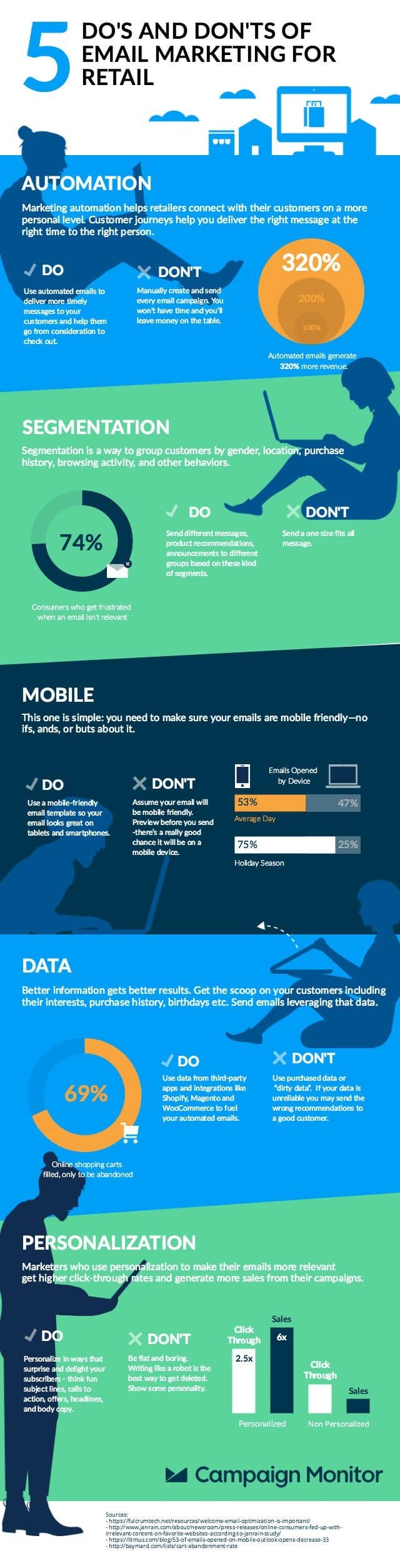
Campaign Monitor share their dos and don’ts for Ecommerce email marketing in this infographic.
They break things down into the following categories:
- Automation
- Segmentation
- Mobile
- Data
- Personalisation
Check out the infographic for more detail.
Email marketing remains a powerful tool for ecommerce businesses looking to engage with their audience, boost sales, and build lasting customer relationships. However, like any marketing strategy, success depends on executing it effectively. To help you navigate the complex world of ecommerce email marketing, we’ve compiled a list of dos and don’ts that will set you on the path to email marketing success.
The Dos:
1. Build a Clean and Targeted Email List
Building a clean and targeted email list is the foundation of successful ecommerce email marketing. A list full of engaged and interested subscribers is more likely to convert into customers. Here’s what you should do:
- Do Segment Your List: Divide your subscribers into segments based on factors like demographics, purchase history, and engagement level. This allows you to send highly targeted and relevant emails.
- Do Use Signup Forms: Implement signup forms on your website and social media platforms to capture the email addresses of interested prospects.
- Do Send a Welcome Email: Send a welcome email to new subscribers, thanking them for joining and setting expectations for future emails.
- Do Regularly Clean Your List: Remove inactive or bounced email addresses to maintain list quality and deliverability.
2. Personalize Your Emails
Personalization is key to making your subscribers feel valued and increasing engagement. Here’s what you should do:
- Do Use Subscribers’ Names: Include the recipient’s name in the subject line or email body to make the email feel more personal.
- Do Recommend Products: Use purchase history and browsing behavior to recommend products that are relevant to each subscriber.
- Do Send Birthday and Anniversary Emails: Celebrate your subscribers’ special occasions with personalized offers or greetings.
- Do Segment Your Emails: Tailor your email content to different segments of your audience based on their preferences and behavior.
3. Create Engaging and Relevant Content
The content of your emails should capture your subscribers’ attention and provide value. Here’s what you should do:
- Do Provide Value: Offer informative and useful content, such as product guides, how-to articles, or industry insights.
- Do Use Compelling Subject Lines: Craft subject lines that pique curiosity and encourage recipients to open your emails.
- Do Include High-Quality Images: Use eye-catching visuals of your products to showcase their features and benefits.
- Do Use Calls to Action (CTAs): Clearly define what action you want subscribers to take and make it easy for them to do so.
4. Optimize for Mobile
With the increasing use of mobile devices, it’s crucial to ensure that your emails are mobile-friendly. Here’s what you should do:
- Do Use Responsive Design: Design your emails to adapt to different screen sizes and orientations.
- Do Test on Various Devices: Test your emails on a variety of smartphones and tablets to ensure they display correctly.
- Do Keep Emails Short and Scannable: Mobile users tend to skim content, so make it easy for them to grasp the main points quickly.
- Do Optimize Load Times: Use optimized images and minimize code to reduce load times on mobile devices.
5. Measure and Analyze Results
Regularly monitoring and analyzing the performance of your email campaigns is essential for ongoing improvement. Here’s what you should do:
- Do Use Email Analytics Tools: Utilize email marketing platforms that offer robust analytics to track open rates, click-through rates, conversion rates, and more.
- Do A/B Testing: Test different elements of your emails, such as subject lines, CTAs, and visuals, to determine what resonates best with your audience.
- Do Monitor Unsubscribe Rates: Keep an eye on your unsubscribe rates and adjust your email content or frequency if they start to rise.
- Do Learn from Successful Campaigns: Analyze what worked in your previous successful campaigns and apply those lessons to future ones.
The Don’ts:
1. Don’t Buy Email Lists
Purchasing email lists may seem like a quick way to grow your subscriber base, but it’s a shortcut to trouble. Here’s why you should avoid it:
- Don’t Risk Legal Consequences: Buying email lists can lead to serious legal issues, as it may violate anti-spam laws such as the CAN-SPAM Act.
- Don’t Damage Your Reputation: Sending emails to people who didn’t opt in can lead to a high spam complaint rate, damaging your sender reputation.
- Don’t Get Low-Quality Leads: Purchased lists often contain outdated or irrelevant email addresses, resulting in low conversion rates and wasted resources.
- Don’t Compromise Deliverability: Your emails are more likely to end up in spam folders when sent to purchased lists.
2. Don’t Overwhelm Subscribers with Emails
Sending too many emails can annoy subscribers and lead them to unsubscribe or mark your emails as spam. Here’s what you should avoid:
- Don’t Send Too Frequently: Find the right balance between staying top of mind and overwhelming your audience.
- Don’t Neglect Preferences: Allow subscribers to choose their email frequency or content preferences.
- Don’t Send Irrelevant Content: Ensure that each email you send provides value and relevance to the recipient.
- Don’t Disregard Unsubscribes: Honor unsubscribe requests promptly to maintain a positive sender reputation.
3. Don’t Neglect Mobile Optimization
With the increasing use of smartphones, ignoring mobile optimization is a costly mistake. Here’s what you should avoid:
- Don’t Use Non-Responsive Designs: Emails that don’t adapt to mobile screens can be difficult to read and navigate.
- Don’t Forget About Load Times: Slow-loading emails frustrate mobile users and can lead to higher bounce rates.
- Don’t Use Tiny Fonts or Small Buttons: Make sure text is legible and buttons are easily tappable on smaller screens.
- Don’t Ignore Testing: Skipping mobile testing can result in formatting issues and a poor user experience.
4. Don’t Be Spammy
Nobody likes spam, and sending spammy emails can harm your brand reputation and deliverability. Here’s what you should avoid:
- Don’t Use Deceptive Subject Lines: Misleading subject lines can lead to high spam complaints and distrust.
- Don’t Use All Caps or Excessive Symbols: These can trigger spam filters and make your emails appear unprofessional.
- Don’t Overuse Exclamation Points: Too many exclamation points can make your emails look like promotions.
- Don’t Send Unwanted Emails: Only send emails to subscribers who have explicitly opted in to receive them.
5. Don’t Neglect Testing and Optimization
Failing to test and optimize your email campaigns means missing out on opportunities for improvement. Here’s what you should avoid:
- Don’t Assume One Size Fits All: Different segments of your audience may respond differently to various elements of your emails.
- Don’t Skip A/B Testing: A/B testing helps you understand what resonates with your audience and can lead to significant improvements.
- Don’t Ignore Analytics: Neglecting to analyze your email performance means missing valuable insights.
- Don’t Stick to Outdated Strategies: The digital landscape is ever-changing; adapt and evolve your email marketing strategies accordingly.
In conclusion, ecommerce email marketing can be a highly effective tool for engaging with your audience and driving sales. By following these dos and avoiding the don’ts, you can create successful email campaigns that build customer loyalty, increase conversions, and contribute to the growth of your ecommerce business. Remember that email marketing is an evolving field, so continuously stay informed about best practices and adapt your strategies accordingly to stay ahead of the competition.

Author:
Mark Ford