Are you sending marketing emails that keep being marked as spam? Want to know what to change to get recipients to stop and read what you have to say?
One of the easiest ways to get marked as spam is emailing people that didn’t subscribe to your list in the first place. Buying your list from someone who probably sent you a spam email themselves is not the way towards a successful email marketing strategy.
For more email marketing mistakes to avoid take a look at the infographic below from Technology Advice.
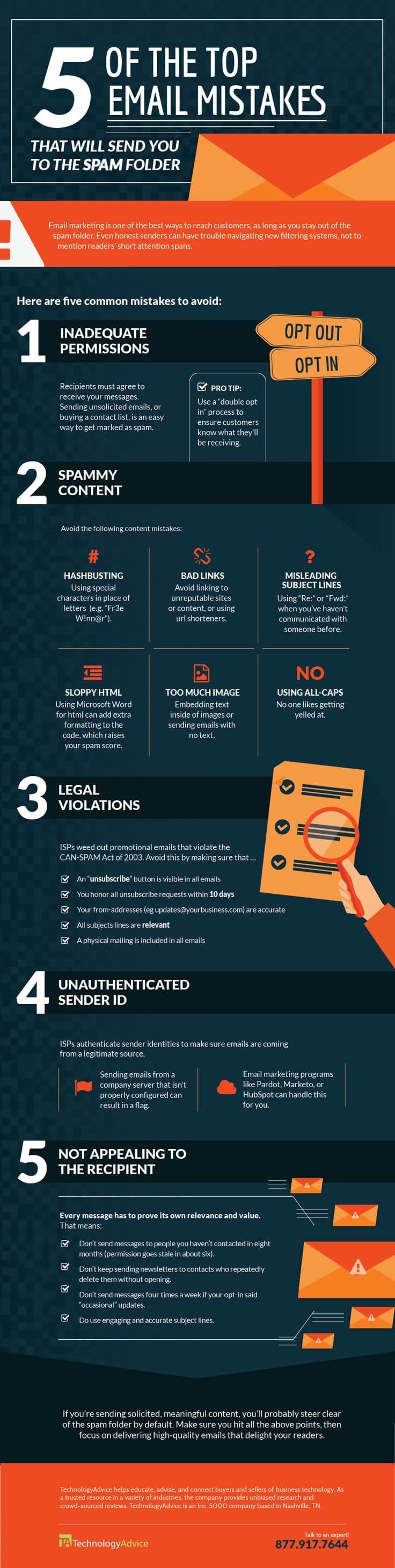
Email marketing can be a powerful tool for businesses to connect with their audience, promote products or services, and drive engagement. However, it’s a double-edged sword. Done incorrectly, it can have a detrimental effect on your brand and reputation. One of the worst things that can happen to your email marketing efforts is having your emails marked as spam.
When your emails end up in the spam folder, they’re unlikely to be seen by your intended recipients. This not only results in missed opportunities but can also damage your sender reputation. To avoid this pitfall, it’s essential to be aware of the common email marketing mistakes that can get your emails marked as spam. In this blog post, we’ll explore five of these critical errors and offer tips on how to avoid them.
1. Purchased Email Lists
One of the most significant mistakes a marketer can make is purchasing email lists. It might seem like a quick way to build a large subscriber base, but it’s a shortcut that leads straight to the spam folder.
Why it’s a mistake:
- Low-Quality Contacts: Purchased lists often contain outdated, incorrect, or low-quality email addresses. Sending emails to these addresses results in high bounce rates and spam complaints.
- Lack of Permission: People on purchased lists haven’t given you permission to email them, leading to a violation of email marketing regulations like the CAN-SPAM Act and GDPR.
How to avoid it:
- Build Your List Organically: Focus on building your email list organically by encouraging website visitors and customers to subscribe. Offer incentives like discounts or valuable content to entice sign-ups.
- Use Double Opt-In: Implement a double opt-in process where subscribers confirm their intent to receive emails. This ensures that you have explicit consent.
2. Misleading Subject Lines and Content
Misleading subject lines and content can trick recipients into opening an email they didn’t want, resulting in immediate spam reports.
Why it’s a mistake:
- Loss of Trust: Deceptive practices erode trust with your audience, damaging your brand’s reputation.
- High Unsubscribe Rates: When recipients realize they’ve been misled, they’re more likely to unsubscribe or mark your emails as spam.
How to avoid it:
- Be Honest and Clear: Write subject lines and content that accurately represent the email’s content. Avoid clickbait tactics.
- Personalize: Personalization can improve open rates, but it should be done honestly. Don’t use false personalization to deceive recipients.
3. Ignoring Unsubscribe Requests
Ignoring unsubscribe requests is not only unethical but also illegal under regulations like the CAN-SPAM Act. Yet, some marketers make the mistake of making it difficult for recipients to unsubscribe.
Why it’s a mistake:
- Legal Consequences: Violating unsubscribe requests can result in hefty fines and legal consequences.
- Negative Brand Image: It leaves a negative impression on recipients and can lead to spam complaints.
How to avoid it:
- Provide an Easy Unsubscribe Option: Include a clear and visible unsubscribe link in every email. Make it easy for recipients to opt out.
- Process Unsubscribes Promptly: Once someone unsubscribes, promptly remove them from your email list. This builds trust and helps maintain a good sender reputation.
4. Overloading Emails with Images and Links
While visuals and links can enhance the appeal of your emails, overloading them with these elements is a common mistake that can trigger spam filters.
Why it’s a mistake:
- High Spam Score: Emails with too many images and links are often flagged as spam because they resemble common spam tactics.
- Slow Load Times: Emails that take too long to load due to excessive images can frustrate recipients.
How to avoid it:
- Maintain a Balanced Ratio: Aim for a balance between text and images. Avoid sending emails that are entirely image-based.
- Use Alt Text: Include descriptive alt text for images to ensure your message is clear even if images don’t load.
- Test Emails: Use email testing tools to check how your emails appear in different email clients and adjust accordingly.
5. Not Segmenting Your Email List
Sending the same email to your entire list without segmenting can lead to recipients marking your emails as spam. People expect relevant content, and generic emails often miss the mark.
Why it’s a mistake:
- Relevance Matters: Irrelevant content can annoy recipients and drive them to mark your emails as spam.
- Higher Unsubscribe Rates: Lack of segmentation can lead to higher unsubscribe rates as subscribers disengage.
How to avoid it:
- Segment Your List: Divide your email list into segments based on demographics, behavior, or preferences. This allows you to send targeted, relevant content.
- Personalize: Use data from your segments to personalize emails, addressing recipients by name and tailoring content to their interests.
Conclusion
Avoiding these common email marketing mistakes can significantly reduce the likelihood of your emails being marked as spam. Remember that building a successful email marketing strategy requires time, effort, and a commitment to best practices.
Prioritize ethical practices, seek explicit consent from your subscribers, and focus on delivering valuable content. By doing so, you can not only avoid spam complaints but also build a strong and engaged email list that contributes to the growth of your business.

Author:
Mark Ford