Are you in the process of launching an email marketing campaign? Need an easy to follow process to guide you towards success?
In today’s digital age, email marketing remains one of the most effective and cost-efficient ways to connect with your target audience. Whether you’re a small business owner, a nonprofit organization, or a multinational corporation, crafting a successful email marketing campaign can help you reach your goals.
However, email marketing is not just about sending out mass emails and hoping for the best. To achieve success, you need a well-thought-out strategy and a clear understanding of your audience’s needs and preferences.
In this blog post, we’ll explore the five essential steps to creating a successful email marketing campaign. These steps will help you build strong relationships with your subscribers, boost engagement, and drive conversions.
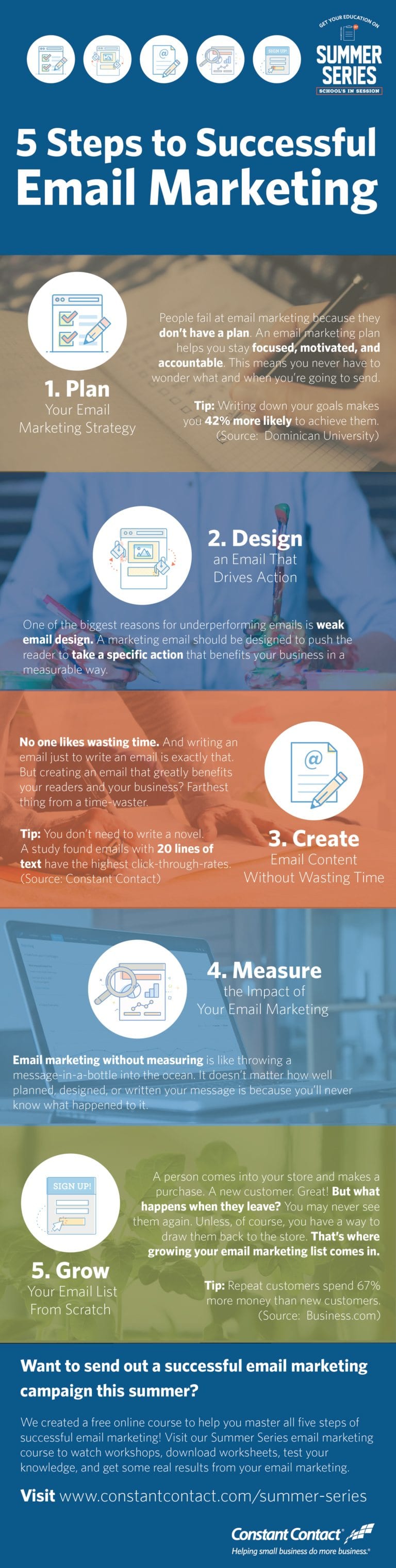
Constant Contact share their 5 essential steps in this infographic.
Step 1: Define Your Email Marketing Goals
The first and most crucial step in creating a successful email marketing campaign is defining your goals. Without clear objectives, you won’t know what you’re trying to achieve, making it difficult to measure success and make improvements.
Here are some common email marketing goals:
- Increase Sales: Many businesses use email marketing to promote products or services and drive sales. If this is your primary goal, you’ll want to focus on creating compelling product emails and tracking revenue generated from your campaigns.
- Boost Website Traffic: If you’re looking to drive more traffic to your website, your emails should contain links to relevant blog posts, landing pages, or product pages. Tracking click-through rates can help gauge the success of this goal.
- Grow Your Subscriber List: Expanding your email list is essential for the long-term success of your email marketing efforts. You can set goals for increasing your subscriber count and work on strategies to achieve this.
- Enhance Customer Engagement: Engaging your audience with valuable content and meaningful interactions can lead to stronger customer relationships. Open and click-through rates, as well as social media engagement, can be indicators of engagement success.
- Educate and Inform: Some organizations use email marketing to educate their audience about industry trends, best practices, or news. If this is your goal, measure success through content engagement metrics and feedback.
Once you’ve determined your primary goals, make sure they are specific, measurable, achievable, relevant, and time-bound (SMART). For example, if your goal is to increase sales, you could set a specific target like “increase monthly sales by 20% within the next three months.”
Step 2: Build a High-Quality Email List
A successful email marketing campaign starts with a high-quality email list. Building and maintaining a list of engaged subscribers is essential for achieving your email marketing goals. Here’s how to do it:
- Create Opt-In Opportunities: Offer valuable incentives, such as discounts, eBooks, or exclusive content, to encourage website visitors to subscribe to your emails. Place opt-in forms prominently on your website and landing pages.
- Segment Your List: Segmenting your email list allows you to send targeted and relevant content to different groups of subscribers. Segmentation can be based on demographics, purchase history, engagement level, or other criteria.
- Regularly Clean Your List: Over time, your email list may accumulate inactive or invalid email addresses. Remove these addresses periodically to maintain a healthy list and improve deliverability rates.
- Use Double Opt-In: Implementing a double opt-in process ensures that subscribers genuinely want to receive your emails. It involves sending a confirmation email after the initial sign-up, reducing the likelihood of spam complaints.
- Respect Privacy and Regulations: Always comply with privacy regulations, such as the General Data Protection Regulation (GDPR) or the CAN-SPAM Act, by obtaining consent and providing clear unsubscribe options in your emails.
- Leverage Social Media: Promote your email sign-up form on your social media profiles to reach a broader audience and encourage followers to subscribe.
Building a high-quality email list is an ongoing process that requires consistent effort and attention. However, it’s a crucial foundation for the success of your email marketing campaigns.
Step 3: Craft Compelling and Relevant Content
Once you have a solid email list in place, the next step is to create compelling and relevant content that resonates with your subscribers. Your email content should provide value, solve problems, or fulfill needs. Here’s how to do it effectively:
- Understand Your Audience: Get to know your subscribers’ preferences, pain points, and interests. Conduct surveys, analyze data, and engage with your audience on social media to gather insights.
- Personalize Your Emails: Personalization goes beyond just addressing subscribers by their first name. Tailor your content based on their preferences, past interactions, and demographic information.
- Write Attention-Grabbing Subject Lines: Your subject line is the first thing recipients see, so make it enticing and relevant. Avoid clickbait, and be transparent about the email’s content.
- Create Mobile-Friendly Designs: Many people check their emails on mobile devices, so ensure that your emails are responsive and easy to read on smartphones and tablets.
- Use Clear Calls to Action (CTAs): Tell your subscribers what you want them to do next, whether it’s clicking a link, making a purchase, or sharing your content on social media.
- Balance Promotional and Educational Content: While promotional emails can drive sales, don’t overwhelm your subscribers with too many sales pitches. Provide educational content, tips, and insights to maintain their interest.
- Test and Optimize: A/B testing can help you determine what type of content, design, and messaging resonate best with your audience. Continuously analyze the results and refine your approach.
Remember that the quality of your email content directly impacts open and click-through rates, as well as overall engagement. Subscribers are more likely to stay engaged if they find your emails valuable and relevant to their needs.
Step 4: Design Engaging Emails
The design and layout of your emails play a significant role in capturing your audience’s attention and delivering your message effectively. Here are some design principles to follow:
- Use a Clean and Mobile-Friendly Layout: Keep your email design simple, with a single-column layout for readability on mobile devices. Use responsive design templates to ensure consistency across various screen sizes.
- Eye-Catching Visuals: Incorporate visually appealing images, graphics, and videos to enhance the visual appeal of your emails. Ensure that visuals are relevant to your content and support your message.
- Consistent Branding: Maintain brand consistency by using your logo, colors, and fonts in your email templates. A consistent brand identity builds trust and recognition.
- Clear and Readable Fonts: Use easy-to-read fonts and font sizes to ensure that your content is legible on all devices. Avoid using too many different fonts in a single email.
- Whitespace: Use whitespace strategically to break up content and make it easier to scan. Don’t overcrowd your emails with text or images.
- Clickable CTAs: Make your calls to action (CTAs) stand out with contrasting colors and clear, action-oriented text. Ensure that they are easily clickable on both desktop and mobile devices.
- Preview Text: Craft compelling preview text that complements your subject line and provides additional context for the email’s content.
- Test Across Email Clients: Different email clients may render emails differently. Test your emails across various email platforms to ensure a consistent appearance.
- Optimize for Accessibility: Ensure that your emails are accessible to individuals with disabilities. Use alt text for images and follow accessibility guidelines for text and design.
An attractive and user-friendly email design will encourage recipients to engage with your content and take the desired actions, whether it’s clicking a link, making a purchase, or sharing your message.
Step 5: Measure, Analyze, and Improve
The final step in creating a successful email marketing campaign is to measure your results, analyze the data, and continuously improve your strategy. Data-driven insights allow you to make informed decisions and refine your campaigns for better performance. Here’s what to focus on:
- Open Rates: Track how many recipients open your emails. A low open rate may indicate issues with your subject lines or sender reputation.
- Click-Through Rates (CTR): Measure the percentage of recipients who clicked on links within your emails. High CTR indicates that your content and CTAs are effective.
- Conversion Rates: Monitor the number of subscribers who take the desired action after clicking through your emails, whether it’s making a purchase, signing up for a webinar, or filling out a contact form.
- Bounce Rates: Keep an eye on bounce rates to identify issues with invalid email addresses or deliverability problems.
- Unsubscribe Rates: While some unsubscribes are inevitable, a sudden increase may signal that your content or email frequency is not aligning with subscribers’ expectations.
- Email List Growth: Measure how quickly your email list is growing and assess the sources of new subscribers.
- Segmentation Performance: Evaluate the performance of different segments within your email list to determine if certain groups are more responsive than others.
- ROI (Return on Investment): Calculate the return on investment for your email marketing campaigns by comparing the revenue generated against the costs.
- Feedback and Surveys: Collect feedback from subscribers through surveys or direct inquiries to gain insights into their preferences and needs.
- Competitive Analysis: Keep an eye on your competitors’ email marketing efforts to identify trends and potential opportunities for improvement.
Use email marketing analytics tools to track these metrics and generate reports that provide insights into your campaign’s performance. Regularly review these reports and adjust your strategy accordingly. Experiment with different subject lines, content types, send times, and segmentation techniques to optimize your campaigns.
Conclusion
Email marketing remains a powerful tool for connecting with your audience, driving engagement, and achieving your business goals. By following the five essential steps outlined in this blog post—defining your goals, building a high-quality email list, crafting compelling content, designing engaging emails, and measuring and improving your campaigns—you can create successful email marketing campaigns that deliver results.
Remember that email marketing is an ongoing process that requires continuous refinement and adaptation to changing audience preferences and industry trends. Stay committed to providing value to your subscribers, and you’ll build strong relationships that lead to long-term success in your email marketing endeavors.

Author:
Mark Ford