In today’s fast-paced digital landscape, technology is a double-edged sword. On one hand, it has revolutionized the way businesses market their products and services. On the other hand, it can also wreak havoc on your marketing strategy if not used wisely.
While technology can certainly enhance your marketing efforts, it can just as easily undermine them. In this blog post, we’ll explore five ways in which technology can potentially ruin your marketing strategy and provide insights on how to avoid these pitfalls.
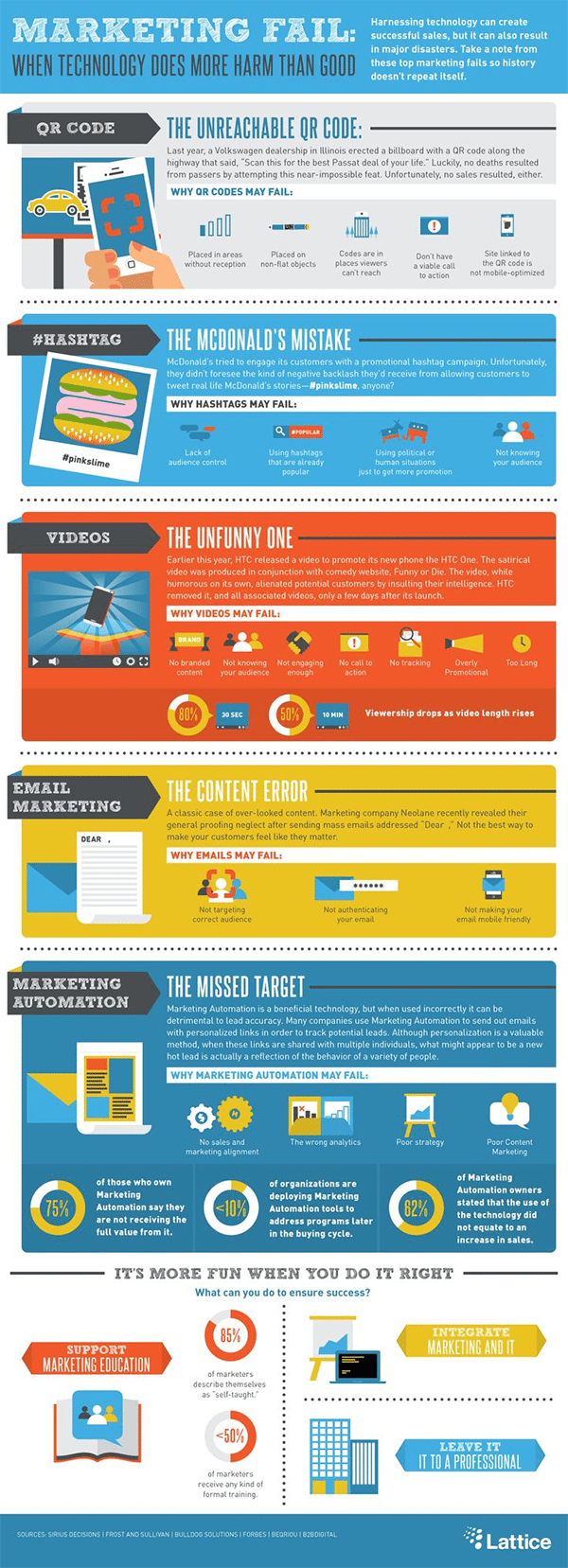
Take a look at the 5 examples on the infographic below from Lattice.
1. Overreliance on Automation
Automation has become an indispensable part of modern marketing. It streamlines processes, saves time, and improves efficiency. However, an overreliance on automation can lead to a disconnection between your brand and your audience. When everything from email marketing to social media posting is automated, it’s easy to lose the personal touch that sets your brand apart.
The Problem:
When you automate too much of your marketing strategy, you risk sending generic, one-size-fits-all messages to your audience. This can result in a lack of personalization and engagement, making it difficult to build meaningful relationships with your customers.
The Solution:
Find the right balance between automation and personalization. While automating routine tasks like email scheduling or social media posting is beneficial, ensure that you maintain human interaction in critical areas. Respond to customer inquiries promptly, engage with comments and messages on social media, and tailor your messaging to specific segments of your audience. By combining automation with a personal touch, you can avoid the pitfall of overreliance on technology.
2. Ignoring Data Privacy Concerns
Data is the lifeblood of modern marketing. It allows businesses to target their audience more effectively and create personalized campaigns. However, the collection and use of data raise significant privacy concerns. Ignoring these concerns can not only harm your reputation but also result in legal consequences.
The Problem:
Failure to address data privacy concerns can lead to data breaches, which can have severe consequences for your business. Consumers are increasingly concerned about how their data is used, and breaches can erode trust in your brand.
The Solution:
Prioritize data privacy in your marketing strategy. Ensure that you are compliant with relevant data protection regulations, such as GDPR and CCPA. Be transparent with your customers about how their data is collected and used, and give them the option to opt out of data collection if they choose. By respecting data privacy and taking steps to protect customer information, you can maintain trust and avoid the negative consequences of data mishandling.
3. Chasing Shiny New Technologies
The marketing technology landscape is constantly evolving, with new tools and platforms emerging regularly. While staying up-to-date is essential, chasing after every new technology can divert your focus and resources away from what truly matters.
The Problem:
Frequent changes in technology can lead to a lack of consistency in your marketing strategy. It’s easy to become distracted by the latest trends and lose sight of your core objectives.
The Solution:
Instead of chasing every new technology, focus on the ones that align with your marketing goals and target audience. Conduct thorough research before adopting new tools or platforms to ensure they will genuinely benefit your strategy. Prioritize consistency and stability in your marketing efforts, and only integrate new technologies when they offer clear advantages.
4. Neglecting Human Creativity
Technology can automate many aspects of marketing, but it can’t replace human creativity and innovation. Neglecting these essential elements can result in uninspired and unengaging marketing campaigns.
The Problem:
When technology takes over creative tasks, there’s a risk of producing cookie-cutter content that lacks originality. This can lead to decreased engagement and a failure to stand out in a crowded market.
The Solution:
Embrace the synergy between technology and human creativity. Use technology to streamline repetitive tasks, such as data analysis and reporting, to free up time for your marketing team to focus on creative endeavors. Encourage brainstorming sessions and collaboration to generate fresh ideas and innovative campaigns. Remember that it’s the unique, human touch that can set your brand apart from the competition.
5. Neglecting Customer Experience
While technology can help you reach a broader audience, it can also alienate customers if not used thoughtfully. Neglecting the customer experience in favor of automation and efficiency can damage your brand’s reputation.
The Problem:
When technology becomes the sole focus, customer interactions may feel robotic and impersonal. This can result in a negative perception of your brand and lead customers to seek more personalized experiences elsewhere.
The Solution:
Prioritize the customer experience in your marketing strategy. Use technology to enhance, not replace, human interactions. Implement chatbots and AI-powered tools that can provide quick and helpful responses to customer inquiries, but ensure there are mechanisms in place for customers to reach a human representative when needed. Collect and analyze customer feedback to continuously improve the user experience. By putting the customer at the center of your strategy, you can avoid the pitfall of neglecting their needs and expectations.
In conclusion, while technology is a powerful tool that can elevate your marketing strategy to new heights, it can also undermine your efforts if not used judiciously. Avoid the pitfalls of overreliance on automation, ignoring data privacy concerns, chasing shiny new technologies, neglecting human creativity, and neglecting the customer experience. By finding the right balance between technology and human touch, you can create a marketing strategy that resonates with your audience, builds trust, and ultimately leads to success in the digital age.

Author:
Mark Ford

From Confusion to Clarity: How to Steer Your Marketing Away from These Frequent Errors
Are you struggling to make sense of your marketing strategy and wondering why your results aren’t matching your effort? Want to learn how to avoid the most common marketing mistakes and create a clear, focused plan that actually delivers results? […]

85 Game-Changing Tools for Creators, Marketers, and Entrepreneurs
Are you searching for powerful yet free tools to help you grow your brand, streamline your workflow, and boost your online presence? Want to discover game-changing platforms that every creator, marketer, and entrepreneur should be using right now? […]