In the vast digital landscape, where information flows at the speed of light, publishing online content has become an essential tool for communication, education, marketing, and self-expression.
Whether you’re a blogger, a business owner, a content marketer, or simply someone who wants to share their thoughts with the world, the process of publishing online content demands careful consideration.
To ensure your content is engaging, informative, and impactful, you must ask yourself a series of critical questions before hitting that “publish” button.
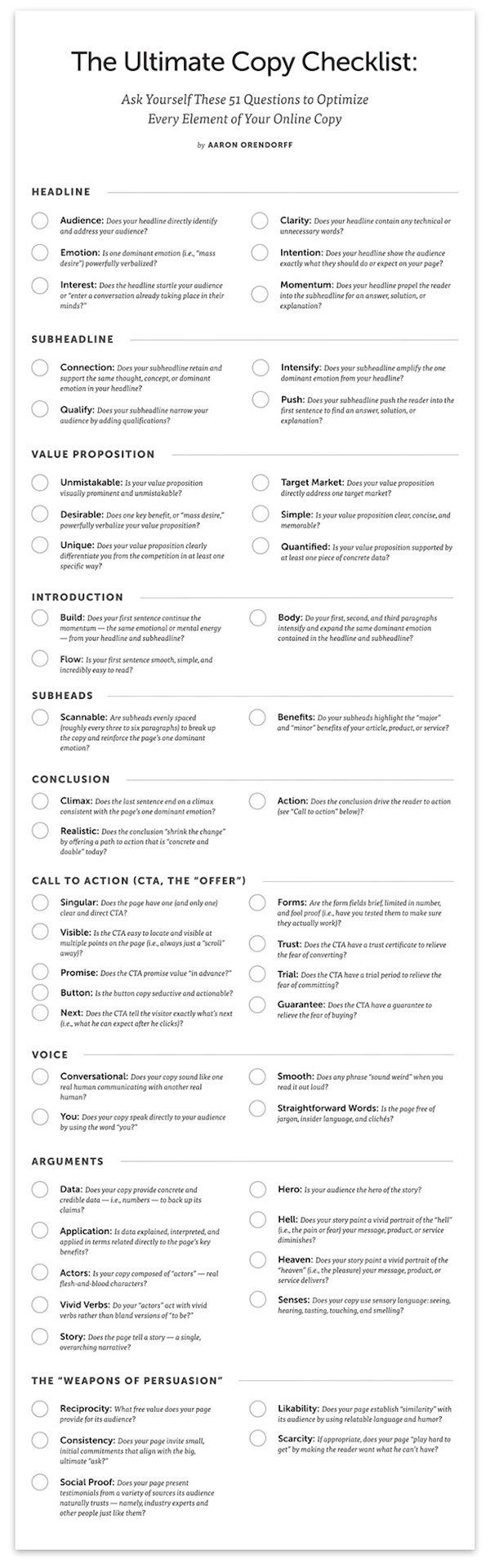
In this comprehensive guide, we’ve compiled 51 questions that you should ponder, organized into seven key categories: Planning, Audience, Content, Structure, SEO, Engagement, and Review.
Infographic from Aaron Orendorff.
Planning
- What’s Your Goal?
- Before you start creating content, define your objective. Are you looking to inform, entertain, persuade, or sell? Knowing your goal will guide your content creation.
- Who’s Your Target Audience?
- Identify your ideal audience: their demographics, interests, and pain points. Tailor your content to address their needs and preferences.
- What’s Your Unique Selling Proposition (USP)?
- What sets your content apart? Why should people read it? Identify your USP to differentiate yourself from the competition.
- Have You Researched Your Topic?
- Ensure you have a solid understanding of your subject matter. Research extensively to provide accurate and valuable information.
- What’s Your Content Calendar?
- Plan a publishing schedule to maintain consistency. Determine when and how often you’ll release content.
- Have You Defined Key Metrics?
- Determine how you’ll measure the success of your content. Is it through page views, conversions, social shares, or other KPIs?
Audience
- What Are Your Audience’s Pain Points?
- Understand the challenges and problems your audience faces. Your content should offer solutions or insights.
- What Questions Do They Have?
- Anticipate the questions your audience might ask and address them in your content.
- What Tone Should You Use?
- Adapt your tone to your audience. Are they looking for a professional, casual, or humorous style?
- Where Does Your Audience Hang Out Online?
- Identify the online platforms and communities your audience frequents. Share your content where they are most active.
- Are You Creating Personas?
- Develop audience personas to gain a deeper understanding of your readers. This will help you create content that resonates.
- Are You Solving Real Problems?
- Ensure that your content provides genuine value. Don’t create content just for the sake of it; make sure it addresses real issues.
Content
- Is Your Headline Compelling?
- Your headline is the first thing readers see. Make it attention-grabbing and relevant to your content.
- Does Your Introduction Hook the Reader?
- The opening paragraphs should captivate your audience and give them a reason to keep reading.
- Are You Providing Value?
- Ask yourself what your readers will gain from your content. Are you informing, entertaining, or inspiring them?
- Is Your Content Accurate and Well-Researched?
- Ensure that your facts are correct, and your sources are reliable. Misinformation can harm your credibility.
- Have You Checked for Plagiarism?
- Use plagiarism detection tools to make sure your content is original. Plagiarism can damage your reputation.
- Is Your Content Evergreen or Time-Sensitive?
- Determine if your content will remain relevant over time. Time-sensitive content should have an expiration date.
- Are You Telling a Story?
- Storytelling can make your content more engaging. Consider weaving anecdotes or narratives into your writing.
- Is Your Content Organized?
- Use clear headings, subheadings, and bullet points to structure your content. Make it easy for readers to skim.
- Is Your Content Concise?
- Avoid unnecessary fluff. Get to the point and eliminate filler words.
- Are You Incorporating Visuals?
- Visual content like images, infographics, and videos can enhance your message and make it more shareable.
- Have You Optimized for Readability?
- Use a legible font, appropriate font size, and adequate line spacing to ensure your content is easy to read.
- Are You Using Appropriate Language?
- Avoid jargon and overly technical language unless your audience is well-versed in the subject.
- Is Your Content Mobile-Friendly?
- With the majority of internet users on mobile devices, ensure your content displays well on smartphones and tablets.
Structure
- Have You Created an Outline?
- An outline helps you organize your thoughts before writing. It ensures a logical flow in your content.
- Does Your Content Have a Clear Structure?
- A typical structure includes an introduction, body, and conclusion. Ensure your content flows seamlessly from one section to the next.
- Are You Using Subheadings?
- Subheadings break up long content into digestible sections. They also help with SEO.
- Are You Using Bullet Points and Numbered Lists?
- Lists make information easier to scan and understand.
- Is Your Call-to-Action (CTA) Clear?
- If you want readers to take a specific action, such as signing up for a newsletter or making a purchase, make your CTA explicit.
- Have You Proofread Your Content?
- Typos and grammar errors can erode your credibility. Proofread carefully or consider hiring an editor.
- Is Your Content Consistent?
- Maintain a consistent tone, style, and formatting throughout your content.
- Have You Linked to Relevant Sources?
- Back up your claims and provide additional resources by including outbound links.
SEO (Search Engine Optimization)
- Have You Researched Keywords?
- Identify relevant keywords and phrases that your audience is likely to search for.
- Is Your Content Keyword-Optimized?
- Incorporate your chosen keywords naturally throughout your content, including in titles, headings, and body text.
- Have You Created a Meta Description?
- Write an enticing meta description that summarizes your content and includes your target keywords.
- Are You Using Alt Text for Images?
- Alt text improves accessibility and can help with image SEO.
- Have You Optimized for Voice Search?
- Consider how people might phrase questions verbally when optimizing for voice search.
- Are You Monitoring Page Load Speed?
- Slow-loading pages can deter readers and negatively impact SEO. Optimize for speed.
Engagement
- Are You Encouraging Comments and Feedback?
- Encourage reader interaction by asking questions and inviting comments.
- Are You Sharing on Social Media?
- Promote your content on relevant social media platforms to expand your reach.
- Are You Engaging with Your Audience?
- Respond to comments and engage in conversations with your readers.
- Are You Building an Email List?
- Email marketing is a powerful tool for audience engagement. Encourage readers to subscribe.
- Have You Considered Influencer Outreach?
- Collaborating with influencers in your niche can help your content reach a broader audience.
Review
- Is Your Content Accurate and Up-to-Date?
- Regularly update your content to reflect the latest information and trends.
- Have You Checked for Broken Links?
- Broken links can harm your SEO and user experience. Use tools to identify and fix them.
- Are You Analyzing Analytics?
- Use web analytics tools to track the performance of your content and make data-driven improvements.
- Are You A/B Testing?
- Experiment with different headlines, CTAs, and content formats to optimize your results.
- Are You Staying Consistent?
- Maintain a consistent publishing schedule to keep your audience engaged.
- Are You Learning and Adapting?
- Stay updated with industry trends and adapt your content strategy accordingly.
- Are You Proud of Your Content?
- Before hitting that “publish” button, ask yourself if you’re genuinely proud of your work. If not, revise until you are.
In conclusion, publishing online content is a multifaceted process that demands careful consideration. By asking yourself these 51 questions across the planning, audience, content, structure, SEO, engagement, and review stages, you can ensure that your online content is not only well-crafted but also effective in achieving your goals. Remember, the digital world is ever-evolving, so continuous improvement and adaptation are key to your success as an online content creator or marketer.

Author:
Mark Ford