Are you creating content as part of your digital marketing strategy? Want to know if you’re investing time and money in the right areas?
Content marketing is a broad (and often confusing) matter for most small business owners. Without proper guidance you could find you waste time doing things that just don’t matter, and neglecting those that do.
Express Writers have identified the key areas to concentrate on in the infographic below.
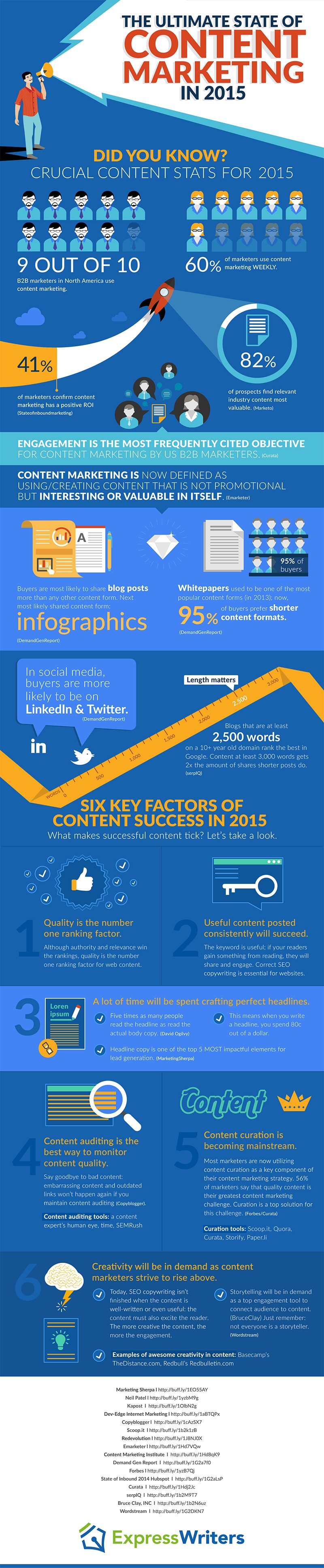
Content marketing has been a buzzword in the world of digital marketing for quite some time, and 2015 was no exception. In fact, it was a year that witnessed significant growth and evolution in the field of content marketing. Brands and businesses started to realize the importance of creating valuable and engaging content to connect with their target audience. However, achieving content marketing success in 2015 required more than just publishing blog posts and social media updates. It demanded a strategic approach that took into account the changing landscape of online marketing. In this blog post, we’ll explore the six key factors that played a crucial role in achieving content marketing success in 2015.
- Quality Over Quantity
In 2015, the era of churning out low-quality content for the sake of quantity was coming to an end. Google’s algorithms were becoming more sophisticated, and they started to prioritize high-quality content over keyword-stuffed articles and blog posts. This shift forced content marketers to rethink their strategies and focus on producing valuable, informative, and well-researched content.
To achieve content marketing success in 2015, brands had to invest in creating content that genuinely resonated with their target audience. This meant conducting thorough research to understand their audience’s pain points, interests, and preferences. It also involved using storytelling techniques to make the content more engaging and relatable.
Furthermore, the importance of visual content, such as videos, infographics, and images, grew significantly in 2015. Brands that incorporated visually appealing content into their marketing efforts saw higher engagement rates and better results. In essence, the mantra for content marketing success in 2015 was “quality over quantity.”
- Mobile Optimization
The rise of mobile devices was one of the most significant shifts in the digital landscape, and content marketers had to adapt accordingly. By 2015, mobile traffic had already surpassed desktop traffic on many websites. As a result, ensuring that content was mobile-friendly became a top priority.
Responsive web design, which allowed websites to adapt to different screen sizes and devices, became the industry standard. Content had to be easy to read and navigate on smartphones and tablets. Additionally, mobile apps became an integral part of content distribution strategies, providing a more personalized and convenient experience for users.
Google also recognized the importance of mobile-friendliness and introduced mobile-friendliness as a ranking factor in its search algorithm. This meant that websites and content that were not optimized for mobile were at a disadvantage in search engine rankings.
In summary, 2015 marked the year when content marketers couldn’t afford to ignore the mobile audience. Mobile optimization became a key factor in ensuring content marketing success.
- Social Media Engagement
Social media platforms continued to play a crucial role in content marketing success in 2015. However, the approach to social media was evolving. It was no longer enough to simply share links to blog posts and hope for the best. Brands had to engage with their audience on a deeper level.
One of the key trends in social media marketing in 2015 was the rise of visual content, particularly on platforms like Instagram and Pinterest. Brands that leveraged the power of images and videos to tell their stories and showcase their products or services gained a competitive edge.
Moreover, social media algorithms were becoming more complex, and organic reach was declining. This meant that brands had to invest in paid social advertising to ensure that their content reached their target audience. Paid social advertising allowed for highly targeted campaigns that could reach specific demographics and interests.
In summary, social media engagement in 2015 required a more strategic and paid approach. Brands that understood the nuances of each platform and invested in engaging content and advertising saw better results.
- Content Distribution and Promotion
Creating great content was only half the battle in 2015; the other half was getting that content in front of the right audience. Content distribution and promotion became essential components of content marketing success.
Email marketing continued to be a powerful tool for content distribution in 2015. Brands used email newsletters to deliver valuable content directly to their subscribers’ inboxes. Personalization and segmentation were key strategies to ensure that the content resonated with the recipients.
Additionally, influencer marketing started to gain traction in 2015. Collaborating with influencers in the industry allowed brands to tap into their established audiences and gain credibility. Influencers could promote content, products, or services to a highly engaged and targeted audience.
Content promotion through paid channels, such as pay-per-click advertising and sponsored content, also became more prevalent. Brands were willing to invest in promoting their content to ensure it reached a wider audience quickly.
In essence, content marketing success in 2015 required a multi-faceted approach that included email marketing, influencer collaborations, and paid promotion to maximize content distribution.
- Analytics and Data-Driven Insights
In 2015, the ability to measure and analyze the performance of content marketing efforts became increasingly sophisticated. Brands had access to a wealth of data that could provide valuable insights into what was working and what needed improvement.
Google Analytics was a staple tool for tracking website traffic and user behavior. Marketers could see which content was driving the most traffic, how long visitors stayed on their site, and where they dropped off. This data allowed for continuous optimization of content strategy.
Social media platforms also offered robust analytics tools that provided insights into engagement, reach, and audience demographics. Marketers could track the performance of individual posts and adjust their social media strategy accordingly.
Furthermore, marketing automation platforms became more advanced, allowing for personalized and automated email campaigns. These platforms provided data on open rates, click-through rates, and conversion rates, enabling marketers to refine their email marketing strategies.
In summary, data-driven insights and analytics were instrumental in achieving content marketing success in 2015. Brands that leveraged data to make informed decisions and optimize their content marketing efforts saw better results.
- Content Personalization
As the digital landscape became more crowded, personalization became a key factor in content marketing success. Generic, one-size-fits-all content was no longer effective in capturing the attention of an increasingly discerning audience.
Personalization involved tailoring content to individual preferences and behaviors. This could be done through tracking user behavior on a website and recommending relevant content or through email campaigns that delivered personalized recommendations based on past interactions.
Additionally, dynamic content on websites and in email campaigns allowed for real-time personalization. For example, e-commerce websites could display product recommendations based on a user’s browsing history and purchase behavior.
In summary, content personalization in 2015 was about delivering the right content to the right person at the right time. Brands that invested in personalization techniques saw higher engagement and conversion rates.
Conclusion
In 2015, content marketing evolved into a sophisticated and strategic discipline. Brands and businesses that focused on quality over quantity, embraced mobile optimization, engaged with their audience on social media, mastered content distribution, used data-driven insights, and implemented content personalization were well-positioned to achieve content marketing success.
While the digital landscape has continued to evolve since 2015, these key factors remain relevant today. Content marketing success still requires a commitment to creating valuable content, adapting to new technologies and platforms, and leveraging data to make informed decisions. By understanding and implementing these key factors, brands can continue to thrive in the ever-changing world of content marketing.

Author:
Mark Ford