Do you need help making your website stand out on Google? Struggling to keep up with the ever-changing world of SEO?
In today’s digital age, having a strong online presence is crucial for businesses and individuals alike. With millions of websites competing for attention on search engines like Google, it’s essential to optimize your site to stand out. This is where Search Engine Optimization (SEO) comes into play.
SEO is the process of improving your website’s visibility on search engine result pages (SERPs), and it’s a critical aspect of online marketing. In this blog post, we’ll explore six SEO tips to help your website stand out on Google and attract more organic traffic.
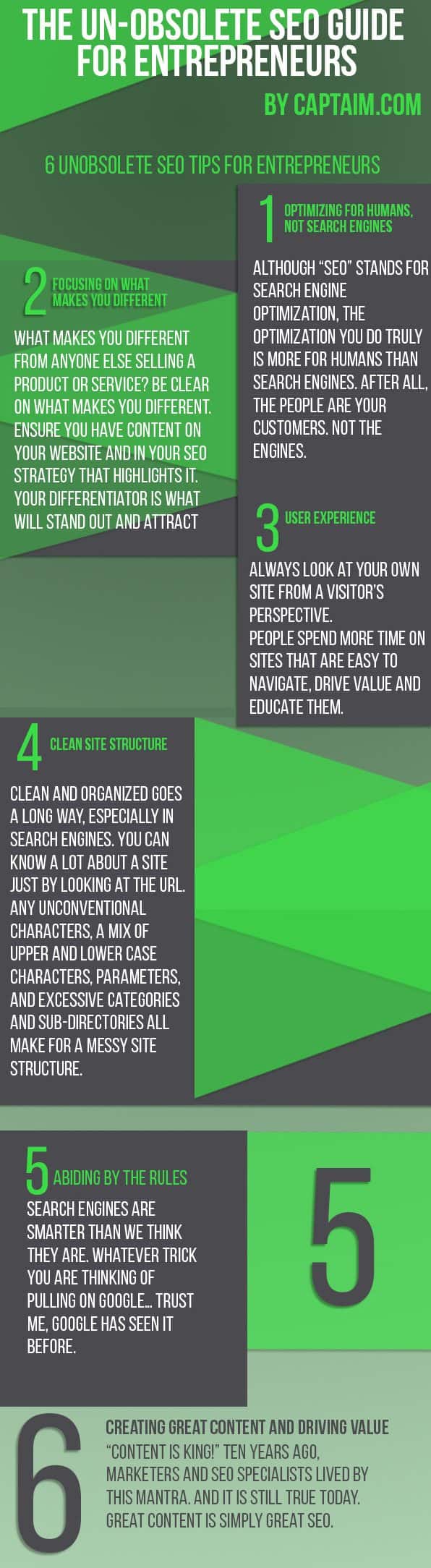
It may seem Google changes the rules all the time, but the 6 tips in this infographic from Captaim remain constant.
Conduct Keyword Research
Keywords are the foundation of SEO. They are the words and phrases that people use when searching for information online. To stand out on Google, you need to identify relevant keywords that relate to your content and target audience. Here’s how you can do it:
- a. Use Keyword Research Tools: There are several keyword research tools available, such as Google Keyword Planner, SEMrush, and Ahrefs. These tools can help you discover high-value keywords, assess their search volume, and analyze their competition.
- b. Long-Tail Keywords: Don’t just focus on short, competitive keywords. Long-tail keywords, which are longer and more specific phrases, often have less competition and can drive targeted traffic to your site. For example, instead of targeting “fitness tips,” you might opt for “beginner’s fitness tips for weight loss.”
- c. Analyze Competitor Keywords: Research your competitors and see which keywords they are targeting successfully. This can provide valuable insights and help you identify opportunities.
Once you’ve gathered a list of relevant keywords, integrate them naturally into your website’s content. Avoid keyword stuffing, which can harm your SEO efforts. Instead, aim for a balanced and reader-friendly approach.
Create High-Quality Content
Content is king in the world of SEO. Google rewards websites that provide valuable, relevant, and well-written content to users. To stand out on Google, follow these content creation guidelines:
- a. Unique and Original: Ensure that your content is unique and not copied from other sources. Plagiarism can lead to penalties from search engines.
- b. High-Quality Writing: Invest in well-written, error-free content. Poor grammar and spelling mistakes can undermine your credibility.
- c. User Intent: Understand the intent behind the keywords you’re targeting. Create content that directly addresses the needs and questions of your target audience.
- d. Multimedia Elements: Incorporate multimedia elements like images, videos, infographics, and charts to make your content more engaging and informative.
- e. Mobile-Friendly: Ensure that your website and content are mobile-responsive, as Google prioritizes mobile-friendly sites in its rankings.
Consistently producing valuable and informative content not only helps improve your website’s SEO but also encourages users to stay longer on your site and return for more.
Optimize On-Page SEO
On-page SEO refers to the optimization of individual web pages to improve their search engine rankings. Here are some on-page SEO techniques to help your website stand out on Google:
- a. Title Tags: Craft compelling and descriptive title tags for each page. Include your target keywords to improve visibility in search results.
- b. Meta Descriptions: Write engaging meta descriptions that summarize the content of your pages. A well-crafted meta description can increase click-through rates.
- c. Header Tags: Use header tags (H1, H2, H3, etc.) to structure your content and make it more readable. Include keywords in your headers where appropriate.
- d. URL Structure: Create clean and user-friendly URLs that include keywords relevant to the page’s content.
- e. Internal Linking: Link to other relevant pages within your website. Internal links help users navigate your site and improve SEO.
- f. Image Optimization: Compress and optimize images to reduce load times. Use descriptive file names and alt text for images.
- g. Page Speed: Ensure that your website loads quickly, as Google considers page speed a ranking factor.
By optimizing your on-page SEO elements, you make it easier for search engines to crawl and understand your content, which can lead to higher rankings.
Build High-Quality Backlinks
Backlinks are links from other websites that point to your site. They are a crucial aspect of off-page SEO and can significantly impact your website’s authority and ranking on Google. Here’s how to build high-quality backlinks:
- a. Create Outstanding Content: Producing valuable and shareable content is the most effective way to attract natural backlinks. When others find your content helpful, they are more likely to link to it.
- b. Guest Blogging: Write guest posts for reputable websites in your niche. Include a link back to your site in your author bio or within the content (if it’s relevant).
- c. Broken Link Building: Find broken links on other websites in your industry and offer to replace them with links to your relevant content.
- d. Outreach: Reach out to influencers, bloggers, and websites in your industry and ask for backlinks or collaborations.
- e. Social Media Promotion: Share your content on social media platforms to increase its visibility and encourage sharing.
Remember that quality matters more than quantity when it comes to backlinks. A few high-quality, relevant backlinks can have a more significant impact on your SEO than numerous low-quality links.
Optimize for User Experience
Google places a significant emphasis on user experience, so optimizing your website for usability and accessibility is essential. Here are some tips to enhance user experience and improve your website’s SEO:
- a. Mobile-Friendly Design: Ensure that your website is responsive and looks great on mobile devices. Google prioritizes mobile-friendly sites in its rankings.
- b. Page Layout: Create a clean and organized page layout that makes it easy for users to navigate your site and find the information they need.
- c. Site Speed: Improve page load times to reduce bounce rates. Compress images, use browser caching, and minimize unnecessary scripts.
- d. Clear Call-to-Actions (CTAs): Include clear and compelling CTAs throughout your site to guide users toward desired actions, such as signing up for a newsletter or making a purchase.
- e. Readability: Use legible fonts and appropriate font sizes. Break up content with headings, bullet points, and white space to make it easier to read.
- f. Secure Website: Implement SSL encryption (HTTPS) to ensure the security of user data and boost your site’s trustworthiness.
- g. Accessibility: Make your website accessible to all users, including those with disabilities. Use alt text for images, provide transcripts for videos, and use accessible color schemes.
Prioritizing user experience not only pleases search engines but also keeps visitors engaged and more likely to convert.
Monitor and Adapt
SEO is not a one-time task but an ongoing process. To stay competitive and continue standing out on Google, you need to monitor your website’s performance and adapt your strategies as needed. Here’s how:
- a. Analytics: Use tools like Google Analytics to track your website’s traffic, user behavior, and conversion rates. Analyze this data to identify trends and areas for improvement.
- b. SEO Tools: Invest in SEO tools that provide insights into your rankings, backlinks, and on-page SEO. These tools can help you track progress and identify issues.
- c. Algorithm Updates: Stay informed about Google’s algorithm updates and adapt your SEO strategies accordingly. What worked in the past may not be as effective in the future.
- d. Competitive Analysis: Keep an eye on your competitors and their SEO strategies. Identify opportunities to outperform them and gain an edge in your niche.
- e. User Feedback: Listen to user feedback and reviews to identify areas where your website can improve. Address any issues promptly.
Conclusion
Standing out on Google in today’s competitive digital landscape requires a strategic and continuous approach to SEO. By conducting keyword research, creating high-quality content, optimizing on-page SEO, building high-quality backlinks, enhancing user experience, and monitoring your website’s performance, you can improve your rankings and attract more organic traffic.
Remember that SEO is not a quick fix but a long-term investment in the success of your online presence. Stay up-to-date with industry trends and algorithm changes, and be willing to adapt your strategies to maintain a strong presence on Google. With dedication and the right techniques, your website can rise above the competition and capture the attention of your target audience.

Author:
Mark Ford