
Have you received a negative review on social media? Wondering how best to react without making things worse?
As a company that prides itself on the positive reviews we receive from our clients receiving our first ever negative one was a bit of a shock. Our initial reaction was to bash the customer on the head with a stick but in the end we decided that probably wasn’t the best way forward ;0).
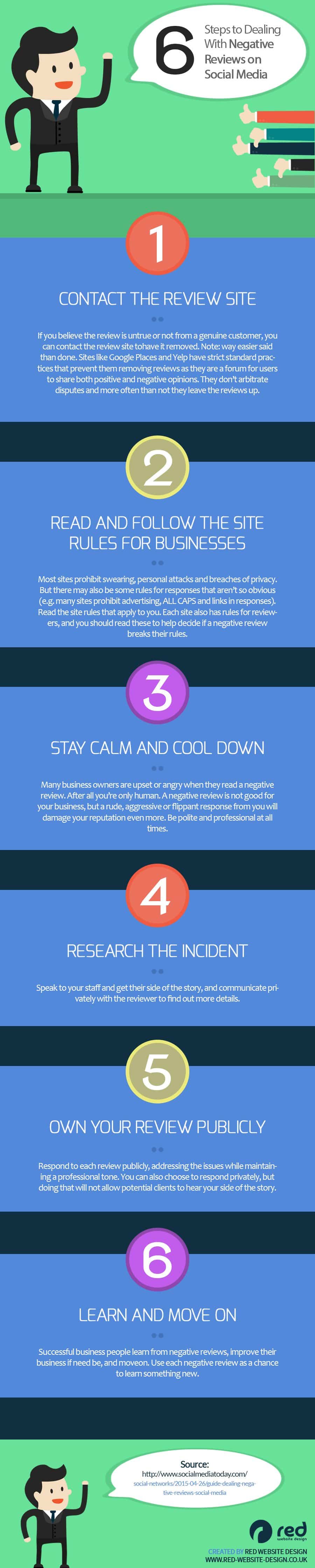
We did a bit of research on how best to proceed and found this handy article written by K.I.S.S. We thought you guys might find it useful so we turned it into the infographic below.
In today’s digital age, social media has become an integral part of business marketing and reputation management. While it offers immense opportunities for reaching a wider audience and building a positive brand image, it also comes with its fair share of challenges. Negative reviews on social media can quickly tarnish your reputation and deter potential customers. However, it’s essential to remember that negative feedback is inevitable, and how you handle it can make a significant difference. In this blog post, we’ll discuss six steps to successfully deal with negative reviews on social media, turning potential PR disasters into opportunities for growth and improvement.
1. Monitor Your Social Media Channels
The first step in effectively dealing with negative reviews is to actively monitor your social media channels. This includes platforms like Facebook, Twitter, Instagram, LinkedIn, and any other platforms relevant to your business. Regular monitoring ensures that you are aware of any negative comments or reviews as soon as they are posted.
Consider using social media management tools or services that offer real-time alerts for brand mentions and comments. Setting up keyword notifications for your brand name, product names, and common industry terms can help you stay informed and respond promptly. By staying vigilant, you can address issues before they escalate and show your customers that you are attentive to their concerns.
2. Stay Calm and Professional
When you come across a negative review, it’s essential to remain calm and professional in your response. Negative comments can be frustrating and hurtful, but reacting emotionally or defensively can make the situation worse. Remember that your response is visible to the public and potential customers, so maintaining a professional tone is crucial.
Start by thanking the customer for their feedback, even if it’s negative. Express empathy and understanding for their concerns. Avoid arguing or placing blame, as this can escalate the situation further. Instead, focus on finding a solution and showing your commitment to resolving the issue.
Here’s an example of a professional response to a negative review:
“Thank you for bringing this to our attention, [Customer Name]. We’re sorry to hear about your experience, and we understand your frustration. We’re committed to providing the best possible service, and we’d like to address your concerns. Could you please send us a direct message with more details so that we can assist you further?”
3. Address the Issue Privately
While it’s essential to acknowledge the negative review publicly, it’s often best to address the issue privately to avoid airing grievances in a public forum. In your initial response, invite the customer to continue the conversation via direct message or email. This not only shows respect for the customer’s privacy but also allows you to gather more information about the problem.
Once you’ve moved the conversation to a private channel, listen carefully to the customer’s concerns and ask clarifying questions to fully understand the issue. Be prompt in your responses and work towards finding a solution that satisfies the customer. Whether it’s offering a refund, a replacement, or another form of compensation, make sure the customer feels heard and valued.
4. Take Responsibility and Apologize
Taking responsibility for any mistakes or shortcomings is a crucial step in resolving negative reviews. Even if the issue wasn’t entirely your fault, acknowledging the customer’s feelings and apologizing for their negative experience is essential. A sincere apology goes a long way in diffusing tension and demonstrating your commitment to customer satisfaction.
Here’s an example of a responsible and empathetic apology:
“We apologize for the inconvenience you’ve experienced, [Customer Name]. Your satisfaction is our priority, and we take full responsibility for the issues you’ve encountered. We’re working to ensure this doesn’t happen again in the future.”
By accepting responsibility and apologizing, you show that you’re willing to make amends and improve your business processes.
5. Implement Changes and Improve
Once you’ve resolved the customer’s issue, it’s essential to take proactive steps to prevent similar problems in the future. Negative reviews can be valuable sources of feedback that highlight areas where your business can improve. Use this feedback as an opportunity to refine your products, services, and customer experience.
Consider conducting a thorough internal review to identify the root causes of the problem. This may involve analyzing customer feedback, evaluating your processes, and training your staff to prevent similar issues. Demonstrating your commitment to continuous improvement can not only win back the trust of the customer who left the negative review but also show potential customers that you take feedback seriously.
6. Encourage Positive Reviews
To counterbalance negative reviews, actively encourage satisfied customers to leave positive feedback on your social media channels. Positive reviews can help drown out the impact of negative ones and enhance your overall online reputation. Here are a few strategies to encourage positive reviews:
- Ask for Reviews: After completing a successful transaction or providing excellent service, politely ask customers to leave a review on your social media profiles.
- Offer Incentives: Consider offering incentives such as discounts or small gifts to customers who leave positive reviews. Be transparent about your incentive program to maintain trust.
- Make It Easy: Provide clear and straightforward instructions on how customers can leave a review. The easier it is, the more likely they’ll take the time to do it.
- Engage with Positive Feedback: When customers leave positive reviews, take the time to thank them publicly. This not only reinforces their positive experience but also encourages others to leave reviews.
Remember that genuine and organic reviews are more valuable than fake or paid ones. Encourage customers to share their honest opinions, as authenticity is essential in building trust with your audience.
Conclusion
Dealing with negative reviews on social media is an inevitable part of managing an online presence for your business. However, by following these six steps—monitoring, staying professional, addressing issues privately, taking responsibility, implementing changes, and encouraging positive reviews—you can turn negative feedback into an opportunity for growth and improvement.
Remember that every negative review is a chance to showcase your commitment to customer satisfaction and your dedication to providing excellent products or services. By handling negative reviews with professionalism and care, you can not only retain existing customers but also attract new ones who see your brand as responsive and customer-focused. In the digital age, reputation management is a critical aspect of business success, and mastering the art of dealing with negative reviews is a skill that every business owner should develop.

Author:
Mark Ford