Are you looking to get more out of your social media marketing efforts? Want to learn which goals can drive real results for your business on social platforms?
You’ll find some social media basics in this infographic.
Here’s a summary of what’s covered:
- Increasing Brand Awareness
- Building Customer Loyalty
- Improving Customer Service
- Gathering Customer Insights
- Driving Website Traffic
- Generating Leads
- Increasing Brand Authority
Check out the post below for more.
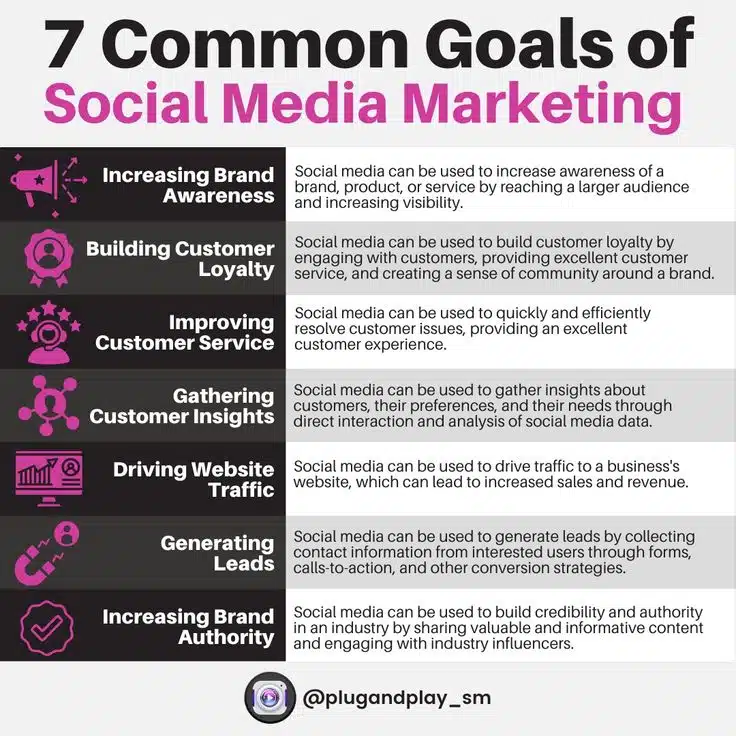
In today’s digital world, social media has evolved far beyond simple updates and status sharing. It’s now a critical marketing tool that businesses of all sizes can use to connect, convert, and grow. But to get the most out of social platforms, your efforts must be guided by clear, measurable goals. Without a direction, social media becomes noise—instead of strategy.
In this post, we explore seven powerful social media goals that every business should prioritise. Each one plays a unique role in helping your brand grow stronger, become more visible, and drive measurable results. Whether you’re just starting out or refining an established strategy, these goals offer a roadmap to success. Let’s dive in and see how to put them to work in your business.
Increasing Brand Awareness
Brand awareness is often the first and most fundamental goal of social media marketing. It’s all about making more people aware of your business, products, or services. A strong presence on social platforms helps your brand stay top-of-mind when customers are ready to buy. The wider your reach, the more recognition and trust you can build.
- Post consistently using brand-specific visuals, tone, and messaging to build familiarity.
- Use hashtags, collaborations, and tagging to increase your content’s discoverability.
- Run paid campaigns targeted at expanding reach beyond your current audience.
- Share behind-the-scenes content or user-generated content to humanise your brand.
Building Customer Loyalty
Customer loyalty is about more than just repeat purchases—it’s about forming a relationship with your audience. Social media enables two-way communication, letting you interact directly with your customers. The more valued and heard they feel, the more likely they are to stick with you long-term. Loyalty becomes a competitive advantage that pays off in trust and advocacy.
- Respond quickly to comments and messages to show customers you value them.
- Create content that reflects your community’s values, challenges, and successes.
- Run loyalty programmes or exclusive giveaways for followers.
- Feature long-term customers or testimonials to celebrate and reward engagement.
Improving Customer Service
Social media is no longer just for marketing—it’s a vital part of modern customer service. Many consumers now expect real-time support through platforms like Facebook, Instagram, or X. Providing helpful responses in public or private messages builds goodwill and solves problems faster. Doing it well can turn unhappy customers into brand advocates.
- Set up auto-replies and FAQs to help manage expectations outside business hours.
- Assign team members to monitor inboxes and comment threads in real time.
- Use customer feedback to improve service offerings and reduce complaints.
- Publicly resolve issues when possible to demonstrate your brand’s transparency.
Gathering Customer Insights
One of the most overlooked benefits of social media is its ability to generate valuable data. Every like, comment, share, and view tells you something about what your audience cares about. By listening closely, you can make more informed business decisions and tailor your content more effectively. Social media insights bridge the gap between assumption and understanding.
- Monitor post engagement rates to identify what types of content resonate most.
- Use platform analytics to learn more about audience demographics and behaviour.
- Run polls, surveys, and Q&As to collect direct feedback from your followers.
- Analyse trending comments and topics to spot emerging needs or preferences.
Driving Website Traffic
A great social media presence should lead your audience somewhere—and that “somewhere” is often your website. Whether it’s a blog post, product page, or contact form, driving traffic from social platforms helps convert interest into action. By strategically placing links and calls to action, you can move users further along the buyer journey.
- Include clickable links in your bios, posts, and stories to direct users to key pages.
- Tease blog content or products on social media to encourage click-throughs.
- Use social ads with “Learn More” or “Shop Now” buttons to drive direct traffic.
- Track traffic sources in Google Analytics to measure which platforms perform best.
Generating Leads
Lead generation is the process of turning interest into opportunity. Through social media, you can identify and capture potential customers who are curious but not yet ready to buy. With the right tactics, social platforms become a gateway to building your email list, booking appointments, or offering trials. It’s about planting seeds that can grow into sales.
- Promote gated content like ebooks, webinars, or free tools in exchange for email signups.
- Use lead generation ad formats offered by platforms like Facebook and LinkedIn.
- Offer limited-time deals with opt-in forms to create urgency and collect data.
- Include strong CTAs in video captions, stories, and posts to guide user action.
Increasing Brand Authority
In a crowded digital space, authority matters more than ever. Positioning your business as a knowledgeable, credible source helps you stand out and gain trust. Social media provides the perfect platform to demonstrate your expertise and align with influential voices in your industry. Authority isn’t claimed—it’s earned, and consistency is key.
- Share insightful, well-researched content that provides genuine value to your audience.
- Engage with thought leaders and comment on trending topics in your niche.
- Publish original perspectives and case studies that showcase your experience.
- Maintain a consistent, professional brand voice that reflects your values and expertise.
Conclusion
Your business’s success on social media depends on knowing what you want to achieve—and having the right strategies in place to get there. These seven social media goals—brand awareness, loyalty, customer service, insights, traffic, leads, and authority—are all essential pieces of a high-performing digital strategy. Focusing on them allows you to turn your social presence from a passive platform into an active business driver.
No matter your industry or audience size, social media has the potential to deliver real, measurable value. Start by setting clear priorities based on your business needs, then align your content and activity accordingly. When your goals are strong, your results will follow.

Author:
Mark Ford