In the fast-paced world of content creation, consistently producing fresh and engaging blog posts can be a daunting task.
There are times when the creative well runs dry, and you find yourself struggling to come up with new ideas. But fear not! Your treasure trove of old blog posts can be a valuable resource to breathe new life into your content strategy.
Recycling old blog posts not only saves you time but also allows you to leverage existing content to reach a broader audience.
In this blog post, we’ll explore seven creative ways to recycle and repurpose your old blog posts when you can’t think of anything new.
Infographic by Web Hosting Secret Revealed.
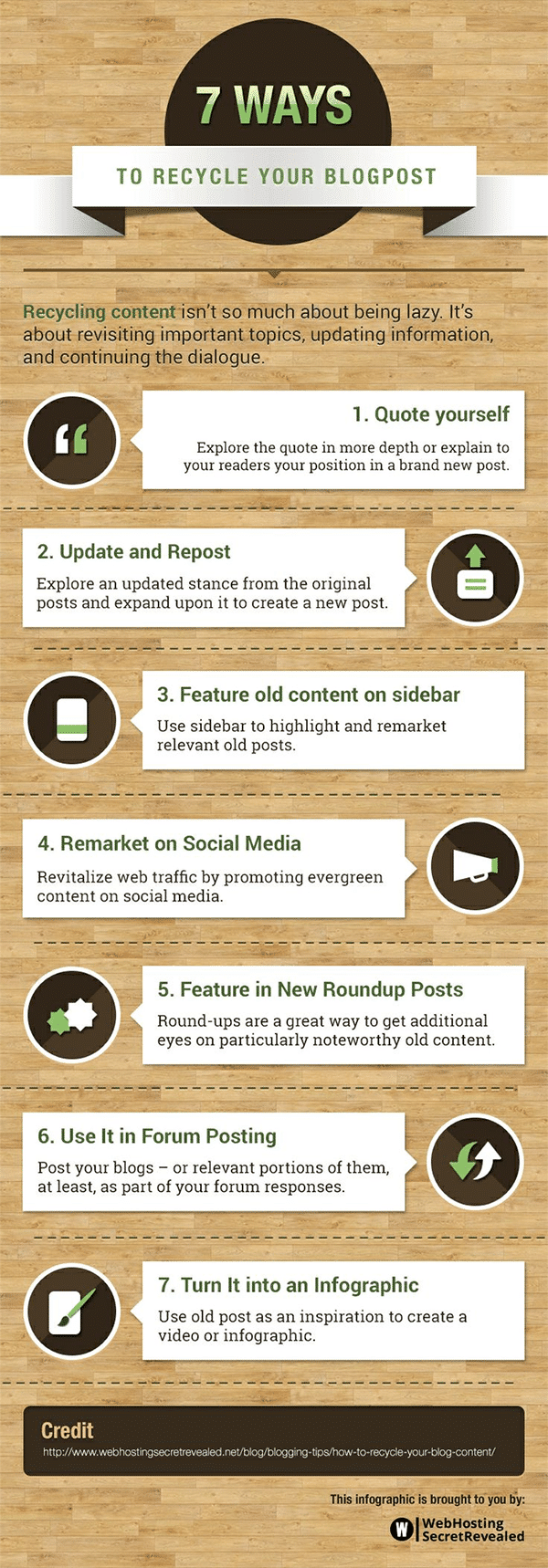
1. Update and Refresh
One of the simplest ways to recycle old blog posts is to update and refresh them. Start by reviewing your older content and identifying posts that are still relevant but may be outdated in terms of statistics, examples, or trends. Update the information, add new insights, and ensure all links are working correctly.
Moreover, consider revising the introduction and conclusion to reflect the latest industry developments or your current perspective. By giving your old posts a facelift, you not only make them more valuable to your audience but also improve their SEO ranking, as search engines favor fresh, up-to-date content.
2. Create Compilations and Roundup Posts
Another effective way to repurpose old blog posts is to create compilation or roundup posts. Gather related articles or posts you’ve written in the past and organize them into a single, comprehensive guide. For example, if you run a cooking blog, you can compile your best dessert recipes into a “Top 10 Dessert Recipes for Every Occasion” post.
Roundup posts not only showcase your expertise in a particular niche but also provide readers with a convenient resource. Additionally, they encourage readers to explore more of your content, boosting your website’s engagement and reducing bounce rates.
3. Transform Text into Different Media
Sometimes, your old blog posts contain valuable information that can be repurposed into different types of media. Consider turning your written content into:
a. Infographics
Take key statistics, facts, or tips from your old blog posts and transform them into eye-catching infographics. Infographics are highly shareable on social media and can help you reach a broader audience. Use free online tools like Canva to create visually appealing infographics without the need for advanced design skills.
b. Podcasts
If you have a library of informative blog posts, why not convert them into podcast episodes? This allows your audience to consume your content in a different format while attracting a new segment of listeners. Record yourself discussing the blog’s main points, elaborating on them, and offering additional insights.
c. Videos
Create video content based on your written blog posts. You can film yourself discussing the topic, use animations to illustrate key points, or create tutorial videos. Video content is highly engaging and can be shared on platforms like YouTube and social media to expand your reach.
4. Repost on Social Media
Don’t underestimate the power of reposting your old blog content on social media. Your audience may have missed some of your earlier posts, or they might appreciate a refresher on a topic. Share snippets, quotes, or summaries of your old blog posts on platforms like Facebook, Twitter, Instagram, and LinkedIn.
Make sure to tailor your social media posts to the specific platform’s audience and posting guidelines. Use attention-grabbing headlines, relevant hashtags, and compelling visuals to maximize engagement.
5. Create Email Newsletters
Email marketing remains an effective way to engage with your audience and drive traffic to your website. Use your old blog posts as content for email newsletters. Summarize the key points of the post, add a call-to-action encouraging subscribers to read the full article, and include relevant links.
By repurposing your content in newsletters, you keep your subscribers informed and maintain regular communication. Plus, it’s an excellent way to introduce newer subscribers to your archive of valuable content.
6. Expand and Deepen
Sometimes, old blog posts can serve as a foundation for more in-depth content. If you’ve previously written introductory or overview articles on a topic, consider creating comprehensive guides or eBooks based on those posts. These extended versions can delve deeper into the subject matter, providing additional value to your audience.
Additionally, you can create series of posts on a particular topic, with each post exploring a specific aspect in detail. This not only recycles old content but also keeps your audience engaged over a longer period.
7. Create a “Best Of” Page
As your blog archives grow, you can create a dedicated “Best Of” or “Top Picks” page on your website. Curate a list of your most popular, insightful, or evergreen blog posts and showcase them on this page. This not only guides new visitors to your best content but also encourages them to explore your site further.
You can organize these posts by category or theme, making it easier for users to find the content that interests them the most. Don’t forget to regularly update this page as you produce new high-quality content.
Conclusion
When you find yourself struggling to come up with fresh blog post ideas, remember that your old blog posts are a valuable resource waiting to be repurposed and recycled. By updating, compiling, transforming, and strategically sharing your existing content, you can keep your audience engaged, improve your website’s SEO, and save time in the content creation process. So, don’t let writer’s block hold you back—get creative with your old blog posts and breathe new life into your content strategy.

Author:
Mark Ford