So you’re just starting a new business, you need to tell the world you exist, what do you need to add to your marketing arsenal?
Starting a new business is an exciting venture filled with possibilities. However, it’s essential to understand that no matter how great your product or service is, success relies heavily on effective marketing. In today’s digital age, there are numerous marketing tools and strategies available. To help your new business thrive, here are eight marketing items you must have in your toolkit.
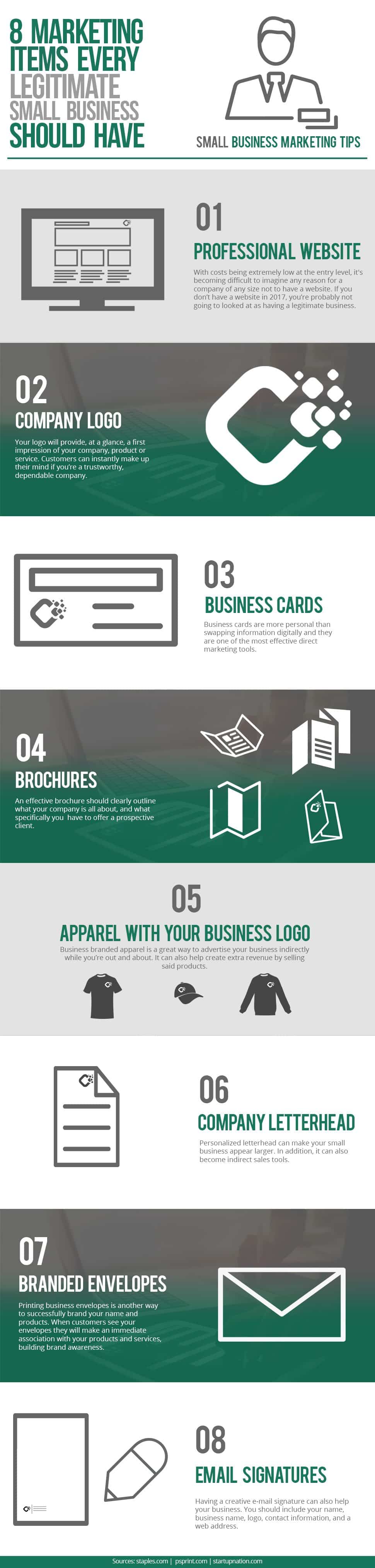
Las Vegas Printing Experts share their marketing essentials in this infographic.
1. A Well-Defined Brand Identity
Before diving into marketing tactics, you must establish a strong brand identity. Your brand is the face of your business, and it should convey your values, mission, and personality. A well-defined brand includes:
- Logo: Create a memorable and visually appealing logo that represents your brand’s essence. It should be versatile enough to work across various platforms and mediums.
- Color Palette: Choose a consistent color palette that aligns with your brand’s personality and message. These colors should be used consistently in all your marketing materials.
- Typography: Select fonts that complement your brand’s image and are easy to read. Stick to a limited set of fonts to maintain a cohesive look.
- Brand Voice: Determine your brand’s tone of voice, whether it’s casual, professional, humorous, or informative. Consistency in your communication style helps build brand recognition.
2. A User-Friendly Website
In today’s digital age, your website serves as the online storefront for your business. It’s often the first point of contact for potential customers, so it’s crucial that it’s user-friendly and visually appealing. Here’s what your website should include:
- Clear Navigation: Ensure easy navigation with a well-structured menu. Visitors should quickly find information about your products or services, contact details, and a blog or news section for updates.
- Mobile Responsiveness: Many users access websites on mobile devices, so your website must be responsive and display correctly on smartphones and tablets.
- Engaging Content: Create high-quality content that informs and engages your audience. This could include product descriptions, blog posts, videos, and images.
- Contact Information: Make it easy for customers to get in touch with you by providing clear contact information, including an email address, phone number, and contact form.
- SEO Optimization: Optimize your website for search engines to improve your online visibility. This involves using relevant keywords, optimizing images, and creating valuable content.
3. Social Media Presence
Social media platforms are powerful tools for building brand awareness and connecting with your audience. Choose the platforms that are most relevant to your target audience and create a consistent presence. Some tips for effective social media marketing include:
- Content Calendar: Plan and schedule your social media posts in advance to maintain a consistent presence.
- Engagement: Interact with your followers by responding to comments, messages, and mentions. Encourage conversations and user-generated content.
- Visuals: Use eye-catching visuals, such as images and videos, to capture your audience’s attention. Ensure your posts are visually appealing and on-brand.
- Analytics: Monitor your social media performance using analytics tools provided by the platforms or third-party tools. Adjust your strategy based on the data to improve results.
4. Email Marketing Campaigns
Email marketing is a cost-effective way to nurture leads and maintain a connection with your audience. Here’s what you need for successful email marketing:
- Email List: Build and maintain an email list of subscribers who are genuinely interested in your products or services. Avoid buying email lists, as this can result in low engagement and legal issues.
- Segmentation: Segment your email list based on customer preferences and behavior. This allows you to send targeted and relevant content to different groups.
- Engaging Content: Craft compelling email content that provides value to your subscribers. This could include newsletters, product updates, special offers, and educational content.
- Automation: Use email marketing automation tools to schedule and send emails at the right time. Automation can also help with personalized messaging.
- Analytics: Track email open rates, click-through rates, and conversion rates to measure the effectiveness of your email campaigns and make improvements accordingly.
5. Search Engine Optimization (SEO)
Search engine optimization is essential for increasing your website’s visibility in search engine results pages (SERPs). Effective SEO involves both on-page and off-page strategies:
- Keyword Research: Identify relevant keywords that potential customers might use to find your products or services. Incorporate these keywords naturally into your website content.
- On-Page Optimization: Optimize your website’s meta titles, meta descriptions, header tags, and image alt tags. Ensure your site loads quickly and is mobile-friendly.
- Content Creation: Regularly publish high-quality, informative content on your website. Blog posts, guides, and articles can help establish your authority in your industry.
- Backlinks: Build a network of high-quality backlinks from reputable websites. This helps improve your website’s authority and search engine ranking.
- Local SEO: If you have a physical location, optimize your website for local search by claiming your Google My Business listing and ensuring accurate business information.
6. Content Marketing Strategy
Content marketing is about creating valuable, informative, and relevant content to attract and engage your target audience. Your content marketing strategy should include:
- Content Calendar: Plan and schedule your content in advance to maintain consistency. Consider different types of content, such as blog posts, videos, infographics, and podcasts.
- Audience Persona: Understand your target audience’s pain points, interests, and preferences. Tailor your content to address their needs and concerns.
- Distribution: Promote your content through various channels, including your website, social media, email marketing, and guest posting on relevant websites.
- Quality Over Quantity: Focus on producing high-quality content that provides real value to your audience rather than churning out low-quality content in large volumes.
- Feedback Loop: Pay attention to audience feedback and analytics data to refine your content strategy over time.
7. Paid Advertising Campaigns
While organic marketing efforts are crucial, paid advertising can help boost your business’s visibility quickly. Popular paid advertising options include:
- Google Ads: Create pay-per-click (PPC) campaigns on Google to appear at the top of search results for specific keywords.
- Social Media Ads: Use social media advertising platforms like Facebook Ads, Instagram Ads, and LinkedIn Ads to target specific demographics and interests.
- Display Ads: Display ads on relevant websites and apps to reach a broader audience.
- Retargeting: Implement retargeting campaigns to re-engage users who have previously visited your website.
- Budget Management: Set clear budgets for your advertising campaigns and regularly monitor their performance to optimize your ad spend.
8. Analytics and Data Analysis
Lastly, no marketing strategy is complete without the ability to measure its effectiveness. Analytics and data analysis tools are essential for tracking your marketing efforts and making informed decisions:
- Website Analytics: Use tools like Google Analytics to monitor website traffic, user behavior, and conversion rates.
- Social Media Insights: Each social media platform provides its own set of analytics tools to track the performance of your posts and campaigns.
- Email Marketing Analytics: Review email open rates, click-through rates, and conversion data to refine your email marketing strategy.
- Conversion Tracking: Implement conversion tracking on your website to measure the success of specific marketing campaigns and channels.
- A/B Testing: Conduct A/B tests to experiment with different marketing strategies and determine what works best for your audience.
In conclusion, these eight marketing items are essential for the success of your new business. Remember that marketing is an ongoing process that requires adaptability and continuous improvement. By investing in these marketing essentials and staying dedicated to your strategy, you’ll be better equipped to build brand awareness, attract customers, and ultimately achieve long-term success for your new business.

Author:
Mark Ford

From Confusion to Clarity: How to Steer Your Marketing Away from These Frequent Errors
Are you struggling to make sense of your marketing strategy and wondering why your results aren’t matching your effort? Want to learn how to avoid the most common marketing mistakes and create a clear, focused plan that actually delivers results? […]

85 Game-Changing Tools for Creators, Marketers, and Entrepreneurs
Are you searching for powerful yet free tools to help you grow your brand, streamline your workflow, and boost your online presence? Want to discover game-changing platforms that every creator, marketer, and entrepreneur should be using right now? […]