In today’s digital age, having a strong online presence is crucial for any business looking to succeed.
One of the most effective ways to achieve this is by dominating the local Google search results for your keywords. When potential customers search for products or services in their area, you want your business to be front and center.
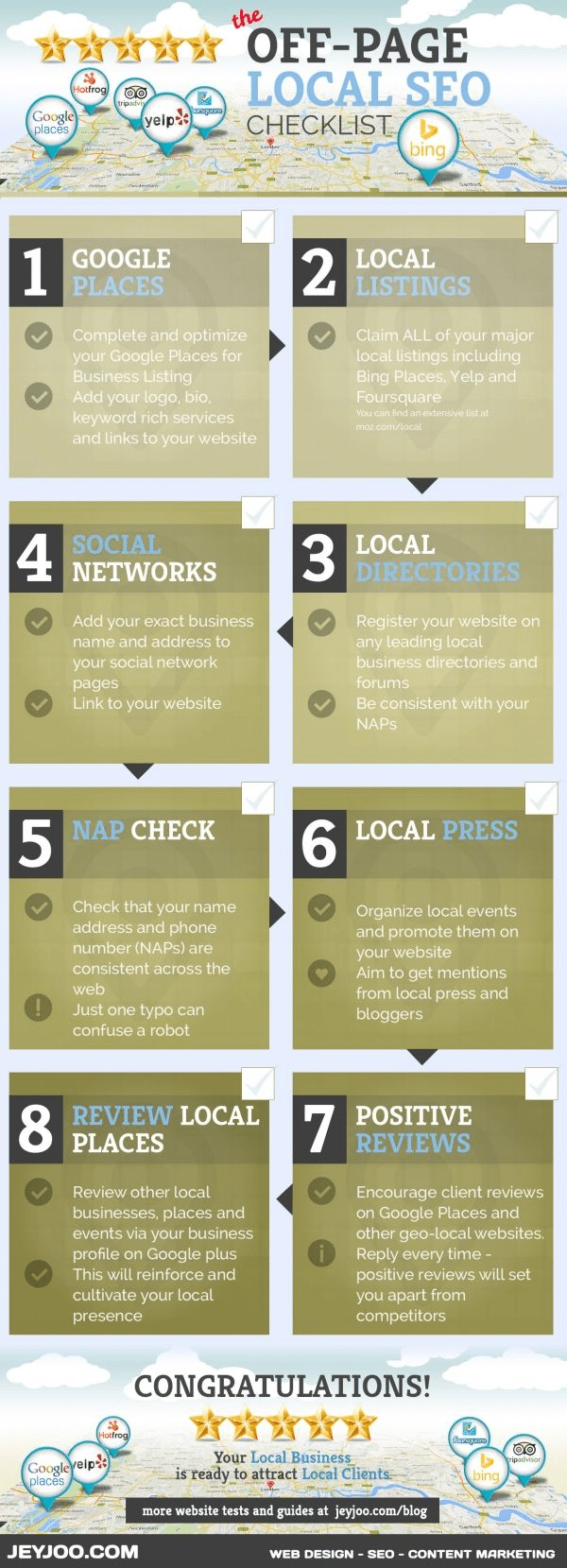
In this blog post, we’ll walk you through eight essential steps to help you achieve local search dominance on Google.
Infographic by Jeyjoo.
Step 1: Keyword Research
Before you can dominate local search results, you need to know which keywords are relevant to your business. Start by brainstorming a list of keywords and phrases that potential customers might use when searching for products or services like yours. Use keyword research tools like Google Keyword Planner, SEMrush, or Ahrefs to refine your list and identify high-value keywords with a local focus. Look for keywords that have a reasonable search volume and manageable competition.
Step 2: Optimize Your Website
Your website is your online storefront, so it’s essential to make it search engine-friendly. Here are some key elements to optimize:
- Title Tags and Meta Descriptions: Ensure that each page on your website has a unique and descriptive title tag and meta description. Include your target keywords naturally within these elements.
- On-Page Content: Create high-quality, informative content that incorporates your keywords. Make sure your content is valuable to your target audience and answers their questions.
- Local SEO: Optimize your website for local search by including your business’s name, address, and phone number (NAP) on every page. This information should match your Google My Business listing.
- Mobile-Friendly Design: Ensure your website is responsive and mobile-friendly. Google prioritizes mobile-friendly websites in its search results.
Step 3: Google My Business (GMB) Optimization
Google My Business is a powerful tool for local businesses. To optimize your GMB listing:
- Claim Your Listing: If you haven’t already, claim your GMB listing and verify your business.
- Complete Your Profile: Fill out all the fields in your GMB profile, including accurate business hours, a business description, and high-quality images.
- Get Reviews: Encourage satisfied customers to leave reviews on your GMB listing. Respond to reviews, both positive and negative, to show that you value customer feedback.
- Add Posts: Use the posts feature to share updates, promotions, and events with your audience.
Step 4: Local Citations and Directory Listings
Local citations and directory listings are mentions of your business name, address, and phone number on other websites. These listings help improve your local SEO. Ensure that your NAP information is consistent across all directories and platforms, including Yelp, YellowPages, and industry-specific directories.
Step 5: Online Reviews and Reputation Management
Online reviews play a significant role in local search rankings and can influence potential customers. Here’s how to manage your online reputation effectively:
- Monitor Reviews: Regularly monitor review platforms like Google, Yelp, and Facebook for new reviews.
- Respond to Reviews: Respond to reviews promptly and professionally. Thank customers for positive reviews and address any concerns in negative ones.
- Encourage Reviews: Encourage happy customers to leave reviews by making it easy for them to do so. Include links to review sites on your website and in follow-up emails.
- Address Negative Feedback: Don’t ignore negative reviews. Address customer complaints and strive to resolve issues to the best of your ability.
Step 6: Content Marketing and Blogging
Content marketing is an excellent way to establish authority in your industry and improve your local search rankings. Create a blog on your website and regularly publish informative, relevant content that addresses the needs and questions of your target audience. Incorporate your target keywords naturally into your blog posts. Share your blog posts on social media and encourage engagement.
Step 7: Local Link Building
High-quality backlinks from local websites can boost your local search rankings. Here’s how to build local links:
- Local Outreach: Reach out to local businesses, organizations, and influencers. Collaborate on content, events, or promotions that benefit both parties.
- Guest Posting: Offer to write guest posts for local websites and blogs. Include a link back to your website in your author bio.
- Sponsorships and Events: Sponsor local events or charities and request a backlink from their websites.
- Local News and Press Releases: Share news about your business and local events through press releases. Local news outlets may pick up your story and provide valuable backlinks.
Step 8: Track and Analyze Your Progress
To ensure your efforts are paying off, regularly monitor your local search rankings and website traffic. Tools like Google Analytics and Google Search Console provide valuable insights into how your website is performing. Pay attention to key metrics like organic search traffic, click-through rates, and conversion rates.
Review your strategy regularly and make adjustments based on your findings. As your online presence improves, you’ll likely see an increase in website traffic, leads, and sales.
Conclusion
Dominating the local Google search results for your keywords requires a strategic and ongoing effort, but the benefits for your business are well worth it. By following these eight steps, you can improve your local SEO, increase your online visibility, and attract more local customers.
Remember that SEO is a long-term game, and results may not be immediate. Stay patient, stay consistent, and continue to adapt your strategy to the ever-changing world of online search. With dedication and effort, you can achieve local search dominance and watch your business thrive in the digital landscape.

Author:
Mark Ford