Is your office struggling with mood killers and lazyites? Could they be affecting the productivity of your business?
Unfortunately not every member of staff will share your enthusiasm for the business and work as hard and effectively as you do! To stop staff from killing your productivity take the time to identify the weak links, help them to understand what they’re doing and coach them to improve.
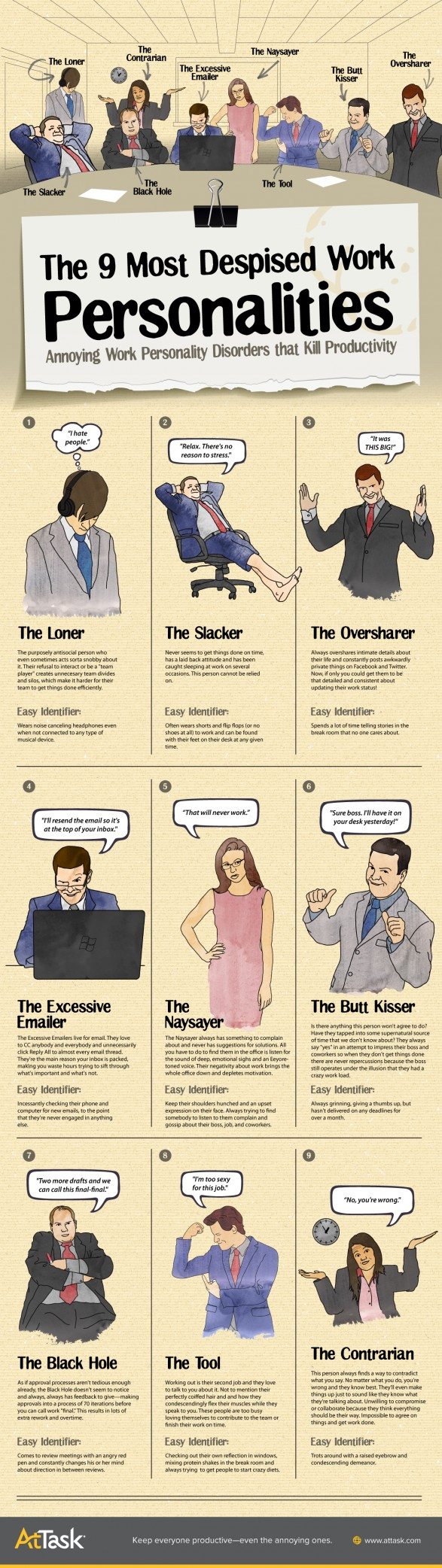
The guys at AtTask have identified the worst culprits in the infographic below.
In any workplace, productivity is crucial for success. It’s the lifeblood of organizations, driving growth, innovation, and profitability. However, there are certain work personalities that can poison the well, creating a toxic environment and crippling productivity. These individuals often exhibit behaviors that rub coworkers the wrong way, undermining teamwork and motivation.
In this blog post, we’ll delve into nine of the most despised work personalities that can sabotage productivity in any workplace. Understanding these personalities and their traits is essential for both employees and employers as it can help in creating a more harmonious and productive work environment.
- The Micromanager
Micromanagers are often the bane of employees’ existence. They have a compulsive need to control every aspect of their team’s work, from the smallest details to the big picture. While they may argue that they’re simply ensuring quality and efficiency, their constant meddling often stifles creativity and demotivates employees.
Micromanagers not only waste their time but also that of their team members. Instead of trusting their team’s abilities, they insist on being involved in every decision and task, which results in frustration and diminished productivity. Employees feel disempowered and unable to take ownership of their work.
To combat the micromanager personality, organizations should encourage open communication and trust between managers and employees. Managers should delegate responsibilities and allow employees the autonomy to make decisions within their scope. This fosters a more productive and positive work environment.
- The Chronic Procrastinator
Procrastination is a common human trait, but when it becomes chronic, it can wreak havoc on workplace productivity. Chronic procrastinators are experts at delaying tasks, often leaving important projects until the last minute. This behavior not only adds stress to the individual but also creates bottlenecks in workflow.
Procrastinators often affect their colleagues by causing unnecessary delays and disruptions. Coworkers may have to pick up the slack, work longer hours, or deal with the consequences of missed deadlines. This can breed resentment and lead to a toxic work atmosphere.
To address chronic procrastination, organizations can implement time management training, establish clear deadlines, and encourage employees to break tasks into smaller, manageable chunks. Additionally, fostering a supportive and accountable workplace culture can help individuals overcome this habit.
- The Office Gossip
The office gossip is the person who thrives on spreading rumors, secrets, and personal information about colleagues. This behavior not only erodes trust but also consumes valuable time and energy that could be better spent on work-related tasks.
Gossiping can be particularly damaging in the workplace. It can lead to conflicts, strained relationships, and a general atmosphere of distrust. When employees are preoccupied with office drama, it’s challenging to focus on their actual job responsibilities.
To combat the negative effects of office gossip, organizations should establish clear guidelines on appropriate workplace behavior and communication. Encouraging employees to address conflicts directly with their colleagues and promoting a culture of respect can help reduce gossip and improve overall productivity.
- The Chronic Complainer
Chronic complainers are individuals who always find something to gripe about, no matter the circumstances. They are quick to point out problems but rarely offer constructive solutions. This constant negativity can be a drain on team morale and productivity.
The chronic complainer often brings down the energy level of the entire team. Their incessant complaints can be demoralizing, and coworkers may begin to avoid them to escape the negativity. This isolation can lead to decreased collaboration and hinder teamwork.
To address chronic complaining, managers can encourage employees to provide constructive feedback and focus on finding solutions rather than dwelling on problems. Additionally, promoting a culture of gratitude and positivity can help counteract the effects of chronic complainers.
- The Credit Thief
The credit thief is the coworker who takes credit for others’ work or ideas. They are quick to claim achievements as their own, often to advance their own career or gain favor with superiors. This behavior not only damages trust but also demotivates those who have their contributions stolen.
When employees feel that their hard work and ideas are not recognized or rewarded, they may become disengaged and less inclined to invest their best efforts in their work. This can have a detrimental impact on productivity and innovation within the organization.
To prevent credit theft, organizations should establish clear guidelines for acknowledging and rewarding contributions. Managers should also ensure that credit is properly attributed, and team members are recognized for their efforts and ideas.
- The Passive-Aggressive Worker
Passive-aggressive individuals express their negative feelings and resentment indirectly. They may agree to tasks but then intentionally delay or perform them poorly. This behavior can create confusion and frustration within the team, hindering productivity.
The passive-aggressive worker often avoids direct communication and conflict resolution, which can lead to misunderstandings and misaligned expectations. This can result in wasted time as team members try to decipher hidden messages and address underlying issues.
To address passive-aggressive behavior, organizations should encourage open and honest communication. Managers should foster an environment where employees feel comfortable expressing their concerns and where conflicts can be resolved constructively.
- The Constant Distraction
In the age of smartphones and social media, constant distractions have become a significant productivity killer in the workplace. Employees who are glued to their devices or engage in non-work-related activities during work hours can hinder their own productivity and that of their colleagues.
Constantly distracted individuals may disrupt meetings, miss important deadlines, and fail to contribute effectively to team projects. This behavior not only wastes time but also disrupts the flow of work.
To combat constant distractions, organizations can implement policies on device usage and encourage employees to use tools and techniques for time management and focus. Additionally, creating designated spaces for focused work or providing flexible work arrangements can help employees minimize distractions and boost productivity.
- The Lone Wolf
While individual contributions are essential, workplaces thrive on collaboration and teamwork. The lone wolf is the employee who prefers to work in isolation, rarely seeking input or assistance from colleagues. This behavior can hinder the sharing of ideas and knowledge, leading to missed opportunities for innovation and productivity improvements.
Lone wolves may be highly skilled, but their unwillingness to collaborate can result in silos and a lack of synergy within the organization. Team members may feel excluded or undervalued, which can impact motivation and productivity.
To address the lone wolf mentality, organizations should promote a culture of collaboration and provide opportunities for employees to work together on projects. Managers can also recognize and reward teamwork to encourage employees to actively engage with their colleagues.
- The Perpetual Negativist
The perpetual negativist is the person who sees the downside in every situation. They are quick to dismiss new ideas, shoot down proposals, and generally resist change. While a healthy dose of skepticism can be valuable, an overly negative attitude can stifle innovation and hinder progress.
Negativists can be a roadblock to productivity, as their pessimism can dampen enthusiasm and hinder the adoption of new processes or technologies. When employees are constantly met with resistance, they may become discouraged and less willing to contribute their ideas and efforts.
To address perpetual negativism, organizations can foster a culture of constructive feedback and encourage employees to provide alternative solutions when they raise concerns. Managers can also provide opportunities for employees to voice their opinions and be heard.
Conclusion
Productivity is a critical component of a successful workplace, but certain work personalities can undermine it. The micromanager, chronic procrastinator, office gossip, chronic complainer, credit thief, passive-aggressive worker, constant distraction, lone wolf, and perpetual negativist can all contribute to a toxic work environment and hinder productivity.
To combat these negative work personalities, organizations should focus on fostering a positive and supportive workplace culture, encouraging open communication, and providing the necessary training and tools to help employees overcome counterproductive behaviors. By addressing these issues head-on, organizations can create a more productive and harmonious work environment for all.

Author:
Mark Ford