
Do you struggle to schedule your social media posts? Want a fool-proof way to overcome this?
At first knowing what and when to schedule a post on social media can seem a little confusing. It doesn’t have to be though, in fact once you have a scheduling plan put together it all seems quite simple.
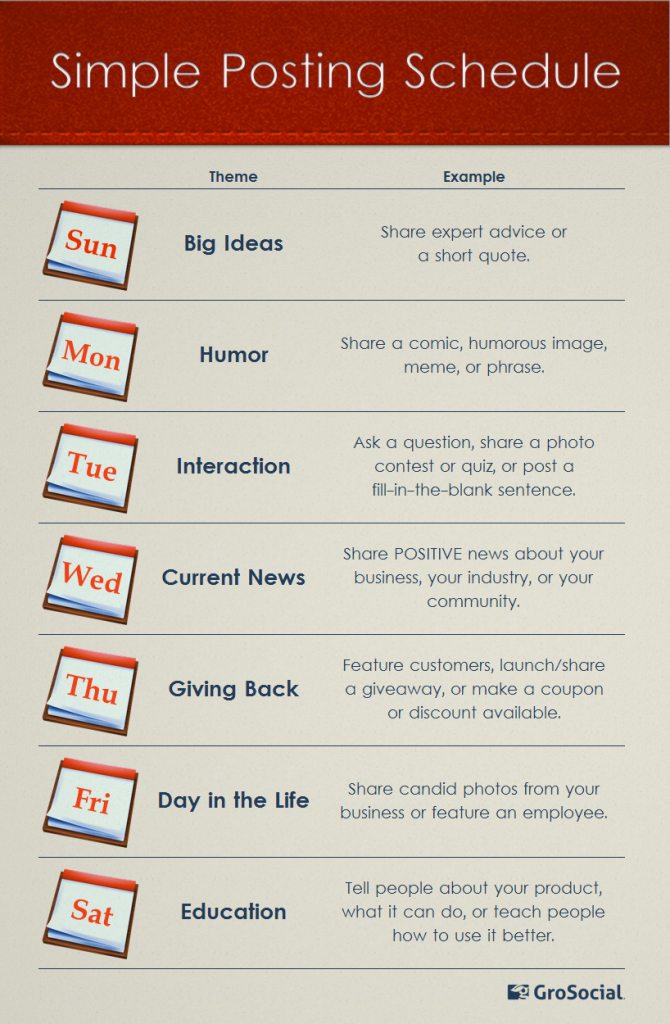
So you don’t have to continue scratching your head in bewilderment, GroSocial have put together a planner in this infographic.
Social media has become an integral part of our daily lives. From keeping up with friends and family to staying updated on current events and trends, platforms like Facebook, Instagram, Twitter, and TikTok play a crucial role in how we connect and consume information. But if you’re using social media for personal use, you might not have considered how to maximize its potential for your business or personal brand.
Creating a consistent social media posting schedule is key to building a strong online presence, whether you’re an aspiring influencer, a small business owner, or just someone who wants to engage more effectively with your followers. In this blog post, we’ll walk you through a daily social media posting schedule that anyone can follow, regardless of your experience level. By the end, you’ll have a clear roadmap for leveraging social media to your advantage.
Why Is a Posting Schedule Important?
Before we dive into the daily schedule, let’s understand why having a posting schedule matters in the first place:
- Consistency: Regular posting keeps your audience engaged and coming back for more. It helps establish your brand and message in their minds.
- Algorithm Optimization: Many social media platforms reward consistent posting by showing your content to a wider audience. Algorithms tend to favor accounts that are active.
- Time Management: A schedule helps you manage your time effectively. You won’t find yourself scrambling for content at the last minute.
- Audience Engagement: Posting at the right times ensures that your content reaches your audience when they are most active, increasing the chances of likes, comments, and shares.
- Brand Credibility: A consistent posting schedule demonstrates professionalism and commitment, which can boost your brand’s credibility.
Now that we understand why a posting schedule is crucial, let’s break down a daily schedule that even beginners can follow:
Day 1: Setting the Stage – Content Planning
- Morning (9:00 AM – 10:00 AM): Start your day by researching current trends and topics relevant to your niche. Use tools like Google Trends or social media listening tools to identify popular keywords and subjects.
- Late Morning (10:00 AM – 12:00 PM): Brainstorm and create a content calendar for the week. Decide on the type of content you’ll be posting each day, whether it’s images, videos, blog links, or user-generated content.
- Afternoon (1:00 PM – 2:00 PM): Write captions and create graphics or visuals for your posts. You can use tools like Canva or Adobe Spark for easy design work, even if you’re not a graphic designer.
- Late Afternoon (3:00 PM – 4:00 PM): Schedule your posts using a social media management tool like Hootsuite or Buffer. This will help you automate your posting and ensure consistency.
Day 2: Content Creation
- Morning (9:00 AM – 10:00 AM): Start your day by capturing new content. Depending on your niche, this could be behind-the-scenes shots, product photos, or personal stories.
- Late Morning (10:00 AM – 12:00 PM): Edit your photos or videos. You don’t need professional software; apps like VSCO or Snapseed work well for basic editing.
- Afternoon (1:00 PM – 2:00 PM): Create engaging captions for your posts. Remember to use relevant hashtags to increase discoverability.
- Late Afternoon (3:00 PM – 4:00 PM): Preview and finalize your content for the upcoming week. Make sure everything aligns with your brand’s message and style.
Day 3: Engaging With Your Audience
- Morning (9:00 AM – 10:00 AM): Respond to comments and messages from your followers. Engagement is a two-way street, so take the time to connect with your audience.
- Late Morning (10:00 AM – 12:00 PM): Find and follow accounts within your niche. Engaging with like-minded users can help expand your network.
- Afternoon (1:00 PM – 2:00 PM): Share user-generated content. Reposting content from your followers can foster a sense of community and loyalty.
- Late Afternoon (3:00 PM – 4:00 PM): Participate in discussions and leave thoughtful comments on posts from influencers or accounts in your niche. This can increase your visibility.
Day 4: Analyzing Your Performance
- Morning (9:00 AM – 10:00 AM): Review your social media analytics. Most platforms provide insights into your post performance, including likes, shares, and engagement rates.
- Late Morning (10:00 AM – 12:00 PM): Analyze which types of content are performing best and which aren’t. Adjust your content calendar accordingly.
- Afternoon (1:00 PM – 2:00 PM): Research your competitors. What are they doing well? What can you learn from their strategies?
- Late Afternoon (3:00 PM – 4:00 PM): Set goals for the upcoming week based on your analysis. Whether it’s increasing engagement or growing your follower count, having clear objectives is essential.
Day 5: Learning and Improvement
- Morning (9:00 AM – 10:00 AM): Spend some time reading articles or watching videos about social media trends and strategies. The digital landscape is constantly evolving, so staying informed is vital.
- Late Morning (10:00 AM – 12:00 PM): Experiment with new content formats or posting times based on your research. Don’t be afraid to try something different.
- Afternoon (1:00 PM – 2:00 PM): Engage with your followers by running a poll, asking a question, or conducting a live Q&A session. Interactive content can boost engagement.
- Late Afternoon (3:00 PM – 4:00 PM): Take a break and step away from social media. It’s important to maintain a healthy balance between your online and offline life.
Day 6: Collaborations and Networking
- Morning (9:00 AM – 10:00 AM): Reach out to potential collaborators or partners in your niche. Building relationships can lead to cross-promotions and increased exposure.
- Late Morning (10:00 AM – 12:00 PM): Attend online networking events or webinars related to your industry. These events can help you stay connected and learn from experts.
- Afternoon (1:00 PM – 2:00 PM): Create content that highlights your collaborations or showcases the knowledge you gained from networking events.
- Late Afternoon (3:00 PM – 4:00 PM): Plan and schedule posts related to your collaborations and networking efforts.
Day 7: Rest and Reflect
- Morning (9:00 AM – 10:00 AM): Take a moment to reflect on your social media journey. What worked well this week, and what could be improved?
- Late Morning (10:00 AM – 12:00 PM): Check in with your audience. Share a personal update or a motivational message.
- Afternoon (1:00 PM – 2:00 PM): Enjoy some downtime and engage in activities that inspire you. This could be reading a book, going for a walk, or pursuing a hobby.
- Late Afternoon (3:00 PM – 4:00 PM): Plan ahead for the next week. Review your goals and set a new posting schedule.
Final Thoughts
Creating a daily social media posting schedule doesn’t have to be complicated, even if you’re new to the world of online marketing. By following the seven-day plan outlined above, you can build a strong online presence and connect with your target audience effectively. Remember, consistency, engagement, and continuous improvement are the keys to success on social media. So, get started, and watch your online presence grow!

Author:
Mark Ford