
Are you looking for ways to increase engagement on Twitter? Do you know the best way to respond to your followers?
Building your Twitter following is just one thing, having the ability to engage with them will see people coming back for more. The more engaging you are with your customer, the more chance you have of your brand being noticed and ultimately resulting in higher conversion rates.
To help boost your tweeting skills LeadSift have created the infographic below.
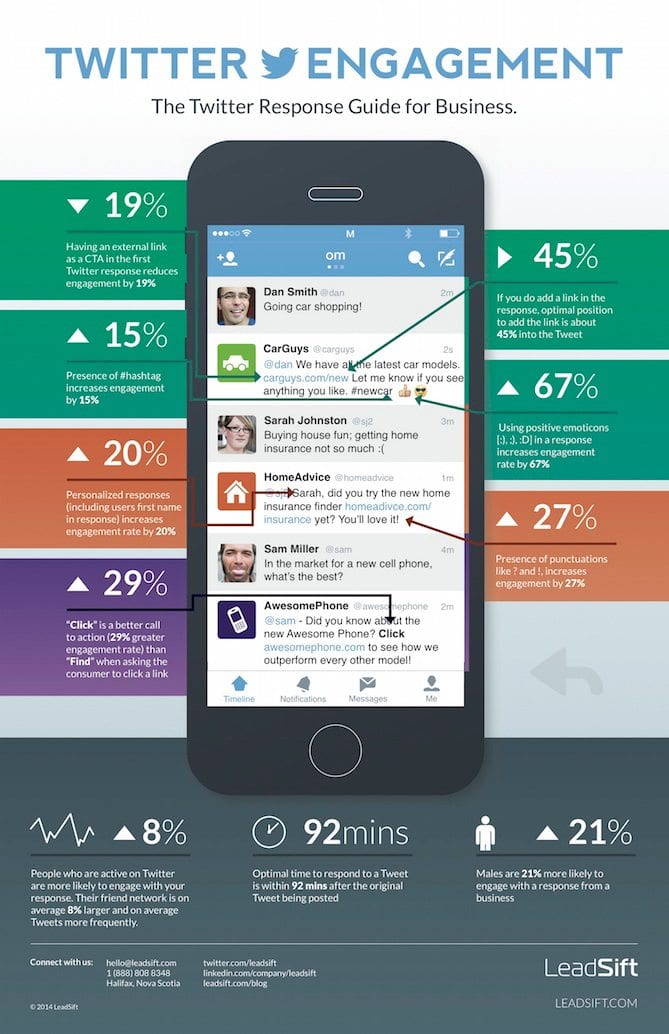
Twitter is a dynamic social media platform that allows users to express their thoughts, share information, and engage with others in real-time. With its fast-paced nature and character limit, mastering Twitter can be a challenge. However, one of the keys to success on Twitter is knowing how to respond to people effectively. In this blog post, we’ll delve into advanced Twitter tips on how to respond to people and increase engagement. Whether you’re a business looking to connect with your audience or an individual seeking to grow your Twitter presence, these strategies will help you make the most out of your interactions.
Section 1: Understanding the Twitter Landscape
Before we dive into advanced strategies, it’s essential to understand the Twitter landscape and how interactions work on the platform.
1.1 Know Your Audience
Understanding your audience is the foundation of successful Twitter engagement. Start by identifying your target audience’s interests, preferences, and pain points. This information will help you tailor your responses and content to resonate with them.
1.2 The Power of Hashtags
Hashtags are Twitter’s way of categorizing and organizing content. Utilize relevant hashtags in your responses to increase the visibility of your tweets. But be mindful of overusing them; a few well-chosen hashtags are more effective than a barrage of them.
1.3 Real-Time Conversations
Twitter is known for its real-time nature. Responses should be timely and relevant to the ongoing conversation. Monitor trending topics and join discussions that align with your brand or interests.
Section 2: Crafting Engaging Responses
Now that you have a grasp of the Twitter landscape, let’s explore advanced strategies for crafting engaging responses.
2.1 Personalization is Key
A generic response won’t cut it on Twitter. Take the time to personalize your replies. Address users by their first name and refer to their specific tweets or comments. This demonstrates that you’ve taken a genuine interest in the conversation.
2.2 Show Appreciation
A simple “Thank you” can go a long way. When someone mentions or compliments you or your content, acknowledge their gesture with gratitude. This builds goodwill and encourages further interaction.
2.3 Ask Open-Ended Questions
Encourage meaningful conversations by asking open-ended questions. These questions invite users to share their thoughts and opinions, fostering engagement. For example, instead of a closed question like “Did you enjoy our latest blog post?” try “What did you find most valuable in our latest blog post?
2.4 Provide Value
Make sure your responses add value to the conversation. Share insights, tips, or additional information that can benefit others. When you consistently provide value, users are more likely to seek out your input.
Section 3: Handling Negative Comments
Dealing with negative comments on Twitter can be challenging, but it’s a crucial aspect of engagement. Here’s how to handle them effectively.
3.1 Stay Calm and Professional
When faced with criticism or negativity, maintain your composure. Respond professionally and avoid getting into heated arguments. Remember that your responses are public, and a calm demeanor reflects well on your brand.
3.2 Address Concerns Promptly
Negative comments often contain valid concerns. Address these concerns promptly and seek to resolve any issues. Publicly acknowledging and rectifying mistakes can turn a negative situation into a positive one.
3.3 Use Direct Messages
Sometimes, it’s best to take sensitive conversations to direct messages (DMs). This allows you to address concerns privately and prevent further public escalation.
Section 4: Leveraging Twitter Features
Twitter offers various features and tools that can enhance your engagement strategies. Here’s how to make the most of them.
4.1 Twitter Polls
Twitter polls are a fantastic way to engage your audience and gather feedback. Use polls to ask questions, conduct surveys, or seek opinions on relevant topics. Encourage users to participate and share their thoughts.
4.2 Retweet with Comments
When you retweet someone’s tweet, consider adding your own comments or insights. This not only shows your engagement but also adds value to the original tweet. It can spark discussions and encourage others to engage with your content.
4.3 Twitter Spaces
Twitter Spaces is a feature for hosting live audio conversations. Use this feature to connect with your audience in real-time, discuss trending topics, or share knowledge on a particular subject. Engage with your listeners by responding to their questions and comments during the session.
Section 5: Building Relationships and Networking
Twitter is a powerful platform for building relationships and networking. Here’s how to leverage it effectively.
5.1 Follow Relevant Accounts
Identify and follow accounts that align with your interests or industry. Engage with their content by liking, retweeting, and commenting. This can lead to reciprocal interactions and increased visibility.
5.2 Engage in Twitter Chats
Twitter chats are organized discussions around specific hashtags. Participate in relevant Twitter chats to connect with like-minded individuals and industry experts. Engaging in these chats can expand your network and provide valuable insights.
5.3 Collaborate and Mention Others
Collaboration is a key aspect of Twitter engagement. Mention and tag relevant accounts when sharing content or discussing related topics. This increases the likelihood of them responding or sharing your content in return.
Section 6: Analytics and Measurement
To continually improve your Twitter engagement, you need to measure your efforts and analyze the results.
6.1 Use Twitter Analytics
Twitter provides a comprehensive analytics dashboard that offers insights into your tweet performance, audience demographics, and engagement metrics. Regularly review these analytics to identify what’s working and what needs improvement.
6.2 A/B Testing
Experiment with different engagement strategies and analyze the results. Test variations in your responses, such as tone, content, and timing. A/B testing helps you refine your approach for better engagement.
Section 7: Maintaining Consistency
Consistency is key to building a strong Twitter presence and increasing engagement. Here are some tips on maintaining consistency.
7.1 Create a Posting Schedule
Establish a posting schedule that aligns with your audience’s online activity. Consistent posting ensures that your content reaches your followers when they are most active.
7.2 Automate Responsibly
While automation tools can be helpful for scheduling tweets and responses, use them judiciously. Maintain a balance between automated and manual engagement to ensure authenticity.
Section 8: Case Studies
To illustrate the effectiveness of these advanced Twitter engagement strategies, let’s explore a few case studies.
8.1 Case Study 1: Brand Engagement
We’ll examine how a brand effectively used personalized responses and Twitter polls to engage with its audience and gather feedback on product improvements.
8.2 Case Study 2: Influencer Engagement
In this case study, we’ll explore how an influencer leveraged Twitter Spaces to connect with their followers and host informative discussions.
Conclusion
Mastering Twitter engagement involves a combination of personalization, value provision, and strategic use of Twitter’s features. Whether you’re a brand looking to connect with your audience or an individual seeking to build a strong Twitter presence, these advanced Twitter tips will help you respond to people effectively and increase engagement. Remember that Twitter is a dynamic platform, so stay adaptable and continue refining your approach as you navigate the ever-evolving Twitter landscape. By doing so, you’ll build meaningful connections and foster a thriving Twitter community around your brand or profile.

Author:
Mark Ford