
Are you a B2B service provider looking to get started with social media? Unsure how best to use social sites like Twitter and LinkedIn?
Social Media Today share their B2B social media tips in this infographic.
Here’s a quick summary:
- Recruiting talent
- Industry leadership
- Customer support
- Building awareness
- Demonstrating social responsibility
Check out the infographic for more detail.
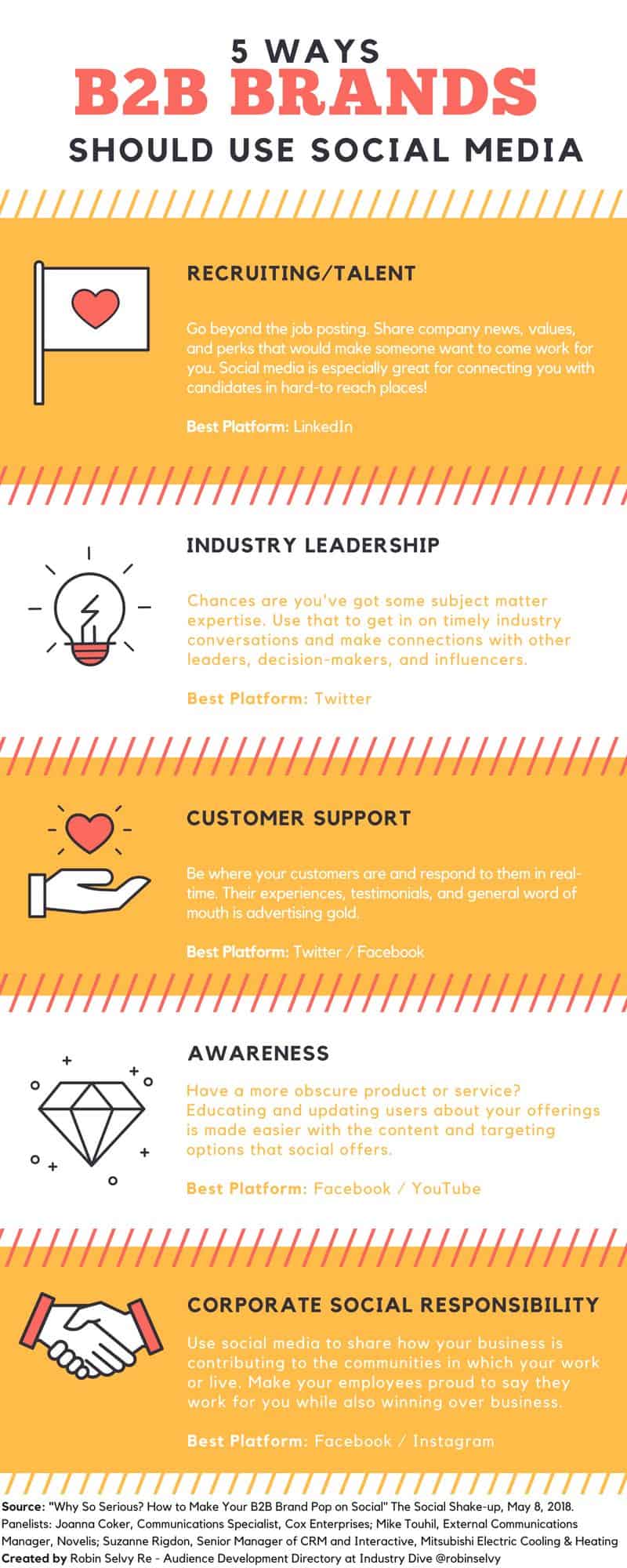
In today’s digital age, social media has evolved beyond being merely a platform for personal interactions. For B2B (business-to-business) brands, social media presents a powerful tool that can enhance various aspects of their operations, from recruiting talent to demonstrating social responsibility. Leveraging social media effectively can significantly impact a B2B company’s ability to recruit top talent, establish industry leadership, provide excellent customer support, increase brand awareness, and showcase its commitment to social responsibility.
Recruiting Talent
Recruiting top talent is a critical challenge for small businesses competing in the B2B landscape. While larger corporations may have extensive resources for recruitment, small businesses can leverage social media strategically to attract skilled professionals who align with their company culture and goals. Here are some in-depth tips and guidance for small businesses on using social media effectively for talent acquisition:
- Define Your Employer Brand
Before diving into social media recruitment, it’s essential for small businesses to define their employer brand. This involves identifying and articulating what makes the company unique and attractive to potential employees. Consider the following steps:
- Identify Core Values: Define the company’s mission, vision, and values. What sets your business apart from competitors? How do you prioritize employee growth and development?
- Highlight Company Culture: Showcase your workplace culture authentically. Share employee testimonials, photos from company events, and insights into day-to-day operations. Give candidates a glimpse into what it’s like to work at your company.
- Craft a Compelling Story: Develop a narrative that communicates your company’s journey, milestones, and future aspirations. Use storytelling to engage potential candidates emotionally and intellectually.
- Choose the Right Platforms
Not all social media platforms are created equal when it comes to recruitment. For small businesses, focusing on platforms where professionals gather and engage is crucial:
- LinkedIn: LinkedIn remains the primary platform for professional networking and recruitment. Create a robust company page with a compelling description, logo, and banner. Regularly update the page with job openings, company news, and thought leadership content.
- Twitter: Twitter can be effective for engaging with industry professionals in real-time. Follow relevant hashtags, participate in industry chats, and share updates about job openings and company achievements. Use Twitter’s advanced search to find potential candidates based on location, skills, or interests.
- Facebook and Instagram: While these platforms are more commonly associated with B2C brands, they can still be valuable for showcasing company culture and attracting talent. Share photos and videos that reflect your workplace environment, company values, and employee achievements. Consider using Facebook Groups or Instagram Stories to foster community engagement.
- Create Engaging Content
To capture the attention of passive candidates and maintain the interest of active job seekers, small businesses should focus on creating engaging and informative content:
- Job Postings: When posting job openings, go beyond the basic job description. Highlight opportunities for growth, unique aspects of your workplace, and any perks or benefits. Use keywords relevant to the position to improve visibility in search results.
- Employee Spotlights: Showcase your team members through employee spotlights or “day in the life” features. Let employees share their experiences, career growth within the company, and reasons why they enjoy working there. Authentic testimonials can be compelling for prospective candidates.
- Thought Leadership Content: Position your small business as an industry leader by sharing thought-provoking articles, whitepapers, or blog posts. Demonstrate expertise in your field and contribute valuable insights that showcase your company’s knowledge and innovation.
- Engage Actively with Potential Candidates
Social media is not just a broadcasting platform; it’s also a place for meaningful interactions and relationship-building:
- Respond Promptly: Monitor your social media channels regularly for messages and comments related to job opportunities. Respond promptly to inquiries and engage in conversations with potential candidates.
- Personalize Interactions: Tailor your responses to candidates based on their background and interests. Show genuine interest in their career goals and how they might fit into your company culture.
- Use Direct Messaging Wisely: LinkedIn’s messaging feature allows for personalized outreach. Instead of sending generic messages, customize your outreach to highlight specific reasons why a candidate would be a great fit for the role and your company.
- Measure and Adapt Your Strategy
Continuous improvement is key to successful social media recruitment for small businesses:
- Analytics: Use analytics tools provided by social media platforms to track the performance of your recruitment efforts. Monitor metrics such as engagement rate, click-through rate on job postings, and follower growth.
- Feedback Loop: Solicit feedback from candidates who have interacted with your social media content or applied for positions. Understand their experience and use their insights to refine your recruitment strategy.
- Iterate and Experiment: Social media is dynamic, so be willing to experiment with different types of content, posting schedules, and messaging strategies. Learn from what works and what doesn’t to optimize your approach over time.
By implementing these strategies, small businesses can leverage social media as a powerful tool for recruiting top talent. Building a strong employer brand, choosing the right platforms, creating engaging content, actively engaging with candidates, and continuously refining their approach will help small businesses attract skilled professionals who contribute to their growth and success in the competitive B2B landscape.
Industry Leadership
Establishing industry leadership is not solely reserved for large corporations with extensive resources. Small businesses can effectively position themselves as thought leaders within their niche by leveraging the power of social media strategically. Here’s an in-depth exploration of how small businesses can use social media to establish and enhance their industry leadership:
- Define Your Unique Value Proposition
Before diving into industry leadership efforts on social media, small businesses must clearly define their unique value proposition (UVP). This involves understanding what sets your business apart from competitors and how you add value to your target audience:
- Identify Core Strengths: Assess your strengths, whether it’s innovative solutions, exceptional customer service, specialized expertise, or unique methodologies.
- Understand Your Audience: Define your target audience and their pain points. What challenges do they face, and how can your business provide solutions or insights?
- Craft a Clear Message: Develop a concise yet compelling message that communicates your UVP. This message should resonate with your audience and differentiate your business in a competitive market.
- Choose the Right Platforms and Content Strategy
Selecting the appropriate social media platforms and crafting an effective content strategy are crucial steps in establishing industry leadership:
- LinkedIn for Professional Networking: LinkedIn is ideal for B2B businesses aiming to connect with industry professionals. Create a LinkedIn company page and optimize it with relevant keywords, a compelling description, and regular updates.
- Twitter for Real-Time Engagement: Use Twitter to participate in industry conversations, share quick insights, and engage with influencers and peers. Utilize hashtags relevant to your industry and participate in Twitter chats to expand your reach.
- Blog Posts and Thought Leadership Articles: Publish thought-provoking blog posts and articles on LinkedIn, your company website, or industry publications. Address industry trends, challenges, and innovative solutions to demonstrate expertise and provide value to your audience.
- Visual Content on Instagram and Facebook: While primarily visual platforms, Instagram and Facebook can be used to showcase company culture, client success stories, and key industry insights through visually engaging content like infographics, videos, and behind-the-scenes photos.
- Establish Thought Leadership Through Content
To position your small business as an industry leader, focus on creating and sharing high-quality content that demonstrates expertise and provides value to your audience:
- Educational Content: Share informative content such as how-to guides, best practices, and industry insights that address common challenges faced by your audience.
- Case Studies and Success Stories: Highlight successful projects, client testimonials, and case studies that showcase your business’s impact and expertise in solving specific industry problems.
- Whitepapers and Research Reports: Publish in-depth whitepapers, research reports, or studies that delve into industry trends, emerging technologies, or market analysis. Position your business as a thought leader by contributing original research and insights.
- Guest Blogging and Collaborations: Collaborate with industry influencers, guest blog on reputable platforms, or invite guest contributors to your own blog. Cross-promote content to expand your reach and credibility within the industry.
- Engage Actively with Industry Peers and Followers
Industry leadership isn’t just about broadcasting your expertise; it’s also about actively engaging with peers, followers, and industry stakeholders:
- Participate in Discussions: Join LinkedIn groups and industry forums to participate in discussions, share insights, and network with peers. Engage thoughtfully in conversations and establish your presence as a knowledgeable contributor.
- Respond to Comments and Messages: Monitor your social media channels regularly and respond promptly to comments, messages, and inquiries. Foster meaningful interactions and build relationships with your audience.
- Host Webinars and Live Sessions: Organize webinars, live Q&A sessions, or virtual events to share industry insights, discuss trends, and engage directly with your audience. Encourage participation and feedback to strengthen your credibility as an industry leader.
- Measure Success and Adapt Strategies
Measuring the effectiveness of your industry leadership efforts on social media is essential for continuous improvement and strategy refinement:
- Track Key Metrics: Use analytics tools provided by social media platforms to track metrics such as engagement rate, follower growth, content reach, and website traffic generated from social media.
- Evaluate Feedback: Solicit feedback from industry peers, followers, and clients to gauge the impact of your content and thought leadership efforts. Use insights to refine your content strategy and address audience needs.
- Stay Updated with Industry Trends: Keep abreast of industry trends, developments, and changes in your niche. Adapt your content strategy to reflect current topics and emerging challenges faced by your audience.
By implementing these strategies, small businesses can effectively leverage social media to establish and enhance their industry leadership. Consistently delivering valuable content, engaging with industry peers, and demonstrating expertise will not only build credibility but also position your business as a trusted authority within your niche, driving long-term success and growth.
Customer Support
In the competitive landscape of B2B operations, exceptional customer support is a cornerstone of maintaining client satisfaction and fostering long-term relationships. Social media platforms offer small businesses a unique opportunity to deliver proactive and responsive customer support, thereby enhancing overall customer experience. Here’s an in-depth exploration of how small businesses can leverage social media effectively for customer support:
- Establishing a Presence on Relevant Platforms
Choosing the right social media platforms for customer support is crucial for small businesses. While each platform has its strengths, consider where your customers are most active and where they expect to reach out for support:
- LinkedIn: Ideal for professional interactions and B2B networking. Create a LinkedIn company page and encourage clients to connect and engage with your business directly.
- Twitter: Known for real-time engagement. Set up a dedicated customer support handle or hashtag to manage inquiries efficiently and respond promptly to customer queries.
- Facebook and Instagram: Although more consumer-oriented, these platforms can be used effectively for B2B customer support. Utilize messaging features and comments sections to address customer issues and provide assistance.
- Best Practices for Effective Customer Support
Delivering exceptional customer support via social media requires adherence to best practices and a customer-centric approach:
- Timely Responses: Respond promptly to customer inquiries and comments. Aim to acknowledge queries within minutes and provide initial responses promptly, even if a detailed resolution requires more time.
- Personalized Interaction: Address customers by name and tailor responses to their specific concerns. Use a friendly and professional tone that reflects your brand’s voice and values.
- Problem Resolution: Endeavor to resolve issues efficiently and effectively. If immediate resolution isn’t possible, assure customers of ongoing efforts and provide clear timelines for follow-up or escalation.
- Transparency and Authenticity: Be transparent about any issues or delays, and communicate openly with customers. Admit mistakes if necessary and demonstrate a commitment to resolving concerns.
- Using Social Listening for Proactive Support
Social media platforms offer valuable insights through social listening, enabling small businesses to anticipate and address customer needs proactively:
- Monitor Mentions and Tags: Track mentions of your brand, product names, and relevant keywords across social media platforms. Address positive feedback and promptly respond to any negative feedback or complaints.
- Follow Industry Trends: Stay informed about industry trends and discussions relevant to your business. Use insights from social listening to anticipate customer questions or concerns and adjust your support strategy accordingly.
- Engage in Conversations: Participate in relevant discussions and provide helpful insights or solutions. Position your business as a knowledgeable resource within your industry.
- Utilizing Messaging and Chat Features
Direct messaging and chat features on social media platforms provide convenient channels for private customer interactions:
- LinkedIn Messaging: Engage with clients professionally through LinkedIn messages. Use this platform for detailed discussions, sharing resources, or following up on support inquiries.
- Twitter Direct Messages (DMs): Enable DMs for customer support queries. Set clear guidelines for response times and ensure DMs are monitored regularly for timely assistance.
- Facebook Messenger: Utilize Facebook Messenger for real-time customer interactions. Leverage automated responses for common queries and ensure prompt follow-up by human agents when necessary.
- Integrating Social Media with Existing Support Systems
Integrating social media channels with your existing customer support systems enhances efficiency and ensures consistent service delivery:
- CRM Integration: Connect social media platforms with your Customer Relationship Management (CRM) system to centralize customer interactions and maintain a comprehensive view of customer history and preferences.
- Ticketing Systems: Use social media platforms to create and manage support tickets. Implement a structured process for ticket resolution, escalation, and tracking to ensure no customer inquiry falls through the cracks.
- Analytics and Reporting: Leverage analytics tools provided by social media platforms to measure customer support metrics. Track response times, resolution rates, customer satisfaction scores, and trends in support inquiries to identify areas for improvement.
- Monitoring and Improving Customer Satisfaction
Continuous monitoring and improvement are key to delivering exceptional customer support via social media:
- Feedback Collection: Encourage customers to provide feedback on their support experience. Use surveys, polls, or direct inquiries to gather insights and identify areas for enhancement.
- Performance Metrics: Regularly review customer support metrics and KPIs. Analyze trends, identify recurring issues, and implement strategies to address root causes and prevent future occurrences.
- Training and Development: Invest in ongoing training for customer support teams. Ensure agents are equipped with the necessary skills, knowledge, and tools to deliver effective support and maintain professionalism across social media platforms.
By implementing these strategies, small businesses can leverage social media as a powerful tool for delivering exceptional customer support. Building a responsive and customer-centric approach not only enhances customer satisfaction but also strengthens brand loyalty and fosters positive relationships within the B2B community.
Building Awareness
Building brand awareness is crucial for small businesses looking to expand their reach, attract new clients, and establish a strong presence in the competitive B2B marketplace. Social media platforms offer small businesses powerful tools and opportunities to amplify their brand visibility effectively. Here’s an in-depth exploration of how small businesses can leverage social media to build awareness:
- Define Your Target Audience and Objectives
Before diving into social media for building awareness, small businesses should clearly define their target audience and set specific objectives:
- Identify Target Audience: Understand who your ideal customers are, their demographics, interests, and pain points. Tailor your messaging and content to resonate with their needs and preferences.
- Set Objectives: Define clear goals for your awareness campaign, whether it’s increasing brand recognition, generating leads, driving website traffic, or expanding your social media following.
- Choose the Right Social Media Platforms
Selecting the appropriate social media platforms ensures that your efforts are focused where your target audience is most active:
- LinkedIn: Ideal for B2B networking and professional interactions. Create a LinkedIn company page and share industry insights, thought leadership content, and updates about your business.
- Twitter: Known for real-time updates and engagement. Use Twitter to participate in industry conversations, share quick updates, and leverage hashtags to reach a broader audience.
- Facebook and Instagram: While more consumer-oriented, these platforms can still be valuable for B2B brands. Use Facebook to create a business page and share informative posts, while Instagram can showcase your company culture through visuals and stories.
- Develop a Content Strategy
A well-crafted content strategy is essential for effectively building awareness on social media:
- Educational Content: Share valuable content such as blog posts, articles, infographics, and how-to guides that address industry challenges and provide solutions.
- Visual Content: Use compelling visuals such as videos, graphics, and slideshows to capture attention and convey your brand’s message effectively.
- Customer Success Stories: Highlight case studies, testimonials, and success stories to demonstrate the impact of your products or services on clients.
- Behind-the-Scenes Content: Give followers a glimpse into your company culture, team members, and day-to-day operations. Humanize your brand to build trust and authenticity.
- Engage with Your Audience
Building awareness goes beyond broadcasting messages; it involves actively engaging with your audience:
- Respond to Comments and Messages: Monitor your social media channels regularly and respond promptly to comments, questions, and inquiries. Show that you value engagement and are responsive to customer interactions.
- Encourage User-generated Content: Encourage customers to share their experiences with your brand. Repost positive testimonials, reviews, and user-generated content to amplify your reach and credibility.
- Host Contests and Giveaways: Organize contests, giveaways, or challenges to encourage participation and attract new followers. Ensure that contests align with your brand’s values and objectives.
- Leverage Paid Advertising
Paid advertising on social media can significantly boost your awareness efforts by targeting specific demographics and maximizing reach:
- LinkedIn Ads: Use LinkedIn’s targeting options to reach decision-makers and professionals within your industry. Consider sponsored content, text ads, or sponsored InMail for personalized outreach.
- Facebook and Instagram Ads: Utilize Facebook’s Ads Manager to create targeted campaigns based on demographics, interests, and behaviors. Choose from various ad formats, including carousel ads, video ads, and stories ads.
- Twitter Promoted Tweets: Promote your tweets to reach a broader audience and amplify your message. Target users based on keywords, interests, or specific demographics relevant to your business.
- Measure and Optimize Performance
Tracking the performance of your awareness campaigns is essential for evaluating success and optimizing future efforts:
- Analytics Tools: Use analytics provided by social media platforms to monitor key metrics such as reach, engagement, click-through rates, and follower growth.
- Conversion Tracking: Set up conversion tracking to measure how social media activities contribute to website traffic, lead generation, and customer acquisition.
- A/B Testing: Experiment with different content formats, messaging strategies, and ad placements to identify what resonates best with your audience. Use insights from A/B testing to refine your approach and improve campaign effectiveness.
- Collaborate and Partner with Influencers
Partnering with industry influencers or thought leaders can amplify your brand’s visibility and credibility:
- Identify Influencers: Research and identify influencers or experts within your industry who align with your brand values and target audience.
- Collaborate on Content: Collaborate with influencers to co-create content such as guest blog posts, webinars, or social media takeovers. Leverage their audience to reach new potential clients and enhance brand awareness.
- Monitor Results: Track the impact of influencer collaborations through metrics such as engagement, follower growth, and website traffic. Evaluate the ROI of influencer partnerships to inform future collaborations.
By implementing these strategies, small businesses can effectively leverage social media to build awareness, expand their reach, and establish themselves as credible players in the B2B marketplace. Consistency, authenticity, and strategic engagement are key to maximizing the impact of your social media efforts and achieving long-term business growth.
Demonstrating Social Responsibility
In today’s business environment, consumers and stakeholders increasingly value corporate social responsibility (CSR). Small businesses can leverage social media as a powerful platform to showcase their commitment to social responsibility, thereby enhancing brand reputation, attracting socially conscious clients, and fostering a positive impact in their communities. Here’s an in-depth exploration of how small businesses can effectively demonstrate social responsibility through social media:
- Define Your Social Responsibility Initiatives
Before showcasing your social responsibility efforts on social media, it’s essential to define clear initiatives aligned with your business values and community impact:
- Identify Key Issues: Determine social or environmental causes that resonate with your company’s values and mission. Examples include sustainability, diversity and inclusion, community development, or ethical sourcing.
- Set Goals: Establish measurable goals for your CSR initiatives. Whether it’s reducing carbon footprint, supporting local charities, or promoting workplace diversity, define specific objectives that align with your business capabilities and resources.
- Engage Stakeholders: Involve employees, customers, and community members in shaping your CSR strategy. Solicit feedback, collaborate on initiatives, and foster a sense of ownership and commitment to shared social responsibility goals.
- Choose the Right Social Media Platforms
Select social media platforms where your target audience is most likely to engage with CSR-related content:
- LinkedIn: Use LinkedIn to share detailed updates, articles, and thought leadership pieces on your CSR initiatives. Utilize LinkedIn groups and professional networks to engage with industry peers and stakeholders.
- Twitter: Leverage Twitter’s real-time nature to participate in CSR conversations, share updates on initiatives, and amplify messages related to social causes. Use relevant hashtags to increase visibility and engagement.
- Facebook and Instagram: Utilize these platforms to showcase visual content, such as photos and videos, that highlight your CSR efforts. Share stories of impact, employee volunteerism, and community involvement to humanize your brand.
- Tell Compelling Stories of Impact
Storytelling is a powerful tool for communicating the impact of your CSR initiatives and resonating with your audience:
- Share Success Stories: Highlight specific examples of how your CSR initiatives have made a difference. Feature case studies, testimonials from beneficiaries, and quantifiable results to illustrate the tangible impact of your efforts.
- Employee Spotlights: Showcase employee involvement in CSR activities. Share stories of volunteerism, fundraising efforts, or personal commitments to social causes. Humanize your brand by highlighting the individuals driving positive change within your organization.
- Visual Content: Use engaging visuals such as infographics, videos, and photos to convey the story behind your CSR initiatives. Visual content can evoke emotion, capture attention, and make your message more memorable to viewers.
- Foster Transparency and Accountability
Transparency and accountability are critical aspects of demonstrating genuine social responsibility:
- Open Communication: Be transparent about your CSR initiatives, goals, and progress. Share updates regularly and openly address any challenges or setbacks encountered along the way.
- Report Impact Metrics: Measure and report on the outcomes of your CSR activities. Share metrics such as funds raised, hours volunteered, environmental impacts, or community benefits achieved. Use data to substantiate your commitment to making a positive difference.
- Respond to Feedback: Encourage dialogue and feedback from stakeholders regarding your CSR efforts. Address concerns constructively and demonstrate a willingness to adapt and improve based on input received.
- Collaborate and Partner with Stakeholders
Collaborating with other businesses, nonprofits, and community organizations can amplify the impact of your CSR initiatives:
- Partnerships: Forge partnerships with nonprofits, NGOs, or local charities aligned with your CSR goals. Collaborate on joint initiatives, co-host events, or engage in mutual support efforts to extend your reach and impact.
- Employee Engagement Programs: Implement employee volunteer programs or corporate giving initiatives that encourage staff participation in CSR activities. Engaged employees can serve as ambassadors for your brand’s social responsibility efforts.
- Influencer and Community Engagement: Partner with influencers or community leaders who advocate for similar social causes. Leverage their platforms and networks to amplify awareness of your CSR initiatives and inspire broader community involvement.
- Measure Impact and Share Results
Demonstrating the measurable impact of your CSR efforts is key to building credibility and inspiring trust among stakeholders:
- Impact Assessment: Use metrics and KPIs to evaluate the success of your CSR initiatives. Measure outcomes such as community engagement levels, environmental improvements, employee satisfaction, and brand reputation.
- Annual Reports and Infographics: Create visually appealing reports or infographics that summarize your CSR achievements and impact. Share these documents on social media, your website, and in communications with stakeholders.
- Celebrate Milestones: Recognize and celebrate milestones and achievements in your CSR journey. Host virtual events, share success stories, and acknowledge the contributions of employees, partners, and community members who supported your initiatives.
By implementing these strategies, small businesses can effectively leverage social media to showcase their commitment to social responsibility, engage with stakeholders, and make a meaningful impact in their communities. Building a reputation as a socially responsible business not only enhances brand credibility and customer loyalty but also contributes to a more sustainable and inclusive business ecosystem.
Conclusion
In conclusion, social media has become an indispensable tool for B2B brands seeking to enhance various aspects of their business operations. Whether it’s recruiting top talent, establishing industry leadership, providing exceptional customer support, building brand awareness, or demonstrating social responsibility, effective use of social media can amplify a brand’s visibility, credibility, and impact within its industry. By leveraging the unique strengths of each platform and crafting engaging content that resonates with their target audience, B2B brands can cultivate stronger relationships, drive business growth, and stay ahead in an increasingly competitive market landscape.

Author:
Mark Ford

How to Create Engaging Instagram Reels Without Ever Showing Your Face
Are you looking for creative ways to make engaging Instagram Reels without stepping in front of the camera? Want to discover proven content ideas that help your brand stand out on social media while keeping your privacy intact? […]