Are you planning to hire a designer but not sure if your brand is ready? Want to make sure you’ve built a strong foundation before investing in visual branding?
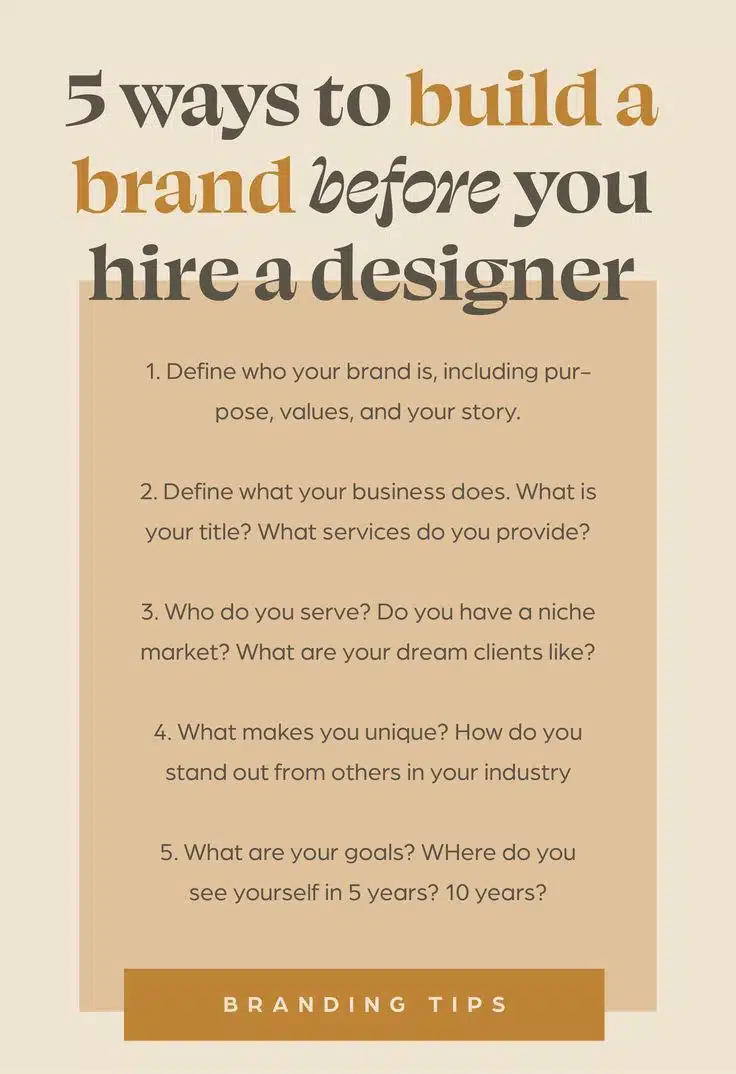
You’ll find some branding basics in this infographic.
Here’s a summary of what’s covered:
- Define Who Your Brand Is
- Define What Your Business Does
- Identify Who You Serve
- Identify What Makes You Unique
- Set Your Long-Term Goals
Check out the post below for more.
Before you hire a designer, you need more than just a vague business idea—you need brand clarity. Without a strong foundation, even the best design work will fall flat. From your brand story to your long-term vision, these elements shape how your designer brings your business to life visually.
In this blog, we walk you through five essential steps to take before you bring in a branding expert or graphic designer.
Define Who Your Brand Is
Before you can create a logo or pick colours, you need to understand who your brand really is. This means digging into your values, your purpose, and the story that led you to start your business in the first place. A well-defined brand identity creates cohesion and direction for everything that follows. The more clarity you have here, the better your designer can visualise it.
- Clarify your mission and purpose: What drives your business? Why do you exist beyond making money?
- Identify your core values: Choose 3–5 values that shape how you operate and communicate.
- Craft your origin story: Share the personal journey or insight that led you to start the business.
- Write a brand personality statement: Define the tone, voice, and traits your brand should consistently express.
Define What Your Business Does
A common mistake is assuming your brand is just your product or service. In reality, branding begins with how well you can articulate what you do and the value you bring. Whether you’re a freelancer, consultant, or company, clarity around your offering makes the design process far more effective. Your designer needs this information to build something that aligns with your services.
- Write a one-sentence summary of your business: Clearly explain what you do in simple, jargon-free language.
- List your core services or products: Define exactly what you sell or provide to customers.
- Create a clear job title or descriptor: Choose something memorable and accurate (e.g., “freelance copywriter” or “boutique skincare brand”).
- Highlight what problems you solve: Explain how your offering improves life for your customers or clients.
Identify Who You Serve
Knowing your audience is crucial before any branding work begins. If your designer doesn’t know who your ideal clients are, the visual identity could end up appealing to the wrong crowd. Targeting everyone leads to watered-down messaging. To avoid this, get specific about your niche, your audience’s needs, and what makes them the right fit.
- Create a detailed ideal client profile: Include age, occupation, values, lifestyle, and buying behaviour.
- Define your niche market: Be clear about the segment of the market you’re targeting.
- Describe your dream clients: What qualities do they have? Why do you want to work with them?
- Identify their pain points and desires: Understand what they need and how your brand can fulfil that.
Identify What Makes You Unique
Your unique value proposition is what sets you apart in a crowded market. It’s not just what you do, but how and why you do it differently from others. If you can’t define your difference, your designer will struggle to capture it visually. Great branding relies on differentiation, so take the time to articulate what makes your brand distinctive.
- Analyse your competitors: Look at what others in your space are doing and identify the gaps.
- Pinpoint your standout qualities: What do people praise you for most often?
- Develop a positioning statement: Summarise who you help, what you help them with, and why you’re the best choice.
- List your brand strengths: Highlight the skills, approach, or philosophy that sets you apart.
Set Your Long-Term Goals
Without clear goals, branding can become reactive rather than strategic. Think about where you want your business to go in the next five to ten years. Your vision will shape the scale and flexibility of your brand identity. Whether it’s growing a team, expanding into new markets, or launching new products, your designer needs to understand the bigger picture.
- Visualise your business in 5–10 years: Consider growth, offerings, team size, and market reach.
- Define your short-term and long-term goals: Separate what you want now from what you want later.
- Decide how you want to be perceived: Choose 3–5 brand attributes you’d like to be known for.
- Think about scalability: Make sure your brand identity will still work as your business evolves.
Conclusion
Hiring a designer isn’t the first step—it’s one of the final steps in bringing your brand to life. To get the most value out of the design process, you need to lay a solid foundation first.
By defining who you are, what you do, who you serve, what makes you different, and where you’re going, you ensure your brand identity is rooted in strategy, not just aesthetics. Build before you brand—and you’ll get better results, faster.

Author:
Mark Ford