Are you trying to grow your brand’s presence on social media but not sure where to start? Want to learn the most effective tips to build a stronger, more engaging social strategy for your small business?
You’ll find some social media basics in this infographic.
Here’s a summary of what’s covered:
- Be Where Your Clients Are
- Choose the Right Platforms for Your Business
- Learn from Successful Brands (And Avoid Their Mistakes)
- Create a Social Media Content Calendar
- Prioritise Quality Over Quantity
- Sound Human, Not Robotic
- Test, Evaluate, and Adjust
- Promote Sparingly (But Strategically)
- Drive Traffic to Your Website
- Use Quality Images and Visuals
Check out the post below for more.
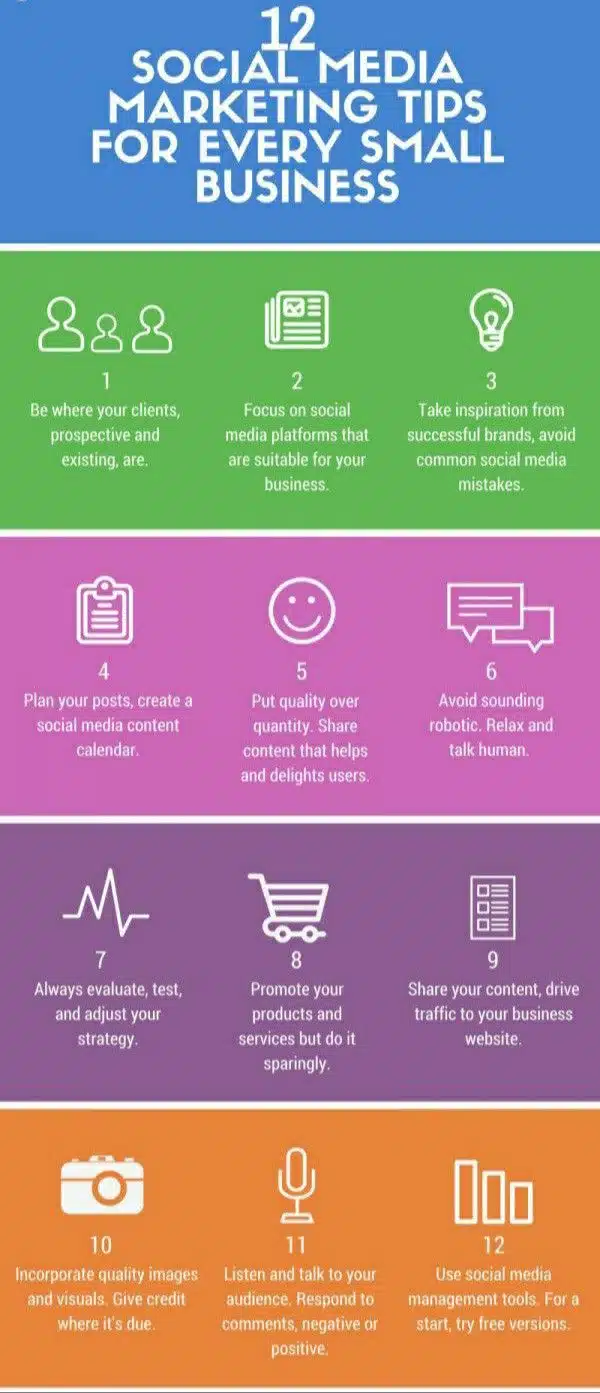
Building a strong social media presence isn’t about chasing trends—it’s about creating a lasting connection with your audience. For small brands, social media is one of the most cost-effective ways to grow brand awareness, generate leads, and foster loyalty.
But with limited resources, it’s important to focus your time and effort on what actually works. That’s where these 12 essentials come in: simple, strategic actions that can take your social game from basic to brilliant.
Be Where Your Clients Are
The first rule of social media for business? Show up where your customers already are. There’s no benefit to being active on every platform if your audience isn’t there. Instead, get strategic about where you invest your time and effort. Your presence should match your target market’s preferences.
- Research the platforms your target audience uses most often
- Look at where your competitors are most active and engaged
- Prioritise quality interaction on 1–2 key platforms
- Review analytics regularly to confirm you’re in the right places
Choose the Right Platforms for Your Business
Not all social platforms serve the same purpose—and not every one is right for your brand. Instagram may work wonders for a fashion brand, but LinkedIn might be better for a B2B service. Make sure the platforms you choose align with your brand’s goals and your customers’ behaviour.
- Define your primary objectives: visibility, leads, traffic, or engagement
- Match platform strengths to your content type (video, visuals, thought leadership)
- Avoid spreading yourself too thin—focus on where you can show up consistently
- Reassess your platform mix every 6–12 months based on results
Learn from Successful Brands (And Avoid Their Mistakes)
Success leaves clues—and so do failures. Studying what works (and what doesn’t) for others in your space can save you time and help refine your approach. But don’t just copy: adapt what fits your brand and avoid repeating the same missteps.
- Follow and study high-performing brands in your industry
- Take note of their tone, visuals, post frequency, and engagement strategies
- Use social listening to uncover gaps or complaints in competitor interactions
- Avoid cringeworthy trends or outdated tactics that alienate your audience
Create a Social Media Content Calendar
Consistency is key to any successful social media strategy. A content calendar helps you stay organised, plan ahead, and maintain a regular presence. It also ensures your posts align with campaigns, launches, and seasonal opportunities.
- Use free tools like Google Calendar or Trello to plan posts
- Schedule at least 1–2 weeks in advance to avoid last-minute scrambling
- Mix in a variety of post types: educational, promotional, personal, and entertaining
- Leave room for timely or trending content to keep things fresh
Prioritise Quality Over Quantity
Posting constantly won’t help if your content lacks value. It’s better to post less often with more impact than to overwhelm your followers with filler. Every post should be crafted with your audience in mind—aiming to inform, inspire, or entertain.
- Focus on content that answers questions or solves problems
- Use high-quality visuals, thoughtful captions, and clear CTAs
- Review post performance to understand what resonates most
- Avoid pressure to post daily unless you have something meaningful to share
Sound Human, Not Robotic
Today’s audiences can spot insincerity a mile away. If your tone is too formal or overly polished, it can make your brand seem distant or generic. The most engaging small brands speak like real people—relaxed, honest, and relatable.
- Write captions in a conversational tone using natural language
- Share behind-the-scenes moments to show the human side of your business
- Avoid corporate jargon or overly promotional language
- Respond to comments and messages like you’re chatting with a friend
Test, Evaluate, and Adjust
Social media is not a “set it and forget it” activity. What worked a year ago might not work now—and what works today might not tomorrow. The only way to keep your strategy effective is to regularly review performance and make smart adjustments.
- Track metrics like reach, engagement, clicks, and conversions
- Use A/B testing to compare content types, captions, or posting times
- Look for patterns in your top-performing and worst-performing posts
- Adjust your strategy every month or quarter based on the data
Promote Sparingly (But Strategically)
Social media isn’t just a sales channel—it’s a relationship-building tool. That said, there’s still a place for promotion. The key is to do it sparingly and with purpose. Don’t overwhelm your feed with hard sells. Instead, offer value alongside the pitch.
- Use the 80/20 rule: 80% value-driven content, 20% promotional
- Highlight benefits, not just features, when promoting your products or services
- Include subtle CTAs in non-promotional posts to drive interest
- Time promotions to align with launches, events, or seasonal demand
Drive Traffic to Your Website
Social media can be a powerful driver of website traffic—but only if you make it easy. Whether you’re pointing people to a blog post, product page, or contact form, give them a clear reason and pathway to click through.
- Include direct links in your bio, captions, and stories
- Use strong, benefit-focused CTAs like “Get the guide” or “Book your spot”
- Share website content regularly: blog posts, case studies, offers, etc.
- Track link clicks using UTM codes or analytics tools to measure results
Use Quality Images and Visuals
First impressions matter—and nothing grabs attention faster than a compelling visual. Poor-quality images can undermine your brand, while well-designed visuals boost engagement and convey professionalism. Even on a budget, quality is achievable.
- Use free tools like Canva to create branded, eye-catching graphics
- Source high-resolution images or take your own photos where possible
- Keep visuals consistent with your brand’s colour palette and style
- Always credit photographers or creators when using third-party content
Engage with Your Audience
Social media is a two-way conversation—not a broadcast channel. When people comment, react, or message your brand, that’s your cue to engage. Every interaction is a chance to build trust, show appreciation, or turn a follower into a customer.
- Reply to comments and DMs quickly and genuinely
- Thank users for positive feedback and address concerns with care
- Use interactive features like polls, questions, and stickers
- Make your audience feel seen and heard—it keeps them coming back
Use Management Tools (Start with Free Ones)
Social media management tools can save you hours and help you stay consistent—even if you’re a team of one. From scheduling to analytics, these tools make it easier to stay on top of your content without burning out.
- Try free tools like Buffer, Later, or Meta Business Suite to start
- Use scheduling to post at optimal times—even when you’re offline
- Monitor and respond to messages or comments in one place
- Upgrade only when needed—free plans often offer plenty for small brands
Conclusion
Creating a better social presence doesn’t require a huge budget, an in-house team, or constant viral content. What it does require is clarity, consistency, and connection. By following these 12 essentials, small brands can create a social media presence that feels authentic, delivers value, and drives real business results.
Start with the platforms that make the most sense for your audience, plan your content with care, and always be ready to listen, learn, and adapt. Social media success is rarely instant—but with the right approach, it is absolutely achievable.

Author:
Mark Ford