
Are you considering adding emoji to your social media posts? Want to know if it’s appropriate for businesses to use emoji in their marketing?
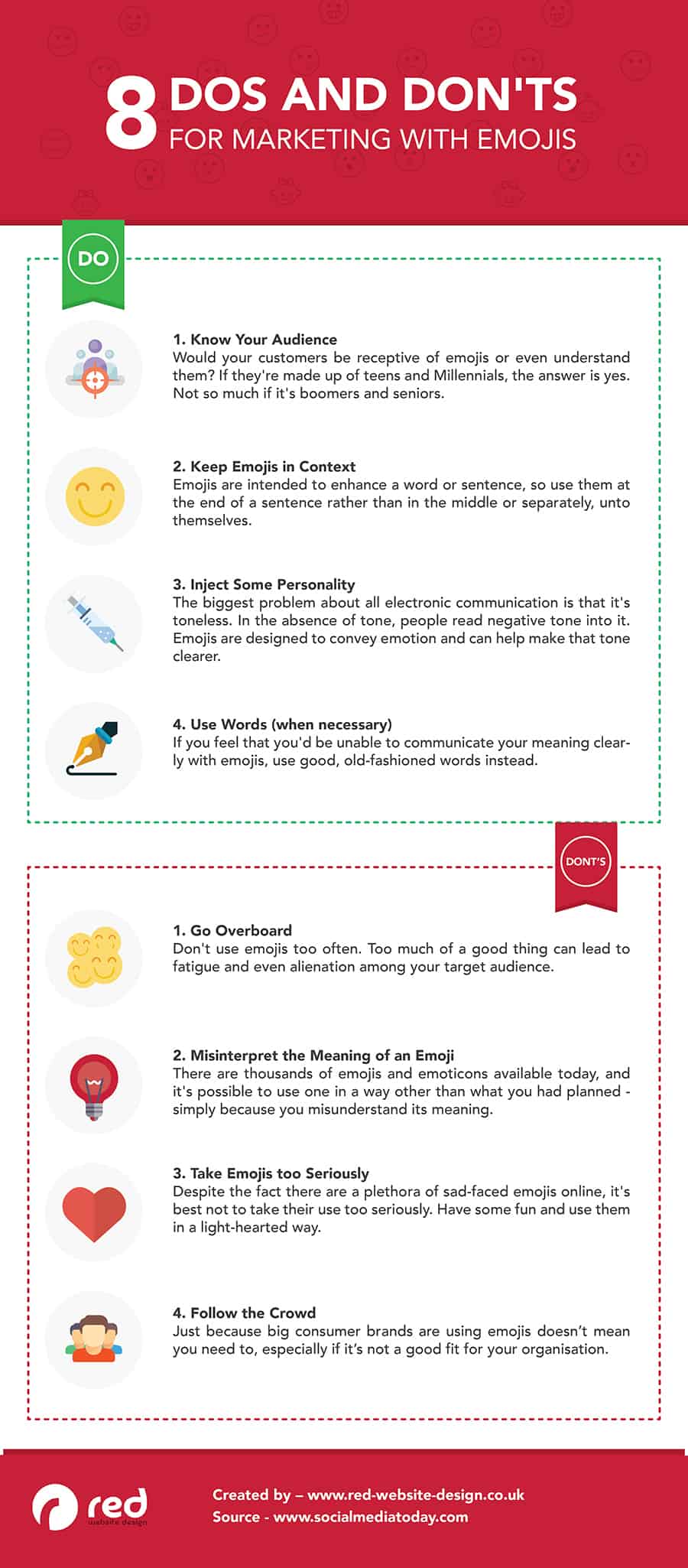
We share the dos and don’ts of emoji for businesses in this infographic.
Here’s a quick summary:
- Do know your audience
- Do keep emoji in context
- Do inject some personality
- Do use words where necessary
- Don’t go overboard
- Don’t misinterpret their meaning
- Don’t take them too seriously
- Don’t follow the crowd
Check out the infographic for more detail.
In the ever-evolving landscape of social media, businesses are constantly searching for ways to stand out and connect with their audience. One tool that has gained significant traction is the use of emoji. These small, colorful symbols can add a playful and expressive touch to online communication. However, like any tool, their effectiveness depends on how they are used. Here are eight essential dos and don’ts for businesses to consider when incorporating emoji into their social media strategy.
Do Know Your Audience
Understanding your audience is the foundation of any successful marketing strategy, and this holds especially true when incorporating emoji into your social media content. Different demographics, cultures, and even individual preferences can significantly influence how emoji are perceived. Here are some in-depth tips and guidance for small businesses to effectively know their audience and tailor their emoji usage accordingly.
Conduct Audience Research
- Demographic Analysis: Start by analyzing the demographic profile of your audience. Age, gender, location, and cultural background can all impact how emoji are interpreted. Younger audiences are typically more comfortable and familiar with emoji, while older demographics may not use or understand them as extensively.
- Behavioral Insights: Use analytics tools to study your audience’s online behavior. Look at which posts receive the most engagement and identify any patterns in the use of emoji. Social media platforms like Facebook, Instagram, and Twitter offer insights into your followers’ interactions, which can be invaluable in shaping your emoji strategy.
- Surveys and Polls: Direct feedback from your audience can provide clarity on their preferences. Conduct surveys or polls asking your followers about their thoughts on emoji use. Questions can include which emoji they like, how often they use them, and in what context they find them appropriate.
- Customer Personas: Develop detailed customer personas that encapsulate the characteristics of your target audience. Include information about their preferences for communication, including emoji usage. This will help you create more personalized and relevant content.
Segment Your Audience
- Group by Demographics: Create segments based on demographic data. For instance, you might have different strategies for millennials compared to baby boomers. Each group might respond differently to the use of emoji in your content.
- Engagement Levels: Identify and segment your audience based on their level of engagement with your brand. Highly engaged followers might appreciate more playful and frequent use of emoji, while less engaged followers might prefer more straightforward and formal communication.
- Cultural Sensitivities: Consider cultural differences in emoji interpretation. Some emoji might have different meanings in different cultures. For example, the thumbs-up emoji is positive in many Western cultures but can be considered offensive in some Middle Eastern contexts.
Tailor Your Emoji Strategy
- Contextual Relevance: Ensure that the emoji you use are contextually relevant to your audience. A tech-savvy audience might appreciate tech-related emoji, while a foodie audience might respond well to food-related emoji. Align the emoji with the interests and habits of your followers.
- Tone and Voice: Match the tone and voice of your emoji use with that of your brand. If your brand is known for being professional and authoritative, use emoji sparingly and choose those that maintain your professional image. If your brand is playful and casual, you can afford to be more liberal with your emoji use.
- Content Type: Different types of content might require different emoji strategies. For example, promotional posts might benefit from attention-grabbing emoji, while customer service responses should use emoji to convey friendliness and empathy.
Monitor and Adapt
- Track Performance: Continuously monitor the performance of your posts that include emoji. Use analytics to track engagement metrics such as likes, shares, comments, and overall reach. Compare these metrics with posts that do not use emoji to gauge their effectiveness.
- Feedback Loop: Pay attention to the feedback you receive from your audience. Comments and direct messages can provide insights into how your emoji use is being perceived. Be open to making adjustments based on this feedback.
- Stay Updated: Emoji usage and trends evolve over time. Stay updated on new emoji releases and emerging trends in emoji use. Adapting to these changes can keep your content fresh and relevant.
Practical Tips for Implementation
- Start Small: If you’re new to using emoji, start small and gradually increase their use. This allows you to test the waters and see how your audience responds without overwhelming them.
- Use Relevant Tools: Utilize tools like social media scheduling and analytics platforms to plan and analyze your emoji use. These tools can help you maintain consistency and measure the impact of your strategy.
- Benchmarking: Look at how competitors and industry leaders are using emoji. While it’s important to maintain your unique voice, benchmarking can provide ideas and inspiration for your own strategy.
- Be Authentic: Ensure that your use of emoji feels authentic and true to your brand. Forced or insincere use of emoji can come off as inauthentic and may alienate your audience.
Examples and Case Studies
- Case Study: Wendy’s: The fast-food chain Wendy’s is known for its witty and playful social media presence. They use emoji effectively to complement their humorous and sassy brand voice. By understanding their young, social media-savvy audience, Wendy’s has been able to use emoji to enhance their engagement and build a strong online community.
- Example: National Geographic: National Geographic often uses emoji to highlight environmental issues and nature-related content. Their audience, which is interested in nature and conservation, responds well to the use of relevant emoji that complement their visually stunning posts.
- Case Study: Small Local Bakery: A local bakery might use emoji to showcase daily specials, highlight fresh ingredients, or celebrate holidays. By knowing that their audience consists of local residents who appreciate personalized and friendly communication, the bakery can use emoji to create a warm and inviting online presence.
In summary, knowing your audience is paramount when using emoji in your social media strategy. By conducting thorough research, segmenting your audience, tailoring your approach, and continuously monitoring feedback, you can ensure that your emoji use resonates well with your followers. This thoughtful approach will help you leverage emoji to enhance your brand’s personality, improve engagement, and ultimately achieve social media success.
Do Keep Emoji in Context
Keeping emoji in context is crucial for ensuring that your messages are clear, engaging, and appropriate for your audience. Misusing emoji or placing them in the wrong context can lead to confusion, misunderstandings, and even damage to your brand’s reputation. Here are some in-depth tips and guidance for small businesses on how to keep emoji in context effectively.
Understand the Nuance of Each Emoji
- Know the Meanings: Before using any emoji, make sure you understand its commonly accepted meanings. For example, the peach emoji is often used to represent a buttocks, not just a fruit. Misusing such emoji can lead to unintended interpretations.
- Cultural Variations: Be aware of cultural differences in emoji interpretation. An emoji that is positive or neutral in one culture might have negative connotations in another. For instance, the thumbs-up emoji is positive in Western cultures but can be offensive in some parts of the Middle East.
- Evolving Meanings: Emoji meanings can evolve over time. Stay updated with current trends and changes in how emoji are used within your target audience. Social media and internet culture can shift quickly, so it’s important to keep up with these changes to maintain relevance.
Align Emoji with Your Message
- Complement Your Text: Use emoji to enhance and complement your written message. For example, if you’re announcing a new product launch, a rocket emoji can convey excitement and innovation. Make sure the emoji adds value to your message rather than distracting from it.
- Emphasize Key Points: Emoji can be used to draw attention to important parts of your message. For instance, a party popper emoji can highlight a special offer or celebration, making it stand out more to your audience.
- Contextual Relevance: Ensure that the emoji you choose are contextually relevant to the content of your post. A heart emoji might be perfect for a Valentine’s Day promotion, but less appropriate for a serious announcement or news update.
Consider the Tone and Voice
- Match Your Brand’s Tone: The emoji you use should reflect your brand’s tone and voice. If your brand is fun and playful, using lighthearted and whimsical emoji can reinforce that persona. Conversely, a more serious and professional brand should use emoji that align with a more formal tone.
- Consistency: Maintain consistency in how you use emoji across different platforms and posts. This helps reinforce your brand’s identity and makes your communication more cohesive.
- Audience Expectations: Consider what your audience expects from your brand’s communication. A law firm might use a gavel or scales of justice emoji to maintain a professional tone, while a fashion brand might use sparkle or dress emoji to add flair to their posts.
Avoid Misinterpretation
- Clear Communication: Ensure that your message is clear even without the emoji. The emoji should enhance the text, not carry the entire meaning. Avoid using emoji in place of words where clarity is crucial.
- Avoid Ambiguity: Some emoji can be ambiguous or have multiple interpretations. Use emoji that are clear and unambiguous in their meaning to avoid potential misunderstandings.
- Test with a Small Audience: If unsure about the interpretation of an emoji, test it with a small segment of your audience or within your team before using it widely. This can help catch any potential issues before they reach a broader audience.
Strategic Placement
- Beginning and End of Messages: Placing emoji at the beginning or end of your message can serve as an attention grabber or a fun sign-off. For example, starting a tweet with a star emoji can make it stand out in a user’s feed.
- Highlighting Hashtags: Use emoji to highlight hashtags or key phrases within your post. This can make your hashtags more noticeable and engaging.
- Balancing Text and Emoji: Avoid clustering too many emoji together, which can make your message hard to read. Balance your text and emoji to ensure readability and clarity.
Tailored to Platform
- Platform-Specific Trends: Different social media platforms have varying trends and norms regarding emoji use. What works on Instagram might not be as effective on LinkedIn. Tailor your emoji strategy to fit the platform you’re using.
- Character Limits: Platforms like Twitter have character limits, so use emoji to convey more within limited space without compromising the clarity of your message.
- Native Emojis: Different platforms render emoji differently. Check how emoji appear on different platforms to ensure they look good and convey the right meaning across all devices and operating systems.
Examples and Case Studies
- Example: Retail Promotion: A small retail store announcing a weekend sale could use a combination of shopping bag, percentage sign, and calendar emoji to clearly convey the message and add a touch of excitement.
- Case Study: Fitness Brand: A fitness brand promoting a new workout class might use muscle, fire, and calendar emoji to emphasize strength, intensity, and scheduling. This keeps the message relevant and engaging for their health-conscious audience.
- Example: Customer Service: A company responding to a customer inquiry on social media might use a smiley face or thumbs-up emoji to convey friendliness and approval, reinforcing a positive and helpful tone.
In summary, keeping emoji in context is about ensuring they enhance your message rather than detract from it. By understanding the nuances of each emoji, aligning them with your message, considering tone and voice, avoiding misinterpretation, strategically placing them, and tailoring their use to specific platforms, small businesses can effectively leverage emoji to engage their audience. This thoughtful approach to emoji use can help build a stronger connection with your followers and enhance your brand’s social media presence.
Do Inject Some Personality
Injecting personality into your social media posts through the use of emoji can transform a faceless brand into a relatable and engaging entity. Emoji offer a way to humanize your brand, making your communication more appealing and memorable. Here are some in-depth tips and guidance for small businesses on how to effectively inject personality into their social media presence using emoji.
Reflect Your Brand’s Voice and Tone
- Define Your Brand Personality: Before you start using emoji, clearly define your brand’s personality. Is your brand fun and quirky, or serious and professional? Understanding this will guide your emoji choices. A playful brand might use a variety of colorful and fun emoji, while a more serious brand might stick to simpler, more formal ones.
- Consistent Voice: Ensure that your use of emoji is consistent with your overall brand voice. If your brand has a casual and friendly tone, emoji can help reinforce this. For instance, a coffee shop with a relaxed vibe might use coffee cup and smiley face emoji to connect with customers.
- Engage Emotionally: Emoji are powerful tools for conveying emotion. Use them to add emotional depth to your messages. A heartfelt thank you post can be enhanced with heart emoji, showing genuine appreciation and warmth.
Showcasing Brand Culture
- Behind-the-Scenes Content: Share behind-the-scenes content of your team and use emoji to add a fun and personal touch. A post about your team’s office day can include smiley faces, coffee cups, and thumbs-up emoji to convey camaraderie and a positive work environment.
- Celebrate Milestones: Use emoji to celebrate milestones and achievements. A post celebrating your business anniversary can include party poppers, balloons, and cake emoji, adding a festive feel and encouraging your audience to join in the celebration.
- Customer Stories and Testimonials: When sharing customer stories or testimonials, use emoji to highlight positive experiences and emotions. If a customer loves your product, a heart or star emoji can emphasize their satisfaction and help other customers feel the enthusiasm.
Humanize Customer Interactions
- Customer Service: When responding to customer inquiries or feedback, emoji can add a friendly and approachable touch. A simple smiley face or thumbs-up can make your responses feel more personal and less automated.
- Addressing Complaints: Handle complaints with care by using empathetic emoji like sad faces or folded hands. This shows that you genuinely care about resolving the issue and empathize with the customer’s concerns.
- Personalized Replies: Tailor your replies to individual customers using emoji that suit the context of the conversation. This personalization can enhance the customer experience and strengthen customer loyalty.
Make Content More Relatable
- Storytelling: Use emoji to tell stories in a visually engaging way. For example, a bakery could share a story about the journey of a bread loaf from dough to shelf using bread, oven, and shopping cart emoji. This makes the content more relatable and fun for the audience.
- Everyday Moments: Share everyday moments and use emoji to make these posts more engaging. A post about a rainy day in the office can include rain cloud and coffee cup emoji, creating a cozy and relatable scene for your followers.
- Seasonal and Holiday Themes: Align your emoji use with seasonal and holiday themes. During the winter holidays, use snowflakes, Christmas trees, and gift box emoji to create a festive atmosphere. This helps your content feel timely and relevant.
Enhance Visual Appeal
- Visual Breaks: Use emoji as visual breaks in longer posts. This not only makes the post more visually appealing but also easier to read. Emoji can act as bullet points or separators, guiding the reader through the content.
- Highlight Key Information: Draw attention to key information or calls to action with relevant emoji. For instance, a post about a limited-time offer can include alarm clock or fire emoji to emphasize urgency.
- Creative Combinations: Experiment with creative combinations of emoji to add a unique touch to your posts. A fitness brand might use muscle, running, and water bottle emoji together to convey a holistic fitness message.
Leverage Trends and Pop Culture
- Stay Current: Keep an eye on trending topics and pop culture references that resonate with your audience. Incorporate relevant emoji to show that your brand is current and in tune with popular culture.
- User-Generated Content: Encourage your followers to use emoji in their interactions with your brand. Share user-generated content that creatively uses emoji, further building a sense of community and engagement.
- Memes and Humor: Use emoji in memes or humorous posts that align with your brand’s personality. This can make your content more shareable and increase engagement. For example, a tech company might use robot and computer emoji in a lighthearted post about the challenges of remote work.
Practical Tips for Implementation
- Moderation is Key: While injecting personality is important, moderation is key. Overusing emoji can make your posts look cluttered and unprofessional. Aim for a balance that enhances your message without overwhelming it.
- Audience Testing: Test different types of emoji and combinations to see what resonates best with your audience. Use A/B testing on social media platforms to compare engagement rates for posts with different emoji strategies.
- Feedback Loop: Pay attention to the feedback you receive from your audience. Monitor comments and messages to see how your use of emoji is being perceived. Be willing to adjust your strategy based on this feedback.
Examples and Case Studies
- Case Study: Innocent Drinks: The UK-based smoothie company Innocent Drinks uses emoji extensively to reflect their fun and quirky brand personality. Their social media posts are often filled with fruit and drink emoji, aligning perfectly with their product offerings and engaging their health-conscious audience.
- Example: Small Bookstore: A small independent bookstore can use book, coffee cup, and heart emoji to create a cozy and inviting atmosphere in their posts. Sharing a photo of a new book arrival with these emoji can make followers feel excited and welcomed.
- Case Study: Tarte Cosmetics: Tarte Cosmetics uses emoji to emphasize their brand’s playful and colorful identity. Their posts often feature makeup-related emoji, sparkles, and hearts, which resonate well with their young, beauty-focused audience.
Injecting personality into your social media posts through the use of emoji can significantly enhance your brand’s relatability and engagement. By reflecting your brand’s voice, showcasing your culture, humanizing interactions, making content relatable, enhancing visual appeal, leveraging trends, and implementing practical strategies, small businesses can effectively use emoji to create a memorable and impactful social media presence. This thoughtful approach helps build stronger connections with your audience, ultimately driving brand loyalty and success.
Do Use Words Where Necessary
While emoji can add a dynamic and engaging element to your social media posts, they should not replace the fundamental clarity that words provide. The right balance between emoji and text ensures that your messages are clear, professional, and effective. Here are some in-depth tips and guidance for small businesses on how to effectively combine emoji with words.
Maintain Clarity and Precision
- Primary Communication: Words are the primary medium for conveying detailed and specific information. Use emoji to enhance or emphasize your message, but rely on words to communicate the main points. For example, if you’re announcing a new product launch, provide the key details in text and use emoji to add excitement or highlight certain aspects.
- Avoid Misinterpretation: Emoji can have different meanings depending on the context and audience. To avoid misunderstandings, ensure that the core message is clear and unambiguous through your choice of words. For instance, when promoting a sale, specify the discount and terms clearly in text, and use emoji to draw attention to the offer.
- Legal and Technical Information: For any legal, technical, or complex information, use clear and precise language. Emoji should not replace critical details that require careful interpretation. Always prioritize clarity when dealing with terms and conditions, instructions, or important announcements.
Enhance Readability and Engagement
- Complementary Use: Use emoji to complement your text rather than replace it. For example, in a post about a new café opening, use text to describe the location, opening hours, and special offers, while adding coffee cup, cake, and party popper emoji to make the post more visually appealing and engaging.
- Highlight Key Points: Emoji can be used to highlight key points within your text. For instance, bullet points accompanied by relevant emoji can make a list of features or benefits more engaging and easier to read. This approach can draw attention to the most important aspects of your message.
- Break Up Text: In longer posts, use emoji to break up the text and make it more digestible. For example, in a multi-paragraph update, strategically placed emoji can serve as visual cues that help guide the reader through the content, making it less intimidating and more enjoyable to read.
Contextual Relevance
- Match the Message: Ensure that the emoji you use are contextually relevant to the message. An emoji should reinforce the text and add value to the overall communication. For example, if you’re sharing a customer testimonial about great service, a smiley face or thumbs-up emoji can enhance the positive sentiment.
- Emotional Tone: Use emoji to convey the emotional tone of your message. A heartfelt thank you message can be enhanced with heart and smiling face emoji, adding warmth and sincerity. Similarly, a post about a challenging situation can be softened with empathetic emoji.
- Consistent Messaging: Maintain consistency in your messaging by aligning emoji with the context of your brand and the specific post. A fitness brand promoting a new workout routine might use muscle and running shoe emoji, while a tech company announcing a new software feature might use laptop and gear emoji.
Audience-Specific Communication
- Know Your Audience: Tailor your use of emoji and text to suit your audience’s preferences. Younger audiences may appreciate a more liberal use of emoji, while older or more professional audiences might prefer a more restrained approach. Analyze engagement metrics to understand what resonates best with your followers.
- Segmented Messaging: If you have a diverse audience, consider segmenting your messaging. For example, use more playful and emoji-rich language on platforms like Instagram or Snapchat, and adopt a more formal tone with fewer emoji on LinkedIn or in email newsletters.
- Feedback Incorporation: Pay attention to feedback from your audience regarding your use of emoji and text. Comments, likes, and direct messages can provide insights into what your audience prefers. Adjust your strategy based on this feedback to ensure maximum engagement and satisfaction.
Practical Examples and Tips
- Announcements and Promotions: When announcing a new product or promotion, use text to provide all the necessary details (e.g., what the product is, pricing, availability) and use emoji to create excitement. For instance, “We’re excited to launch our new eco-friendly water bottle! 🌍💧 Available now for $19.99. Get yours today and join the green movement! 🌿”.
- Customer Engagement: In customer service interactions, use words to address the customer’s issue clearly and concisely, and add emoji to convey friendliness and empathy. For example, “Thank you for reaching out! We’re sorry to hear about the issue with your order 😔. Please DM us your order number, and we’ll resolve it right away! 👍”.
- Content Balance: Maintain a balance between text and emoji in your posts. For instance, a restaurant announcing a new menu item could post, “Introducing our new spicy tuna roll! 🍣🔥 Perfect for those who love a little kick. Available starting this Friday!” This approach keeps the message clear while adding visual appeal.
- Event Promotion: For promoting events, use detailed text to provide essential information such as date, time, location, and special activities, and use emoji to highlight and make the post more engaging. For example, “Join us for a fun-filled family day at the park this Saturday! 🏞️🎈 Activities include face painting 🎨, live music 🎵, and a BBQ 🍔. Don’t miss out!”.
Training and Consistency
- Team Training: Ensure that your team is on the same page regarding the use of emoji and text in your communications. Provide guidelines and examples to help them understand the appropriate balance and context for emoji use.
- Editorial Calendar: Plan your social media content in advance using an editorial calendar. This allows you to thoughtfully incorporate emoji into your posts, ensuring they enhance the message and maintain consistency across all platforms.
- Brand Guidelines: Develop brand guidelines that include the use of emoji. Specify which emoji are appropriate for different types of posts and how they should be used in conjunction with text. This helps maintain a consistent brand voice and prevents misuse.
Examples and Case Studies
- Case Study: Airbnb: Airbnb uses a blend of text and emoji to make their social media posts engaging while maintaining clarity. When promoting travel destinations, they use descriptive text to provide details and complement it with relevant emoji, such as palm trees, beach umbrellas, and airplanes, to evoke the travel experience.
- Example: Local Bakery: A local bakery might post, “Good morning! ☀️ Start your day with our fresh-baked croissants 🥐 and a hot cup of coffee ☕. Visit us today for a delicious breakfast!” This combination of text and emoji effectively communicates the message and makes it more inviting.
- Case Study: Nike: Nike often uses emoji to enhance their motivational messages. A post might read, “Push your limits and achieve greatness 💪🏆. What are you training for today? #JustDoIt”. The emoji add energy and reinforce the motivational tone.
In conclusion, while emoji can significantly enhance your social media posts, they should be used to complement and not replace text. By maintaining clarity, enhancing readability, ensuring contextual relevance, tailoring communication to your audience, providing practical examples, and ensuring consistency through training and guidelines, small businesses can effectively use words and emoji to create engaging and impactful social media content. This balanced approach helps maintain professionalism, ensures clear communication, and leverages the emotional and visual appeal of emoji.
Don’t Go Overboard
While emoji can add a vibrant and engaging element to your social media content, it’s important to use them in moderation. Overusing emoji can lead to cluttered and unprofessional-looking posts, potentially confusing your audience and diluting your message. Here are some in-depth tips and guidance for small businesses on how to avoid going overboard with emoji.
Balance and Moderation
- Less is More: When it comes to emoji, less is often more. Using a few well-placed emoji can enhance your message, but overloading your post with too many can make it difficult to read and understand. Aim for a balance that complements your text rather than overwhelming it.
- Strategic Placement: Use emoji strategically to emphasize key points or to add a touch of personality, rather than scattering them throughout your message. For instance, placing an emoji at the beginning or end of a sentence can draw attention without cluttering the text.
- Quality Over Quantity: Focus on using high-quality, relevant emoji that add value to your message. One or two well-chosen emoji can be far more effective than a string of unrelated ones.
Maintain Professionalism
- Appropriate Context: Ensure that the use of emoji is appropriate for the context and tone of your message. While it’s acceptable to use more emoji in casual, light-hearted posts, maintain a more restrained approach in professional or serious communications.
- Brand Image: Consider how the use of emoji reflects on your brand. Overuse can make your brand appear less serious or professional. Align your emoji usage with your brand’s image and the expectations of your audience.
- Clarity and Readability: Avoid compromising the clarity and readability of your posts. Ensure that your message can stand on its own without the emoji and that the text remains the primary mode of communication.
Audience Considerations
- Audience Preferences: Tailor your emoji usage to the preferences of your audience. Younger audiences might appreciate more frequent use of emoji, while older or more professional audiences might prefer a more subdued approach. Monitor engagement metrics to understand what works best.
- Cultural Sensitivities: Be mindful of cultural differences in the interpretation of emoji. What might be seen as fun and playful in one culture could be misunderstood or even offensive in another. Research and consider the cultural context of your audience to avoid potential pitfalls.
- Feedback and Adjustment: Pay attention to feedback from your audience regarding your use of emoji. If you notice a drop in engagement or receive negative comments, it might be a sign that you’re overdoing it. Be ready to adjust your approach based on this feedback.
Practical Tips for Implementation
- Clear Objectives: Define the objective of each post and use emoji to support that objective. For example, if the goal is to drive traffic to your website, a single arrow emoji pointing to the link can be effective without overwhelming the message.
- Test and Learn: Experiment with different levels of emoji use to see what resonates best with your audience. Conduct A/B testing with posts that use varying amounts of emoji and analyze the engagement metrics to determine the optimal approach.
- Guidelines for Team: Develop guidelines for your team on how to use emoji in your social media communications. This can help ensure consistency and prevent overuse. Provide examples of effective and ineffective emoji use to illustrate your points.
Examples and Case Studies
- Example: Retail Store: A retail store might post, “New arrivals are here! 🛍️ Check out our latest collection online now!” This uses one well-placed emoji to draw attention to the excitement of new products without overwhelming the message.
- Case Study: Tech Startup: A tech startup promoting a new app feature might use a more restrained approach: “Excited to announce our new feature: dark mode! 🌙 Update your app today.” The moon emoji highlights the feature while keeping the post professional and clear.
- Example: Local Restaurant: A local restaurant might use emoji to promote a special event: “Join us for Taco Tuesday! 🌮 Specials all day long!” Here, the taco emoji adds a fun touch to the promotion without overloading the message.
Avoiding Common Pitfalls
- Avoid Emoji Chains: Refrain from using long chains of emoji. For instance, a string of five different food emoji can make a post look cluttered and confusing. Stick to one or two emoji that clearly convey your message.
- Relevance and Specificity: Use emoji that are relevant to the content of your post. Random or unrelated emoji can distract from your message and confuse your audience. Make sure each emoji used has a clear purpose and adds to the overall communication.
- Professional Boundaries: In professional communications, especially B2B contexts, keep emoji use minimal. Overuse in professional settings can come off as unprofessional and may not be taken seriously by your audience.
Monitoring and Evaluation
- Engagement Metrics: Regularly monitor the engagement metrics of your posts to assess the impact of your emoji usage. Look for patterns in likes, shares, comments, and overall engagement to determine what works best.
- Audience Feedback: Direct feedback from your audience can be invaluable. Pay attention to comments and direct messages that mention your use of emoji. Positive feedback can reinforce your strategy, while negative feedback can highlight areas for improvement.
- Adjust and Adapt: Be flexible and willing to adjust your approach based on the data and feedback you receive. If you find that less frequent use of emoji yields better results, adjust your strategy accordingly.
Visual Examples
- Effective Use: “Excited to launch our new product! 🚀 Pre-order now and be the first to try it!” – This example uses one relevant emoji to emphasize the excitement of the launch.
- Overuse: “🎉🎉🎉 Big Sale! 🎉🎉🎉 Everything 50% off! 🎉🎉🎉 Shop now! 🎉🎉🎉” – This example uses too many party popper emoji, which can make the post look cluttered and overwhelming.
- Balanced Use: “Join us this Saturday for a community clean-up! 🌍✨ Let’s make a difference together. #CommunityLove” – This example uses two relevant emoji to enhance the message without overshadowing the text.
In conclusion, while emoji can enhance your social media presence, it’s crucial to use them in moderation to maintain professionalism and clarity. By focusing on balance, maintaining professionalism, considering your audience, following practical tips, avoiding common pitfalls, and continuously monitoring and adjusting your strategy, small businesses can effectively use emoji to engage their audience without going overboard. This thoughtful approach ensures that emoji enhance your message rather than detract from it, helping you create clear, professional, and engaging content.
Don’t Misinterpret Their Meaning
Emoji can be a powerful tool in digital communication, adding nuance and emotion that words alone may not convey. However, the meanings of emoji can vary widely depending on context, culture, and individual interpretation. Misinterpreting or misusing emoji can lead to misunderstandings, confusion, or even offense. For small businesses, it’s essential to use emoji accurately to maintain clear and positive communication. Here are some in-depth tips and guidance on how to avoid misinterpreting the meaning of emoji.
Understand Common Emoji Meanings
- Familiarize Yourself with Popular Emoji: Learn the commonly accepted meanings of frequently used emoji. Resources like Emojipedia provide comprehensive explanations and examples of how each emoji is typically used. For example, the “face with tears of joy” 😂 emoji is widely recognized as a symbol of laughter and happiness.
- Stay Updated: Emoji meanings can evolve over time, particularly among different social media platforms and user groups. Stay updated on current trends and changes in emoji usage to ensure your communication remains relevant and appropriate.
- Platform Differences: Be aware that the appearance of emoji can differ across platforms (e.g., Apple, Android, Windows). An emoji that looks cheerful on one platform might appear slightly different on another, potentially altering its perceived meaning. Test how your chosen emoji look on different devices to ensure consistency.
Cultural Sensitivity
- Cultural Variations: Understand that emoji can have different meanings in different cultures. For example, the “thumbs-up” 👍 emoji is positive in many Western cultures but can be considered offensive in some Middle Eastern contexts. Research cultural norms and sensitivities of your target audience to avoid potential missteps.
- Avoid Ambiguous Emoji: Some emoji have multiple interpretations that can vary significantly between cultures. For example, the “folded hands” 🙏 emoji might be interpreted as a prayer gesture in some cultures, while others might see it as a symbol of gratitude or a high-five. Use such emoji with caution and provide context if necessary.
- Inclusive Communication: Aim for inclusivity by choosing emoji that are universally understood and accepted. Avoid using symbols that might be confusing or carry unintended connotations for certain cultural groups.
Context is Key
- Match Emoji to Message: Ensure that the emoji you choose are contextually appropriate for your message. For example, a “party popper” 🎉 emoji is great for celebrating an achievement but would be out of place in a post about a serious topic.
- Complement, Don’t Replace: Use emoji to complement your text, not to replace it. Make sure the core message is clear from the text alone, with emoji adding emphasis or emotion. For example, “We’re thrilled to announce our new product launch! 🚀” uses the rocket emoji to highlight excitement without relying solely on it for meaning.
- Test with a Small Audience: Before using new or uncommon emoji in a major campaign, test them with a small segment of your audience or within your team. This can help identify any potential misunderstandings or misinterpretations.
Practical Tips for Correct Usage
- Use Clear and Specific Emoji: Choose emoji that have clear and specific meanings to minimize ambiguity. For example, the “green checkmark” ✅ clearly signifies approval or completion, while the “red X” ❌ denotes something negative or incorrect.
- Avoid Overuse of Complex Emoji: Some emoji, like the “smirking face” 😏 or “upside-down face” 🙃, can be interpreted in multiple ways depending on context. Use such emoji sparingly and only when their meaning is unmistakable within the given context.
- Provide Context: When using emoji that might be open to interpretation, provide context in the accompanying text. This helps clarify the intended meaning and reduces the risk of misinterpretation. For example, “Join us for a fun-filled weekend at the beach! 🏖️ (weather permitting)” makes the context of the beach emoji clear.
Avoid Common Pitfalls
- Beware of Double Meanings: Some emoji can have innocent and more suggestive meanings. For example, the “eggplant” 🍆 and “peach” 🍑 emoji are often used to represent body parts in informal communication. Avoid using such emoji in professional or brand-related contexts to prevent unintended interpretations.
- Know the Slang: Be aware of how emoji are used in slang and internet culture. For instance, the “skull” 💀 emoji is often used to indicate something extremely funny (“I’m dead” from laughter). Understanding these nuances helps you avoid accidental misuse.
- Review and Edit: Always review your posts before publishing to ensure that the emoji used are appropriate and clearly understood within the context. Editing tools and social media previews can help you see how your message will appear to your audience.
Examples and Case Studies
- Example: Coffee Shop: A local coffee shop might post, “Start your day with our new espresso blend! ☕️✨” The coffee cup emoji clearly represents coffee, and the sparkle emoji adds excitement. Both are contextually appropriate and enhance the message without causing confusion.
- Case Study: International Brand: An international brand might use the “OK” hand gesture 👌 emoji in a global campaign. However, since this gesture can be offensive in some cultures, they opt for a universally positive emoji like the “thumbs-up” 👍 instead, ensuring the message is well-received globally.
- Example: Customer Service: A customer service response might read, “Thank you for your feedback! 😊 We’re here to help with any questions you might have.” The smiling face emoji adds a friendly tone without ambiguity, making the message warm and approachable.
Training and Team Alignment
- Create Guidelines: Develop a set of guidelines for emoji usage within your team. This can include which emoji are appropriate for different types of posts, how to combine emoji with text effectively, and examples of correct and incorrect usage.
- Team Training: Train your team on the nuances of emoji meanings and their appropriate use in various contexts. This ensures that everyone is on the same page and uses emoji consistently in line with your brand’s voice and values.
- Feedback Mechanism: Establish a feedback mechanism where team members can report any instances of misinterpreted emoji use. This helps identify potential issues early and allows for corrective action.
Continuous Learning and Adaptation
- Monitor Trends: Continuously monitor social media trends and how emoji usage evolves. This helps you stay relevant and avoid outdated or inappropriate emoji use.
- Learn from Mistakes: If an emoji use backfires or causes confusion, learn from the experience. Analyze what went wrong and how it can be avoided in the future. Use these learnings to refine your emoji strategy.
- Engage with Your Audience: Encourage your audience to share their feedback on your emoji usage. This can provide valuable insights into how your audience interprets and reacts to emoji, helping you fine-tune your approach.
In summary, avoiding misinterpretation of emoji requires a careful and informed approach. By understanding common emoji meanings, being culturally sensitive, maintaining contextual relevance, avoiding common pitfalls, using practical tips, and continuously learning and adapting, small businesses can use emoji effectively to enhance their communication. This thoughtful approach ensures that emoji add value to your messages, fostering clear, engaging, and positive interactions with your audience.
Don’t Take Them Too Seriously
While emoji can enhance social media communication by adding a touch of personality and emotion, they should not be the focal point of your content strategy. It’s important for small businesses to strike a balance between utilizing emoji to engage their audience and maintaining the professionalism and clarity of their message. Here are some in-depth tips and guidance for small businesses on how to effectively use emoji without taking them too seriously.
Embrace the Playfulness of Emoji
- Light-Hearted Communication: Emoji are inherently playful and should be used to add a touch of fun to your communication. Use them to inject humor and lighten the tone of your posts, but ensure that the underlying message remains clear and professional. For example, “Our new summer drinks are here to beat the heat! 🥤☀️ #StayCool” uses emoji to add a fun twist to the announcement.
- Casual Interactions: When engaging with your audience, especially in informal settings like social media comments or casual posts, don’t be afraid to use emoji to create a friendly and approachable image. This can help humanize your brand and make it more relatable. For instance, replying to a customer’s compliment with “Thanks for the love! ❤️ We’re glad you enjoyed it!” adds warmth and friendliness to your response.
- Celebrate Moments: Use emoji to celebrate milestones, holidays, and special events in a fun and engaging way. For example, a post celebrating a business anniversary could use party popper, cake, and balloon emoji to convey a festive mood: “We’re celebrating 5 amazing years today! 🎉🎂🎈 Thank you for being part of our journey!”
Keep Emoji in Perspective
- Supportive Role: Remember that emoji are there to support your message, not to overshadow it. Your primary focus should be on conveying clear and concise information, with emoji serving as a complementary element. For instance, a post about a new product should highlight the product features and benefits, with a few relevant emoji to enhance the message.
- Professional Boundaries: Maintain professional boundaries by using emoji appropriately. In formal communications, such as business proposals, contracts, or serious customer service issues, it’s best to minimize or avoid emoji altogether. Keep your language professional and clear in these contexts to ensure that your message is taken seriously.
- Avoid Overreliance: Don’t rely too heavily on emoji to carry your message. Ensure that your posts are understandable without the emoji. This prevents miscommunication and ensures that your message remains effective across different platforms and audiences.
Balance Fun with Professionalism
- Context Matters: The context of your communication should dictate the use of emoji. In light-hearted and casual contexts, feel free to use emoji more liberally. However, in serious or sensitive situations, it’s best to limit or avoid their use. For example, a post addressing a customer complaint should focus on resolving the issue professionally, possibly using a single, empathetic emoji to convey understanding: “We’re sorry to hear about your experience 😔. Please DM us so we can make it right.”
- Audience Expectations: Understand your audience’s expectations and preferences regarding emoji use. Younger audiences may appreciate a more playful approach, while older or more conservative audiences might prefer a more restrained use of emoji. Tailor your emoji use to suit the preferences of your target audience.
- Consistency with Brand Voice: Ensure that your use of emoji is consistent with your brand’s voice and tone. A brand known for its playful and quirky personality can use emoji more freely, while a more serious and professional brand should use them sparingly and thoughtfully.
Practical Tips for Balanced Emoji Use
- Moderation: Use emoji in moderation to enhance your message without overwhelming it. A few well-placed emoji can add personality to your posts, while too many can make your content look cluttered and unprofessional.
- Relevance: Choose emoji that are relevant to the content of your message. Ensure that each emoji adds value and is contextually appropriate. For example, a post about a new dessert menu can use dessert-related emoji like cake, ice cream, and cupcake to make the post more appealing: “Indulge in our new dessert menu! 🍰🍦🧁”.
- Engagement: Use emoji to encourage engagement and interaction from your audience. Questions, polls, and calls-to-action can be made more inviting with the use of emoji. For instance, “Which summer drink is your favorite? 🍹🍓🍋 Vote now and let us know!”.
Avoid Common Pitfalls
- Over-Seriousness: Don’t overthink the use of emoji. They are meant to be fun and add a light-hearted touch to your communication. Avoid stressing too much about finding the perfect emoji for every post. Instead, focus on creating engaging and valuable content for your audience.
- Misinterpretation: Be cautious of using emoji that might be misinterpreted or have multiple meanings. Ensure that your chosen emoji are clear and widely understood to avoid confusion. For example, the “eggplant” 🍆 emoji can have suggestive meanings, so it’s best avoided in most professional contexts.
- Trends and Memes: Stay aware of current trends and memes involving emoji. While it’s great to stay relevant, ensure that the trends you participate in align with your brand values and don’t inadvertently offend or alienate your audience.
Examples and Case Studies
- Example: Clothing Boutique: A small clothing boutique might post, “New summer arrivals are here! 🌸👗👒 Come check out the latest trends!” This uses emoji to enhance the excitement of new arrivals without taking away from the primary message.
- Case Study: Tech Company: A tech company might share a post about a software update: “Our latest update is now live! 🚀 Enjoy enhanced features and improved performance.” The rocket emoji adds a dynamic touch, but the focus remains on the update information.
- Example: Local Gym: A local gym might post, “Join us for a morning workout session! 💪🌞 Start your day strong with our energizing classes.” The flexed biceps and sun emoji add energy and motivation to the post.
Encouraging a Light-Hearted Brand Culture
- Team Training: Train your team on how to use emoji appropriately in social media communication. Encourage them to embrace the playful nature of emoji while maintaining professionalism and clarity in their messages.
- Creative Freedom: Allow your team creative freedom to use emoji in ways that align with your brand’s voice. This can help keep your social media content fresh and engaging.
- Feedback and Adaptation: Regularly review the performance of your posts and gather feedback from your audience. Use this feedback to adapt and refine your emoji strategy, ensuring it remains effective and aligned with your brand goals.
In conclusion, while emoji are a valuable tool for enhancing social media communication, they should not be taken too seriously. By embracing their playful nature, keeping them in perspective, balancing fun with professionalism, and avoiding common pitfalls, small businesses can use emoji effectively to engage their audience and enhance their brand’s personality. This balanced approach ensures that emoji add value to your communication without overshadowing the core message, helping you create engaging and impactful social media content.
Don’t Follow the Crowd
In the fast-paced world of social media, it can be tempting for small businesses to mimic the strategies and trends used by larger brands or competitors. However, blindly following the crowd can dilute your unique brand identity and fail to resonate with your specific audience. To stand out and build a strong connection with your followers, it’s essential to develop a distinctive approach to emoji use and overall social media strategy. Here are some in-depth tips and guidance on how small businesses can avoid following the crowd and instead create authentic, engaging content.
Understand Your Unique Brand Identity
- Define Your Brand Voice: Clearly define your brand voice and personality. Are you playful and casual, or professional and authoritative? Your emoji use should reflect this voice consistently across all platforms. For example, a playful brand might use more whimsical and colorful emoji, while a professional brand might stick to simpler, more straightforward symbols.
- Brand Values and Mission: Align your emoji use with your brand’s core values and mission. If sustainability is a key part of your brand, use relevant emoji (like 🌍 or 🌱) to reinforce this message in your posts. This creates a coherent and authentic brand image that resonates with your audience.
- Unique Selling Proposition (USP): Highlight what sets your brand apart from the competition. Use emoji to emphasize your unique offerings or brand characteristics. For instance, if your business prides itself on artisanal, handmade products, use craft-related emoji (like 🧶 or 🛠️) to underscore this uniqueness.
Tailor Your Approach to Your Audience
- Audience Research: Conduct thorough research to understand your audience’s preferences, behaviors, and values. What kind of content do they engage with the most? What are their interests and needs? Use this insight to tailor your emoji strategy in a way that genuinely connects with your followers.
- Personalization: Personalize your social media content to make it more relevant to your audience. Use emoji that reflect their interests and lifestyles. For example, a fitness brand targeting young adults might use exercise-related emoji (like 🏋️♂️ or 🏃♀️), while a travel agency could use travel-related emoji (like ✈️ or 🏖️).
- Direct Engagement: Engage directly with your audience to understand their preferences. Conduct polls or surveys asking them about their favorite emoji or how they feel about your current emoji use. This direct feedback can provide valuable insights and help you refine your strategy.
Innovate and Experiment
- Creative Experimentation: Don’t be afraid to experiment with new and creative ways of using emoji. Try combining emoji in novel ways to tell a story or create a unique visual appeal. For instance, a bakery could use a series of emoji to illustrate the process of baking a cake: 🥚➕🍫➕🍰➕🍴.
- Test and Learn: Implement A/B testing to see what types of emoji combinations and placements resonate best with your audience. Compare the engagement rates of different posts to identify successful strategies. Use this data to continuously refine and improve your approach.
- Innovative Campaigns: Develop innovative marketing campaigns that leverage emoji in unique ways. For example, create a contest where followers submit their own creative emoji combinations related to your products or services. This encourages engagement and generates user-generated content.
Stay True to Your Brand
- Authenticity: Authenticity is key to building trust and loyalty with your audience. Avoid using emoji in a way that feels forced or inauthentic. Ensure that every emoji you use aligns with your brand’s voice and message. Authenticity resonates more deeply with audiences and fosters stronger connections.
- Consistency: Maintain consistency in your emoji use across all platforms and types of content. This helps reinforce your brand identity and makes your social media presence more cohesive. For example, if you frequently use certain emoji to represent your products, continue using them consistently to build brand recognition.
- Quality Over Quantity: Focus on the quality of your posts rather than the quantity of emoji used. A few well-placed emoji can enhance a post, but excessive use can make it look cluttered and unprofessional. Ensure that every emoji adds value to your message.
Monitor Trends, But Don’t Copy
- Trend Awareness: Stay aware of current trends in emoji use and social media, but don’t feel pressured to follow them blindly. Analyze trends to understand their relevance to your brand and audience. Adopt only those trends that align with your brand values and enhance your messaging.
- Adapt, Don’t Adopt: Adapt popular trends to fit your brand’s unique voice and style. For example, if a new emoji becomes popular, find a creative way to incorporate it into your content that feels natural and relevant. This allows you to stay current while maintaining your distinct identity.
- Long-Term Strategy: Focus on building a long-term social media strategy that emphasizes consistent and meaningful engagement with your audience. Trends come and go, but a strong, authentic brand presence endures. Prioritize strategies that align with your long-term goals over short-term fads.
Examples and Case Studies
- Case Study: Patagonia: Outdoor clothing brand Patagonia uses emoji sparingly and thoughtfully, aligning with their brand’s commitment to sustainability and environmental activism. They use nature-related emoji (like mountains, trees, and waves) to highlight their environmental initiatives without overwhelming their posts.
- Example: Local Craft Brewery: A local craft brewery might use beer-related emoji (like 🍺 and 🍻) to promote new brews and events. However, they differentiate themselves by also using unique combinations like hops (🌿) and barley (🌾) emoji to emphasize their artisanal brewing process.
- Case Study: Glossier: Beauty brand Glossier uses emoji to enhance their playful and approachable brand voice. They frequently use makeup-related emoji (like 💄 and 💅) to highlight products, but also incorporate their signature pink color in their visual branding, creating a cohesive and recognizable social media presence.
Practical Tips for Implementation
- Develop Brand Guidelines: Create comprehensive brand guidelines that include rules for emoji use. Outline which emoji are appropriate, how they should be used, and in what contexts. This ensures consistency and helps team members understand the brand’s approach to emoji.
- Regular Reviews: Regularly review and update your emoji strategy to ensure it remains aligned with your brand and relevant to your audience. Social media trends and audience preferences can change, so stay flexible and ready to adapt as needed.
- Encourage Creativity: Foster a culture of creativity within your social media team. Encourage team members to brainstorm and experiment with new ways to use emoji. Hold regular creative sessions to generate fresh ideas and keep your content innovative.
In conclusion, while it can be tempting to follow the crowd in social media trends, it’s essential for small businesses to develop their own unique approach to emoji use. By understanding your brand identity, tailoring your approach to your audience, innovating and experimenting, staying true to your brand, and monitoring trends without copying, you can create authentic, engaging, and distinctive content. This thoughtful approach ensures that your emoji use enhances your brand’s communication, resonates with your audience, and sets you apart from the competition.
Conclusion
In conclusion, emoji can be a powerful tool for businesses looking to enhance their social media communication. By knowing your audience, keeping emoji in context, injecting personality, and using words where necessary, you can effectively incorporate emoji into your strategy. At the same time, it’s crucial to avoid going overboard, misinterpreting their meaning, taking them too seriously, or simply following the crowd. Striking the right balance and being mindful of these dos and don’ts will help you leverage emoji to connect with your audience and achieve social media success.

Author:
Mark Ford