How does your business generate new leads? Are you still doing it the old fashioned way and cold calling?
Whilst cold calling can be a source of leads there is an easier and more cost effective way to build your business – simply make your customers come to you. Ok, it’s not that simple, but it is possible with the implementation of a content marketing strategy.
Take a look at this infographic from Entrepreneur which shows why you should sack your salespeople (only joking) and do content marketing instead.
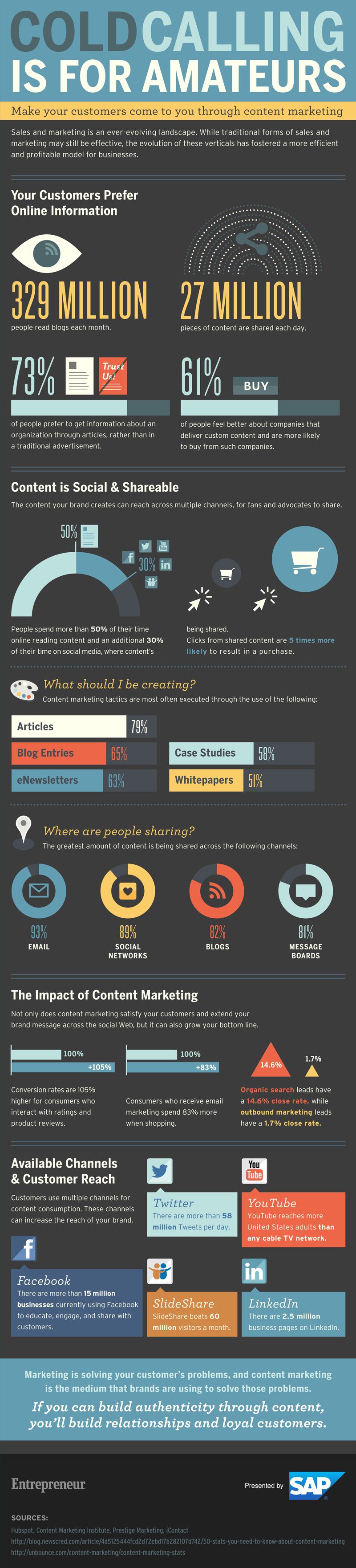
In the ever-evolving world of sales and marketing, strategies and techniques are constantly changing. One thing that has become increasingly clear in recent years is that cold calling, once a staple of sales tactics, is on the decline. With the rise of digital technology and changing consumer behavior, businesses are finding that traditional cold calling is no longer as effective as it once was. Instead, smart businesses are turning to content marketing as a more powerful and efficient way to reach their target audience and generate leads.
In this blog post, we will delve deep into the world of cold calling and content marketing, exploring the reasons why cold calling is losing its effectiveness and why content marketing is the way forward for businesses looking to thrive in the digital age.
The Decline of Cold Calling
Cold calling, the practice of reaching out to potential customers or clients with whom you have no prior relationship, has been a long-standing strategy in the world of sales. However, several factors have contributed to its decline in recent years.
1. Consumer Aversion to Cold Calls
One of the primary reasons for the decline of cold calling is consumer aversion. In today’s world, people are bombarded with information from various sources, and their time is more valuable than ever. Cold calls often interrupt their busy lives and can be seen as intrusive and unwelcome. As a result, many consumers simply ignore or reject cold calls.
2. Ineffectiveness
Cold calling is becoming increasingly ineffective. The vast majority of cold calls do not lead to meaningful conversations or conversions. In fact, studies have shown that the success rate of cold calls is as low as 1-2%. This means that businesses are spending a significant amount of time and resources on a strategy that yields minimal results.
3. Regulatory Restrictions
In many regions, there are strict regulations governing cold calling practices. Businesses need to comply with laws such as the Telephone Consumer Protection Act (TCPA) in the United States, which restricts unsolicited calls and text messages. Violating these regulations can result in hefty fines and damage to a company’s reputation.
4. High Costs
Cold calling can be costly. From hiring and training sales representatives to maintaining call centers and purchasing call lists, the expenses can add up quickly. This can strain a company’s budget, especially when the return on investment is low.
The Rise of Content Marketing
As cold calling loses its luster, content marketing has emerged as a more effective and efficient alternative. Content marketing involves creating and distributing valuable, relevant, and consistent content to attract and engage a target audience. Here are some compelling reasons why businesses are turning to content marketing:
1. Building Trust and Credibility
Content marketing allows businesses to establish themselves as authorities in their industry. By providing valuable and informative content, companies can build trust and credibility with their audience. When consumers see a business consistently delivering useful information, they are more likely to trust and choose that business over competitors.
2. Attracting Inbound Leads
Content marketing focuses on attracting potential customers rather than interrupting them like cold calls. By creating content that addresses the needs and interests of their target audience, businesses can naturally draw in inbound leads. This means that potential customers come to you, already interested in what you have to offer.
3. Cost-Effective
Compared to the high costs associated with cold calling, content marketing is often more budget-friendly. While creating quality content does require an investment of time and resources, the long-term benefits far outweigh the initial costs. Once created, content can continue to generate leads and traffic over an extended period.
4. Measurable Results
One of the advantages of content marketing is the ability to track and measure results accurately. Businesses can use analytics tools to monitor the performance of their content, such as website traffic, engagement metrics, and conversion rates. This data enables them to refine their strategies and focus on what works best for their audience.
Key Components of Successful Content Marketing
To harness the power of content marketing effectively, businesses should understand and implement key components that contribute to its success:
1. Audience Research
Knowing your target audience is essential. Conduct thorough research to understand their needs, preferences, pain points, and behavior. This information will guide your content creation efforts and help you tailor your content to resonate with your audience.
2. High-Quality Content
Content quality matters. Whether it’s blog posts, videos, infographics, or podcasts, your content should be well-researched, informative, and engaging. Providing real value to your audience is crucial in building trust and authority.
3. Consistency
Consistency is key in content marketing. Establish a regular posting schedule to keep your audience engaged and coming back for more. Consistency also helps improve your search engine rankings.
4. SEO Optimization
Search engine optimization (SEO) is vital for ensuring your content is discoverable. Conduct keyword research and optimize your content for relevant search terms to increase its visibility on search engines like Google.
5. Promotion
Creating great content is only half the battle. You also need to promote it effectively. Share your content on social media, email newsletters, and other relevant channels to reach a wider audience.
6. Engagement
Engage with your audience by responding to comments, questions, and feedback. Building a community around your content can lead to loyal customers and brand advocates.
7. Analytics and Iteration
Regularly analyze the performance of your content using analytics tools. Use the insights gained to refine your content strategy and improve results over time.
Success Stories: Companies Thriving with Content Marketing
Several companies have successfully transitioned from traditional cold calling to content marketing, achieving impressive results in the process. Here are a few notable examples:
1. HubSpot
HubSpot, a leading marketing and sales software company, has become synonymous with inbound marketing. They provide a wealth of educational content, from blog posts and ebooks to webinars and certification courses. By offering valuable resources that help businesses improve their marketing and sales efforts, HubSpot has attracted a massive audience of marketers and sales professionals.
2. Moz
Moz, a company specializing in SEO software and services, is another content marketing success story. Their blog, Whiteboard Friday video series, and in-depth guides have positioned them as authorities in the field of SEO. Moz’s content not only attracts a wide audience but also drives organic traffic and leads to their products and services.
3. Buffer
Buffer, a social media management platform, has built a strong online presence through content marketing. They regularly publish blog posts, podcasts, and social media guides that help businesses improve their social media strategies. By sharing their expertise and insights, Buffer has established itself as a trusted resource in the social media marketing space.
Conclusion
While cold calling may have been the go-to method for generating leads and sales in the past, it is clear that times have changed. The decline in consumer responsiveness, coupled with the inefficiencies and high costs of cold calling, has prompted businesses to explore more effective alternatives. Content marketing has emerged as a powerful strategy for attracting, engaging, and converting leads in the digital age.
By providing valuable, relevant, and consistent content, businesses can build trust and credibility with their target audience, attract inbound leads, and achieve measurable results. The success stories of companies like HubSpot, Moz, and Buffer serve as inspiration for those looking to make the transition from cold calling to content marketing.
In conclusion, for businesses seeking to thrive in today’s competitive landscape, the message is clear: Cold calling is for amateurs. Content marketing is the professional and strategic approach that can lead to long-term success and sustainable growth in the digital era. Embrace content marketing, and you’ll find that building meaningful connections with your audience has never been more accessible or rewarding.

Author:
Mark Ford